Understanding Sequences Addition & Subtraction Worksheets for Ages 7-8
13 filtered results
-
From - To
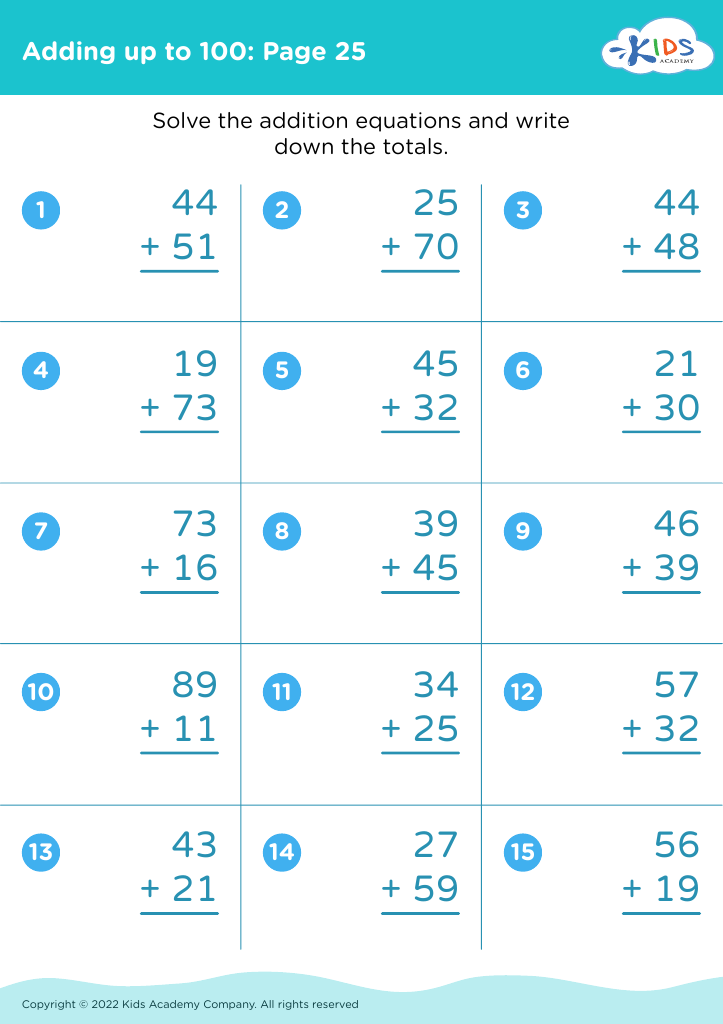
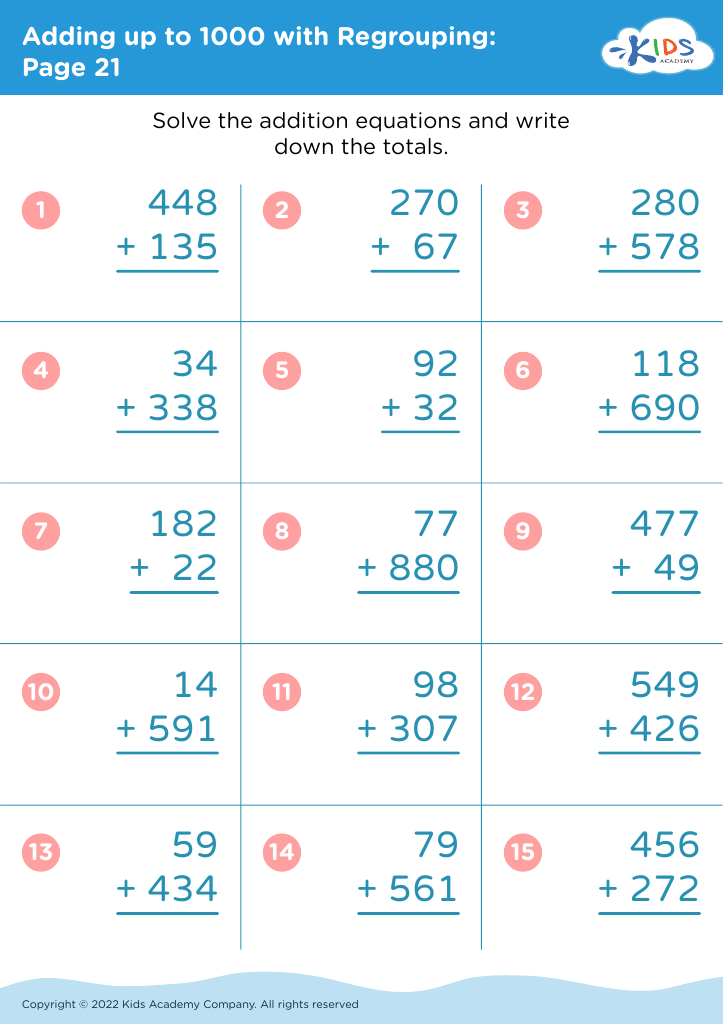
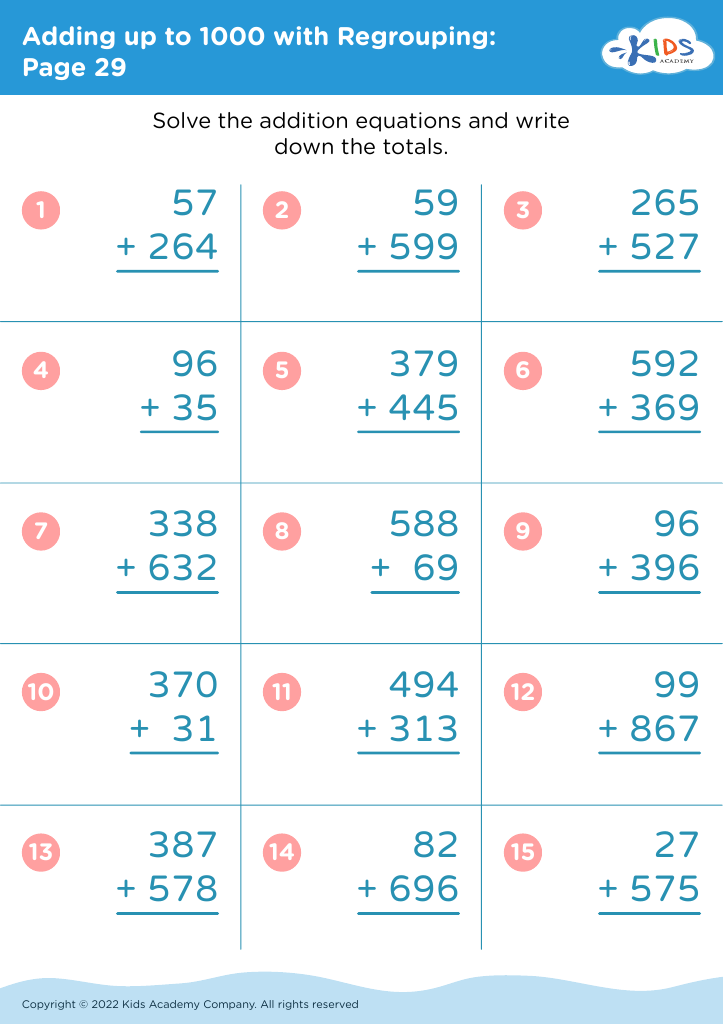
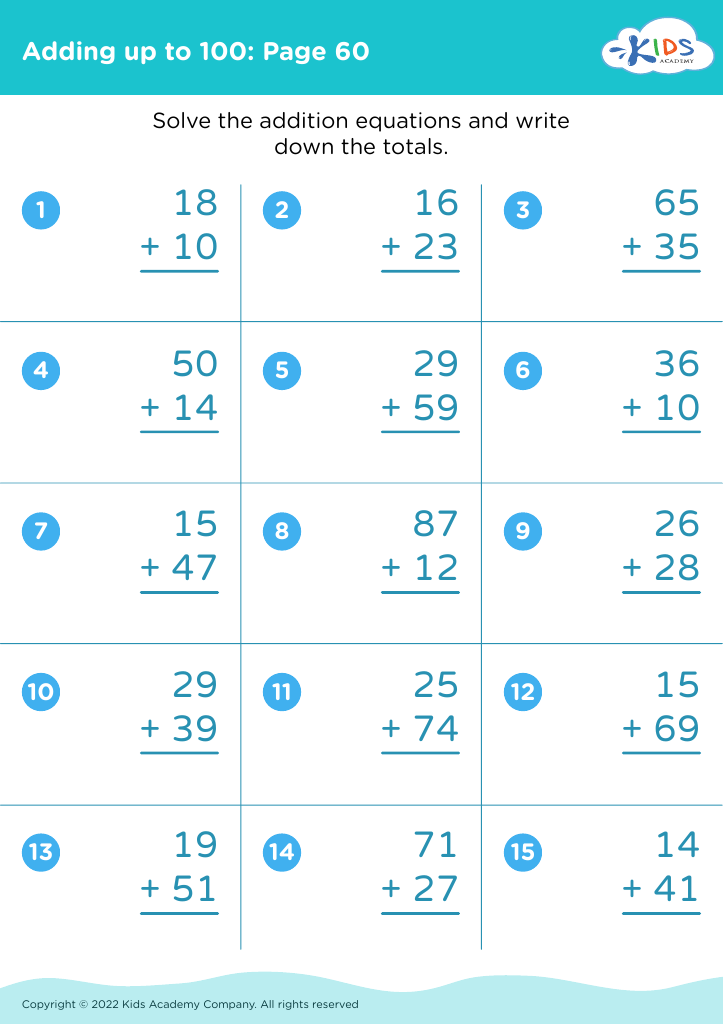
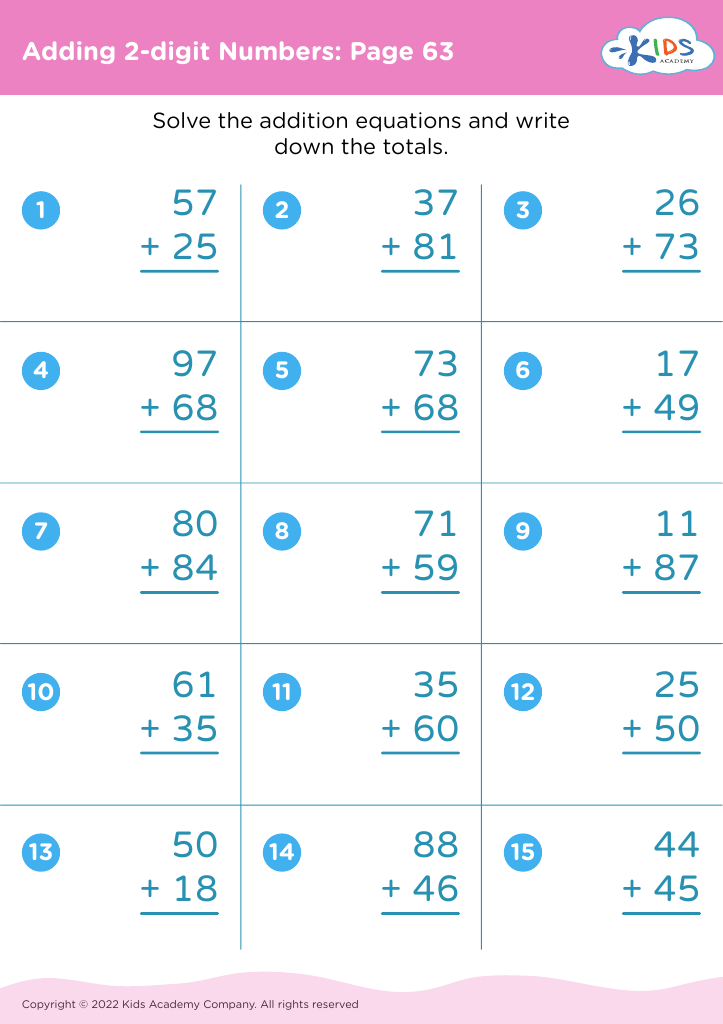
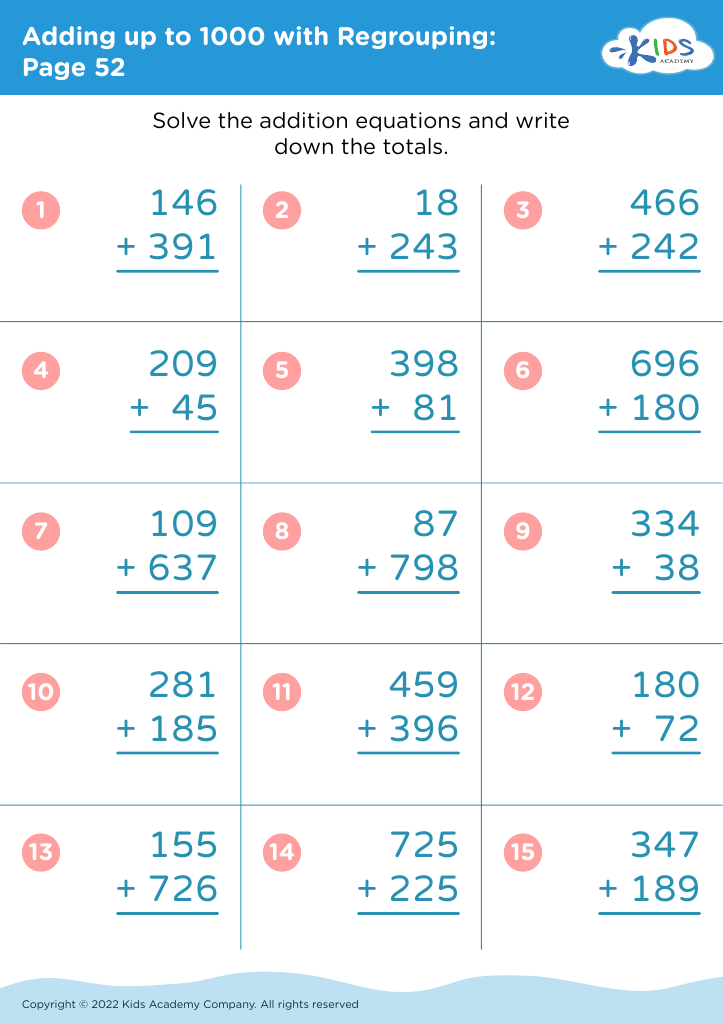
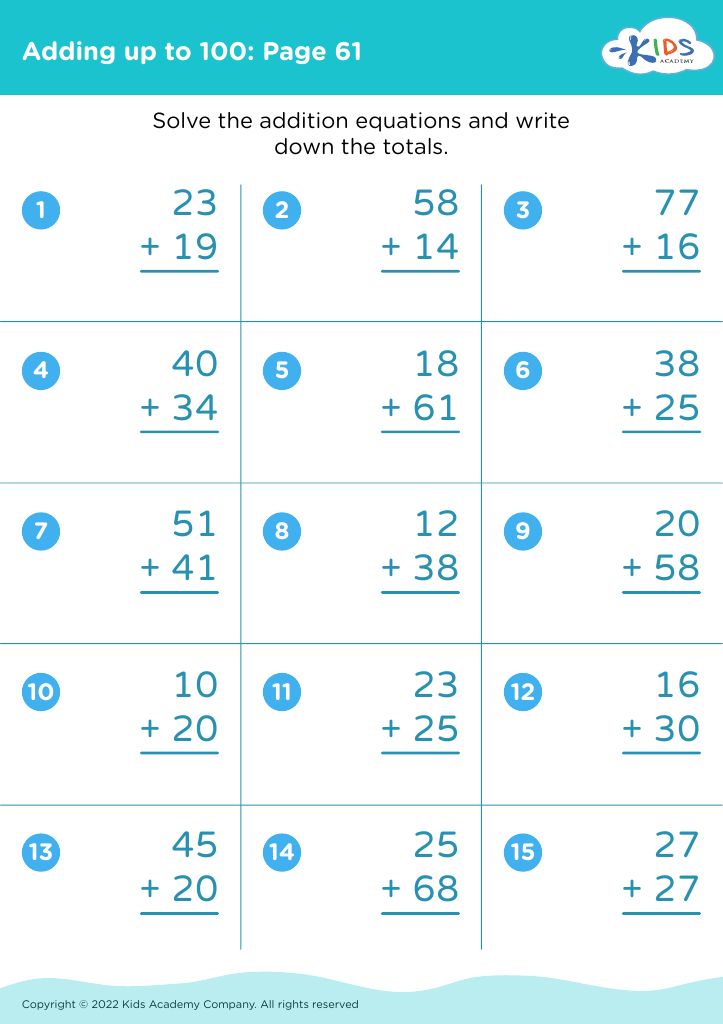
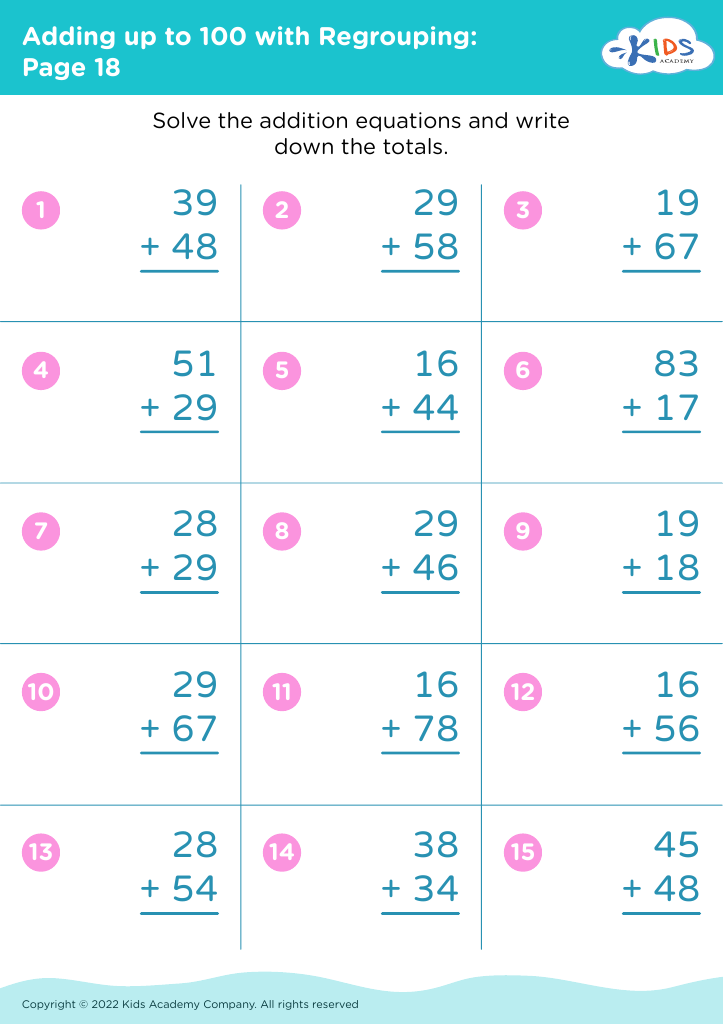
Our "Understanding Sequences Addition & Subtraction Worksheets" for ages 7-8 are expertly designed to make math fun and engaging. These worksheets focus on enhancing your child's understanding of addition and subtraction within sequences. Through a variety of exercises, kids will learn to recognize patterns and sequences, boosting their problem-solving skills and numerical fluency. Each printable worksheet is created to build a solid math foundation, integrating logic with arithmetic operations. Perfect for classroom use or at-home practice, these resources will help young learners confidently tackle math challenges and develop a love for learning.
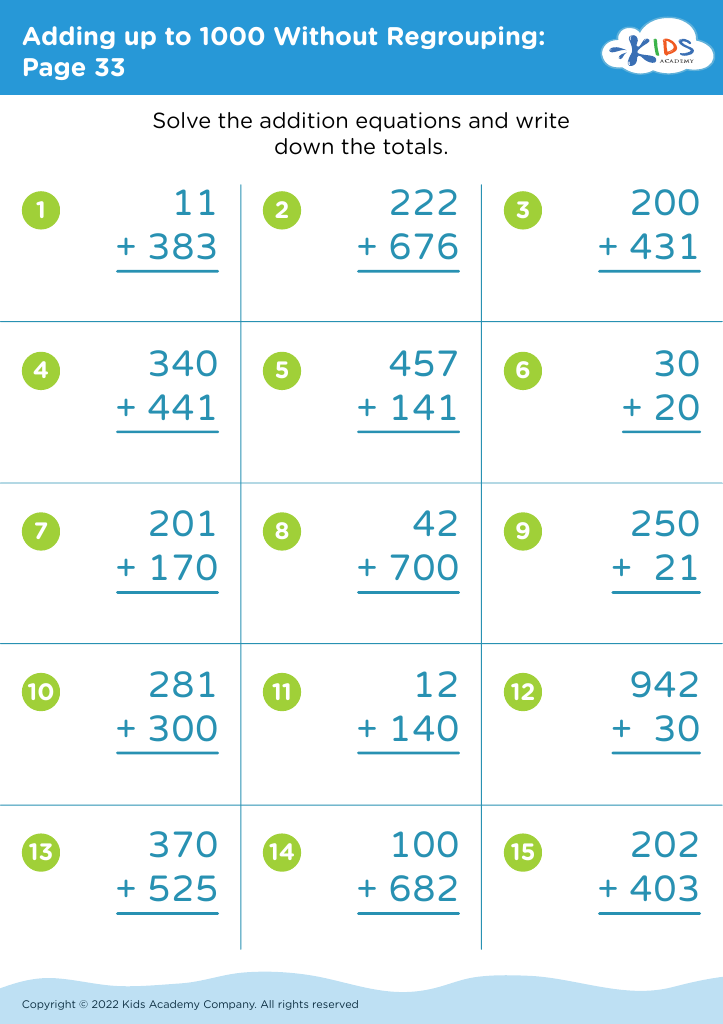








Parents and teachers should care about understanding sequences in addition and subtraction for children aged 7-8 because it lays a crucial foundation for future mathematical learning. At this formative age, recognizing and working with patterns in numbers helps children develop essential problem-solving skills. Understanding sequences allows students to predict future numbers in a pattern, reinforcing the basics of addition and subtraction through practical application rather than memorization alone.
Furthermore, these skills are directly linked to more complex mathematical concepts they will encounter later, such as multiplication, division, and algebra. For example, identifying increments in a sequence helps students see the relationship between consecutive numbers, aiding in their grasp of functions and equations in more advanced studies.
Mastery of sequences in addition and subtraction also enhances cognitive abilities such as logical reasoning, attention to detail, and critical thinking. These capabilities extend beyond math, contributing to overall academic success and everyday decision-making skills. By supporting children in understanding numerical sequences, parents and teachers help cultivate a robust mathematical foundation, boost confidence in problem-solving, and encourage a positive attitude toward learning. Thus, making sequences a pivotal part of early math education is essential for long-term academic and practical success.








