
Visual discrimination Addition & Subtraction Worksheets for Ages 7-8
4 filtered results
Difficulty Level
Grade
Age
-
From - To
Subject
Activity
Standards
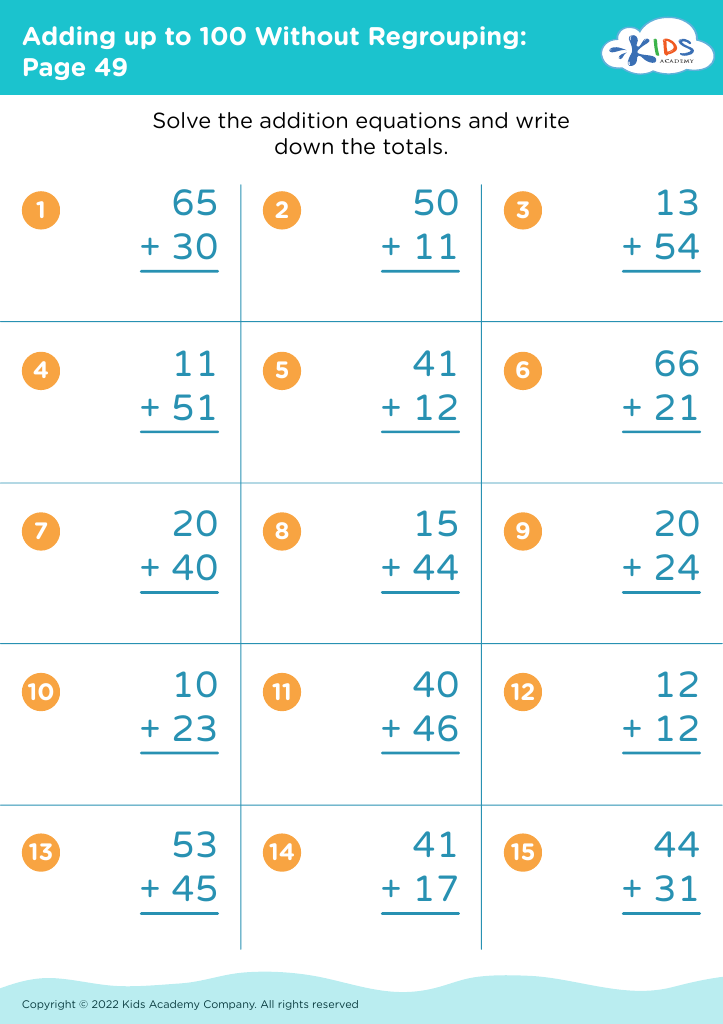
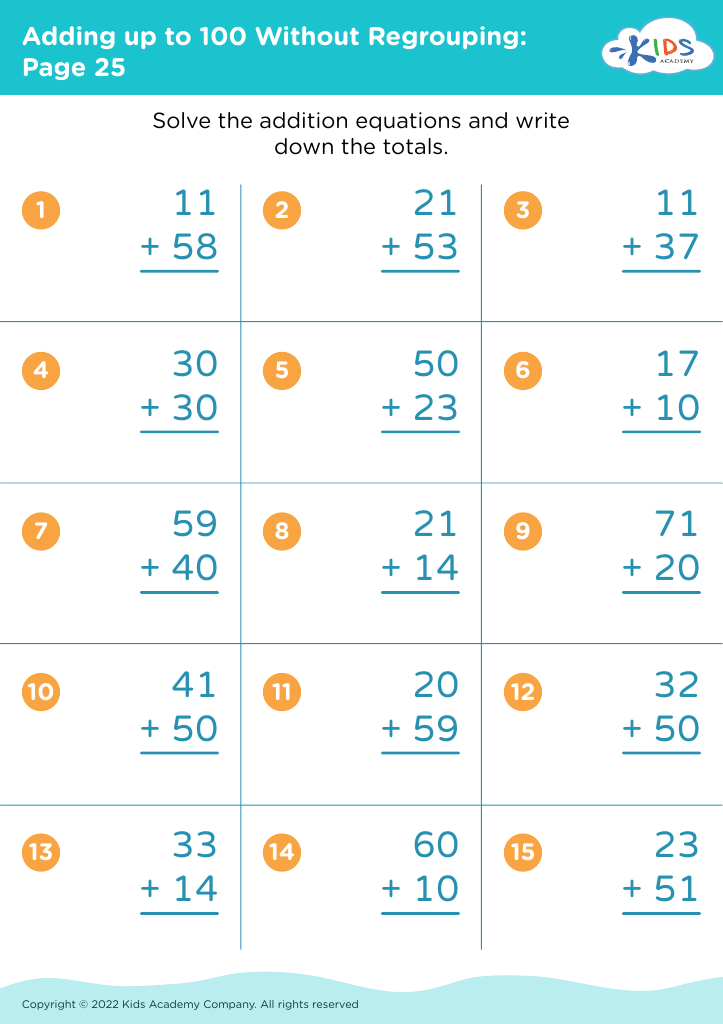
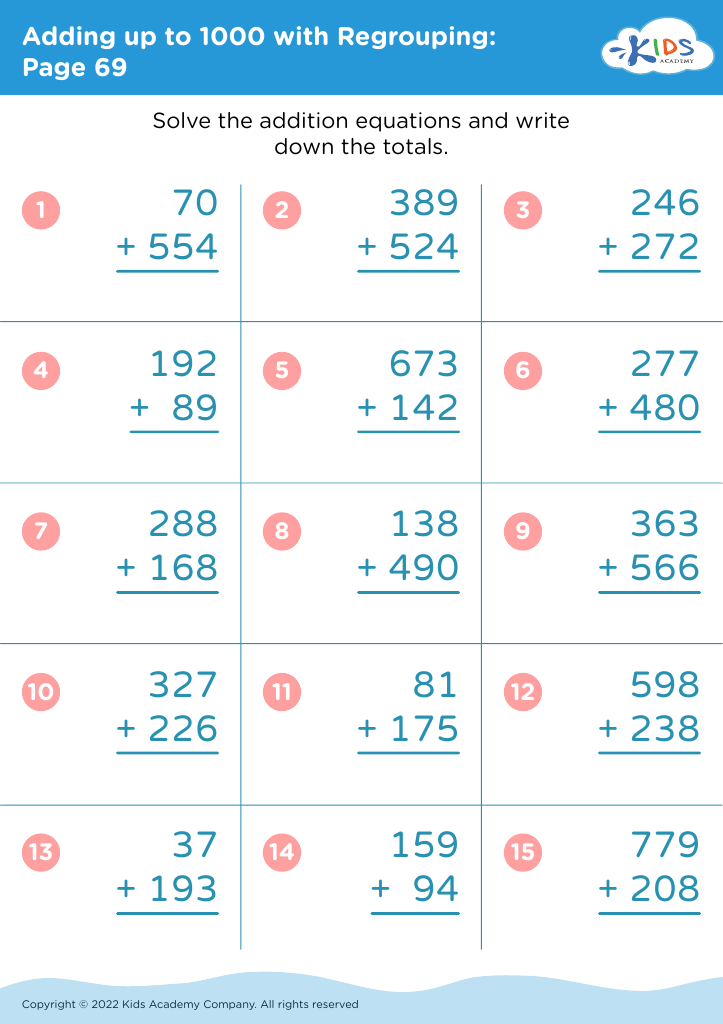
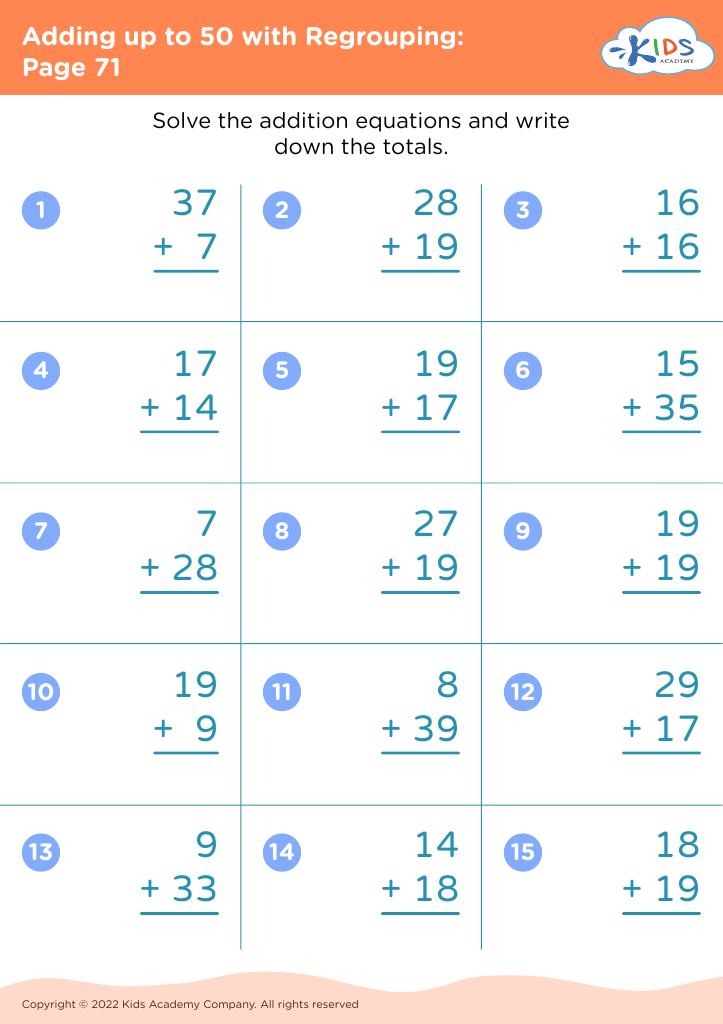
Enhance your child's math skills with our "Visual Discrimination Addition & Subtraction Worksheets for Ages 7-8." These engaging worksheets are designed to develop essential visual discrimination skills while reinforcing fundamental addition and subtraction concepts. Tailored for young learners, each worksheet features colorful illustrations and varying difficulty levels, making math practice enjoyable and effective. By recognizing and distinguishing different visual elements, children will build confidence in their ability to tackle mathematical problems. Perfect for home or classroom use, our worksheets serve as a valuable resource for fostering critical thinking and problem-solving skills in early mathematics. Watch your child's abilities grow with practice!
Favorites
With answer key
Interactive
Join Kids Academy for Free
Who is primarily going to use this learning content?








Visual discrimination in addition and subtraction is crucial for children aged 7-8, as it significantly impacts their mathematical development and problem-solving skills. At this age, learners are transitioning from basic arithmetic to more complex calculations. Mastery of visual discrimination helps them distinguish between numbers and symbols, recognize patterns, and process multi-step problems with greater efficiency.
Teachers and parents should prioritize this skill because it enhances a child's ability to visualize numerical relationships and operations. By developing strong visual discrimination skills, children can quickly identify and manipulate numbers and learn to differentiate between similarly shaped digits, preventing common errors. This foundation is essential not only for arithmetic but also for future mathematical concepts, including geometry and data interpretation.
Furthermore, when children are adept at visual discrimination, they experience increased confidence, leading to more positive attitudes towards math. Engaging them in activities that promote this skill can also foster critical thinking and attention to detail, which are vital in everyday life. Ultimately, nurturing these abilities equips children for academic success and allows them to approach math challenges with resilience and creativity. For these reasons, visual discrimination in addition and subtraction should be an area of focus for parents and teachers alike.








