
Boost critical thinking Addition Worksheets for Ages 7-8
3 filtered results
Difficulty Level
Grade
Age
-
From - To
Subject
Activity
Standards
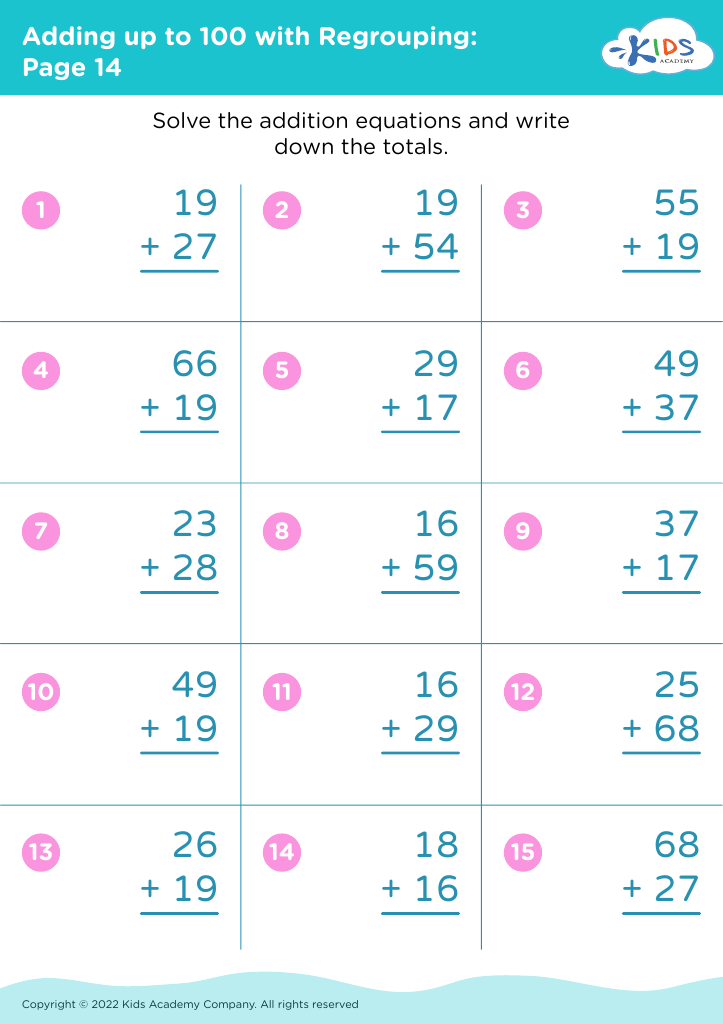
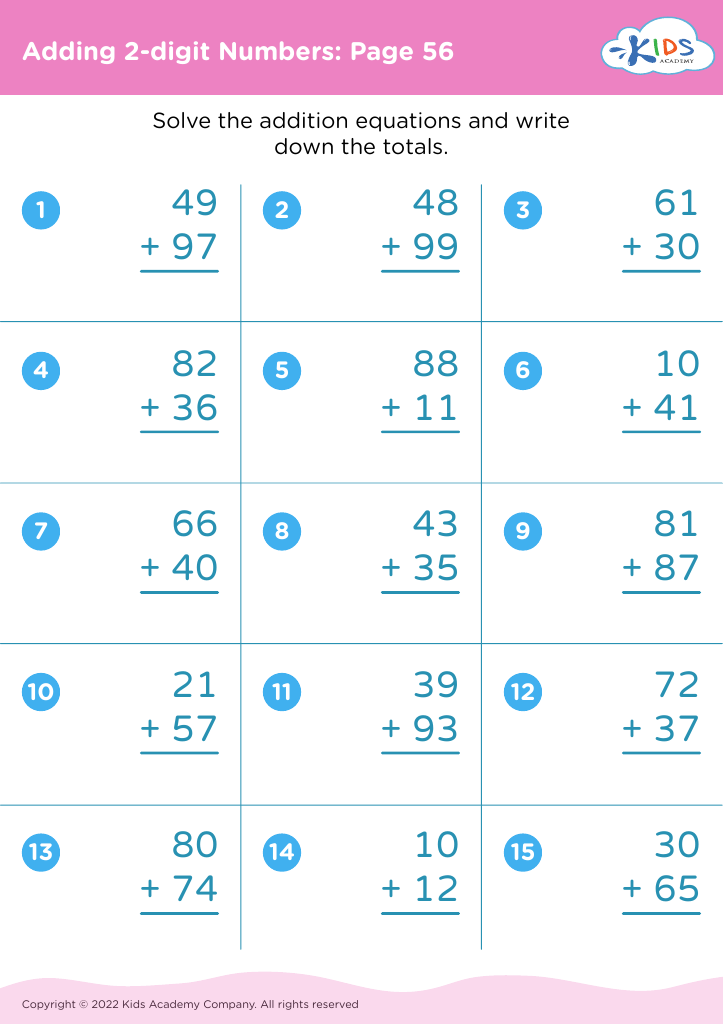
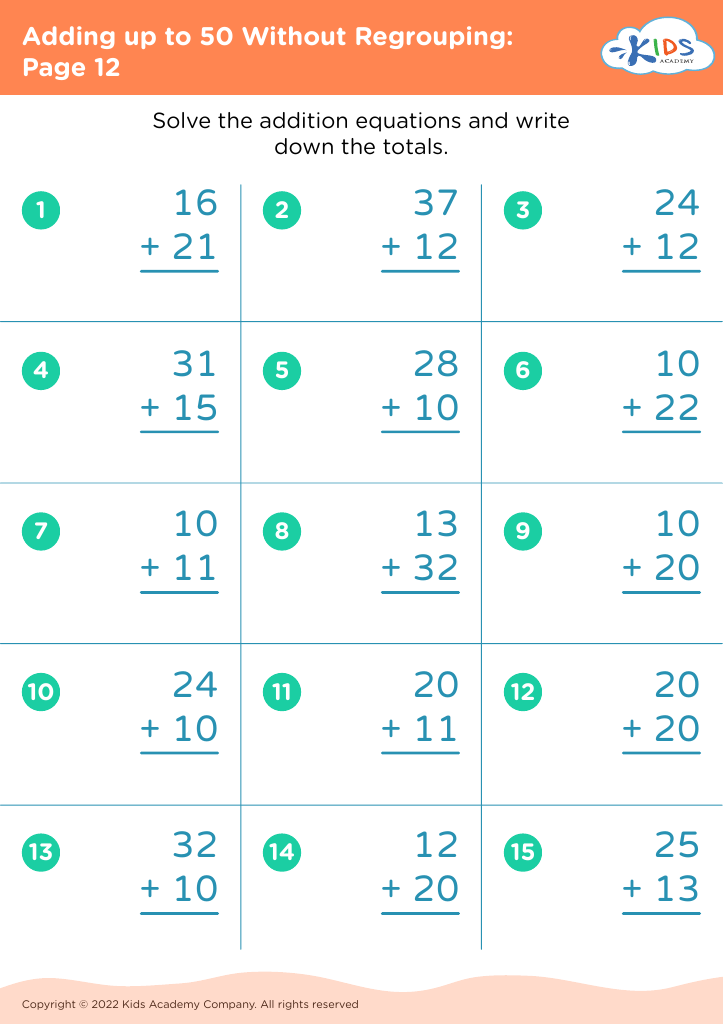
Enhance your child's arithmetic abilities and analytical skills with our "Boost Critical Thinking Addition Worksheets for Ages 7-8." Designed to challenge young minds, these worksheets go beyond basic addition by presenting problems that require strategic thinking and problem-solving. Each activity engages kids with fun scenarios and varied difficulty levels, helping them develop a deeper understanding of mathematical concepts. Perfect for classroom use or at-home practice, these worksheets foster critical thinking, improve focus, and encourage a love for learning. Give your 7-8 year-olds the tools they need to master addition while sharpening their cognitive skills.
Favorites
With answer key
Interactive
Join Kids Academy for Free
Who is primarily going to use this learning content?








Boosting critical thinking skills in addition for ages 7-8 is essential for several reasons. At this developmental stage, children are transitioning from simple rote memorization to more complex cognitive processes. Critical thinking in mathematics enables young learners to understand the "why" behind the "what," promoting a deeper comprehension of addition beyond mere calculation.
Additionally, fostering critical thinking helps children develop problem-solving skills. When they approach addition with critical thinking, they learn to explore various strategies and choose the most efficient one, enhancing their confidence and independence. This foundation is crucial for more advanced mathematical concepts they will encounter later on.
Moreover, critical thinking in addition encourages persistence and resilience. Children learn to tackle math problems methodically, exploring different angles and solutions, which fosters a growth mindset. They become accustomed to challenges and learn that making mistakes is a part of the learning process, building their perseverance.
Furthermore, promoting critical thinking in such foundational skills positively impacts other academic areas. It nurtures logical reasoning and analytical thinking applicable to subjects like science, language arts, and social studies.
In essence, boosting critical thinking in addition sets a solid groundwork for lifelong learning, essential academic success, and the development of well-rounded individuals equipped to solve complex problems in their future endeavors.








