
Critical thinking development Addition Worksheets for Ages 7-8
3 filtered results
Difficulty Level
Grade
Age
-
From - To
Subject
Activity
Standards
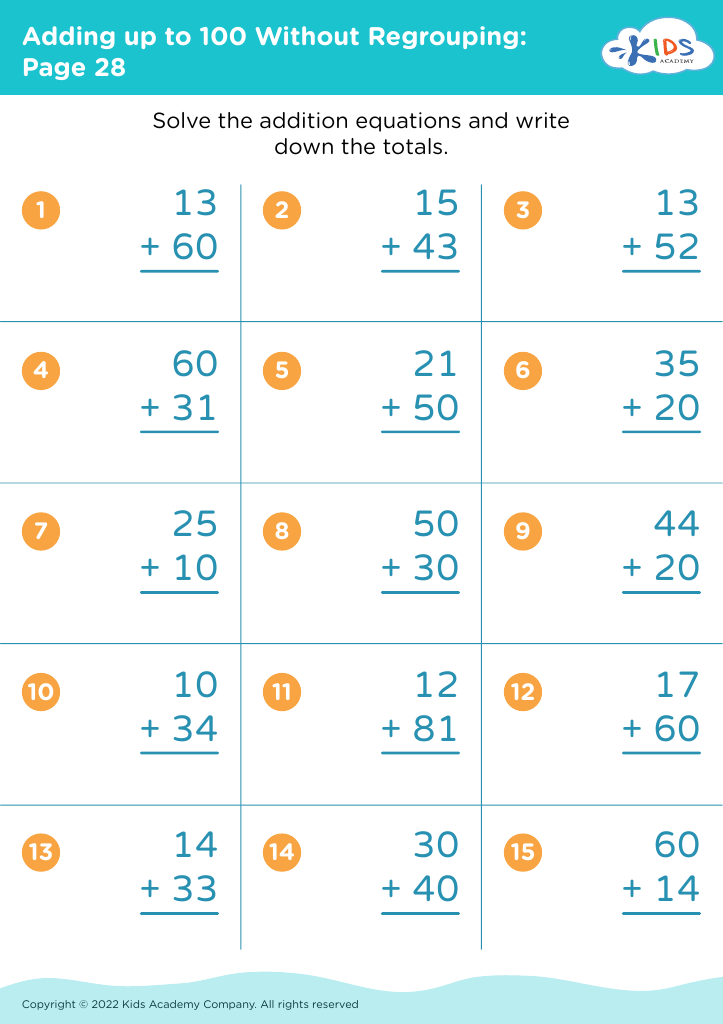
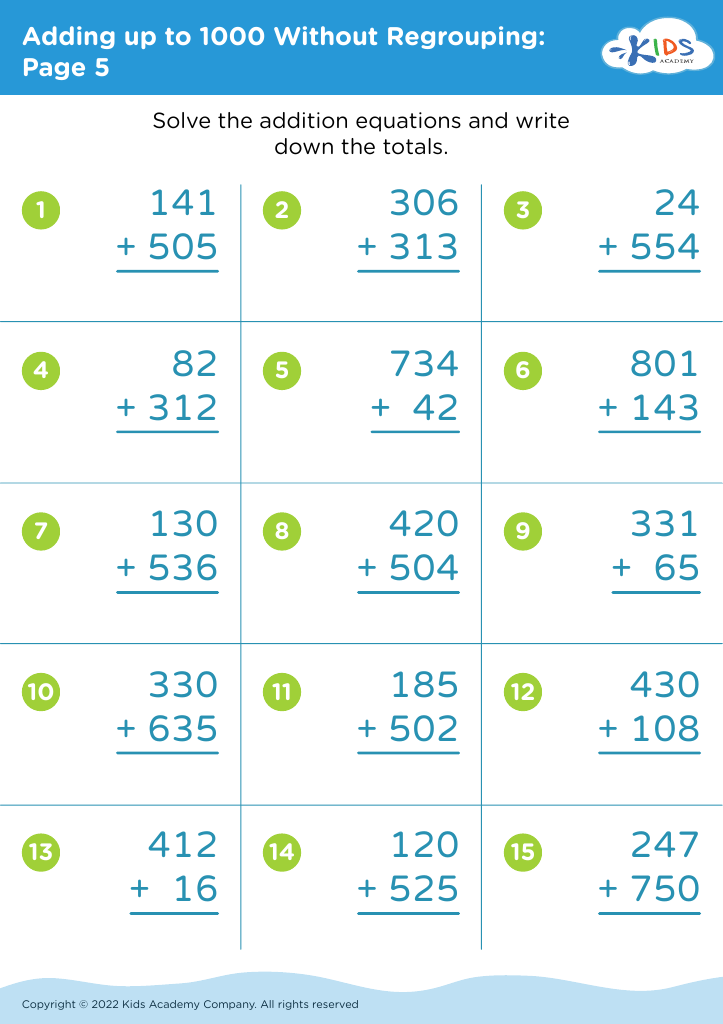
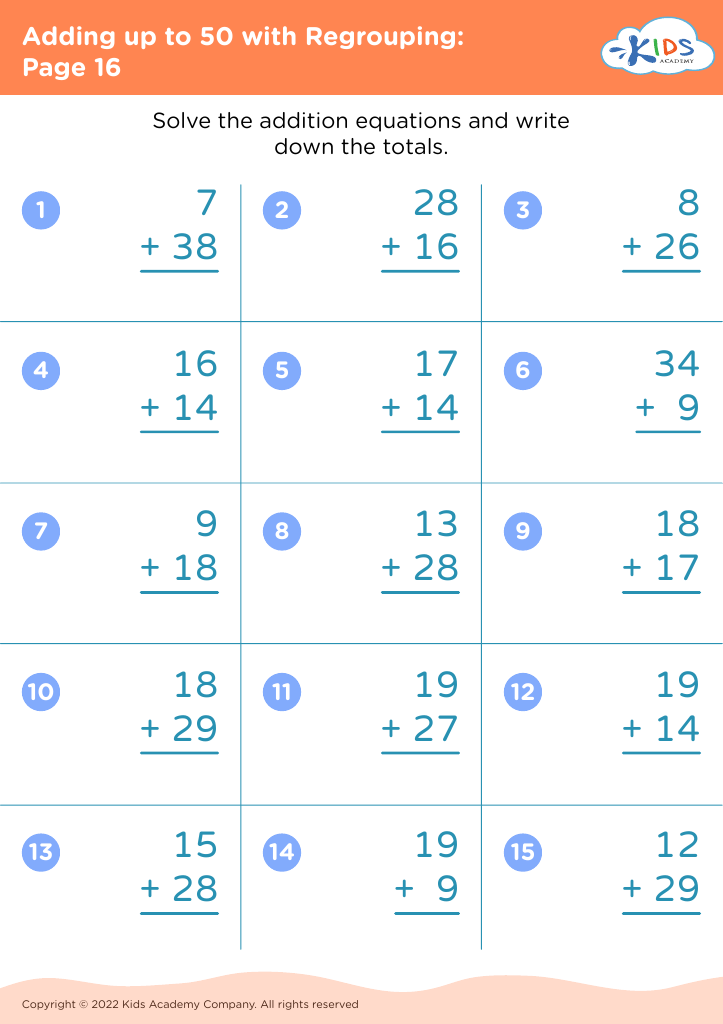
Our "Critical Thinking Development Addition Worksheets for Ages 7-8" are specially designed to enhance your child's problem-solving abilities while making math fun and engaging. Through a variety of challenging addition exercises, these worksheets encourage young learners to think analytically and develop strong critical thinking skills. Suitable for second graders, each printable worksheet provides a mix of visual aids and practical problems to help students grow their mathematical confidence and ability. Kids practice adding single, double, and triple-digit numbers while honing their reasoning and logic. Perfect for classroom use or at-home practice, boost your child's math skills today!
Favorites
With answer key
Interactive
Join Kids Academy for Free
Who is primarily going to use this learning content?








Critical thinking development is crucial for children ages 7-8, a stage ripe with cognitive and emotional growth. Encouraging critical thinking instills foundational skills that benefit both academic and personal growth. Parents and teachers should prioritize this for several reasons.
Firstly, critical thinking enhances problem-solving skills. At this age, children encounter more complex problems in subjects like math and reading. Teaching them to think critically helps them analyze problems, evaluate possible solutions, and decide on the best course of action.
Secondly, fostering critical thinking boosts creativity. Children learn to think outside the box and approach tasks with innovative ideas. This creative problem-solving skill translates to various aspects of life, from school projects to everyday personal challenges.
Thirdly, critical thinking promotes informed decision-making. When children learn to question information and weigh evidence, they become more discerning consumers of knowledge. This is especially important in a world saturated with information, both accurate and misleading.
Lastly, developing critical thinking skills supports emotional intelligence. Children learn empathy and understanding by considering different perspectives and reasoning through social situations. This can improve their ability to interact positively with others and foster a sense of community.
Investing in critical thinking for children ages 7-8 sets the stage for lifelong learning and responsible citizenship, making it a cornerstone of development worth every parent and teacher's attention.








