
Develop inference skills Addition Worksheets for Ages 7-8
3 filtered results
Difficulty Level
Grade
Age
-
From - To
Subject
Activity
Standards
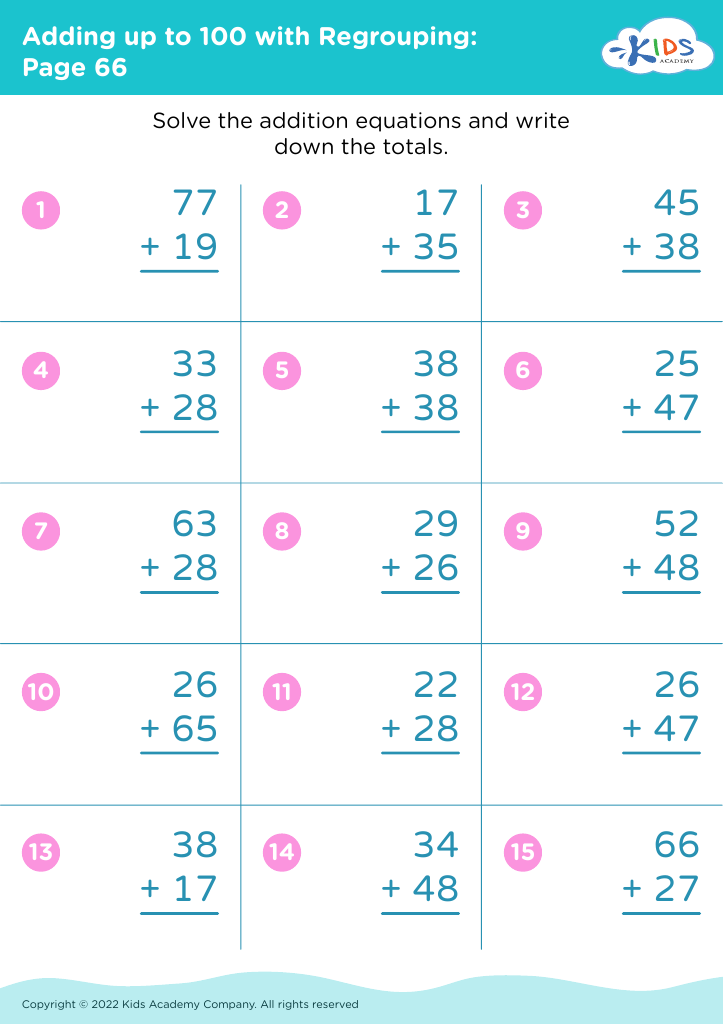
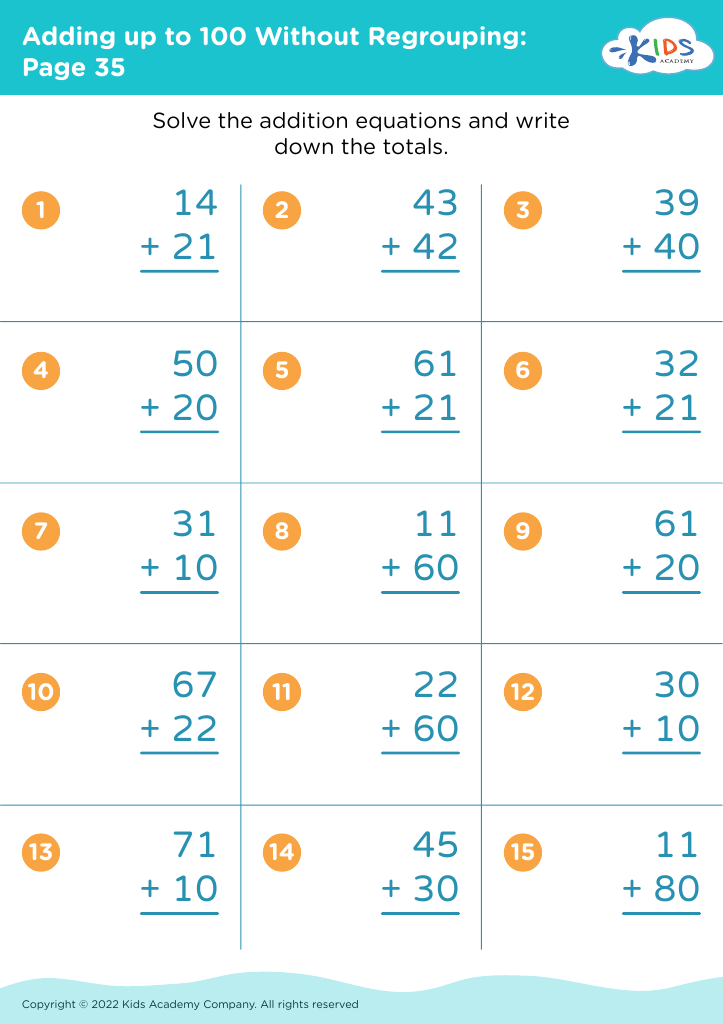
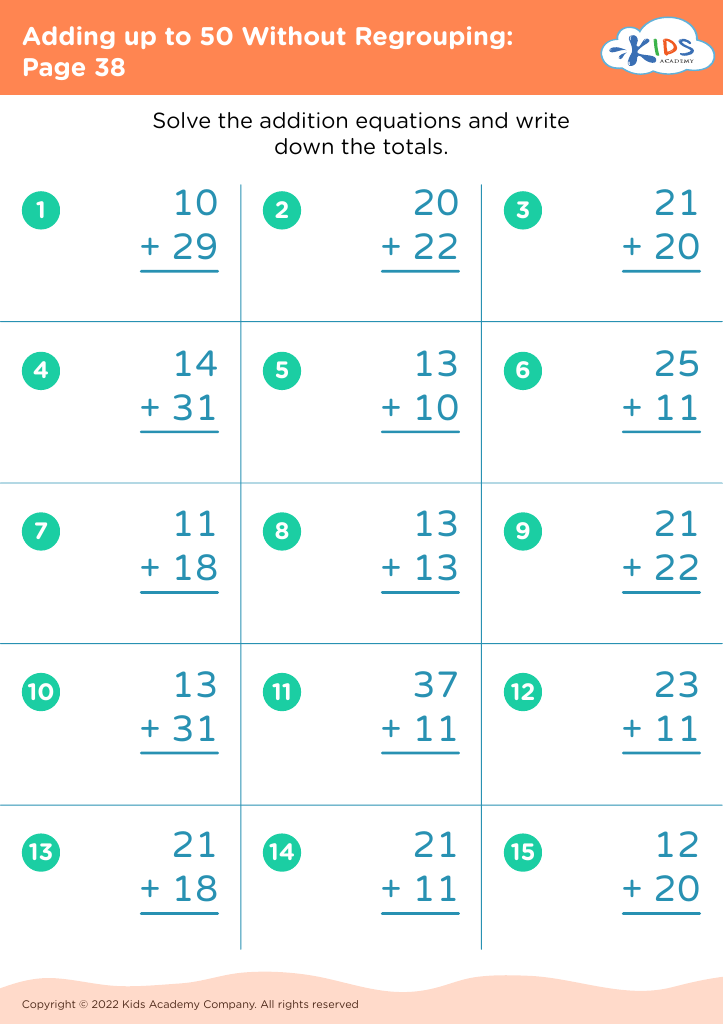
Boost your child’s math confidence with our "Develop Inference Skills Addition Worksheets" designed specifically for ages 7-8. These engaging worksheets encourage critical thinking as children analyze addition problems and draw conclusions from given information. With a variety of exercises tailored to enhance their reasoning skills, your young learners will become proficient in interpreting data and applying their knowledge in real-world scenarios. Our user-friendly format makes it easy for parents and teachers to guide children through these important learning milestones. Give your child the tools they need to succeed in math by exploring our fun and educational worksheets today!
Favorites
With answer key
Interactive
Join Kids Academy for Free
Who is primarily going to use this learning content?








Developing inference skills in children aged 7-8, particularly in the context of math concepts like addition, is crucial for several reasons. At this developmental stage, children are transitioning from basic counting to understanding the relationships between numbers. Inference skills allow them to connect ideas, interpret data, and solve problems not just through rote memorization but through critical thinking.
When children learn to infer relationships in addition—such as recognizing patterns or deriving sums using known combinations—they build a deeper conceptual understanding of mathematics. This lays the groundwork for more advanced arithmetic and encourages flexibility in thinking, which is essential as math becomes more complex. Teachers and parents play a vital role in fostering these skills through engaging activities and discussions that promote exploration of numbers.
Moreover, the ability to infer extends beyond math; it enhances literacy skills by aiding comprehension in reading passages and storytelling. When children infer meanings or predictions, they become more proficient in making connections – a skill applicable across all subjects. Thus, enhancing inference skills during these formative years not only improves mathematical abilities but also supports overall academic success and lifelong learning.








