Develop number recognition Addition Worksheets for Ages 7-8
5 filtered results
-
From - To
Enhance your child's number recognition and addition skills with our engaging worksheets designed specifically for ages 7-8. These printable resources offer a fun and interactive way for children to familiarize themselves with numbers while mastering essential addition concepts. Each worksheet features vibrant illustrations and varied exercises that cater to different learning styles. Through enjoyable activities, young learners will develop confidence in recognizing numbers, counting, and performing basic addition. Perfect for both classroom use and home practice, these worksheets support foundational math skills that are crucial for academic success. Explore our collection and help your child excel in early mathematics!
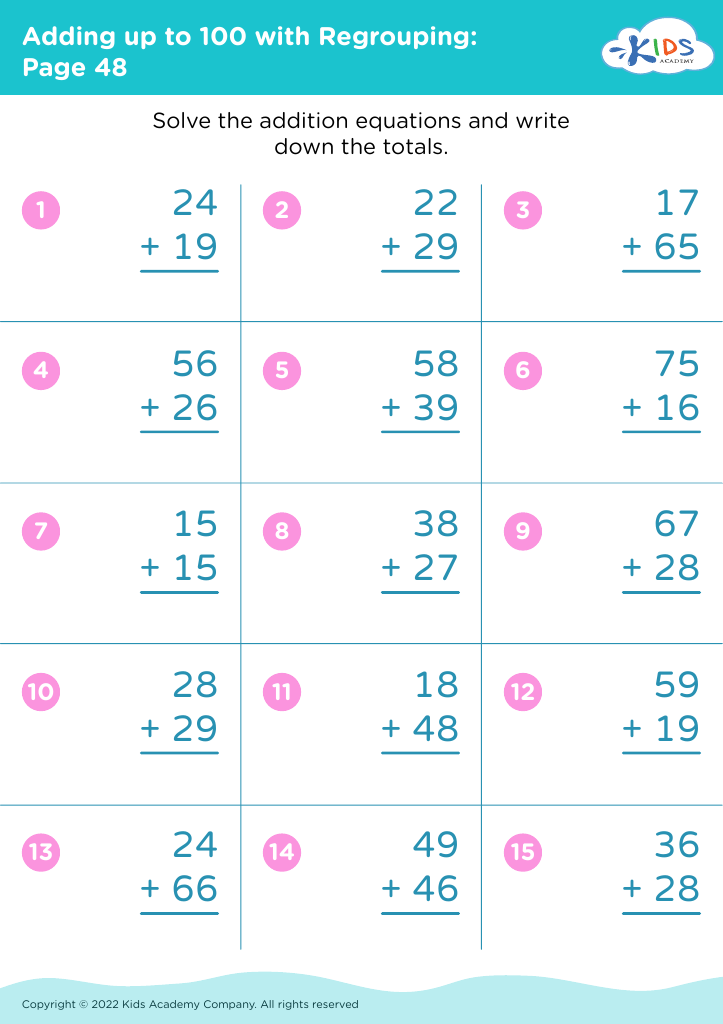
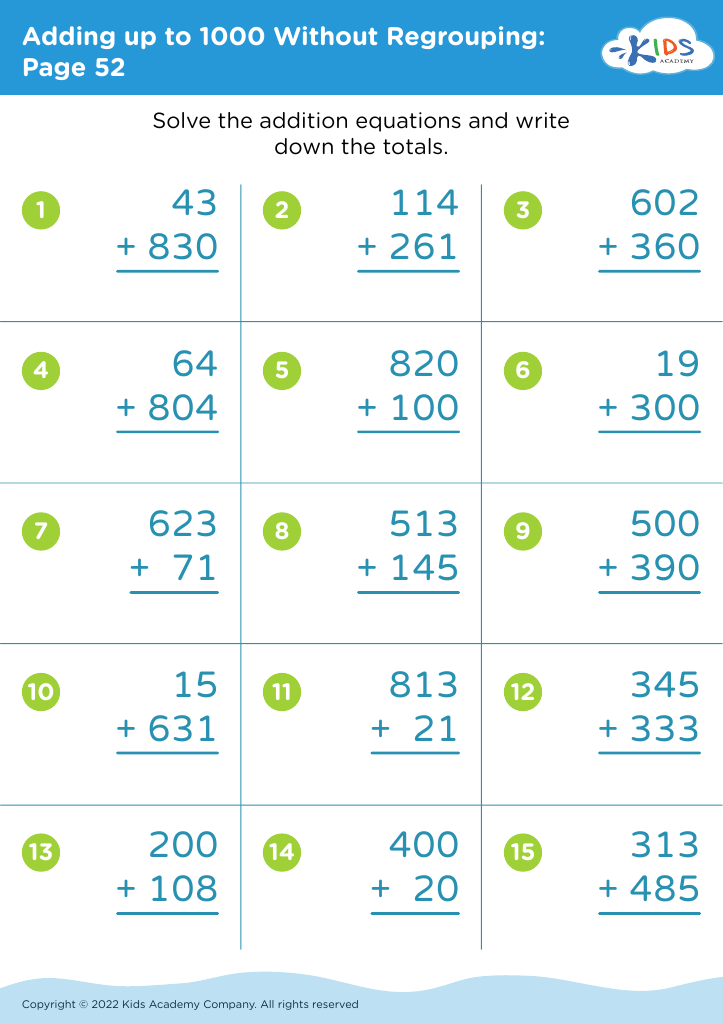
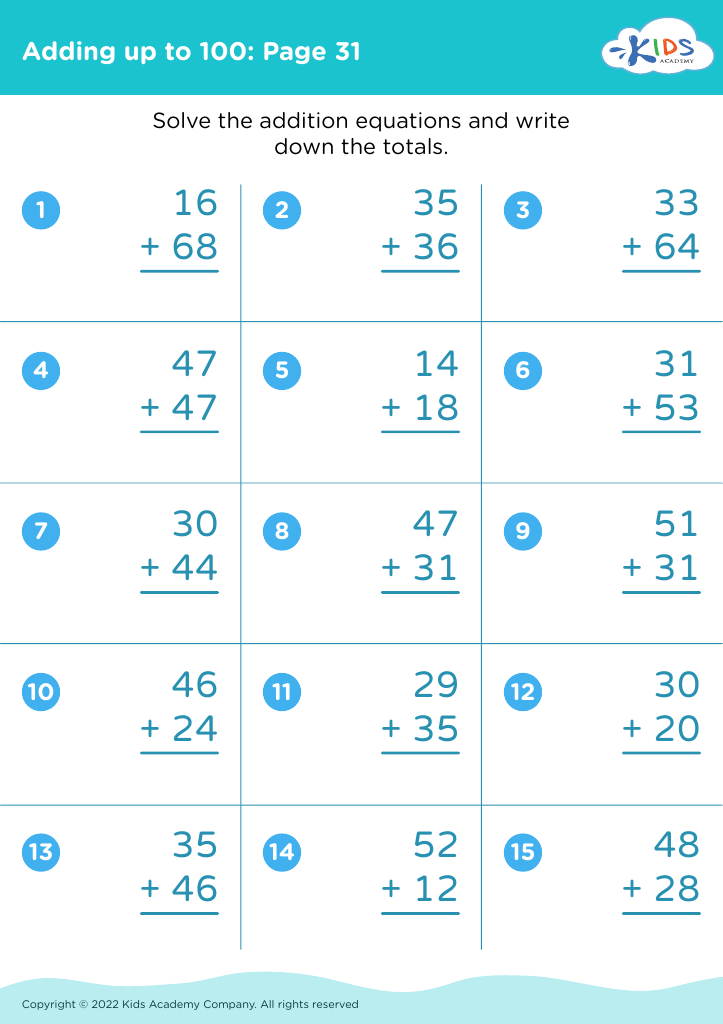
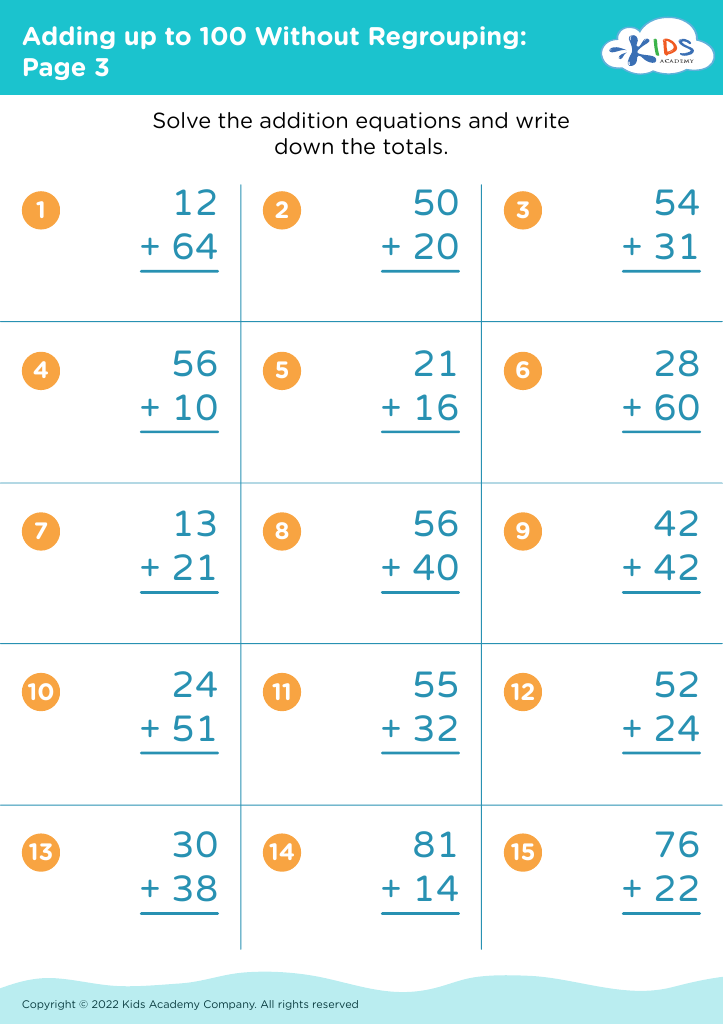
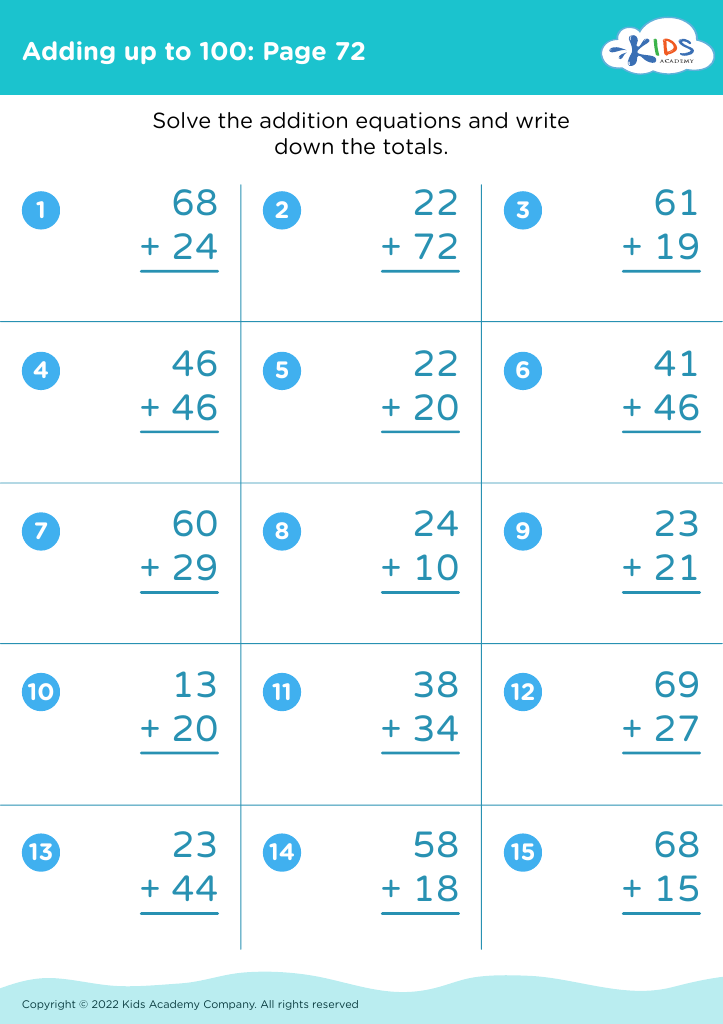








Developing number recognition and addition skills in children aged 7-8 is crucial for several reasons. At this stage, children are not only solidifying their understanding of numbers but also beginning to encounter more complex mathematical concepts. Effective number recognition lays the foundation for future mathematical learning, helping children easily identify and manipulate numbers in various contexts. This skill is critical for success in mathematics and everyday situations, such as telling time, making calculations while shopping, or budgeting.
Parents and teachers should also care about fostering addition skills at this age as it enhances problem-solving abilities and critical thinking. Mastery of basic addition aids in the understanding of higher mathematical operations, including subtraction, multiplication, and even division, setting a goal for academic success later on.
Moreover, encouraging these skills can increase a child's confidence in math, reducing anxiety associated with the subject. Engaging in fun and interactive addition activities can also strengthen parent-child or teacher-student relationships, making learning enjoyable. Ultimately, a strong foundation in number recognition and addition not only prepares children for their current academic challenges but also equips them with essential life skills that promote lifelong learning and resilience.








