Motor skills development Addition Worksheets for Ages 7-8
4 filtered results
-
From - To
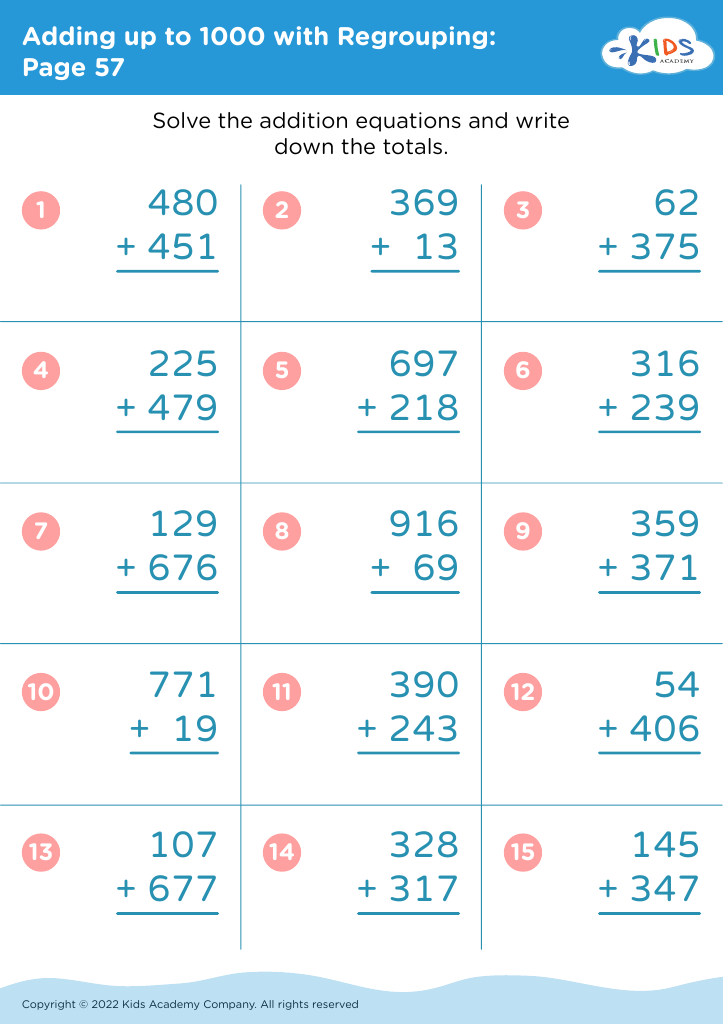
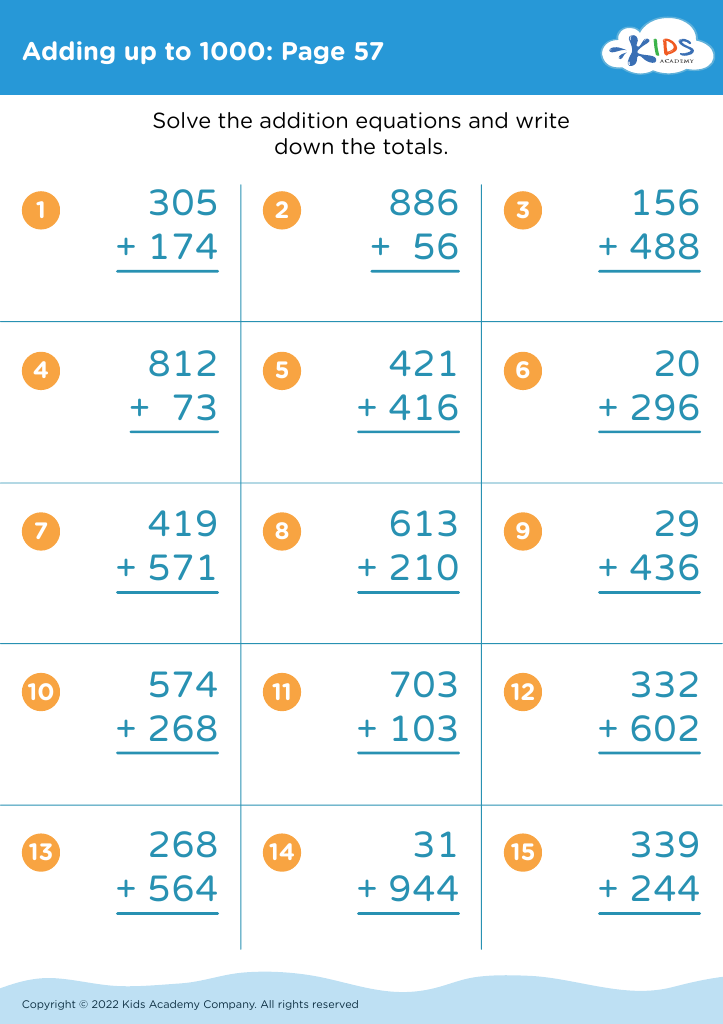
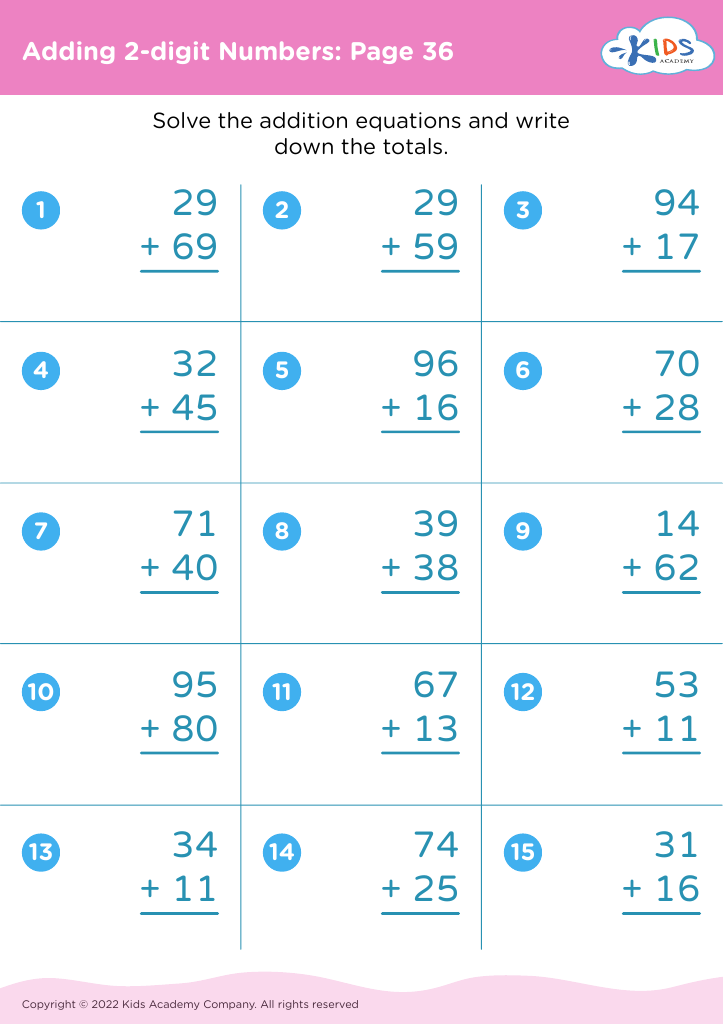
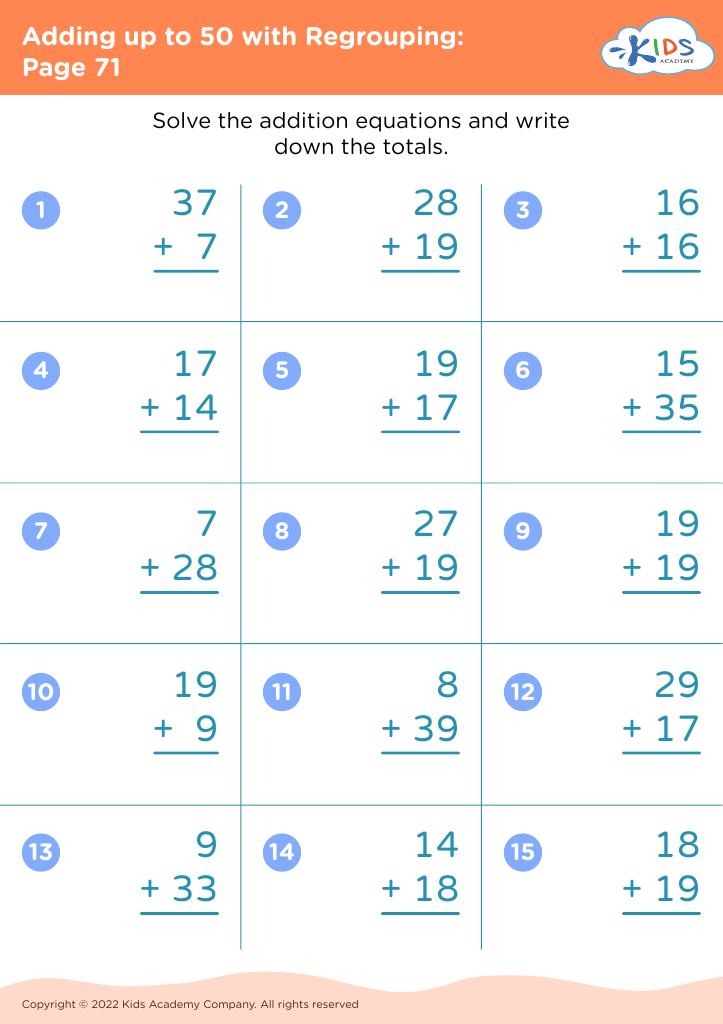
Enhance your child's motor skills while they master addition with our engaging worksheets designed for ages 7-8! These interactive resources focus on developing fine motor skills through various fun activities that complement math learning. Each worksheet encourages children to practice essential writing techniques and improve hand-eye coordination as they solve addition problems. Our carefully crafted activities are perfect for classroom or home use, combining education with play to keep kids motivated and excited about math. Download these printable worksheets today to help your child excel in both motor skills and mathematical understanding in an enjoyable way!




.jpg)


Motor skills development is crucial for children aged 7-8, as it significantly influences their physical, cognitive, and social growth. At this age, children become increasingly active and engage in more complex physical activities, which require refined motor skills. Developing both gross motor skills, such as running and jumping, and fine motor skills, such as writing and crafting, is essential for their overall development.
Parents and teachers should care about this developmental stage because it sets the foundation for future physical activities, sports participation, and healthy lifestyles. Strong motor skills enhance children's ability to coordinate movements, maintain balance, and improve hand-eye coordination, which are vital for academic tasks like writing and using technological devices effectively.
Moreover, motor skills play a key role in fostering social interactions. As children engage in group games and sports, they learn important social skills such as teamwork, communication, and sharing, which are essential for their emotional development. Being physically active also contributes to improved self-esteem and a positive body image.
Thus, investing in motor skills development during this critical age promotes well-rounded growth, making it indispensable for parents and educators to prioritize and support these skills in their routines and curricula.








