Pattern recognition Addition Worksheets for Ages 7-8
5 filtered results
-
From - To
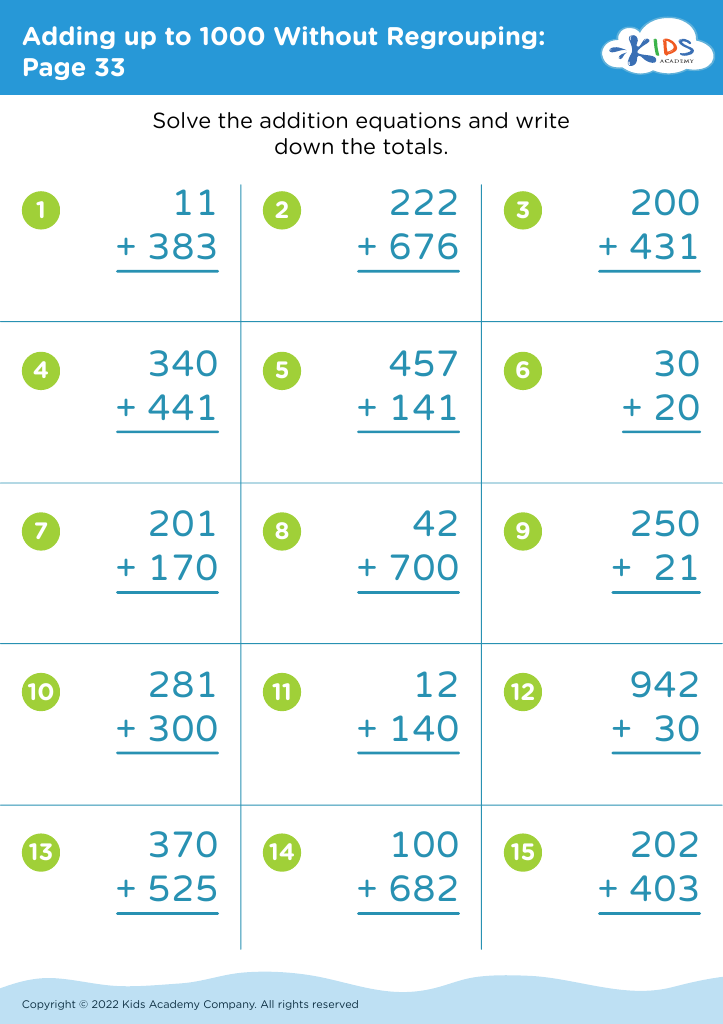
Discover our engaging Pattern Recognition Addition Worksheets designed specifically for children ages 7-8! These fun and interactive activities help students sharpen their addition skills while enhancing their ability to identify patterns. By recognizing sequences and completing addition problems, kids develop critical thinking and problem-solving abilities essential for math mastery. Our worksheets cater to various learning styles, featuring vibrant visuals and step-by-step guidance, making learning enjoyable and effective. Ideal for classroom use or at-home practice, these resources will build your child's confidence in mathematics. Encourage creativity and analytical skills with our thoughtfully crafted pattern recognition worksheets today!
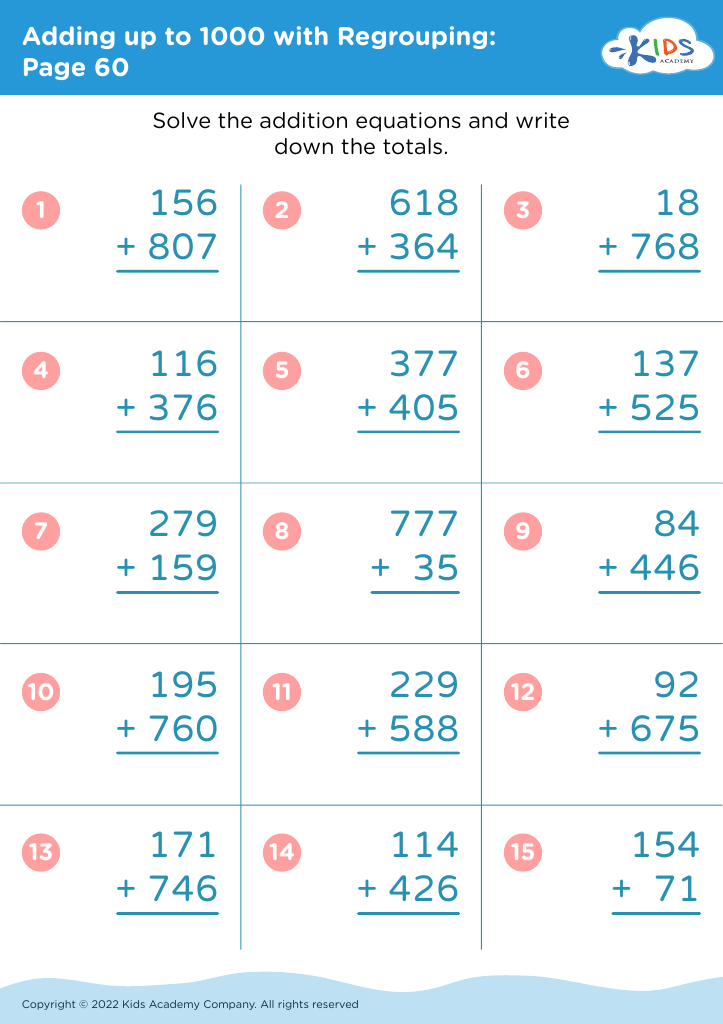
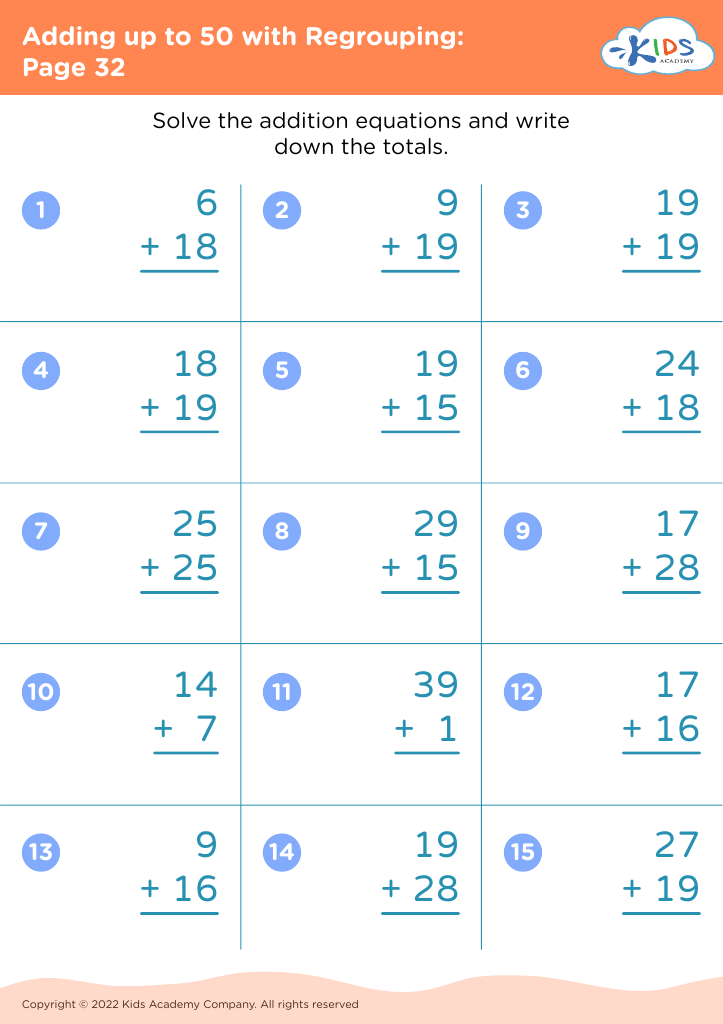
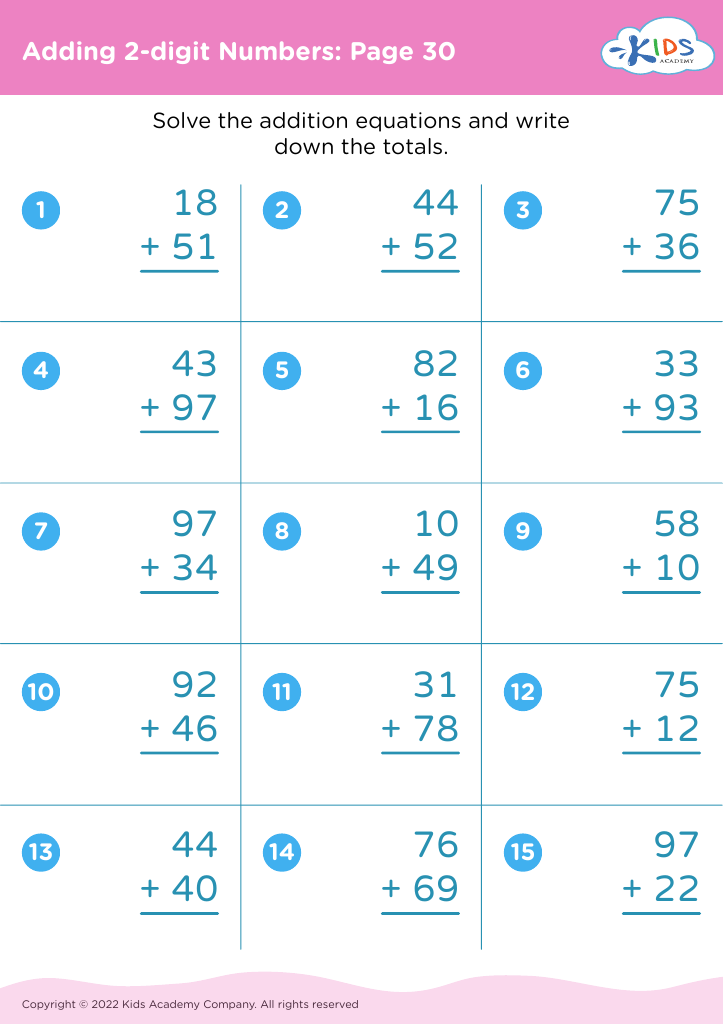
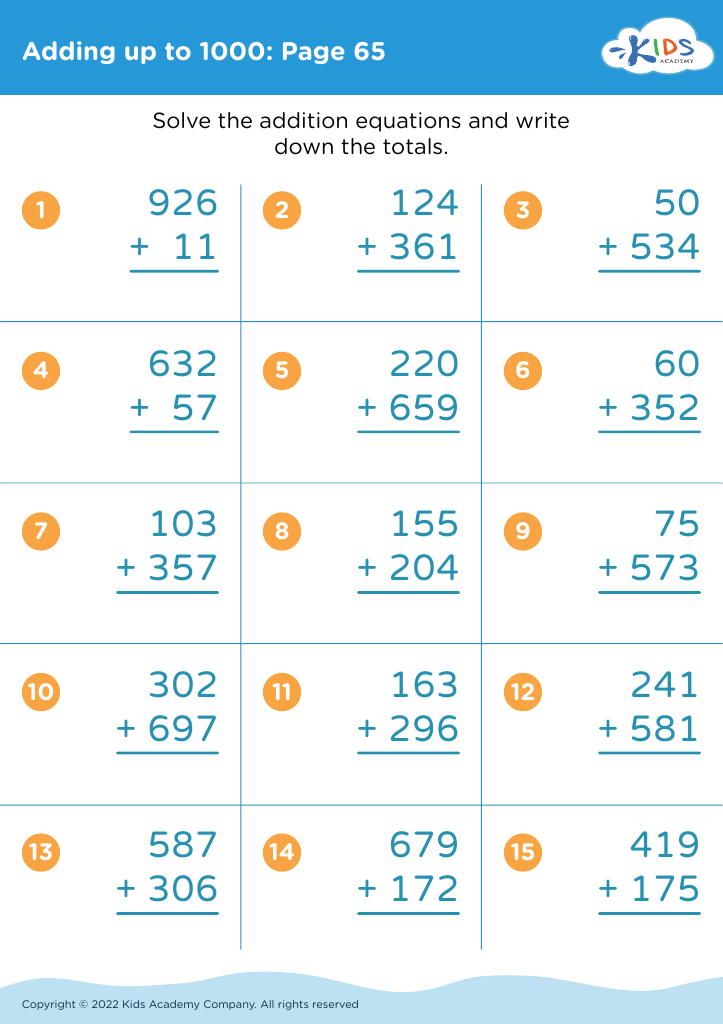








Pattern recognition is a crucial mathematical skill, particularly for children aged 7-8, as it lays the foundation for more complex concepts. Understanding patterns enables students to see relationships between numbers, enhancing their ability to perform addition and other calculations. When children recognize patterns, they learn to anticipate outcomes, which boosts their problem-solving skills and cognitive development.
For parents and teachers, fostering pattern recognition in addition extends beyond academics; it promotes critical thinking, encouraging children to make connections in various subjects. As early graders engage with patterns, they cultivate a mindset that embraces learning and exploration, forming a bridge to future mathematical concepts such as algebra and geometry.
Additionally, pattern recognition supports crucial skills like memorization and fluency in arithmetic. When children learn to spot patterns in addition (like recognizing that when you add four consecutive numbers, they always create even sums), they become more confident in their abilities. This sense of competency can lead to a growing interest in math, reducing anxiety surrounding the subject.
Ultimately, nurturing pattern recognition not only helps improve addition skills but also equips children with a powerful tool for academic success and lifelong learning, making it a worthy focus for parents and educators alike.








