Understanding division Addition Worksheets for Ages 7-8
5 filtered results
-
From - To
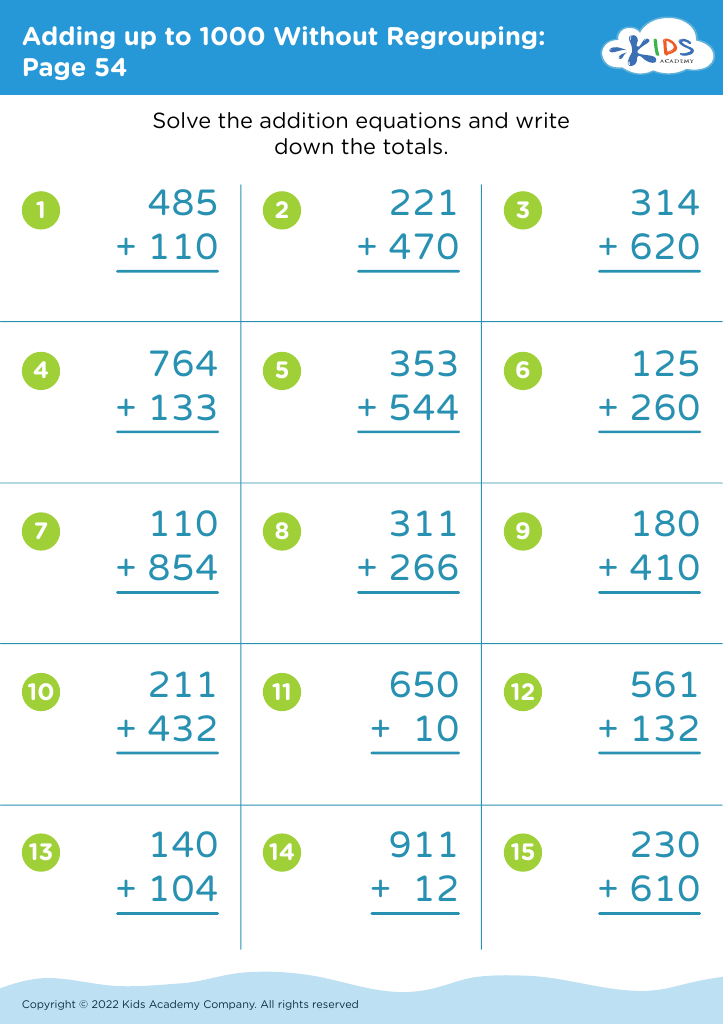
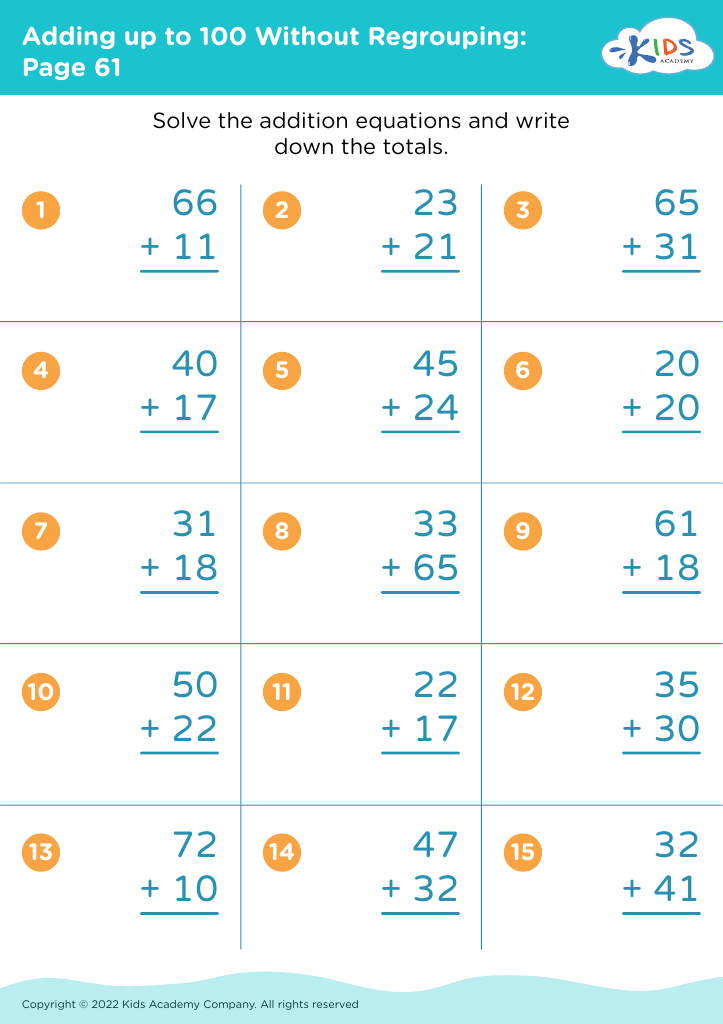
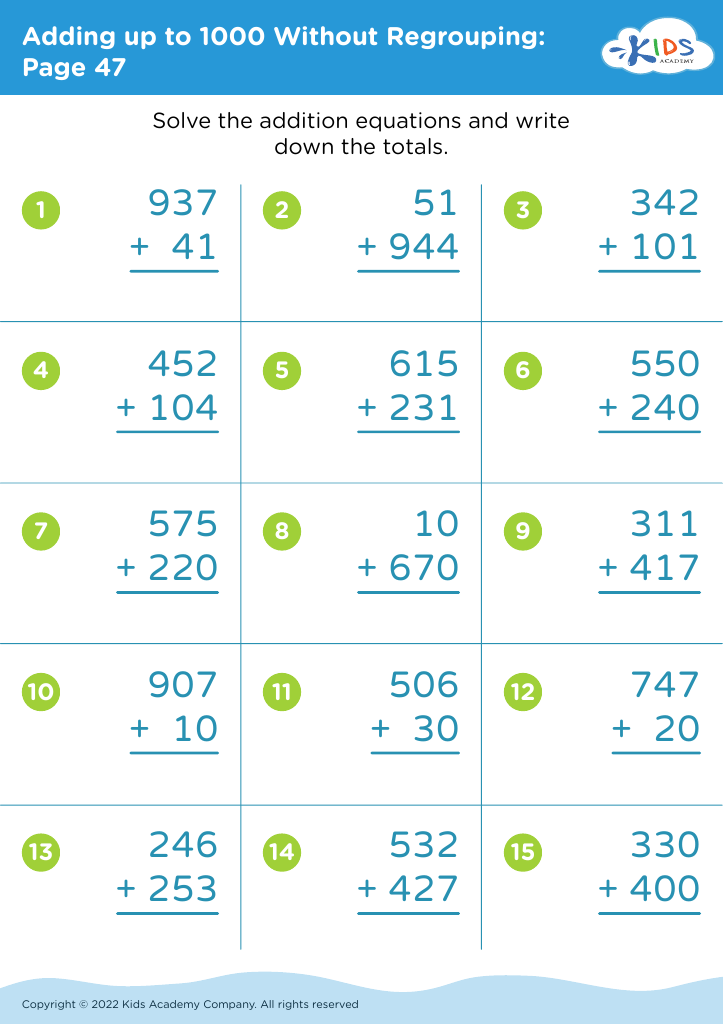
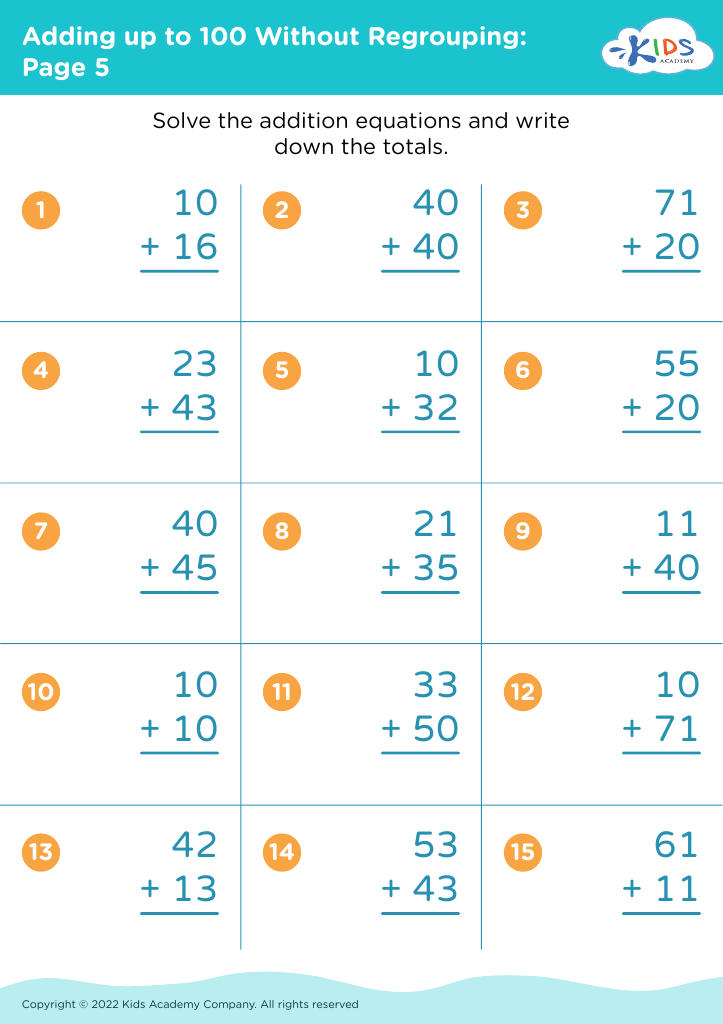
Discover our engaging "Understanding Division Addition Worksheets" designed specifically for children aged 7-8. These worksheets help young learners grasp the relationship between addition and division, reinforcing their math skills through fun and interactive exercises. Each worksheet features colorful graphics and age-appropriate problems that encourage children to explore division concepts while boosting their confidence in mathematics. Perfect for home or classroom use, our resources aim to make learning addition and its connection to division enjoyable. Watch your child excel as they develop critical thinking skills and a solid foundation in math. Start their math journey today with our comprehensive worksheets!
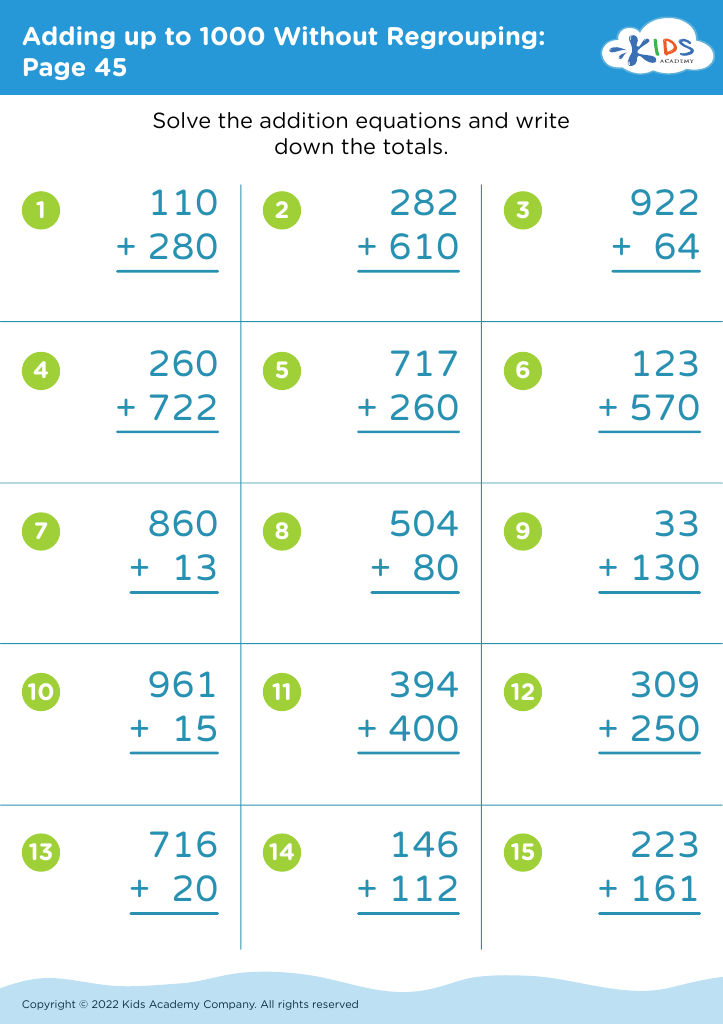








Understanding division and addition is crucial for children aged 7-8, as these foundational math concepts support their overall academic growth and everyday life skills. At this age, children are starting to make deeper connections in mathematics, and grasping addition and division sets the stage for more complex operations and problem-solving abilities.
First, mastery of addition strengthens mental arithmetic skills, enabling children to perform calculations quickly and accurately. This skill spills over into other subjects, fostering better comprehension in areas such as science and logic. By practicing addition, children also develop critical thinking skills, encouraging them to approach problems analytically.
On the other hand, understanding division is essential for fostering a sense of sharing and equality. It teaches children how to distribute items evenly and comprehend ratios and fractions, which are significant concepts encountered in more advanced mathematics.
Moreover, a solid grasp of these operations promotes confidence in students, reducing math anxiety as they advance in their studies. When parents and teachers prioritize these concepts, they not only enhance children's academic performance but also equip them with skills that will benefit them in real-world situations, ultimately nurturing responsible and numerically literate individuals.








