
Understanding equations Addition Worksheets for Ages 7-8
4 filtered results
Difficulty Level
Grade
Age
-
From - To
Subject
Activity
Standards
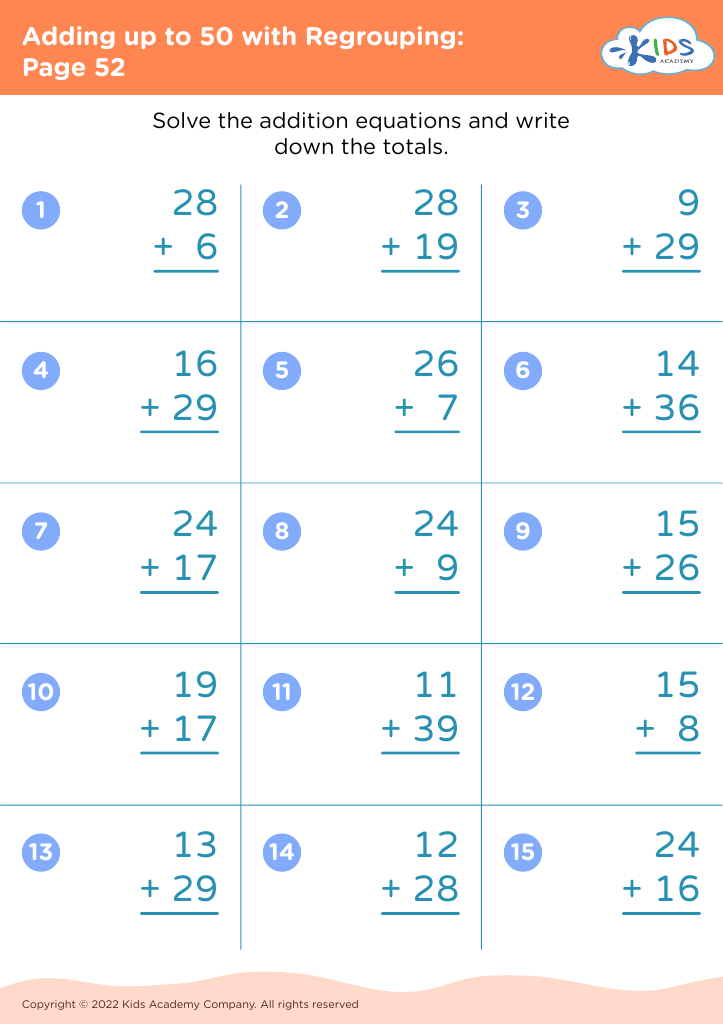
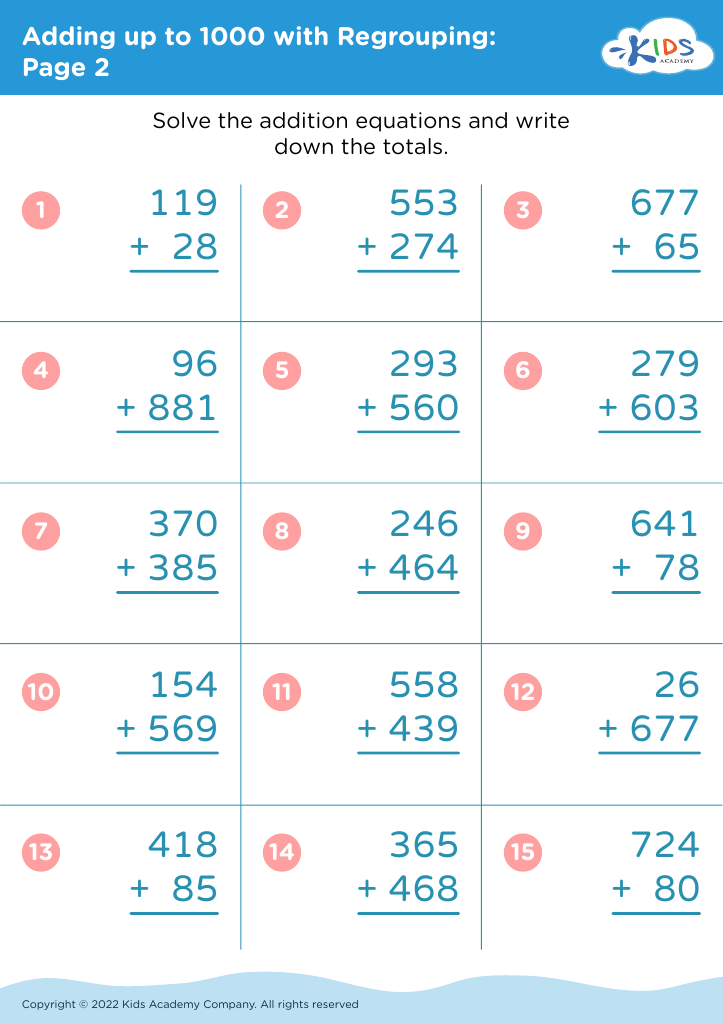
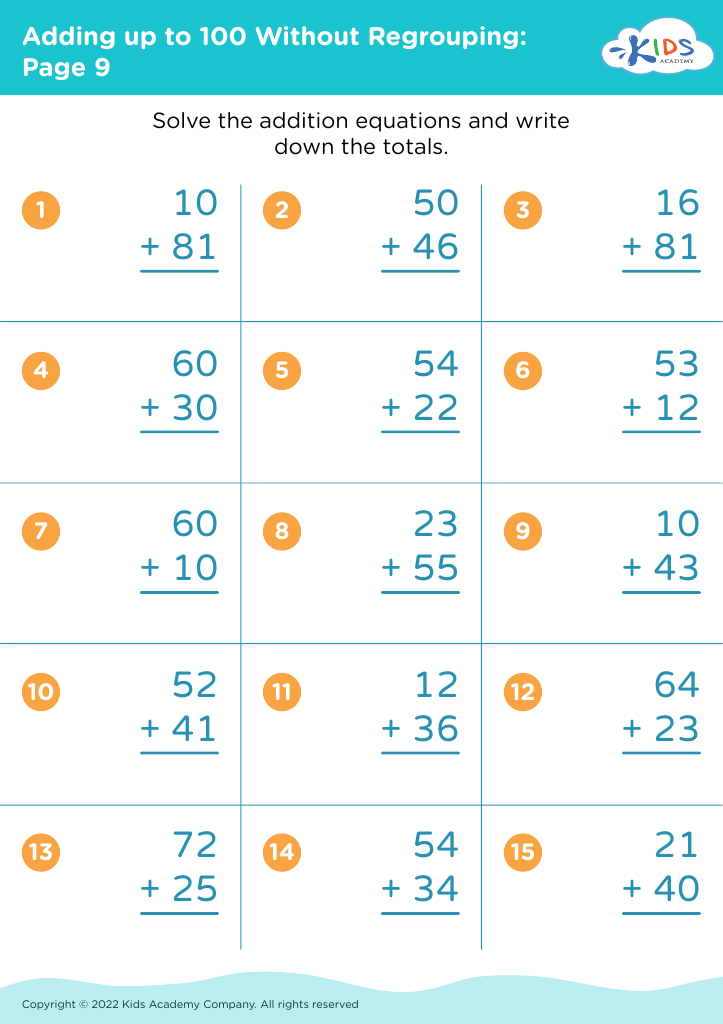
Enhance your child's math skills with our "Understanding Equations Addition Worksheets" for ages 7-8! These engaging worksheets introduce young learners to basic equations and help develop their addition proficiency. Children will explore simple addition problems through interactive exercises, fostering critical thinking and problem-solving abilities. Our resources are designed to build a strong mathematical foundation, guiding students in understanding the relationship between addition and equations. Perfect for classroom use or homework, these worksheets encourage independent learning while instilling confidence in math skills. Equip your child with the tools they need to succeed with our comprehensive addition worksheets today!
Favorites
With answer key
Interactive
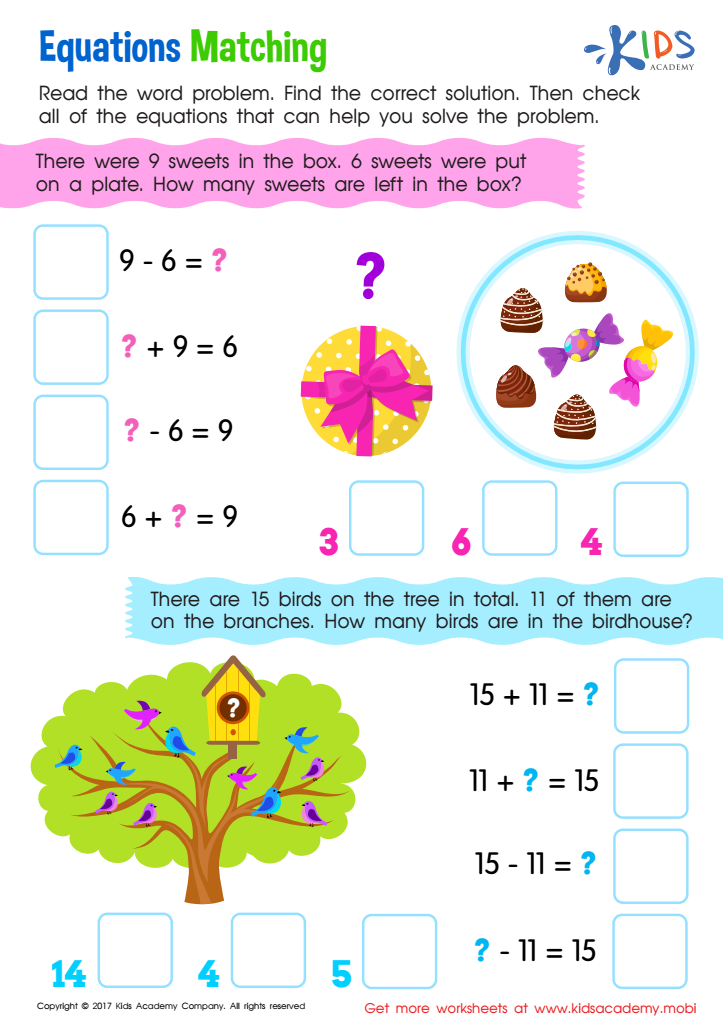
Equations Matching Word Problems Worksheet
Download this worksheet and give your young mathematician practice in solving equations using matching numbers and number family facts. They'll solve word problems, develop critical thinking and algebraic reasoning, and gain success with addition and subtraction.
 Assign to My Students
Equations Matching Word Problems Worksheet
Worksheet
Join Kids Academy for Free
Who is primarily going to use this learning content?


.jpg)





Understanding equations and addition is crucial for students aged 7 to 8, as it lays the foundation for future mathematical learning. At this age, children begin to transition from concrete understanding to more abstract concepts. Teaching them to grasp the basics of equations helps foster critical thinking and problem-solving skills. This foundation is essential, as mathematics builds on itself; without a sound understanding of addition and simple equations, children may struggle with more advanced topics later on.
Moreover, learning equations involves understanding relationships between numbers and operations. This concept not only enhances numerical fluency but also encourages logical reasoning. Parents and teachers who prioritize this understanding can significantly bolster a child's confidence and interest in math by making it engaging and relatable.
Additionally, achievement in math positively correlates with overall academic performance. By ensuring children grasp these concepts early, we empower them to tackle challenges in both math and other subjects as they progress. It’s crucial for parents and teachers to collaborate in providing engaging experiences and using real-world examples so children can appreciate the relevance of equations and addition in everyday life.








