Understanding sequence Addition Worksheets for Ages 7-8
4 filtered results
-
From - To
Discover essential sequence addition worksheets designed for children ages 7-8 at Kids Academy. Our engaging materials help young learners grasp the foundational concept of adding numbers in a specific order. With a variety of exercises tailored to strengthen their sequencing skills, children will find these worksheets fun and rewarding. As they progress, they'll enhance their understanding of patterns in addition, building confidence and proficiency in math. Perfect for home or classroom use, these worksheets promote critical thinking and problem-solving skills. Browse our collection today and support your child's journey to mastering sequence addition with ease!
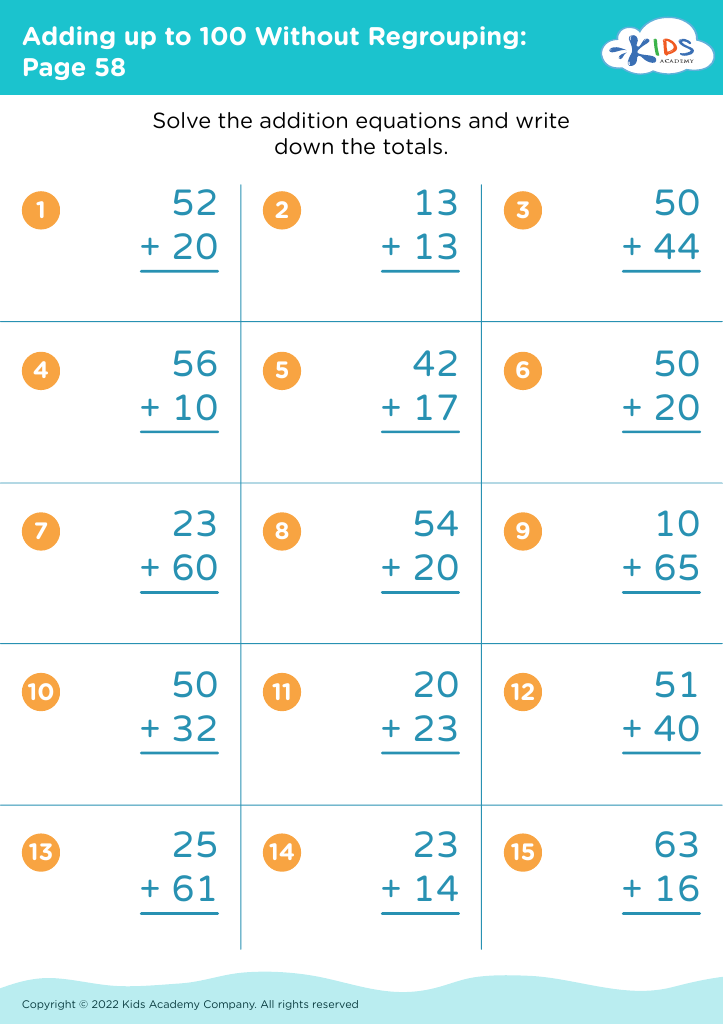
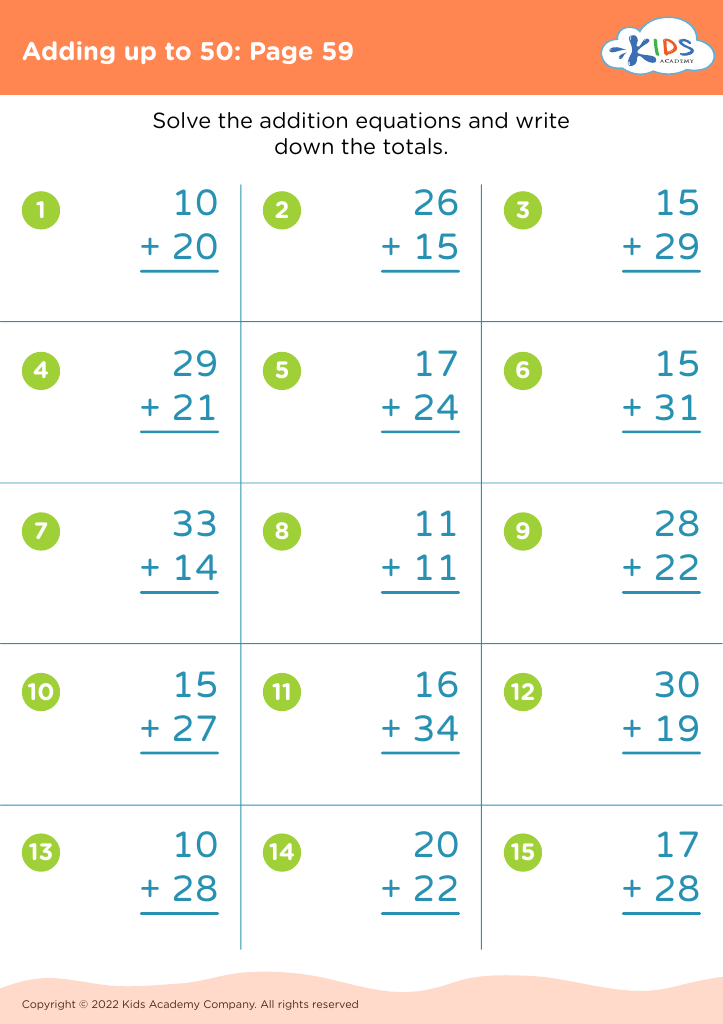
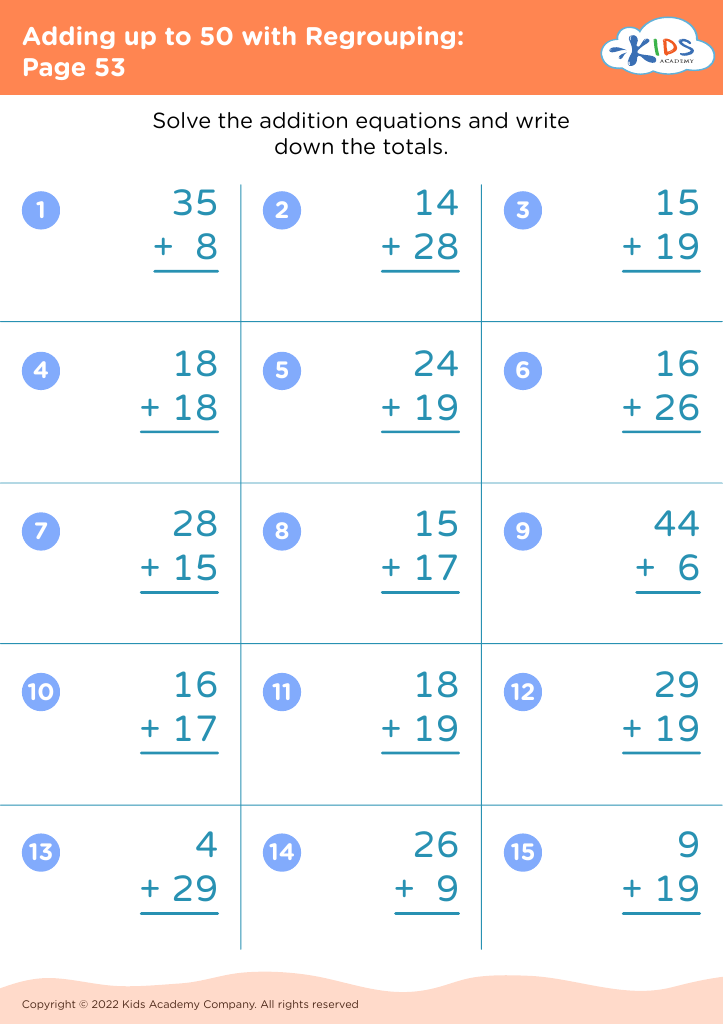
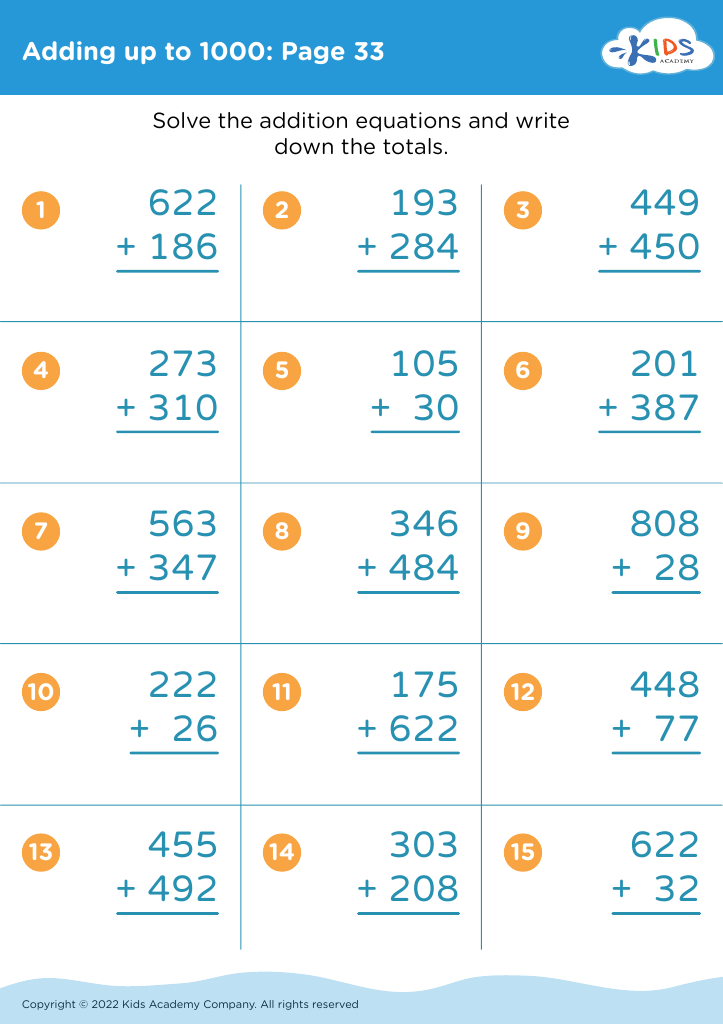








Understanding sequence addition is crucial for children aged 7-8 as it forms the foundation for more advanced mathematical concepts. During this stage, children are transitioning from basic arithmetic to more complex problem-solving skills. Sequence addition helps them grasp the relationship between numbers and the patterns that emerge when adding them in various orders.
By mastering this skill, children can improve their mental math abilities, making calculations faster and more intuitive. This understanding fosters a sense of confidence in their math skills, encouraging them to engage more deeply with the subject. Parents and teachers can leverage this understanding to create engaging activities that promote sequential thinking, ultimately deepening children's comprehension of addition.
Furthermore, learning sequence addition aids in developing critical thinking and analytical skills. As students explore various ways to add numbers, they begin to recognize how changing the order of addends does not affect the sum—a fundamental property of addition. This helps them build a strong mathematical foundation that will be beneficial in future lessons in algebra and beyond. Ultimately, prioritizing sequence addition can create a pathway for children to navigate more complex mathematical situations with ease and confidence, equipping them for long-term academic success.








