Visual interpretation Addition Worksheets for Ages 7-8
4 filtered results
-
From - To
Our "Visual Interpretation Addition Worksheets for Ages 7-8" transform learning math into a fun and engaging experience. Designed to strengthen critical thinking and problem-solving skills, these worksheets use colorful illustrations and visual aids to help children grasp addition concepts effortlessly. Perfect for young learners, they offer a hands-on approach that simplifies complex problems while making math exciting. Each worksheet is crafted to build confidence and encourage independent learning, laying a solid foundation for future math successes. Whether in the classroom or at home, our visual addition worksheets are a fantastic resource for every young math enthusiast.
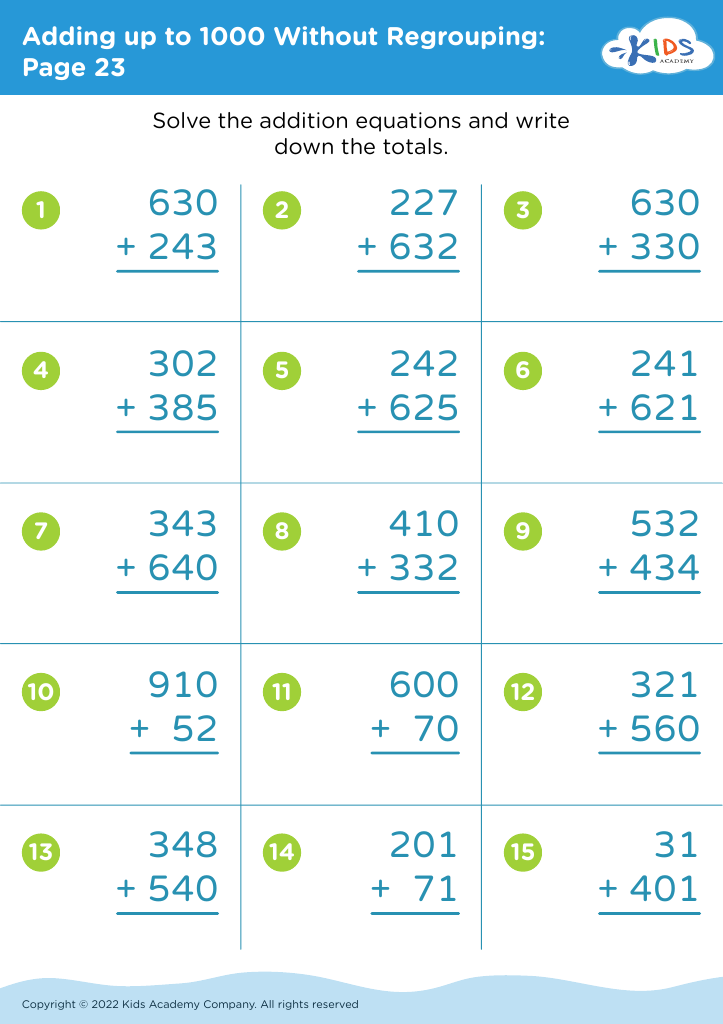
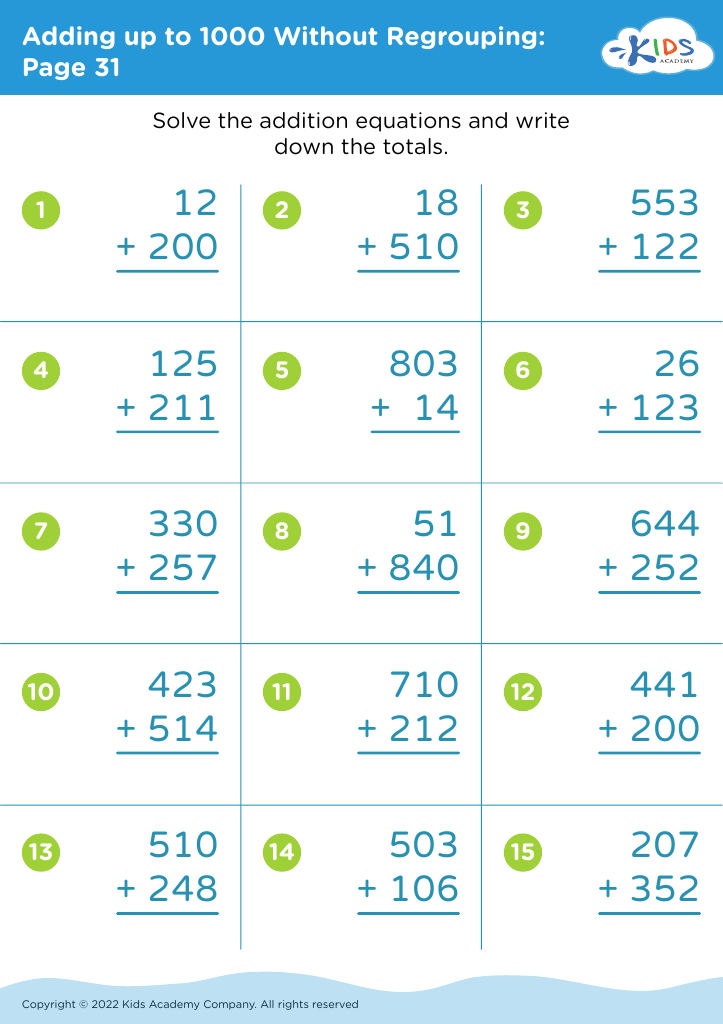
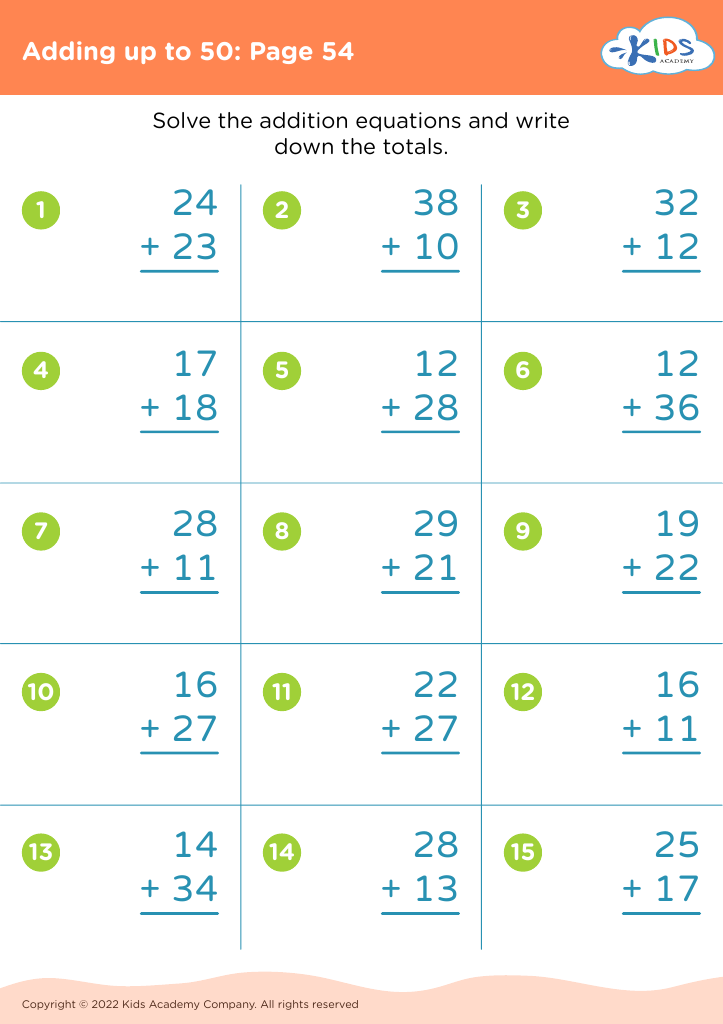
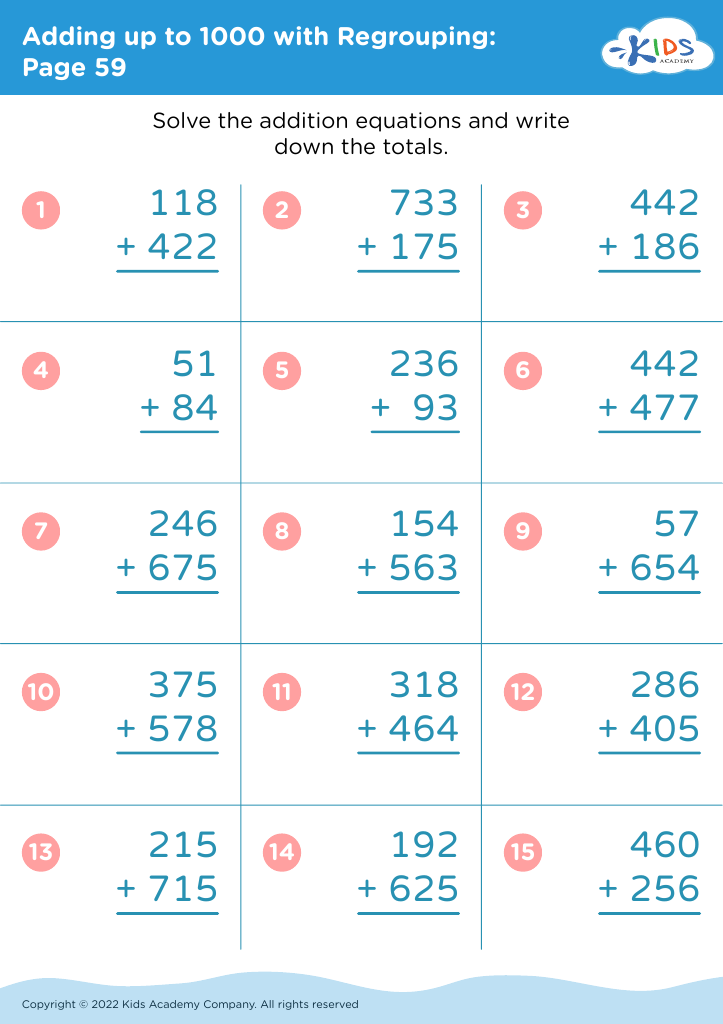








Visual interpretation in addition is crucial for children aged 7-8 because it lays the foundation for their future success in mathematics. At this developmental stage, youngsters are transitioning from concrete to more abstract thinking. Visual methods like number lines, manipulatives, and pictorial representations of math problems help them grasp fundamental concepts more solidly. These tools bridge the gap between tangible objects and abstract numbers, enabling better comprehension.
Moreover, visual strategies cater to diverse learning styles. While some children excel with verbal instructions, others find visual cues more intuitive. Incorporating multiple methods of teaching addition ensures that more children can understand and retain the information. This inclusive approach helps build a strong mathematical foundation for all students.
Understanding how to visualize addition problems also encourages problem-solving and critical thinking. Children learn to recognize patterns and relationships between numbers, skills vital for tackling more complex math concepts later on. Furthermore, visual methods can make learning more engaging and enjoyable, reducing math anxiety and boosting confidence in young learners.
In summary, visual interpretation in addition not only enhances comprehension and caters to different learning styles but also promotes a positive and inclusive learning environment. Parents and teachers invested in these strategies help children develop robust mathematical skills and foster a lifelong love for learning.








