Understanding times tables Basic Times Tables up to 12 Worksheets for Ages 7-8
3 filtered results
-
From - To
"Understanding Times Tables: Basic Times Tables up to 12 Worksheets for Ages 7-8" offers engaging and educational resources tailored to young learners. Our worksheets are designed to help children master multiplication tables up to 12, building a solid foundation in essential math skills. With colorful illustrations and fun activities, kids stay motivated while reinforcing their understanding of times tables. Ideal for home or classroom use, these worksheets ensure that children ages 7-8 can boost their confidence in math while making learning enjoyable and interactive. Equip your child with the tools they need for math success today!
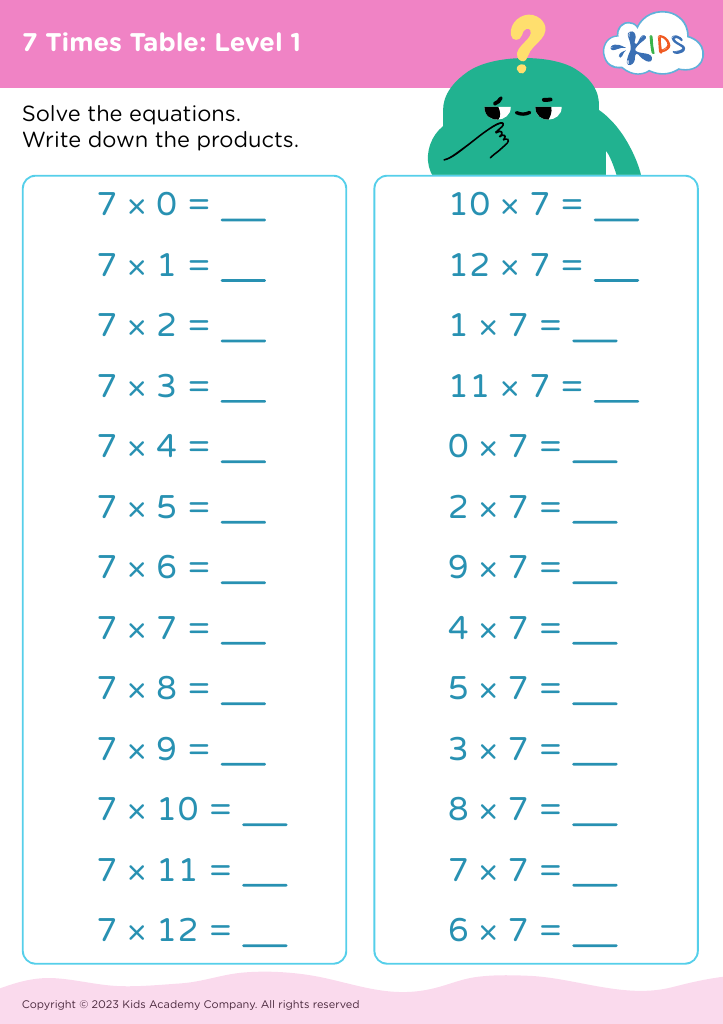
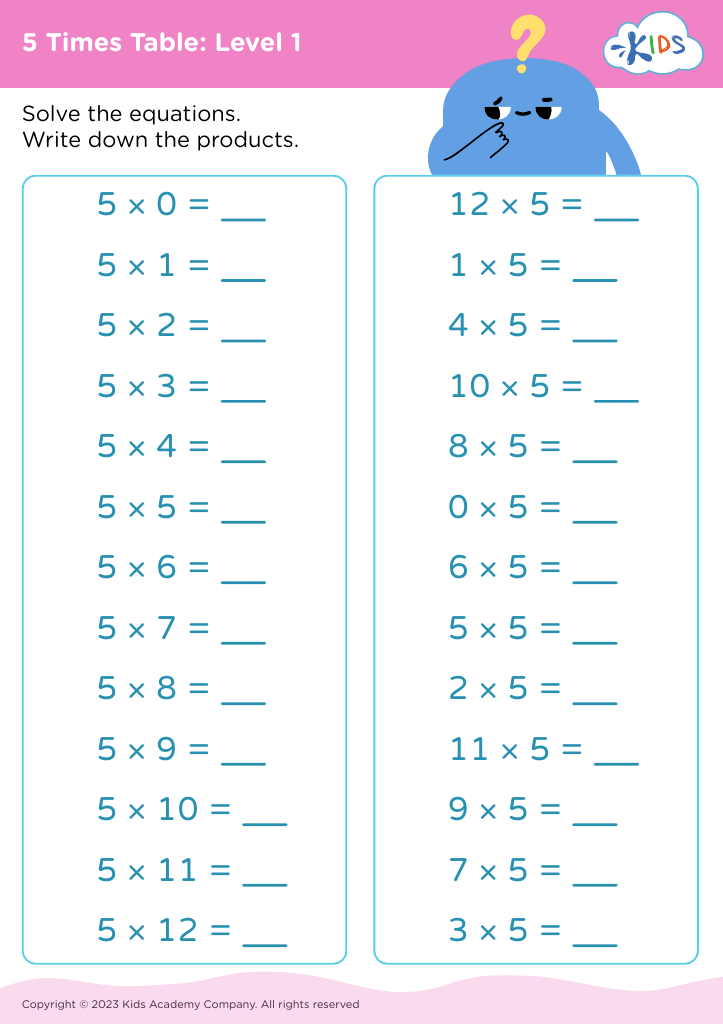
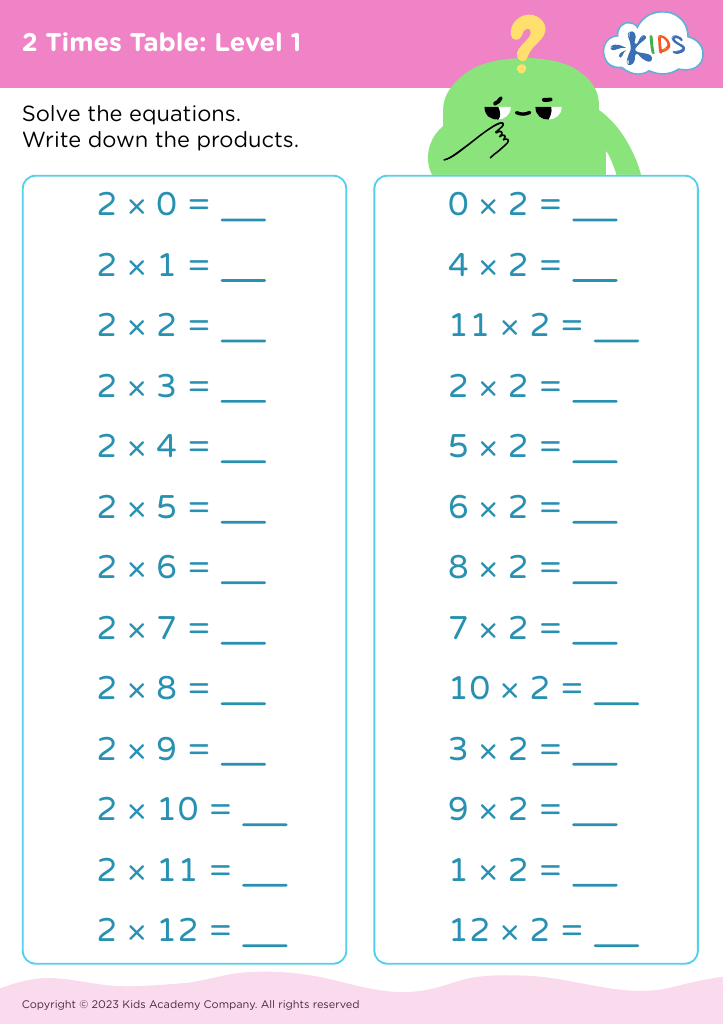


Understanding basic times tables up to 12 is crucial for children aged 7-8 because it lays the foundation for essential mathematical skills that they will use throughout their academic and everyday lives. Mastery of times tables promotes fluency in multiplication, which is a fundamental building block for more advanced math concepts such as division, fractions, percentages, and algebra.
Parents and teachers should prioritize this because it enhances a child’s confidence and reduces math-related anxiety. With a solid grasp of times tables, children can solve problems more efficiently and accurately, enabling quicker progress through school curricula. This basic numeracy is not only critical in academic scenarios but also in real-world contexts such as calculating expenses, understanding time, measuring ingredients for a recipe, and even in various career paths later in life.
In addition, early competency in times tables encourages cognitive development, enhancing memory, reasoning skills, and pattern recognition. As children practice multiplication, they develop discipline and the ability to commit information to long-term memory. This type of learning promotes a positive attitude towards mathematics and learning in general, setting the stage for future academic success and an inquisitive mindset.
Overall, prioritizing understanding times tables at an early age equips children with lifelong skills, cognitive benefits, and a strong academic foundation, contributing positively to their overall development.








