Understanding graphs Graphs Worksheets for Ages 7-8
5 filtered results
-
From - To
Explore our "Understanding Graphs" worksheets tailored for ages 7-8, designed to make learning about graphs engaging and fun! These printable resources introduce key concepts of graph interpretation, including reading bar graphs, line graphs, and pictographs. Ideal for enhancing critical thinking and data analysis skills, our worksheets encourage kids to visualize information clearly and gain confidence in their mathematical abilities. Each activity is aligned with early grade curriculum standards, ensuring a seamless learning experience. With a variety of exercises, students will develop a solid foundation in understanding graphs, setting them up for future success in mathematics. Start exploring today!
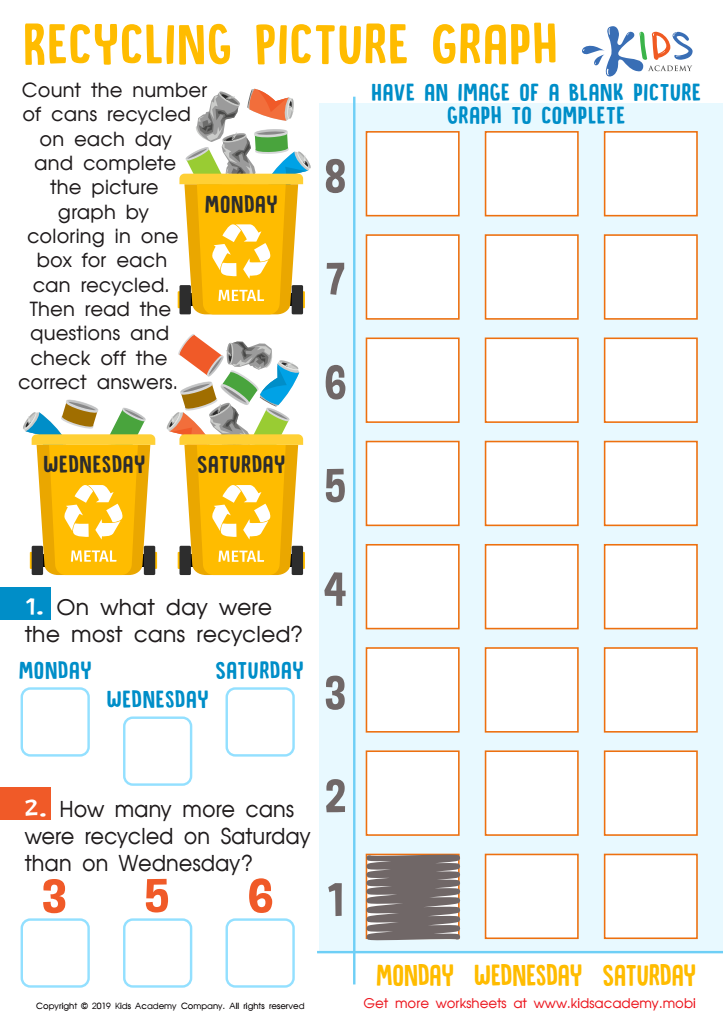
Recycling Picture Graph Worksheet
 Assign to My Students
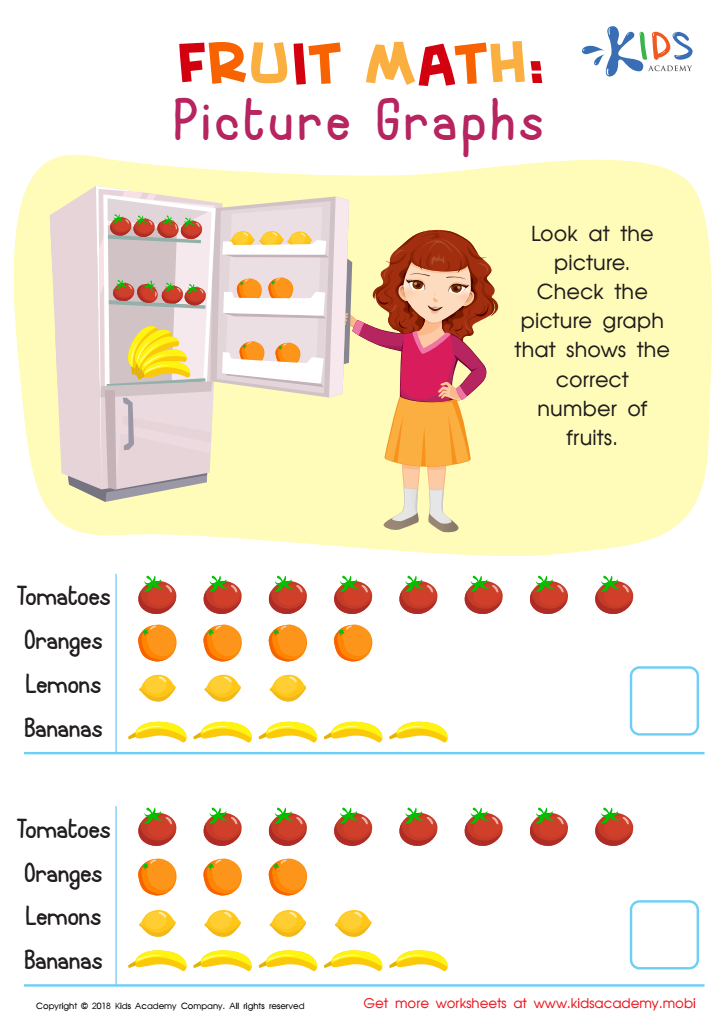
Fruit Math: Picture Graphs Worksheet
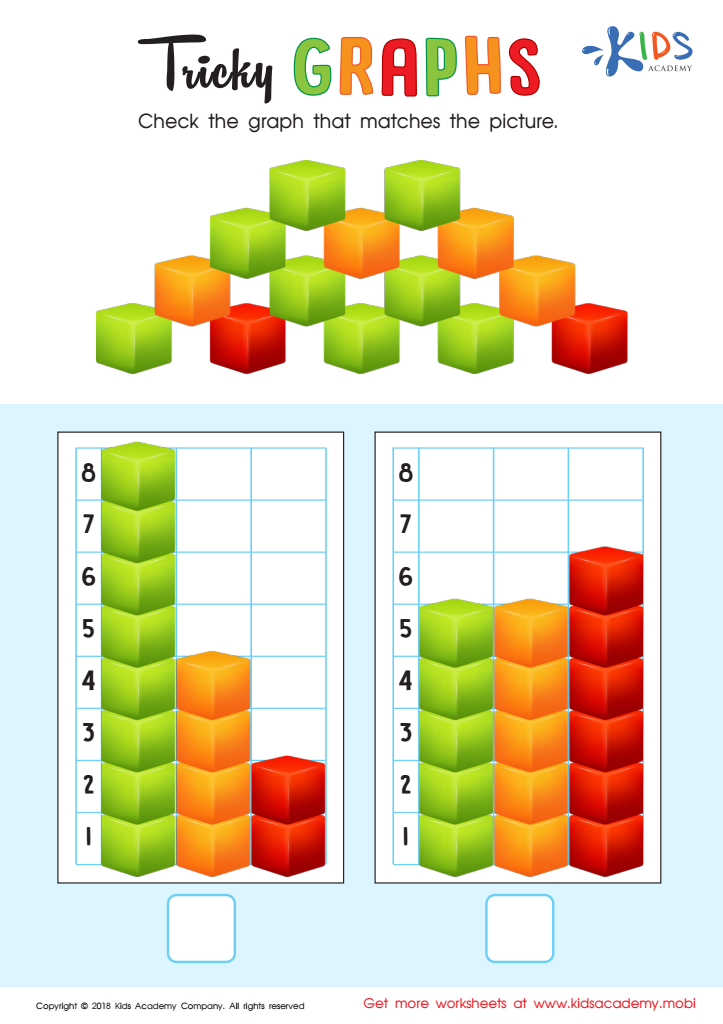
Tricky Graphs Worksheet
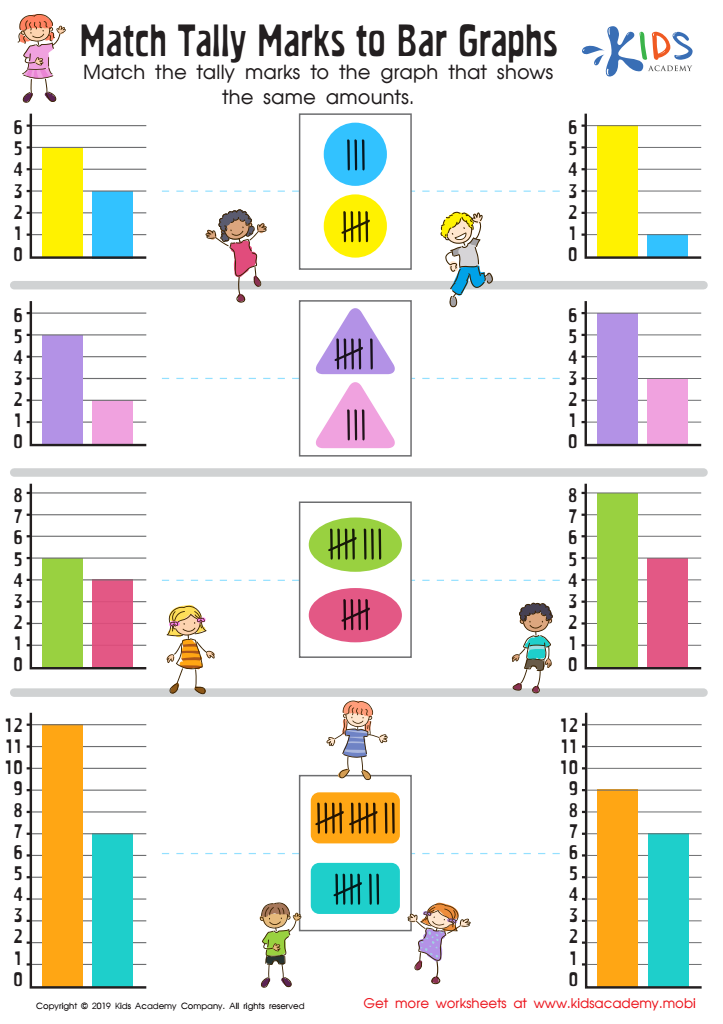
Match Tally Marks to Bar Graphs Worksheet

Aircraft Carrier Picture Graphs Worksheet








Understanding graphs is a vital skill for children ages 7-8, representing a key component of early numeracy and critical thinking. At this age, students are beginning to interpret and represent data visually, which is essential for several reasons.
Firstly, graphs help children make sense of information in a visual format, engaging different learning styles. They can quickly grasp concepts such as trends, comparisons, and quantities represented visually. Secondly, understanding graphs fosters decision-making and problem-solving skills, allowing children to draw conclusions from data. For example, they can analyze their class's favorite fruits or sports, enhancing their ability to reason and think critically.
Moreover, graphs are foundational in subjects beyond math, including science and social studies, where data representation is paramount in experiments and demographic studies. As children engage with graphs, they develop a fundamental skill set that will serve them academically and in daily life, helping them become informed citizens in an increasingly data-driven world.
Moreover, when parents and teachers emphasize graph literacy, they promote an appreciation for math and data, laying the groundwork for future learning. Encouraging the exploration of graphs cultivates curiosity, enhancing children's overall academic experience and preparing them for lifelong learning and engagement with the world around them.








