Addition of fractions Math Worksheets for Ages 7-8
3 filtered results
-
From - To
Boost your child’s math skills with our engaging Addition of Fractions worksheets, specially designed for ages 7-8! These worksheets introduce the concept of adding fractions through fun, interactive exercises that make learning enjoyable. Your little ones will explore visual aids, relatable examples, and step-by-step problems that enhance their understanding and confidence. Covering important skills such as finding common denominators and simplifying sums, these resources create a strong foundation for future math success. Ideal for classroom use or at-home practice, our worksheets cater to various learning styles, ensuring every child can grasp the addition of fractions with ease. Start counting together today!
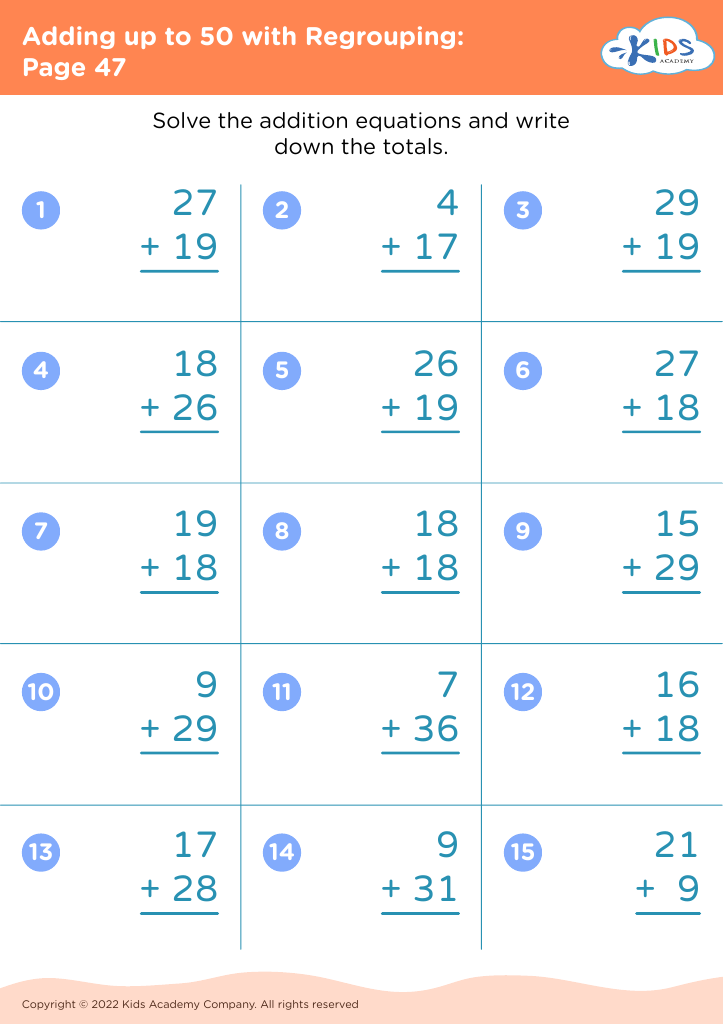
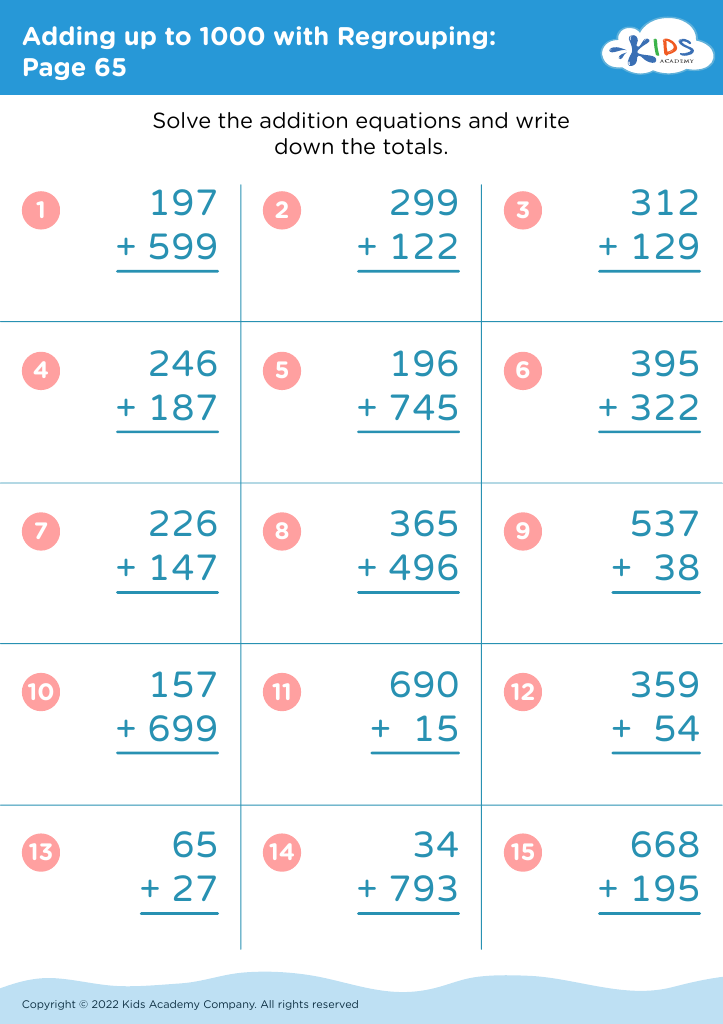
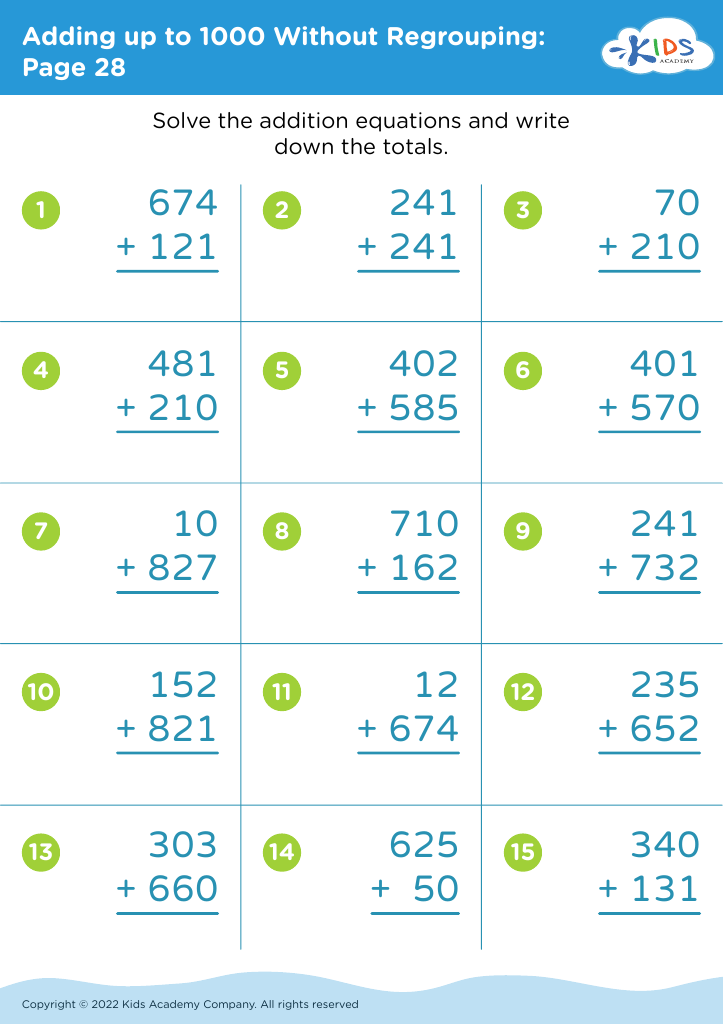








Understanding the addition of fractions is crucial for children aged 7-8, as it lays the foundation for more complex mathematical concepts they will encounter later on. At this developmental stage, children are not only learning basic arithmetic but are also enhancing their problem-solving and critical-thinking skills.
Addition of fractions teaches children about parts of a whole, reinforcing their grasp of related concepts such as sharing and dividing. This understanding can apply to real-life situations, like cooking, where measurements often require the addition of fractions. Moreover, mastering this topic aids in building confidence in mathematics, an area many students find challenging.
For parents and teachers, fostering a positive attitude towards math at this early age is essential. Helping children see fractions as understandable and useful engenders a lifelong interest in mathematics and their application in everyday life. Effective teaching experiences with fractions bolster children's overall mathematical fluency, setting them up for success in future mathematical endeavors, including decimals and percentages, which they will learn in later grades.
Thus, engaging with addition of fractions not only enhances computational skills but also enriches children's cognitive development and prepares them for more advanced math challenges.








