Basic measurement skills Math Worksheets for Ages 7-8
3 filtered results
-
From - To
Enhance your child's understanding of essential measurement concepts with our Basic Measurement Skills Math Worksheets designed for ages 7-8. These engaging worksheets help young learners grasp the fundamentals of measuring length, weight, and capacity using standard and non-standard units. Our expertly crafted activities promote hands-on practice and real-world application, making complex ideas easy to understand and fun to learn. Boost your child's confidence in math through interactive exercises and colorful illustrations that keep them motivated and excited to explore the world of measurement. Equip your young mathematician with the skills they need to succeed with our comprehensive worksheet collection.
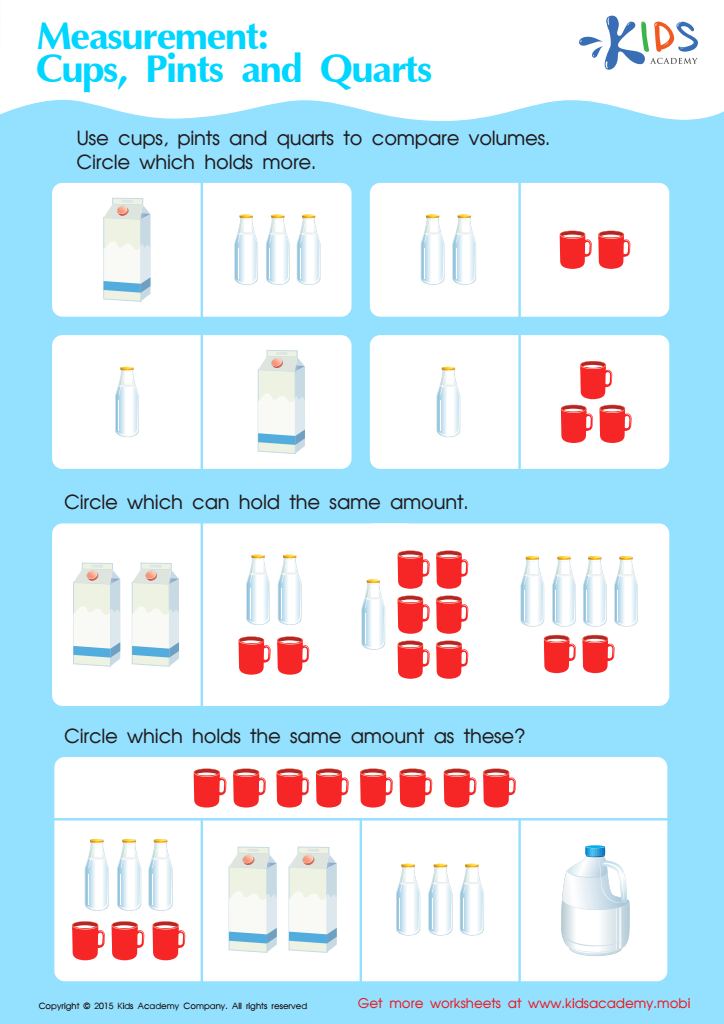
Measurement: Compare Volumes Worksheet
 Assign to My Students
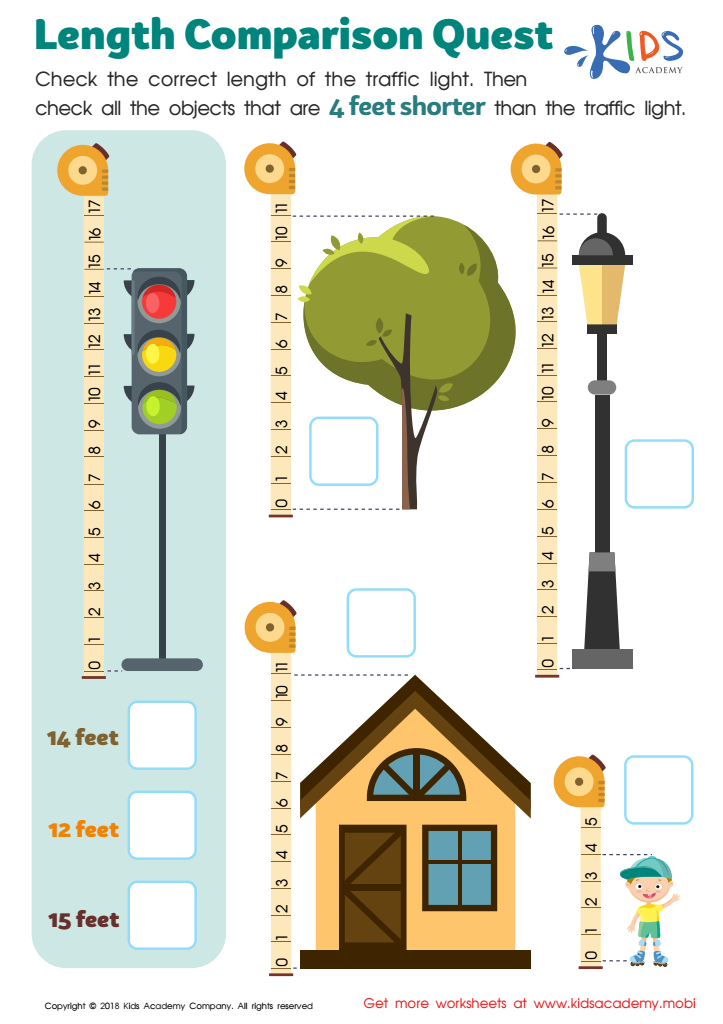
Length Comparison Quest Worksheet
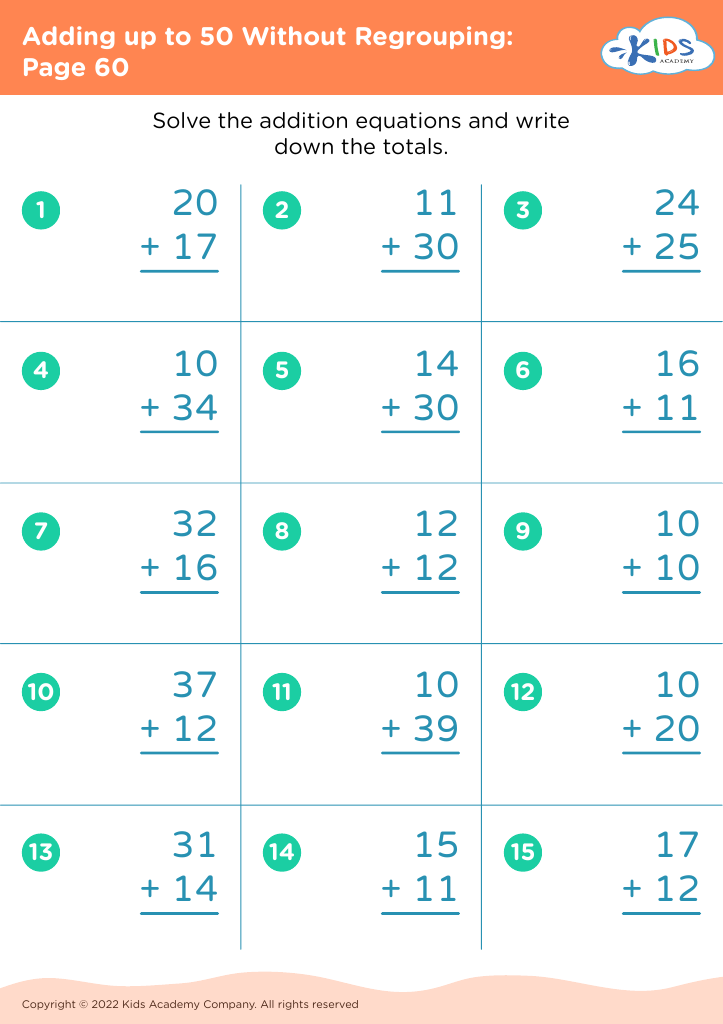







Understanding basic measurement skills is crucial for children aged 7-8 because these skills form an essential foundation for both academic success and everyday life. At this developmental stage, children are naturally curious which makes it an ideal time to introduce concepts such as length, weight, volume, and time.
Learning to measure fosters critical thinking and problem-solving abilities in kids. They begin to make connections between numbers and real-world objects, enhancing their spatial awareness and fine motor skills. For example, when children use a ruler to measure the length of a pencil, they not only learn numbers but also develop an understanding of the physical world.
Furthermore, measurement skills are integral to other areas of study beyond math, including science and art. In a science experiment, accurate measurements are key to obtaining valid results. In art, understanding dimensions can help create more accurate drawings and structures. These skills also build a foundation for more complex math concepts like geometry and algebra.
Beyond the classroom, basic measurement is a practical life skill. Tasks like cooking, planning a space, or managing time, all require a fundamental understanding of measurement. Instilling these skills early prepares children for a lifetime of practical problem-solving and helps them navigate the world more independently and effectively. Thus, parents and teachers should prioritize teaching measurement as a critical tool for lifelong learning and everyday functioning.








