Developing counting skills Math Worksheets for Ages 7-8
4 filtered results
-
From - To
Help your child master essential math skills with our "Developing Counting Skills Math Worksheets" for ages 7-8. Our expertly crafted worksheets provide engaging and effective exercises designed to reinforce counting proficiency and number sense. These activities encompass a variety of fun and educational tasks, such as counting objects, skip counting, and comparing numbers. Perfect for young learners, our worksheets are tailored to blend learning with play, ensuring children build confidence and a strong numerical foundation. Whether used at home or in the classroom, these resources are ideal for supporting your child's journey towards math excellence.
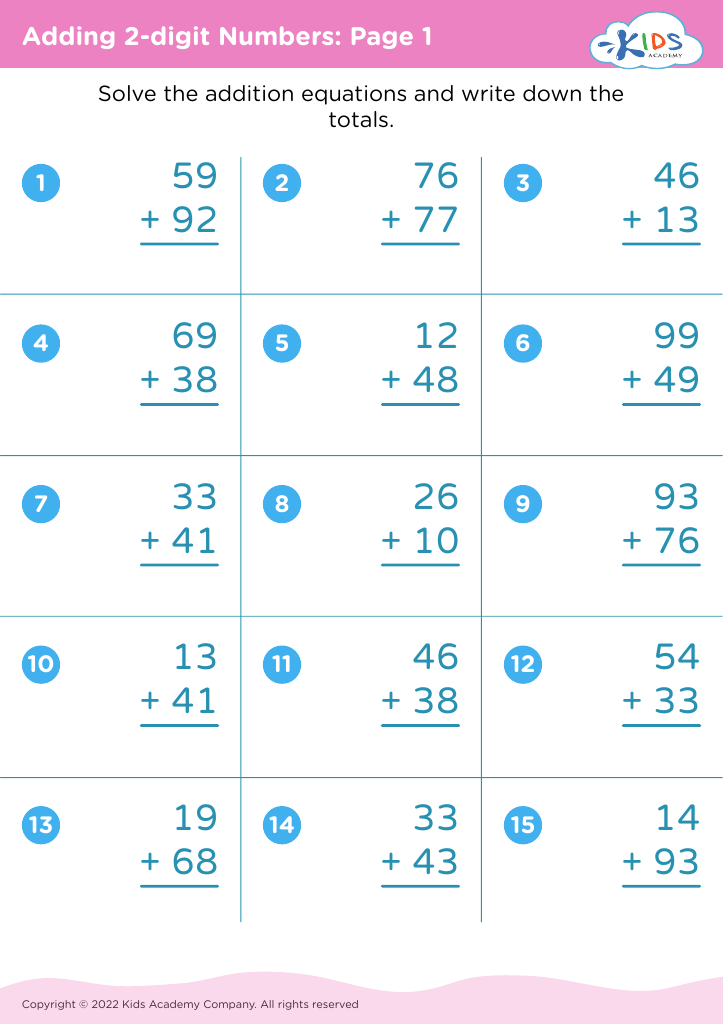
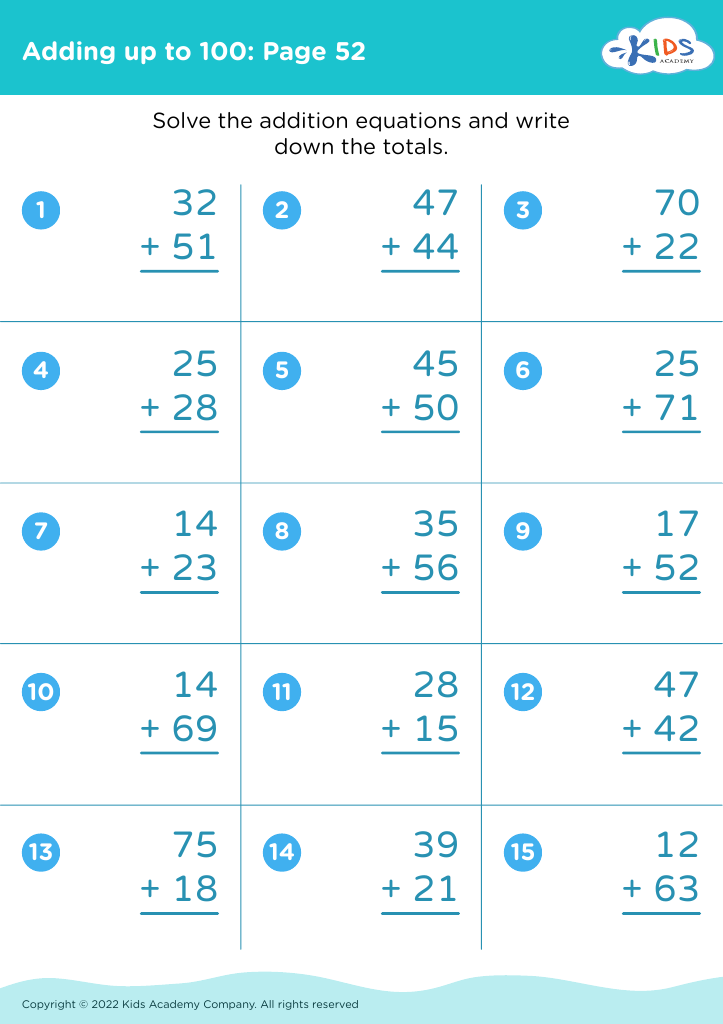
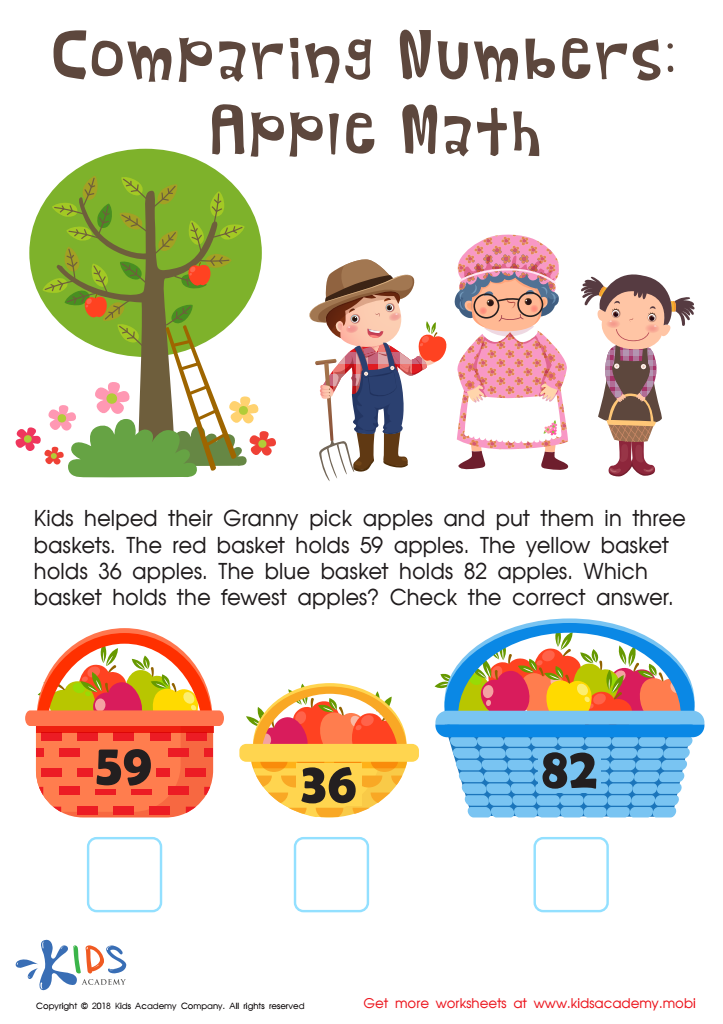
Apple Math Worksheet
 Assign to My Students
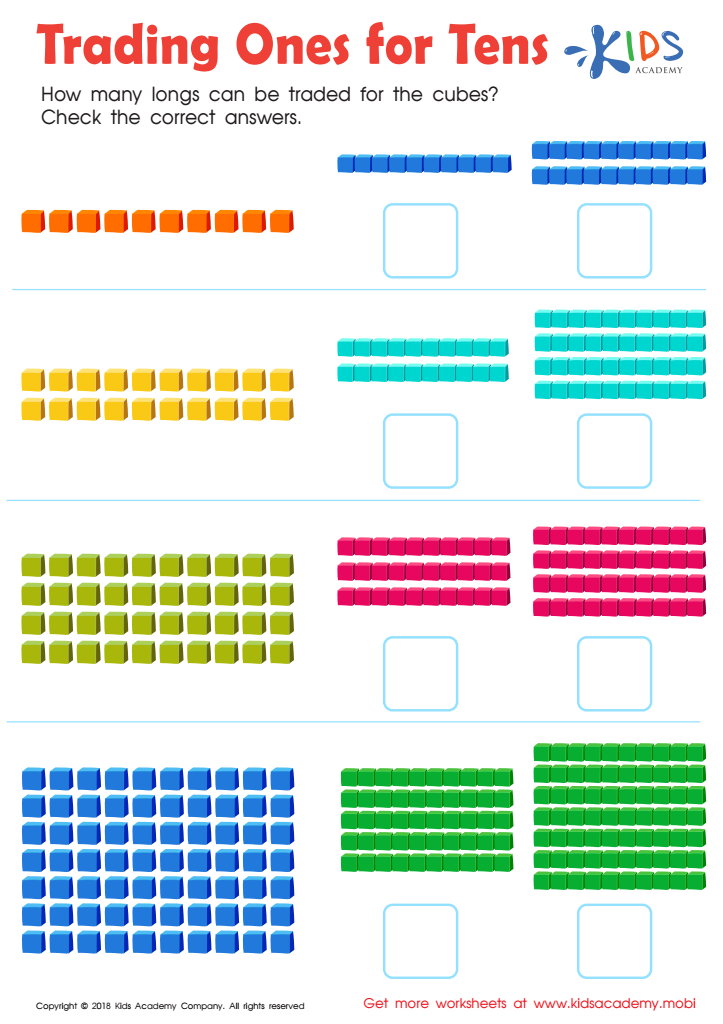
Trading Ones for Tens Worksheet: Part 2








Developing counting skills at ages 7-8 is crucial as it lays the foundation for future mathematical understanding and cognitive development. At this formative stage, children are building the groundwork for more complex mathematical concepts such as addition, subtraction, multiplication, and division. Proficiency in counting ensures that they have a solid grasp of numbers, which is essential for problem-solving and logical thinking in later years.
Moreover, counting skills help children develop number sense, which is the ability to understand and use numbers flexibly and fluently. This skill is integral to everyday activities such as telling time, measuring ingredients for a recipe, or even handling money. Early competence in counting fosters confidence, making children more likely to engage with math positively as they advance through their education.
Parents and teachers play a vital role in nurturing these skills through interactive and engaging activities. By incorporating games, visual aids, and hands-on experiences, they make learning enjoyable and relatable. Encouraging a strong mathematical foundation not only supports academic success but also promotes critical thinking and problem-solving skills essential for real-world applications. Therefore, investing time and effort in developing counting skills in young learners is an invaluable step towards their holistic development and long-term success.








