Following directions Math Worksheets for Ages 7-8
3 filtered results
-
From - To
Enhance your child's mathematical abilities with our tailored Following Directions Math Worksheets, designed specifically for ages 7-8. These engaging worksheets encourage young learners to practice essential math skills while following step-by-step instructions. By completing these activities, children will improve their critical thinking and comprehension skills, making learning fun and interactive. Our resources focus on various mathematical concepts, including addition, subtraction, and problem-solving, all within the context of directive-based tasks. Perfect for classroom use or at-home practice, these worksheets will help your child build confidence in math while sharpening their ability to follow directions effectively. Start enhancing their skills today!
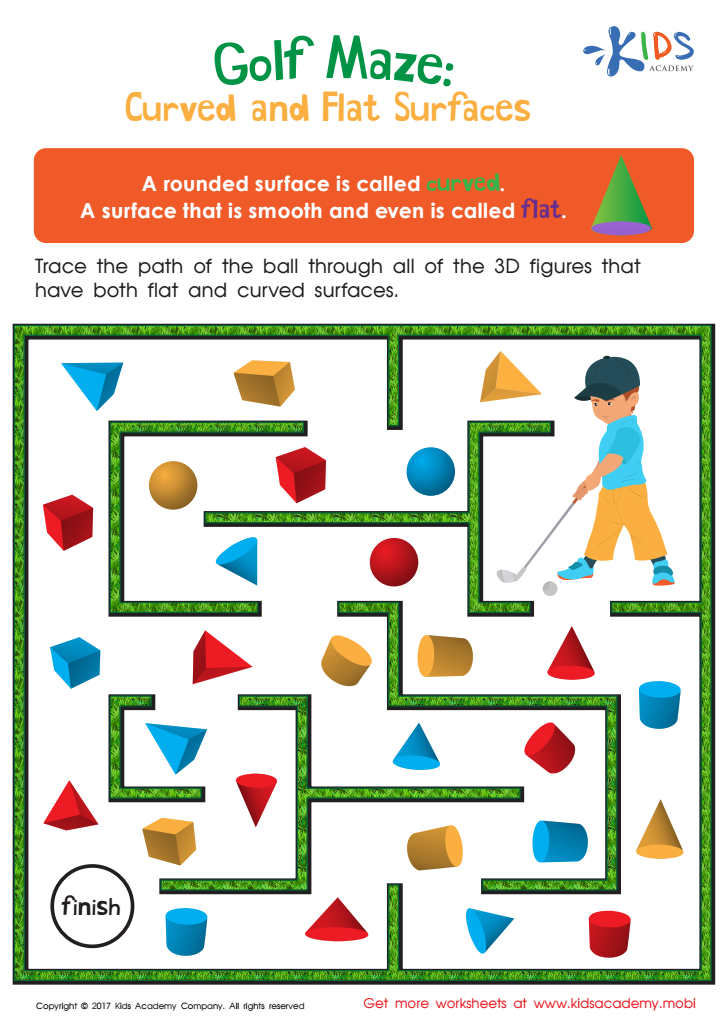
Golf Maze: Curved and Flat Surfaces Worksheet
 Assign to My Students
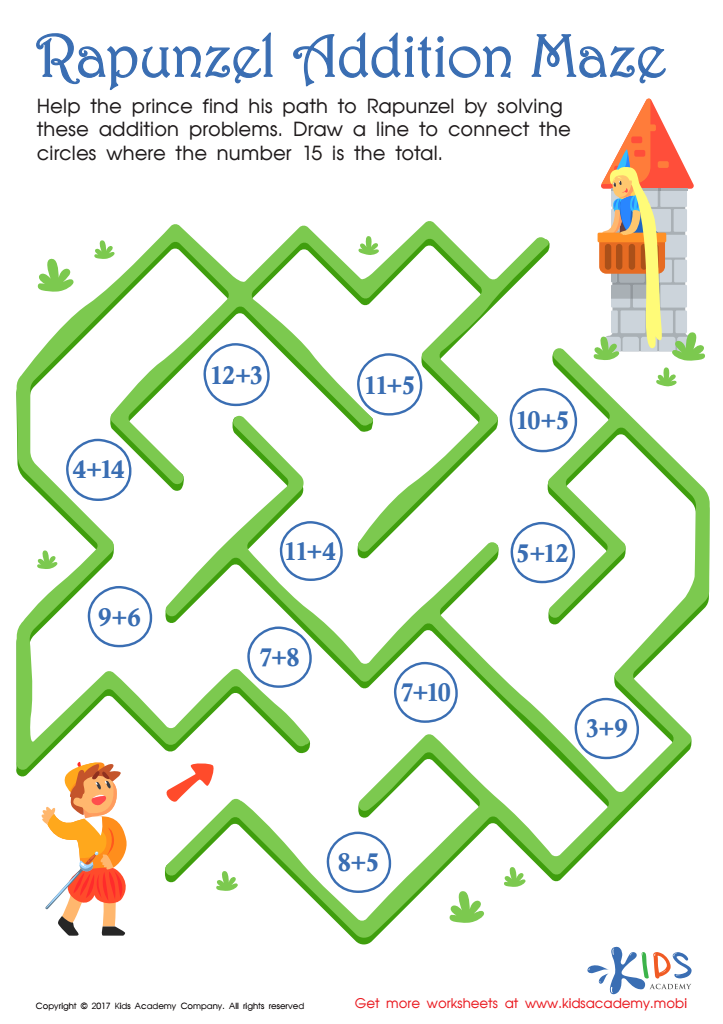
Rapunzel Addition Maze Worksheet








Following directions in math is crucial for children aged 7-8 because it lays the foundation for their overall academic success and critical thinking abilities. At this stage, kids are developing problem-solving skills and learning to interpret and process information effectively. When children learn to follow directions in math, they enhance their comprehension, allowing them to tackle more complex concepts as they progress in their education.
Understanding and applying mathematical directions fosters independence and confidence. This helps children feel empowered to approach problems strategically and assists them in grounding themselves in structure and logic, which is vital not just in math but across other subjects. Moreover, the ability to accurately follow directions aids in building patience and attention to detail, diverting students from missing crucial steps in longer, multi-part problems.
When teachers and parents emphasize this skill, they also nurture positive attitudes toward learning and discourage frustration with math. Ultimately, fostering success in following directions equips children with essential tools for academic excellence, self-discipline, and lifelong learning—preparing them for more advanced studies and real-world situations where clear guidance is necessary for achievement.








