Check out this FREE Trial Lesson on Math for age 7-8!

Making Precise Line Plots

Favorites
With answer key
Interactive
  • 7-8
  • Improve counting skills
  • Math
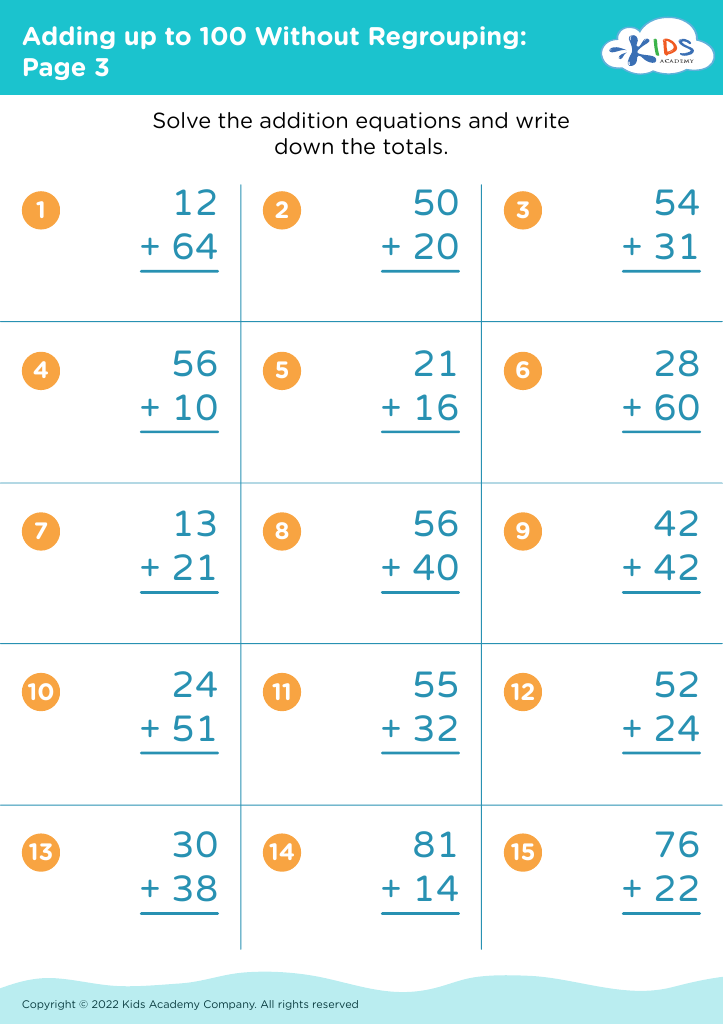
Adding up to 100 Without Regrouping: Page 3
Worksheet
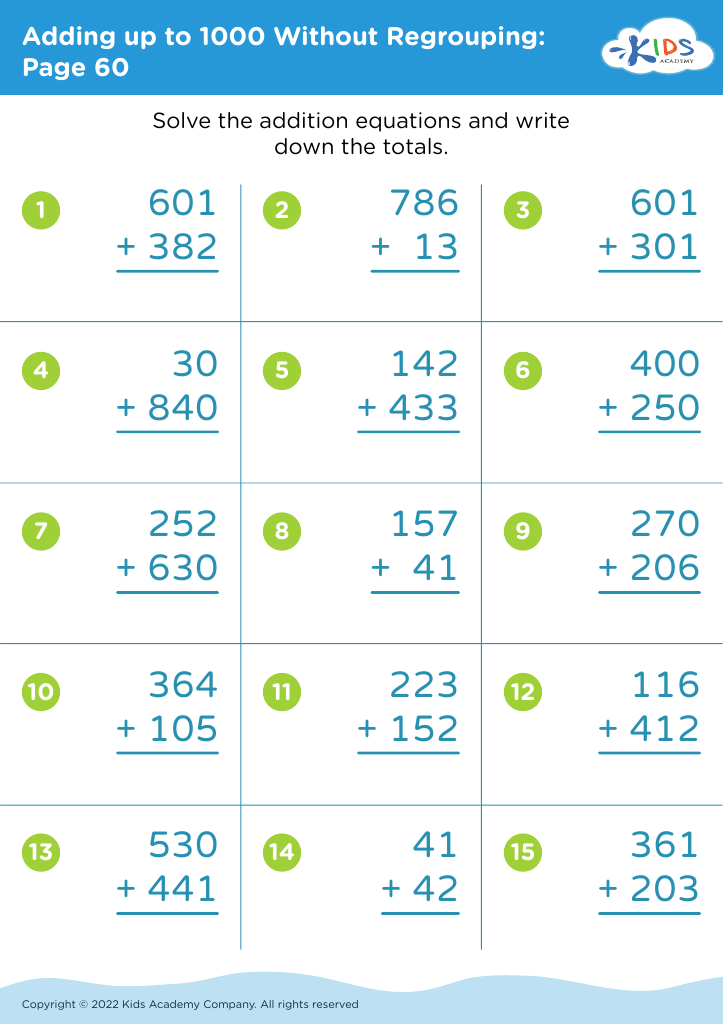
Adding up to 1000 Without Regrouping: Page 60
Worksheet
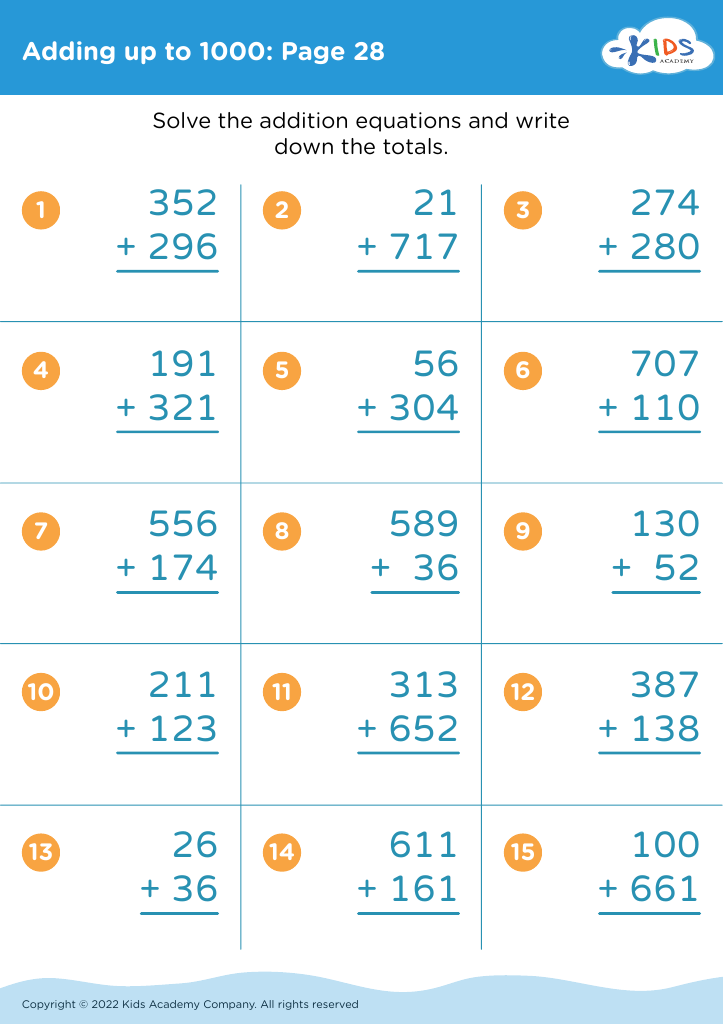
Adding up to 1000: Page 28

Adding up to 1000: Page 28

Adding up to 1000: Page 28
Worksheet
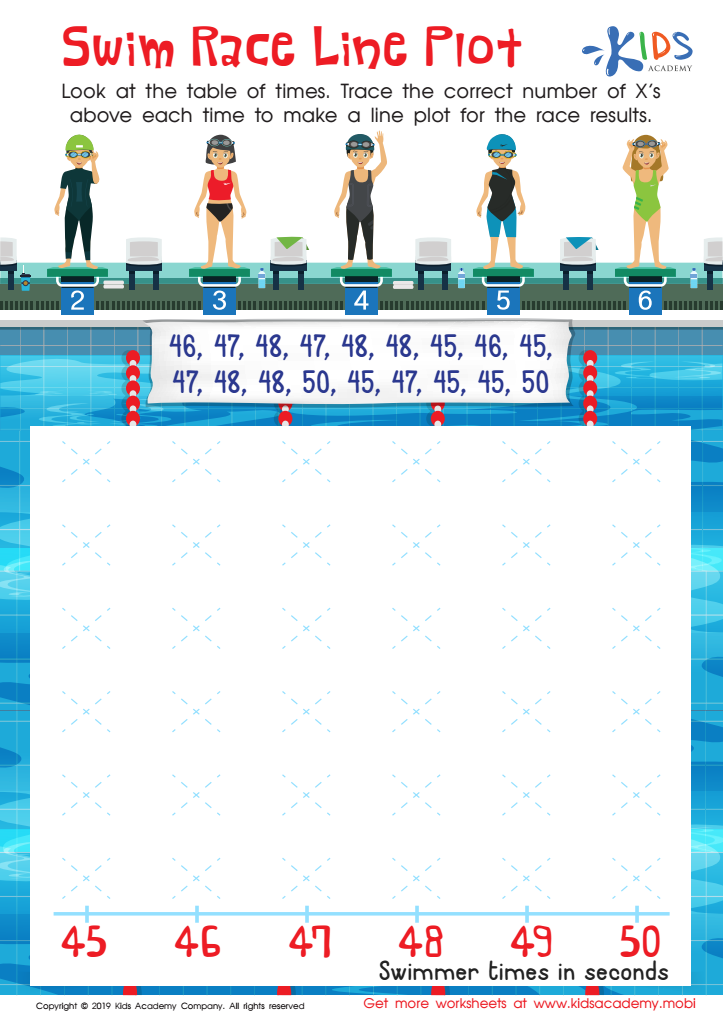
Swim Race Line Plot Worksheet

Swim Race Line Plot Worksheet

Kindergartners can benefit from extra help with math, particularly line plots. This worksheet can make the concept easier to understand. Together, study the table of times; then, guide the kids in tracing the correct number of x's above each time to make a line plot for the race result.
Swim Race Line Plot Worksheet
Worksheet
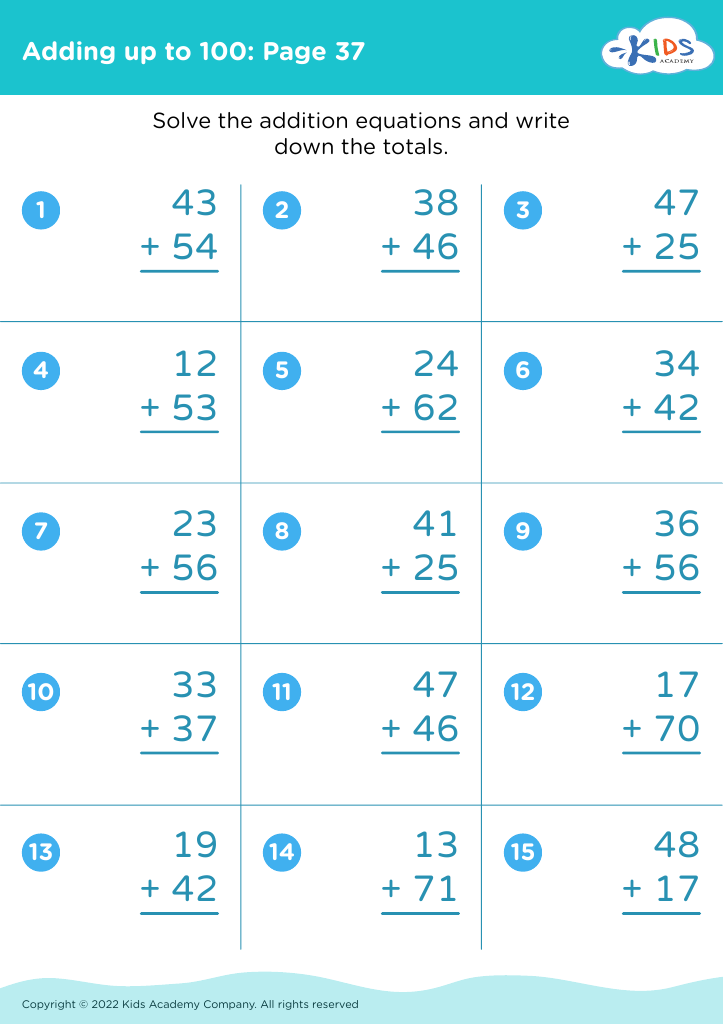
Adding up to 100: Page 37

Adding up to 100: Page 37

Adding up to 100: Page 37
Worksheet
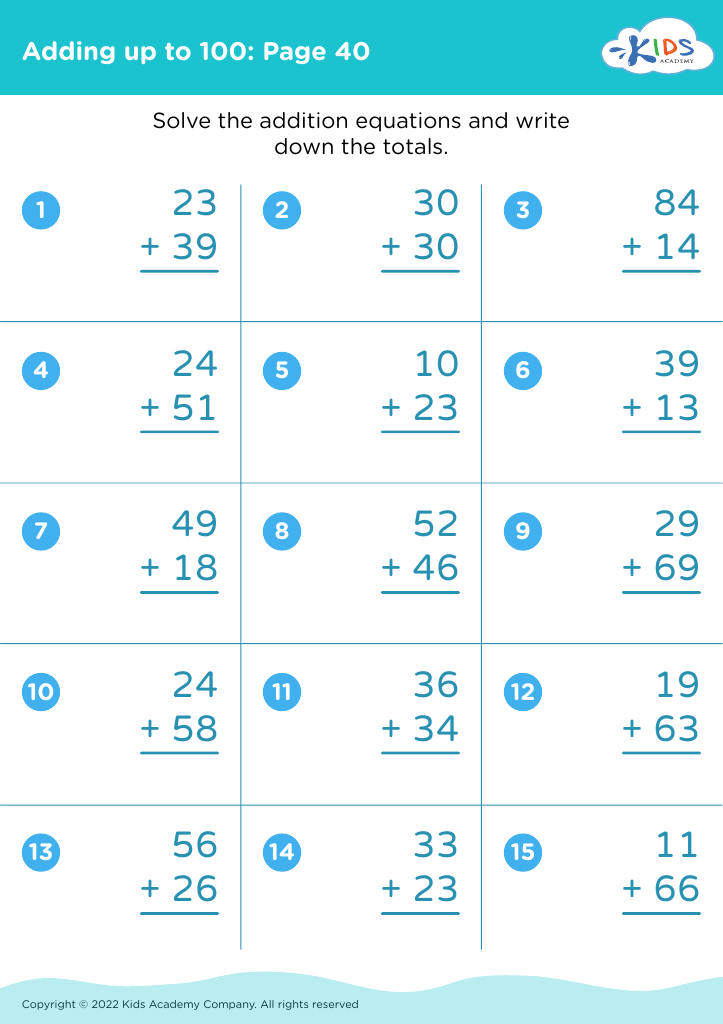
Adding up to 100: Page 40

Adding up to 100: Page 40

Adding up to 100: Page 40
Worksheet
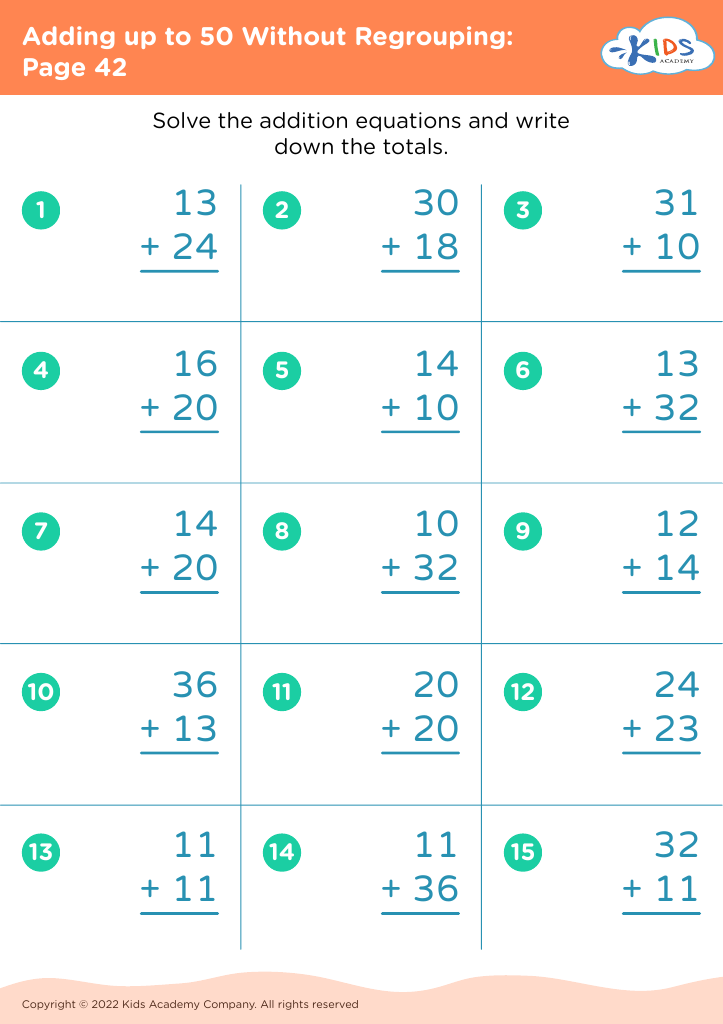
Adding up to 50 Without Regrouping: Page 42
Worksheet
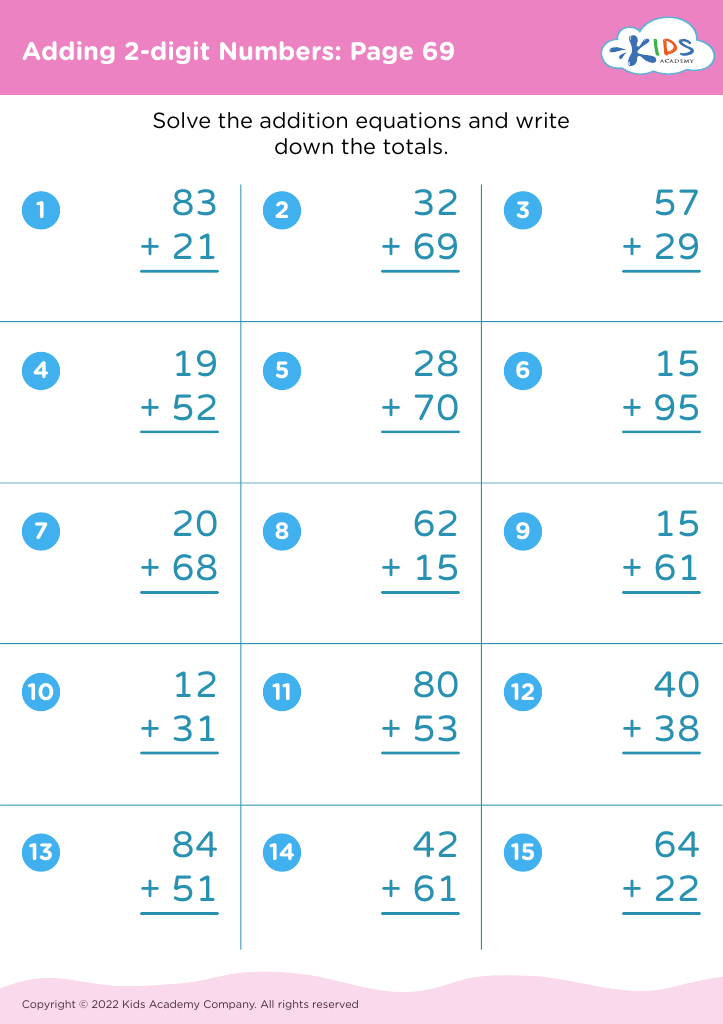
Adding 2-digit Numbers: Page 69

Adding 2-digit Numbers: Page 69

Adding 2-digit Numbers: Page 69
Worksheet
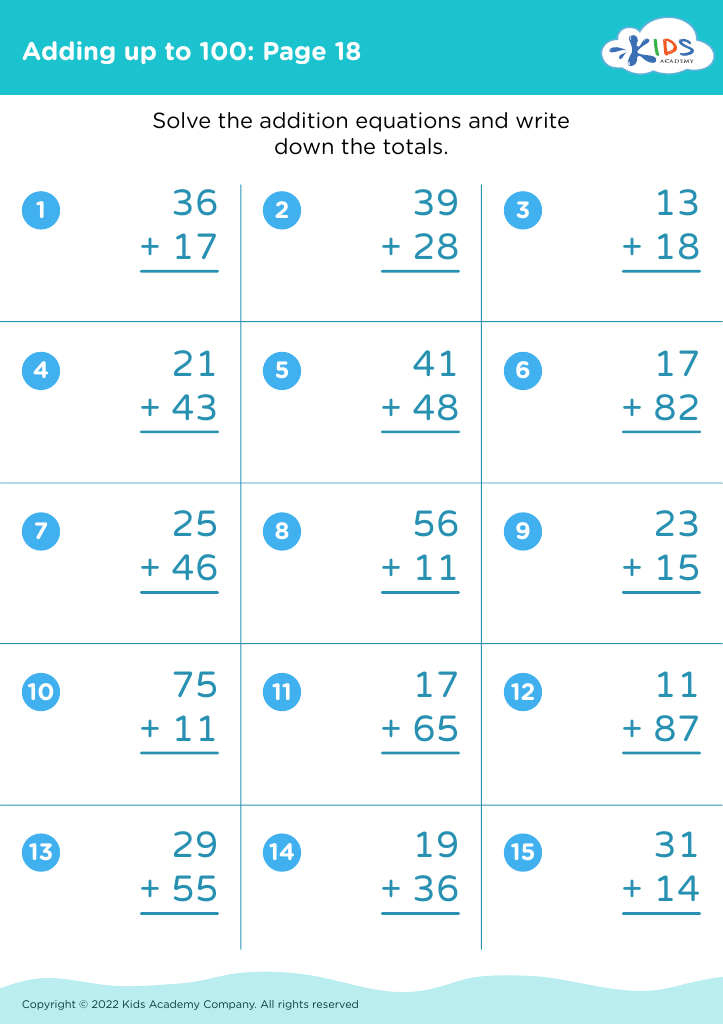
Adding up to 100: Page 18

Adding up to 100: Page 18

Adding up to 100: Page 18
Worksheet
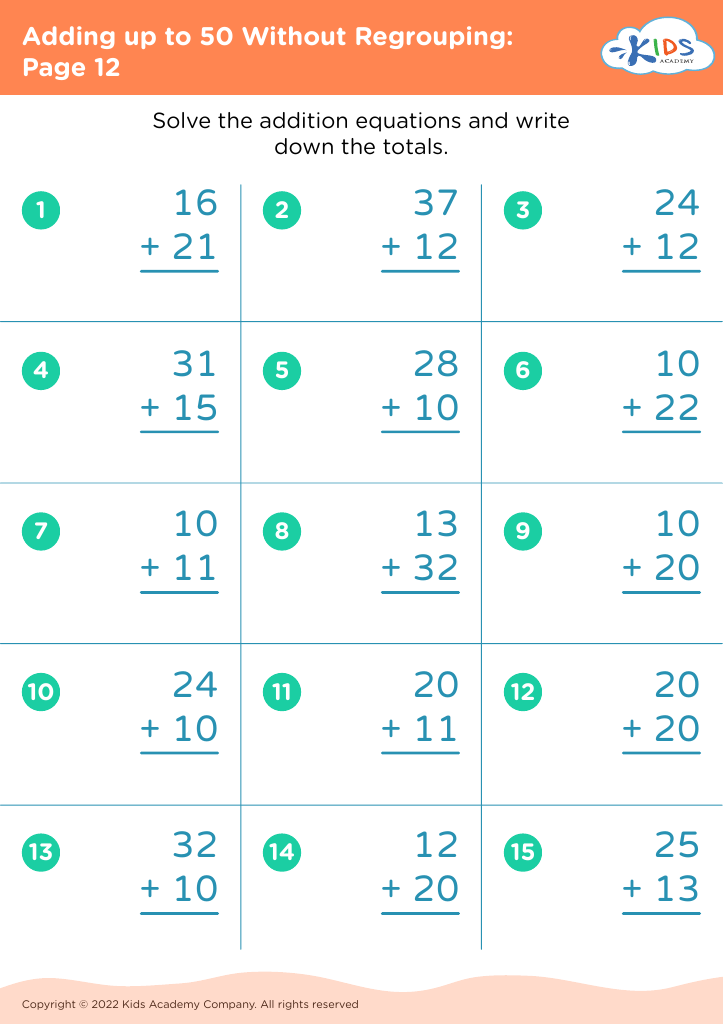
Adding up to 50 Without Regrouping: Page 12
Worksheet
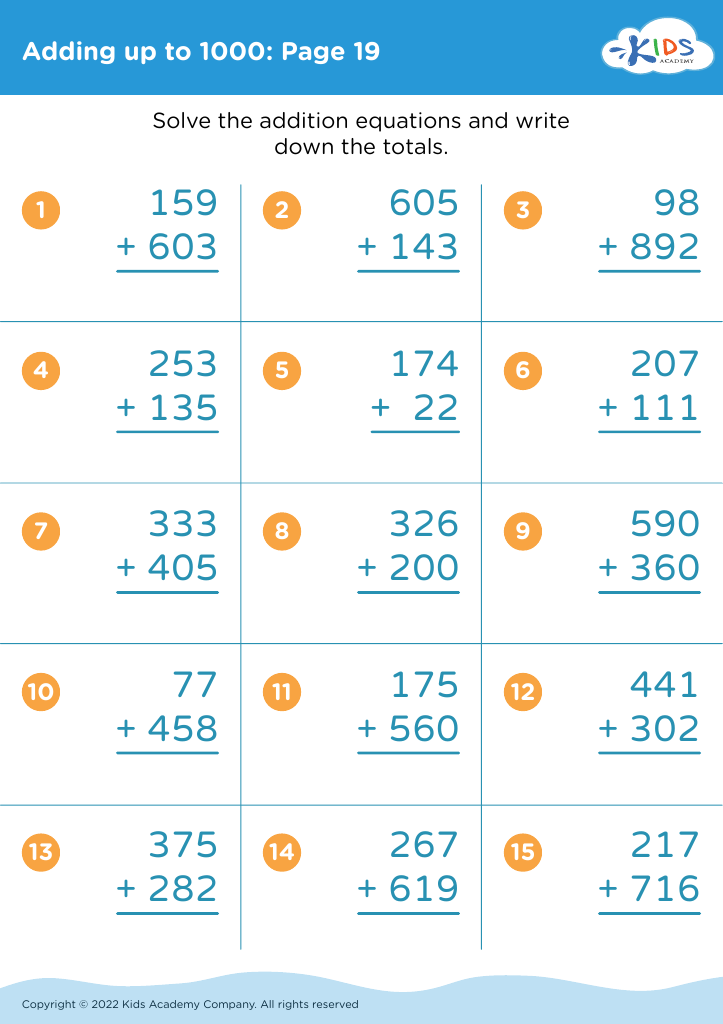
Adding up to 1000: Page 19

Adding up to 1000: Page 19

Adding up to 1000: Page 19
Worksheet
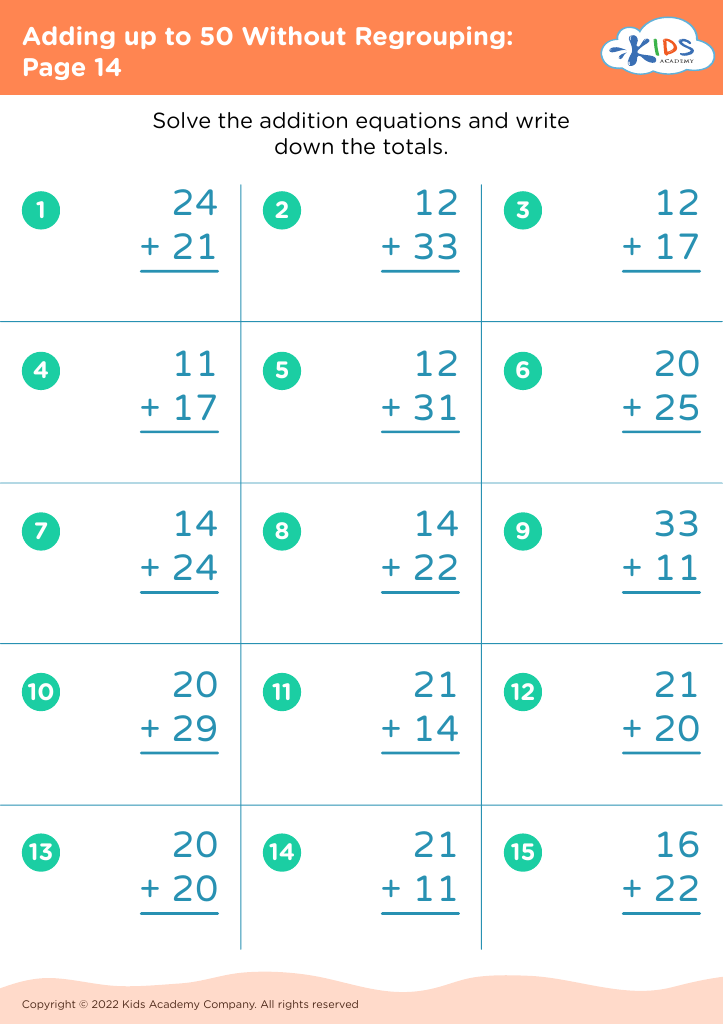
Adding up to 50 Without Regrouping: Page 14
Worksheet
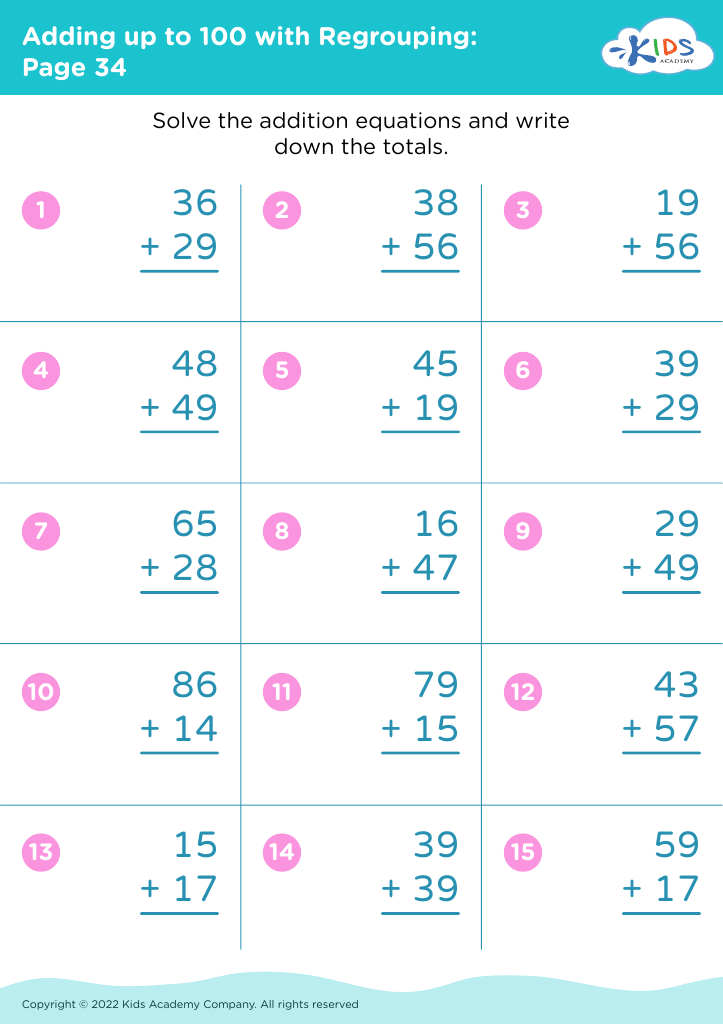
Adding up to 100 with Regrouping: Page 34
Worksheet
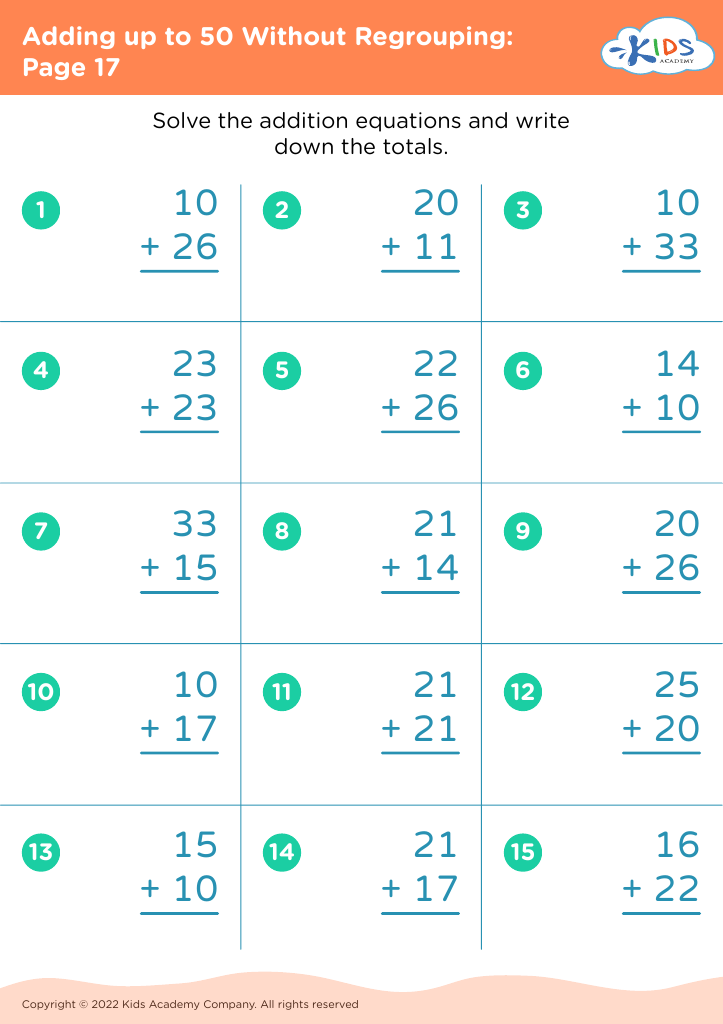
Adding up to 50 Without Regrouping: Page 17
Worksheet
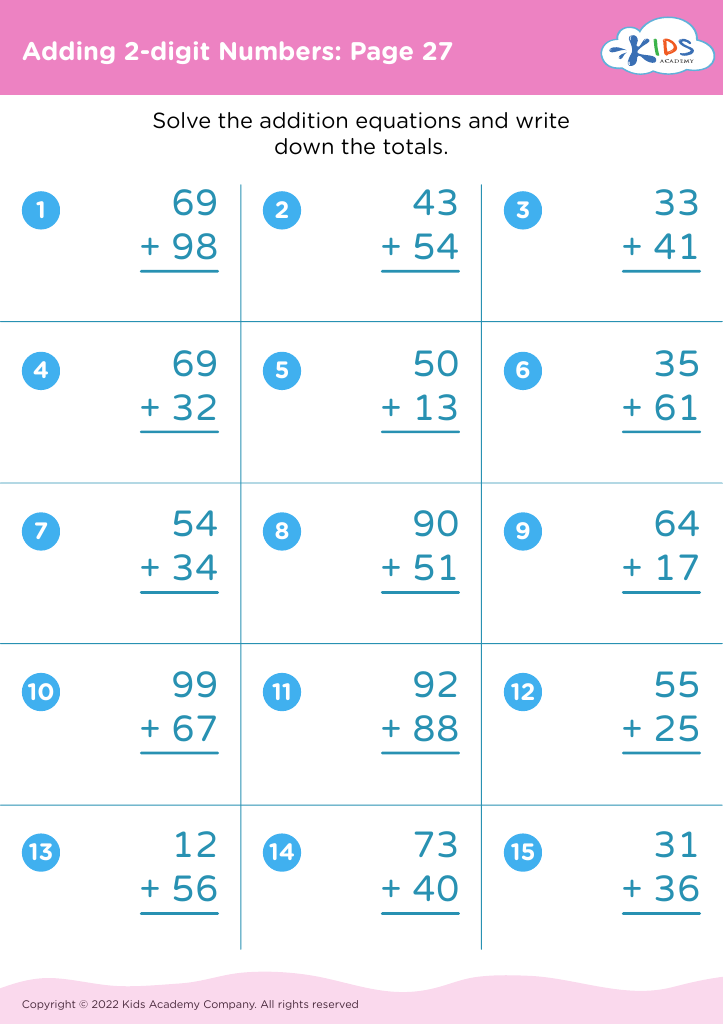
Adding 2-digit Numbers: Page 27

Adding 2-digit Numbers: Page 27

Adding 2-digit Numbers: Page 27
Worksheet
Repeated Archaeology Addition Worksheet
Repeated Archaeology Addition Worksheet
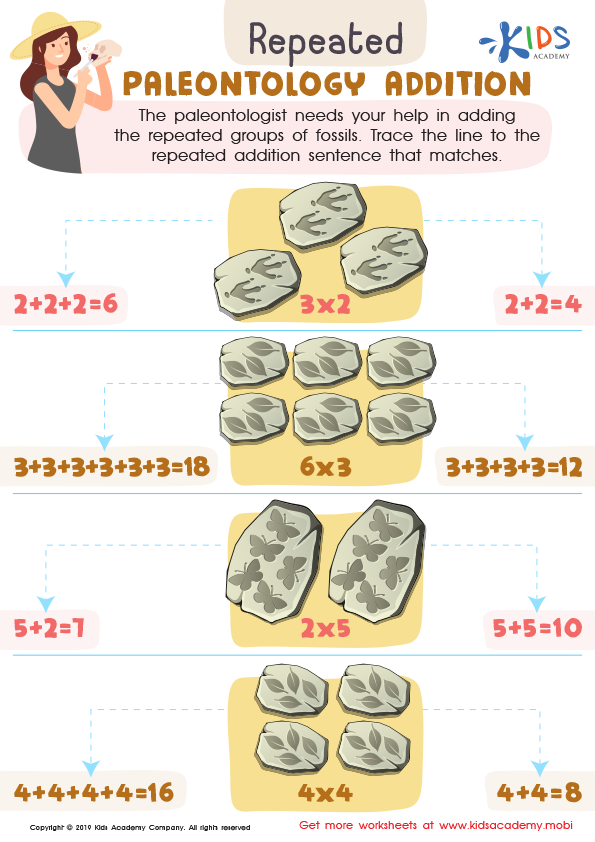
Does your child have dreams for the future? Help them explore the different professions available to them and what each entails. This traceable sheet, featuring an archaeologist completing their work, will show your kid how to find the repeated addition sentence that matches the line. Hold their hand as they complete the activity, inspiring them to pursue their big dreams!
Repeated Archaeology Addition Worksheet
Worksheet
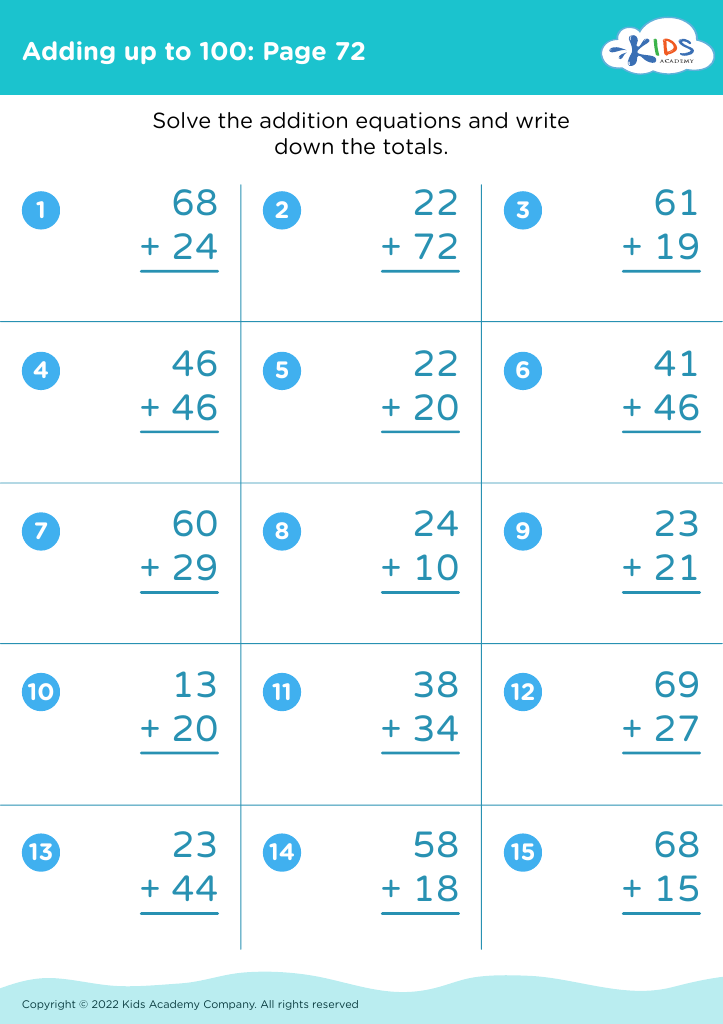
Adding up to 100: Page 72

Adding up to 100: Page 72

Adding up to 100: Page 72
Worksheet
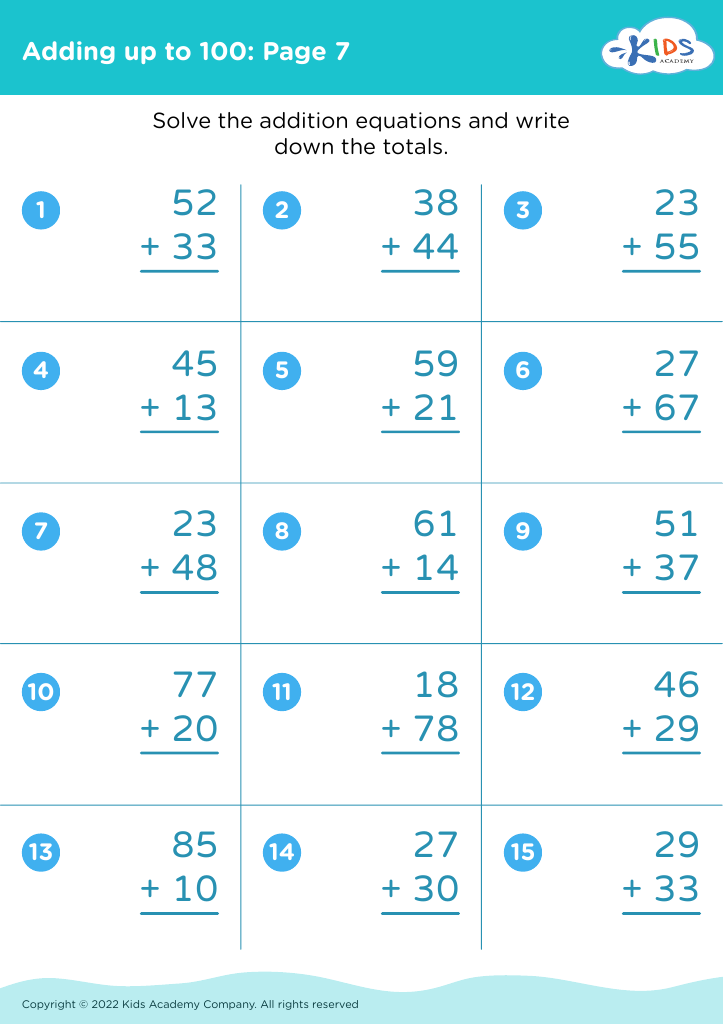
Adding up to 100: Page 7

Adding up to 100: Page 7

Adding up to 100: Page 7
Worksheet
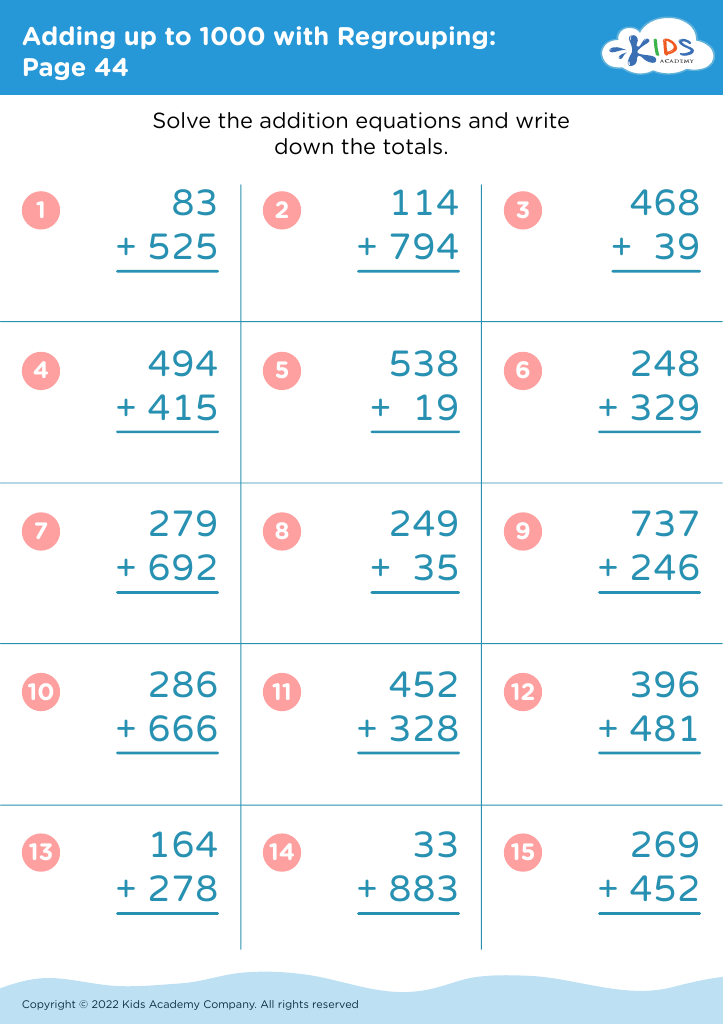
Adding up to 1000 with Regrouping: Page 44
Worksheet
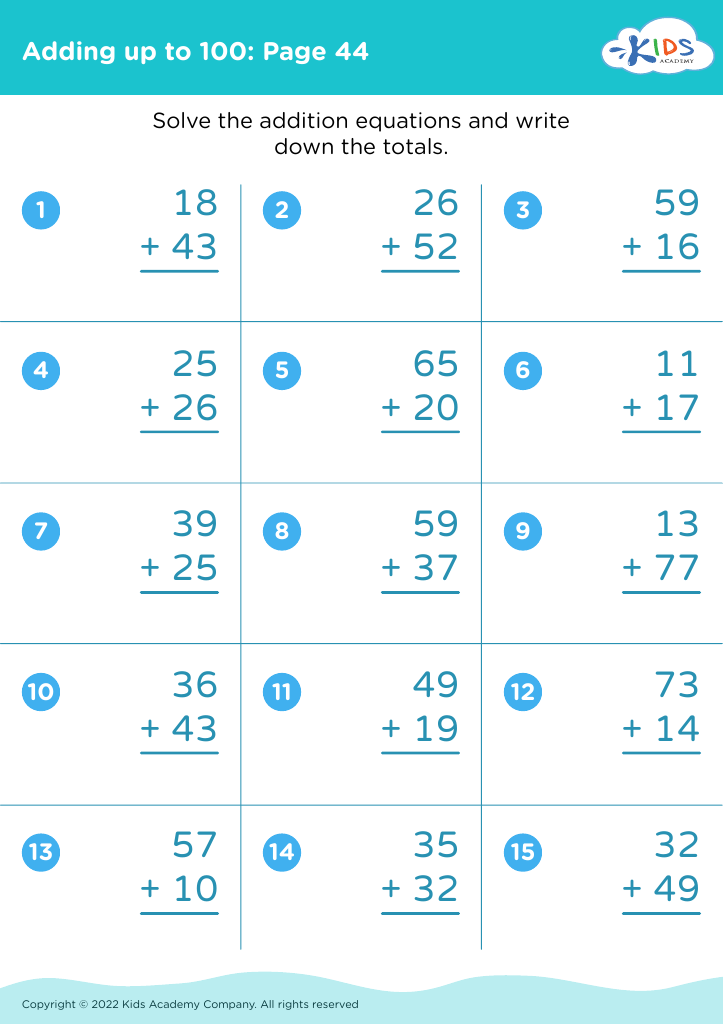
Adding up to 100: Page 44

Adding up to 100: Page 44

Adding up to 100: Page 44
Worksheet


Parents and teachers play a crucial role in developing counting skills in children aged 7-8 because strong foundational math skills are essential for academic success and everyday life. At this age, children transition from simple counting to more complex mathematical concepts, such as addition, subtraction, and the understanding of number relationships. Enhancing counting abilities helps children build confidence in their mathematical reasoning, setting the stage for future success in subjects like algebra and geometry.

Developing counting skills also supports cognitive development by promoting logical thinking, problem-solving abilities, and memory retention. These skills are transferable, benefiting students in other academic areas and real-life scenarios. Basic arithmetic operations like adding items in a shopping list or dividing treats evenly among friends become more manageable with strong counting skills.

Moreover, math proficiency is directly linked to improved critical thinking and analytical abilities, which are invaluable in various careers and daily decision-making processes. By fostering a positive attitude toward math and emphasizing its practical applications, parents and teachers can motivate children to embrace learning and overcome common anxieties associated with the subject. Investing in counting skills for 7-8-year-olds, therefore, is not just about math; it's about equipping them with tools for lifelong success.