Improving reading skills Math Worksheets for Ages 7-8
5 filtered results
-
From - To
Enhance your child's reading skills with our engaging Math Worksheets designed specifically for ages 7-8. These worksheets blend fundamental math concepts with reading exercises, promoting literacy alongside numeracy. Fun word problems and challenging puzzles encourage kids to read carefully and think critically, boosting their comprehension and problem-solving skills. Each worksheet provides a dynamic learning experience, helping children connect mathematical ideas with real-world contexts. Suitable for teachers and parents alike, our resources foster a love for learning while reinforcing essential reading abilities. Download and explore a collection of worksheets that will make reading and math practice enjoyable and effective for young learners!
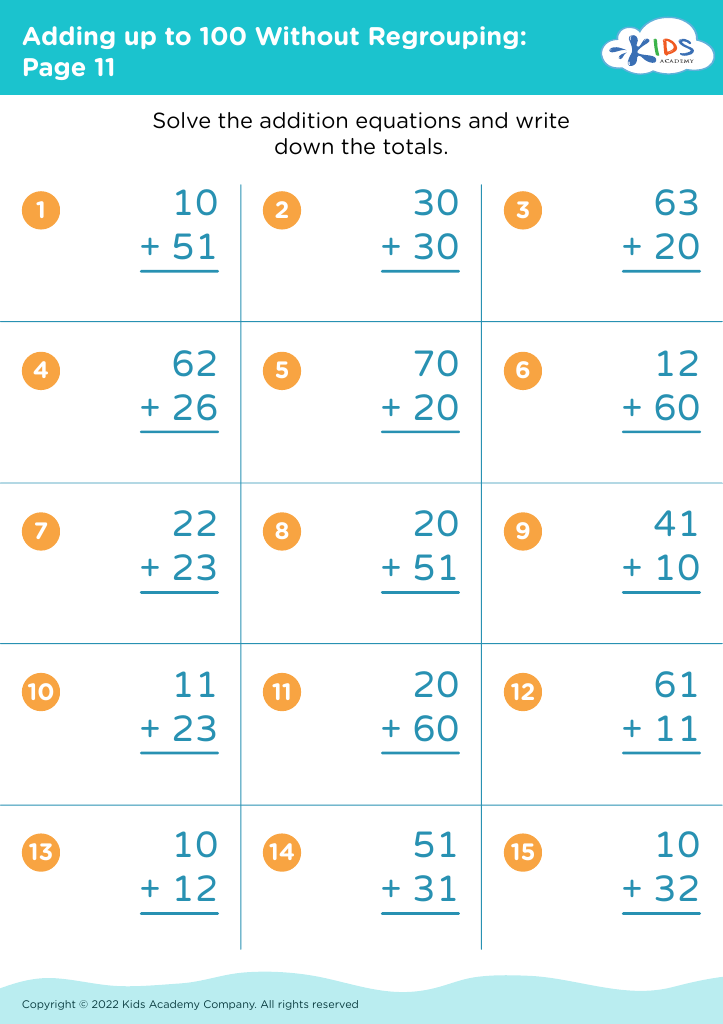
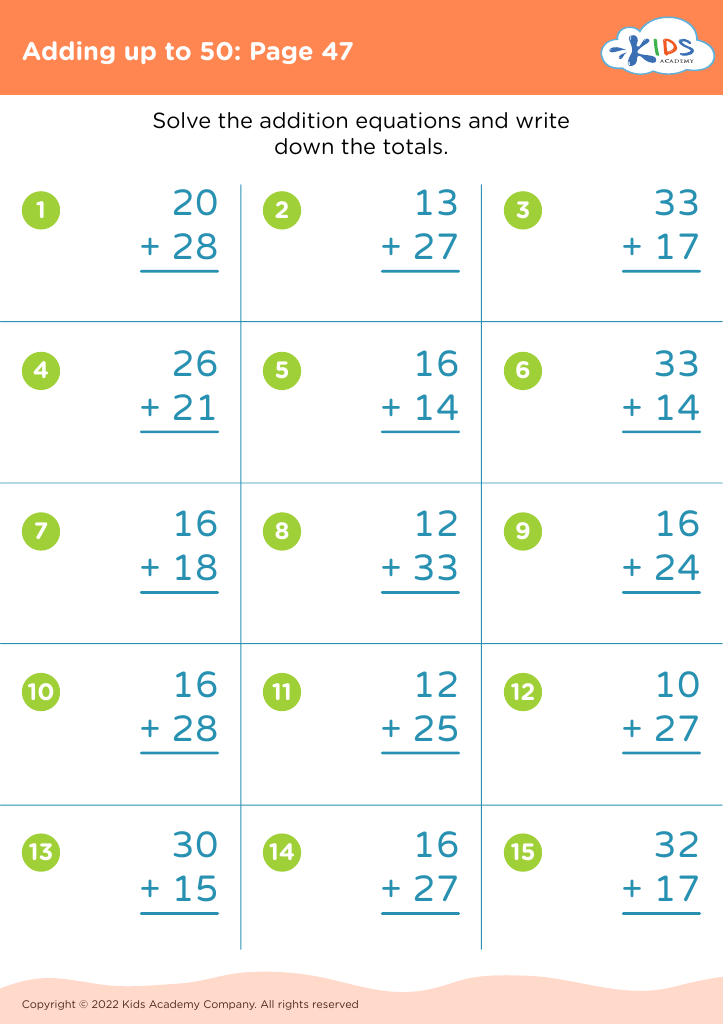
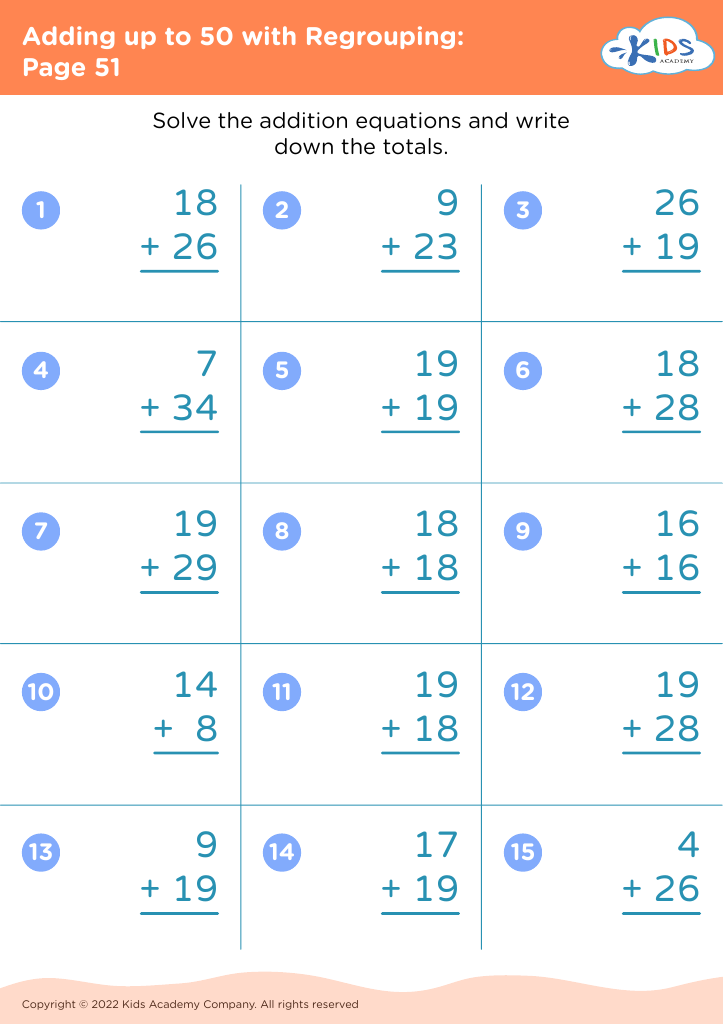
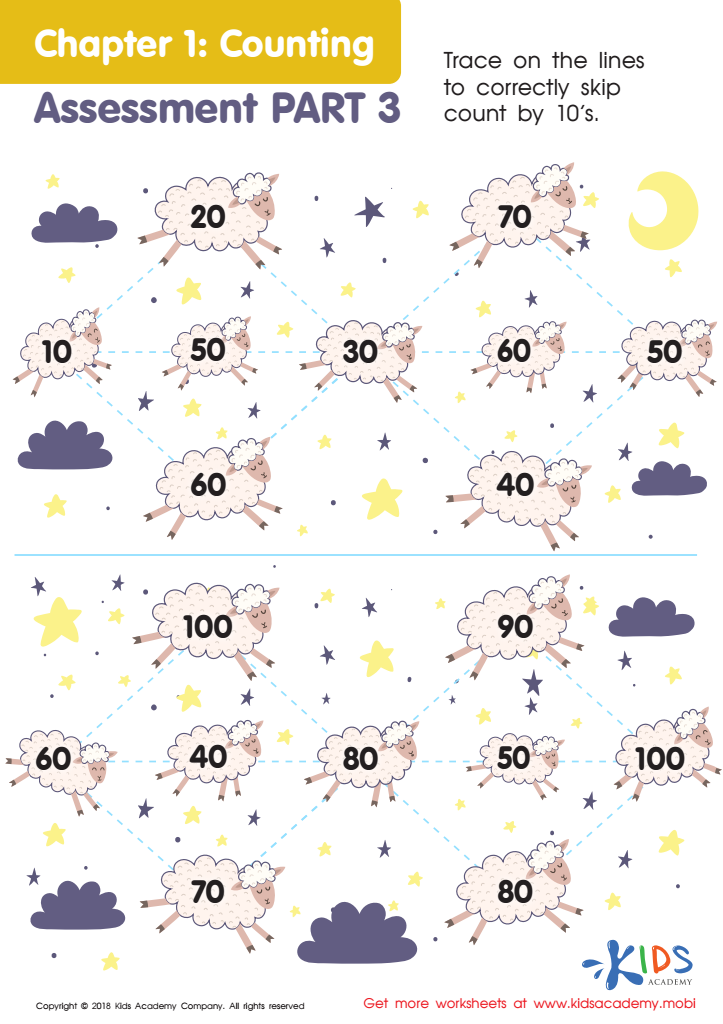
Counting: Assessment 3 Worksheet
 Assign to My Students
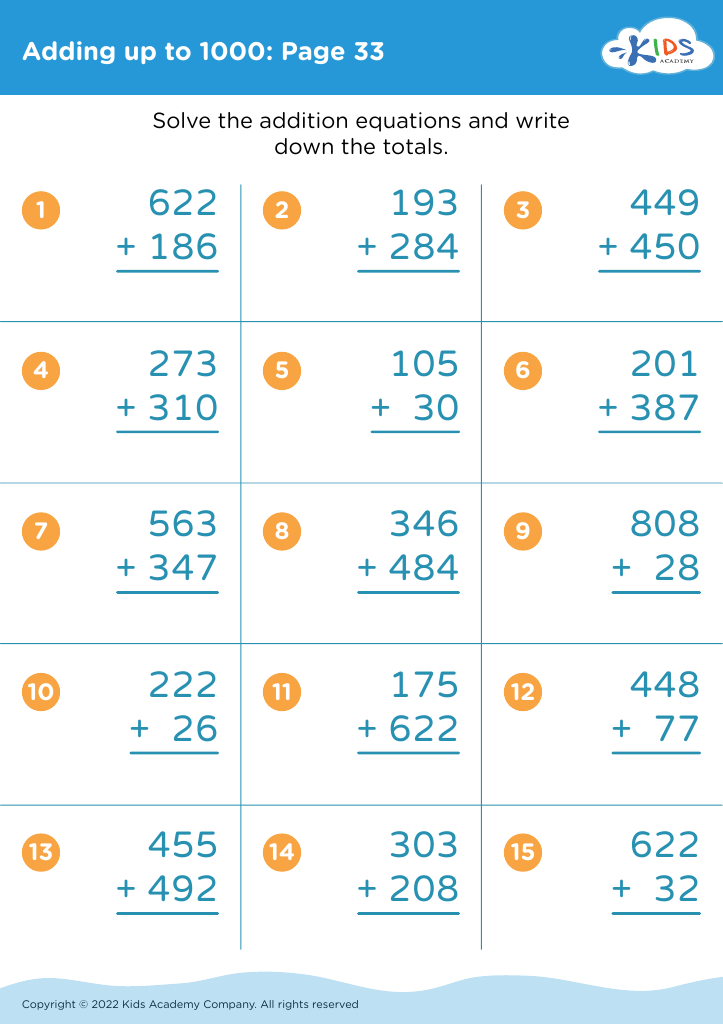








Improving reading and math skills for children aged 7-8 is crucial for their academic and personal development. At this age, children are encountering more complex texts and mathematical concepts, laying the foundation for future learning. Strong reading skills enable students to understand and critically engage with diverse subjects, from science to social studies, enhancing their overall academic performance. Reading also fosters imagination and empathy, skills that are essential for social interactions and emotional intelligence.
Similarly, math skills at this developmental stage are fundamental for problem-solving and logical reasoning. Mastering basic arithmetic prepares children for more advanced mathematical concepts in the upcoming years. Early proficiency in math contributes to confidence and a positive attitude toward learning, helping to reduce anxiety in more rigorous academic settings.
Furthermore, both reading and math skills are interconnected—reading comprehension can enhance word problems in math, while math vocabulary supports reading tasks. Encouraging improvement in these areas not only benefits academic success but also equips children with critical life skills. Therefore, parents and teachers should collaborate to provide a rich learning environment that nurtures these essential skills, ensuring children are well-prepared for their educational journeys ahead.








