
Visualization skills Math Worksheets for Ages 7-8
3 filtered results
Difficulty Level
Grade
Age
-
From - To
Subject
Activity
Standards
Enhance your child’s mathematical journey with our "Visualization Skills Math Worksheets" designed specifically for ages 7-8. These engaging worksheets help young learners develop crucial visualization skills necessary for problem-solving and mathematical reasoning. Through fun activities and practice questions, children will learn to visualize numbers, shapes, and patterns, making abstract concepts more tangible. Perfect for reinforcing classroom learning or providing extra practice at home, these worksheets promote independent thinking and improve focus. Help your child build a strong foundation in math while fostering a love for learning. Explore our collection today and watch their confidence soar!
Favorites
With answer key
Interactive
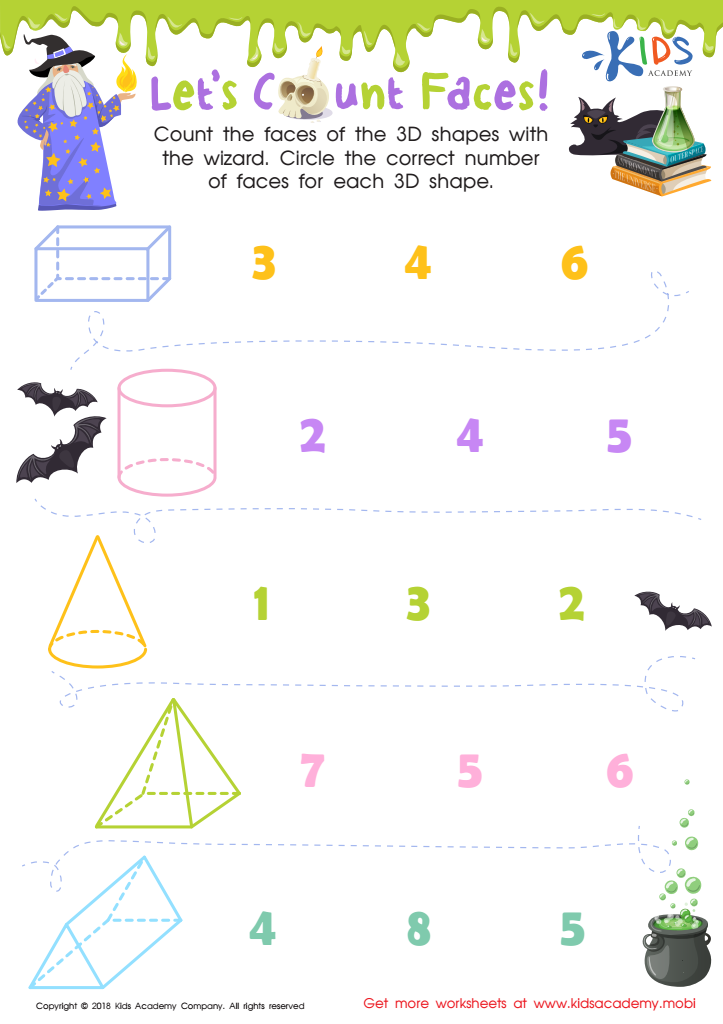
Let's Count Faces! Worksheet
Help the wizard count the faces of 3D shapes! Ask your kids to identify the shapes before beginning, then have them circle the correct number of faces. Enjoy this fun wizard-themed worksheet with your kids!
 Assign to My Students
Let's Count Faces! Worksheet
Worksheet
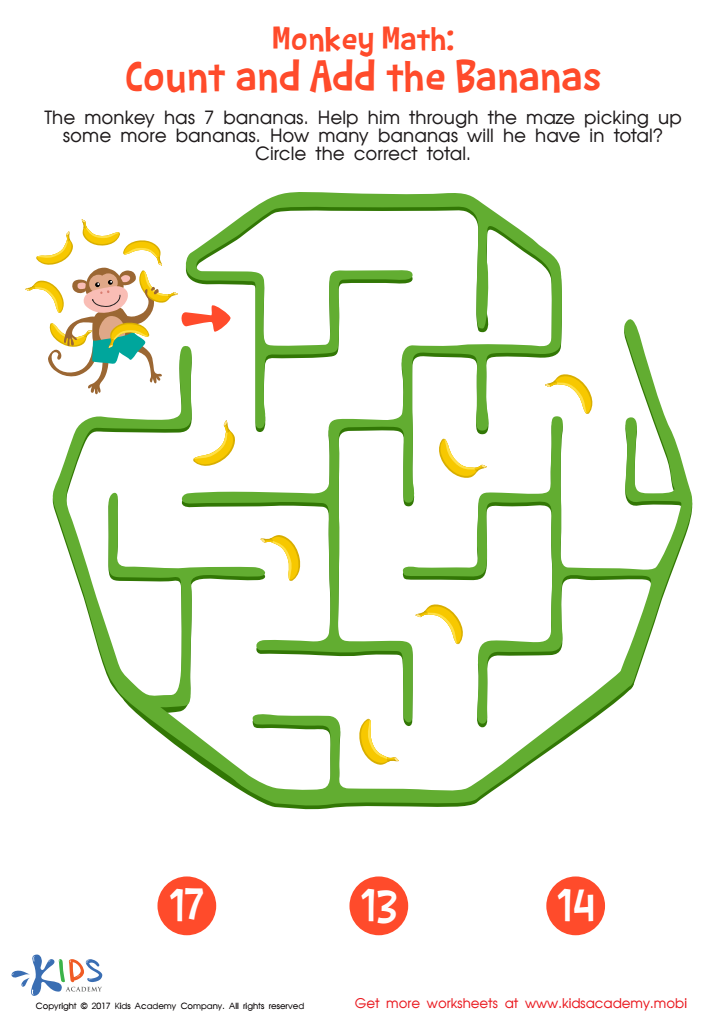
Monkey Math Worksheet
Worksheet
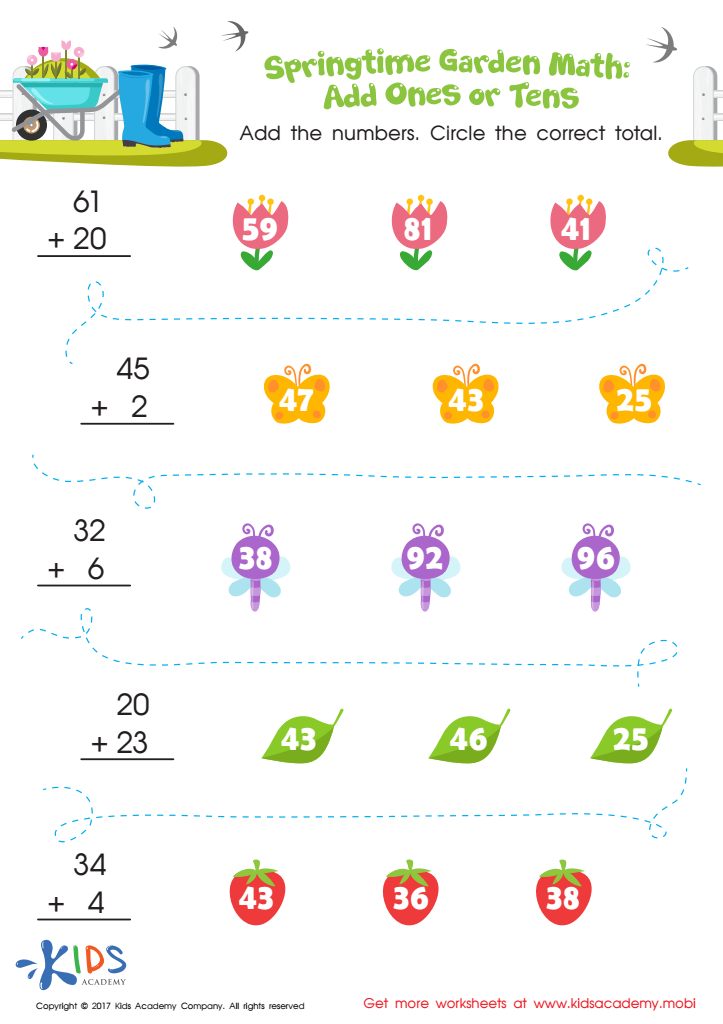
Springtime Garden Math Worksheet
Get your kid ready for math success with this bright garden-themed addition worksheet! They'll practice adding two-digit numbers and check their answers with the choices provided. It's an effective way to help kids build skills, as practice strengthens understanding. Get printing for math mastery!
Springtime Garden Math Worksheet
Worksheet
Join Kids Academy for Free
Who is primarily going to use this learning content?




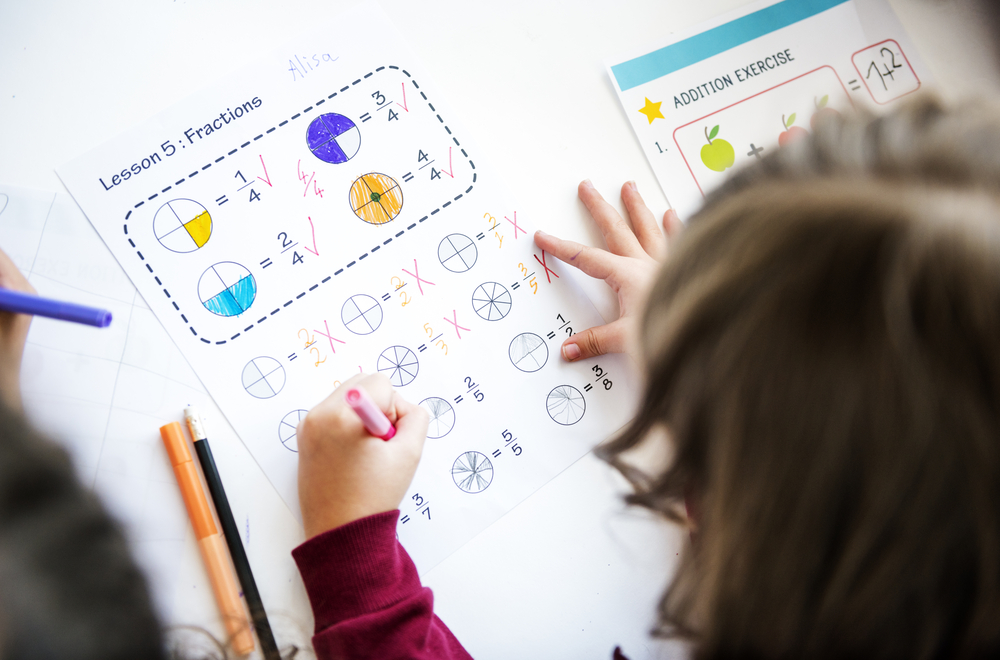



Visualization skills in math are crucial for children aged 7-8 as they lay the foundation for deeper understanding and problem-solving abilities. At this developmental stage, children are becoming more capable of mental imagery, which enhances their ability to grasp abstract concepts. When children visualize mathematical problems, they can better understand relationships between numbers, recognize patterns, and improve their spatial reasoning.
For parents and teachers, fostering visualization skills can lead to greater student engagement and confidence in math. Visualization helps make math tangible; for instance, when children visualize a story problem, they can imagine the scenario, leading to more effective problem-solving strategies. This skill supports their ability to work with geometry, measurement, and even algebraic concepts later on.
Moreover, strong visualization skills contribute to improved academic performance in mathematics, as children can mentally manipulate numbers and shapes, aiding in calculations and estimations. Ultimately, investing time in developing these skills supports not just math proficiency but also critical thinking, creativity, and perseverance—traits that are valuable in all areas of learning and life. By nurturing visualization skills, parents and teachers empower children to approach math with curiosity and competence, setting the stage for future success.








