Mental math skills Times Tables Worksheets for Ages 7-8
4 filtered results
-
From - To
Enhance your child’s mental math skills with our engaging Times Tables Worksheets designed specifically for ages 7-8. These worksheets focus on building a strong foundation in multiplication through interactive exercises, games, and practice problems that make learning fun. By mastering the times tables, children will develop confidence and quick calculation abilities essential for future math success. Our resources are aligned with educational standards, ensuring effective learning while keeping your child engaged. Dive into a world of exciting math challenges that sharpen mental agility and boost problem-solving skills. Prepare your little ones for a brighter academic future with our expertly crafted materials!
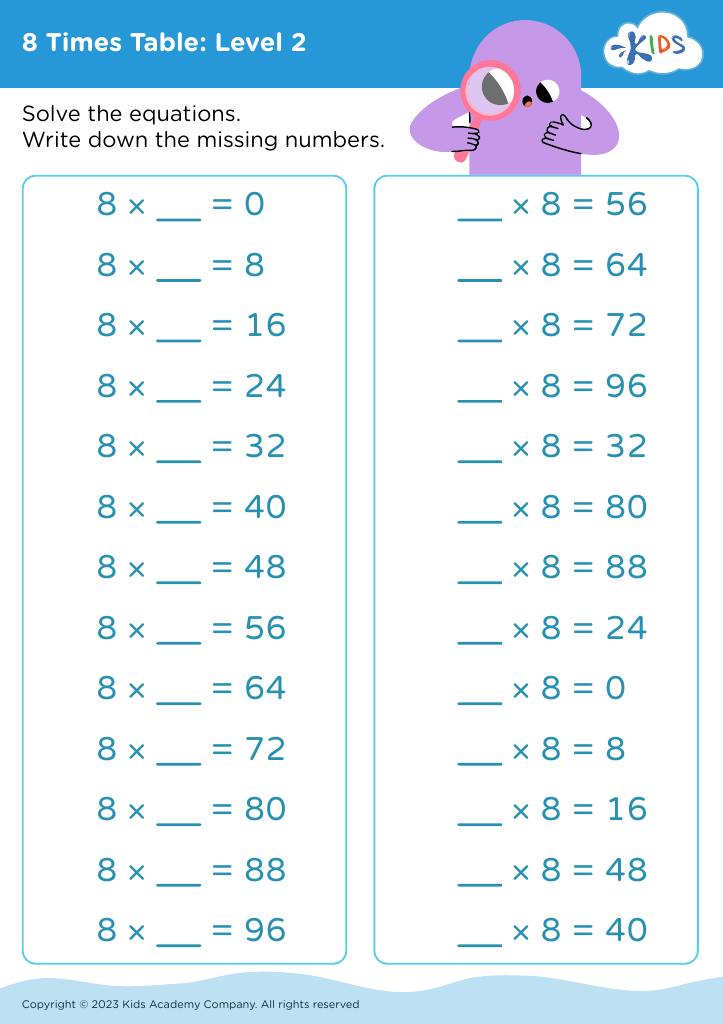
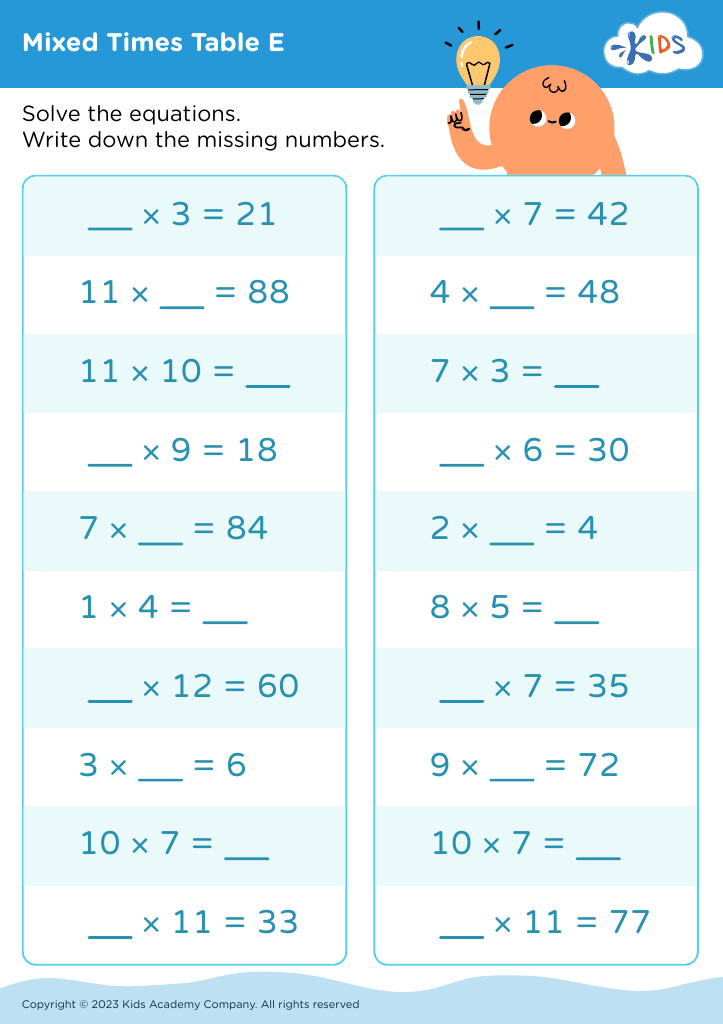
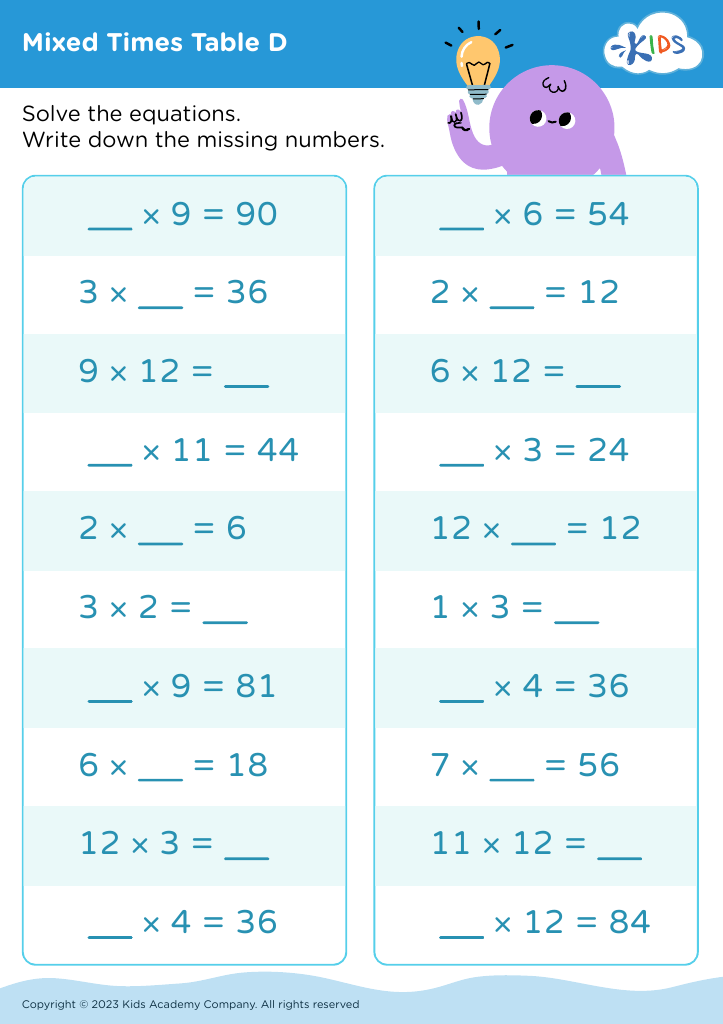
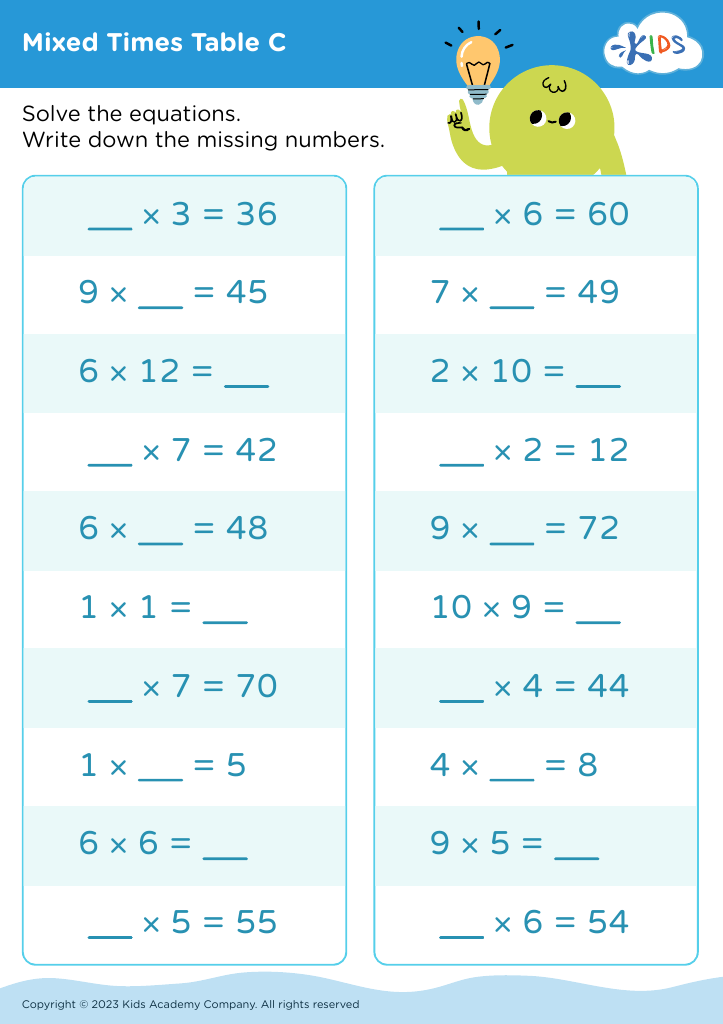





Parents and teachers should emphasize mental math skills, particularly times tables, for children aged 7-8 for several crucial reasons. At this developmental stage, children are forming foundational math skills that will support their future learning. Mastery of times tables enhances their computational fluency, allowing them to perform calculations quickly and accurately. This not only builds confidence but also reduces anxiety in more complex math topics encountered later.
Mental math skills help children develop critical thinking and problem-solving abilities. When children learn to recognize patterns in numbers, they enhance their cognitive skills, which are essential for approaching various math concepts. Moreover, familiarity with multiplication tables aids in understanding division, fractions, and even topics like algebra as they progress in school.
Encouraging mental math through fun activities or games can also foster a positive attitude toward math. When parents and teachers engage with children in learning times tables, it creates a supportive environment, making math enjoyable rather than intimidating. Ultimately, developing strong mental math skills during this formative age cultivates a love for learning and lays a solid foundation for lifelong mathematical proficiency.








