Animal knowledge Reading Non-Fiction Worksheets for Ages 7-8
3 filtered results
-
From - To
Explore our engaging Animal Knowledge Reading Non-Fiction Worksheets designed for ages 7-8. These printable resources encourage young readers to discover the fascinating world of animals while enhancing their reading and comprehension skills. Each worksheet features age-appropriate, fact-based content that sparks curiosity and promotes critical thinking. Perfect for classroom use or at-home learning, our curated activities help children build a solid foundation in non-fiction reading. Dive into captivating stories about various animal species, their habitats, behaviors, and unique traits. Make learning an adventure with our expertly crafted worksheets that blend education with exciting animal facts!
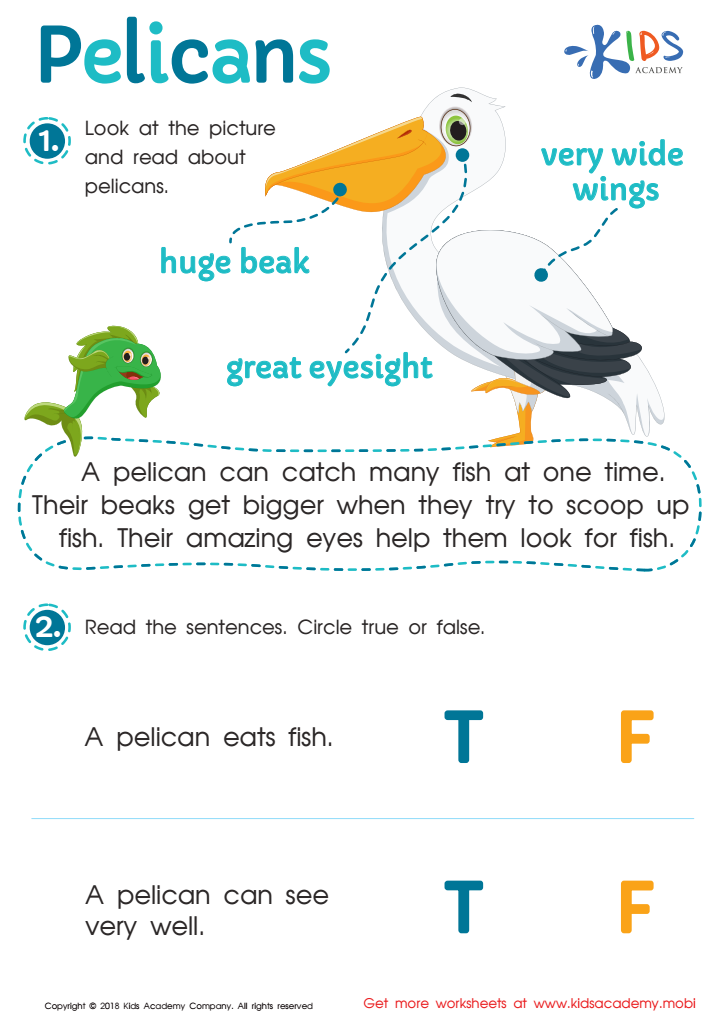
Pelicans Worksheet
 Assign to My Students
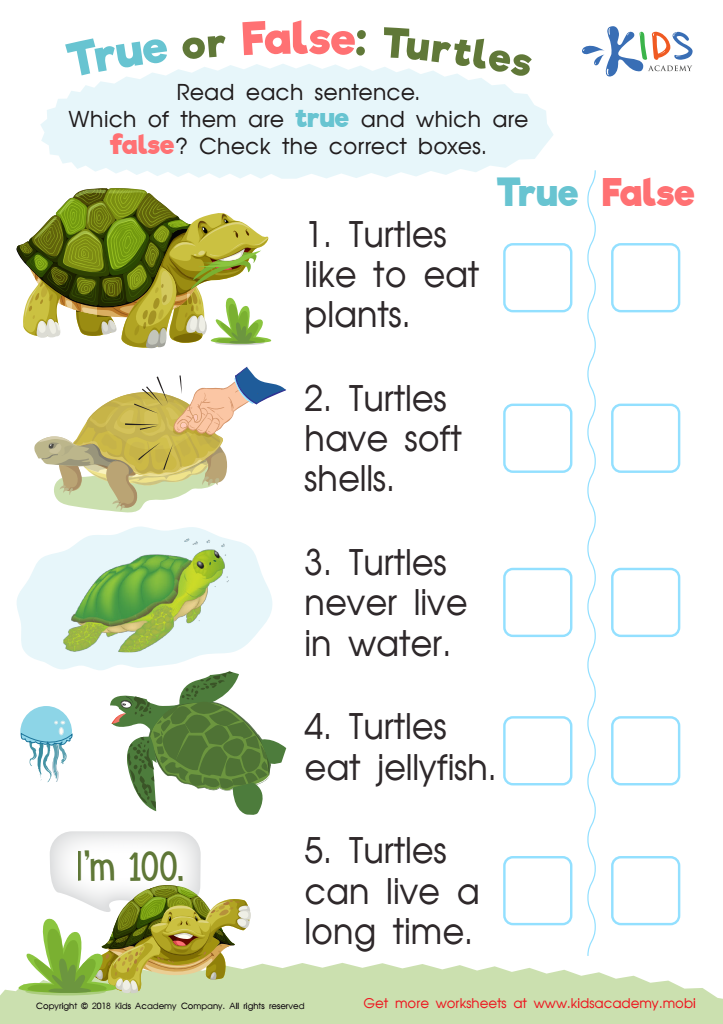
True or False: Turtles Worksheet
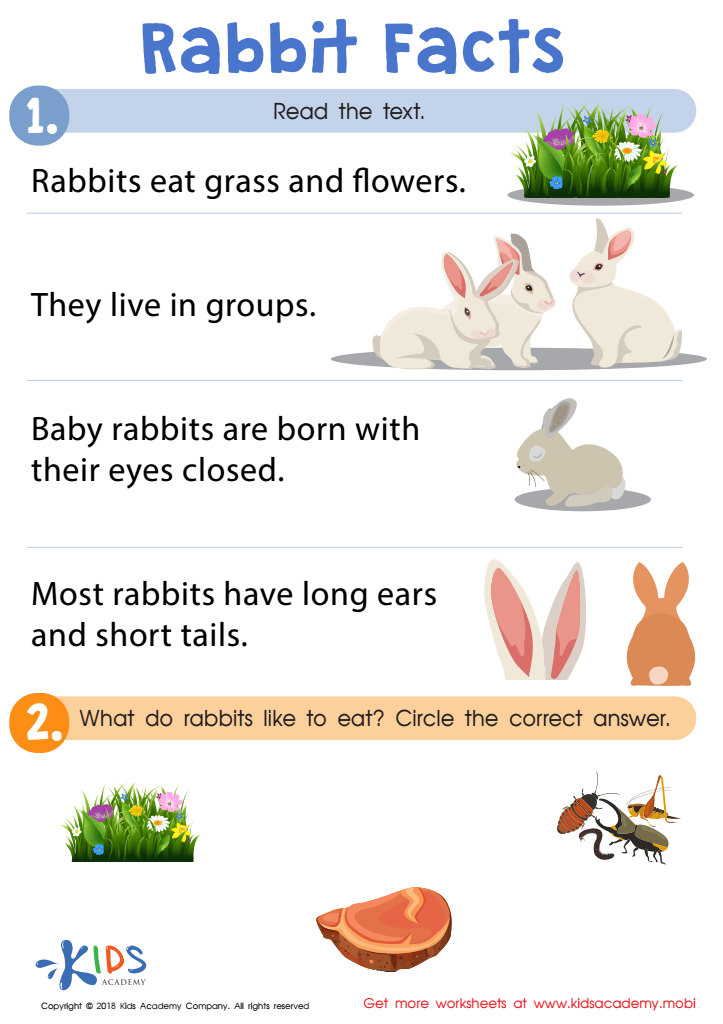
Rabbit Facts Worksheet








Animal knowledge reading non-fiction books are incredibly beneficial for children aged 7-8, bridging the gap between fundamental skills and deeper learning. At this developmental stage, kids are naturally curious and eager to explore the world around them. Non-fiction books about animals cater to this curiosity, offering factual, engaging content that keeps young readers interested. Learning about different animals, their habitats, behaviors, and roles in the ecosystem not only expands their knowledge but also fosters a sense of wonder and respect for nature.
Additionally, reading non-fiction enhances literacy skills differently than fiction. This age range is critical for developing reading comprehension and decoding skills, which are bolstered by the expository text structures and factual information in non-fiction books. Understanding how to navigate headings, subheadings, indices, and glossaries builds essential research skills and improves information retention.
Moreover, animal-related non-fiction can inspire interdisciplinary exploration. It encourages students to delve into related subjects like geography, biology, and environmental science. This holistic learning approach helps children see the interconnectedness of various subjects, making education more meaningful.
For parents and teachers, promoting non-fiction reading lays a strong educational foundation, nurtures intellectual growth, and supports lifelong learning habits. Engaging with diverse, factual content means children are better prepared for future academic pursuits and more informed about the world around them.








