Enhancing observation skills Reading Non-Fiction Worksheets for Ages 7-8
3 filtered results
-
From - To
Discover our engaging "Enhancing Observation Skills" non-fiction worksheets designed specifically for children aged 7-8. These resources help young learners sharpen their observational abilities while exploring various subjects through informative texts. Each worksheet encourages critical thinking, enabling students to notice details, make connections, and draw conclusions about the material they read. Fun activities paired with captivating non-fiction content stimulate curiosity and foster a love for learning. Our worksheets support skill development in reading comprehension, vocabulary, and analytical thinking, providing a well-rounded approach to literacy. Perfect for both classroom settings and at-home learning, ignite your child's passion for reading and observation today!
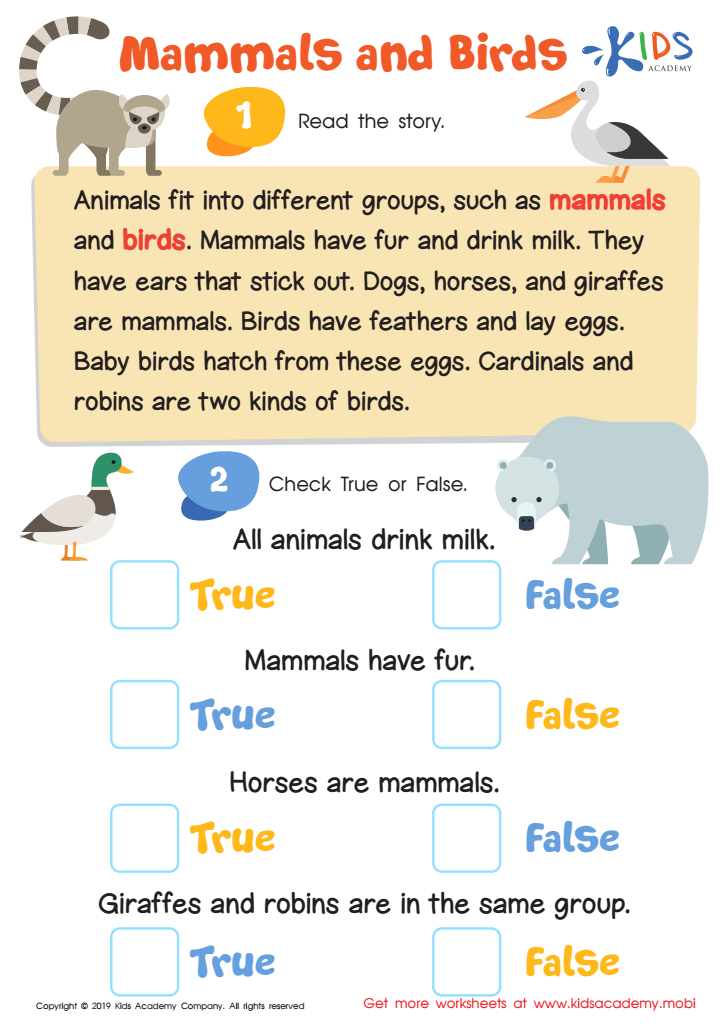
Mammals and Birds Worksheet
 Assign to My Students
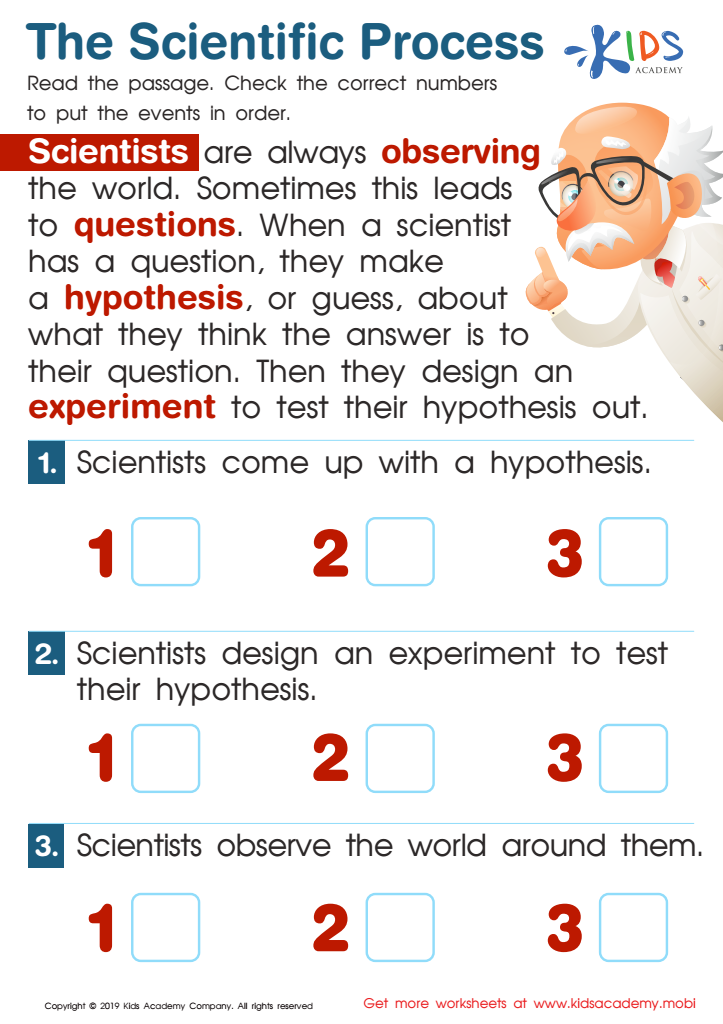
The Scientific Process Worksheet
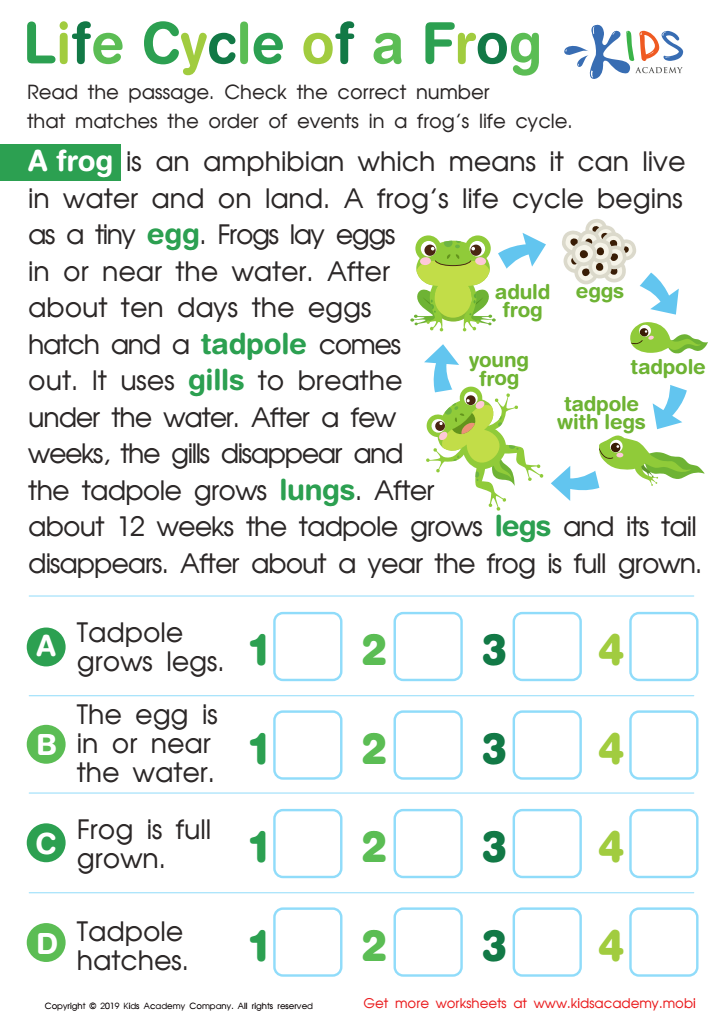
Life Cycle of a Frog Worksheet








Enhancing observation skills while reading non-fiction for children ages 7-8 is crucial for several reasons. Firstly, this age group is at a pivotal stage of cognitive development where improving these skills lays a foundation for critical thinking and analytical capabilities. Non-fiction texts, whether about animals, history, or science, require children to sift through facts, identify main ideas, and observe details that contribute to a better understanding of the world around them.
Secondly, enhancing observation skills encourages curiosity and engagement. When children learn to actively observe details in non-fiction, they become more inquisitive, prompting further exploration and discussion. This can foster a love for learning and reading that extends beyond the classroom.
Moreover, adept observation skills can improve literacy overall. As children become proficient in noticing specific details, they will find it easier to make connections, draw inferences, and summarize information.
Lastly, by focusing on observation skills, parents and teachers equip young learners with tools to navigate an information-rich world. In an age where critical evaluation of sources is essential, fostering strong observation skills can empower children to differentiate between credible information and misinformation, setting them up for academic success and informed citizenship.








