Historical Knowledge Reading Non-Fiction Worksheets for Ages 7-8
5 filtered results
-
From - To
Discover our engaging "Historical Knowledge Reading Non-Fiction Worksheets" designed for children ages 7-8! These informative and interactive worksheets are perfect for helping young learners explore significant events, influential figures, and cultural milestones throughout history. Each worksheet focuses on improving reading comprehension skills while fostering a love for learning about the past. With diverse activities, children will analyze texts, answer questions, and develop critical thinking skills. Support your child's educational journey, encourage curiosity, and spark meaningful discussions with this fun and resourceful collection. Ideal for both classroom and home use, our worksheets will enrich your child's understanding of history in an enjoyable way!
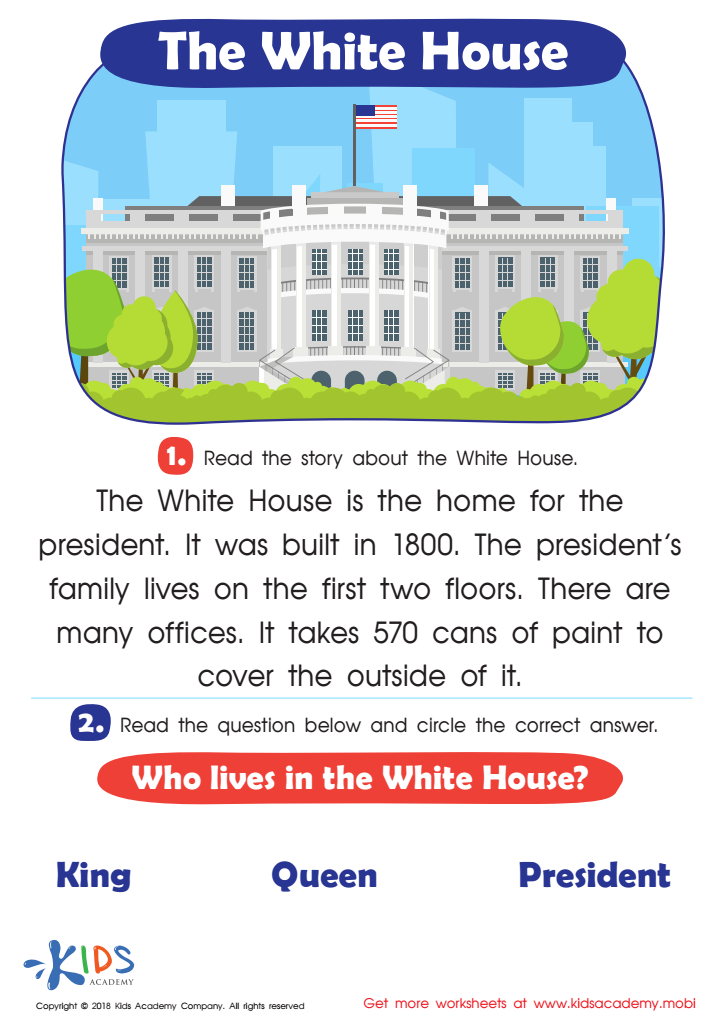
White House Worksheet
 Assign to My Students
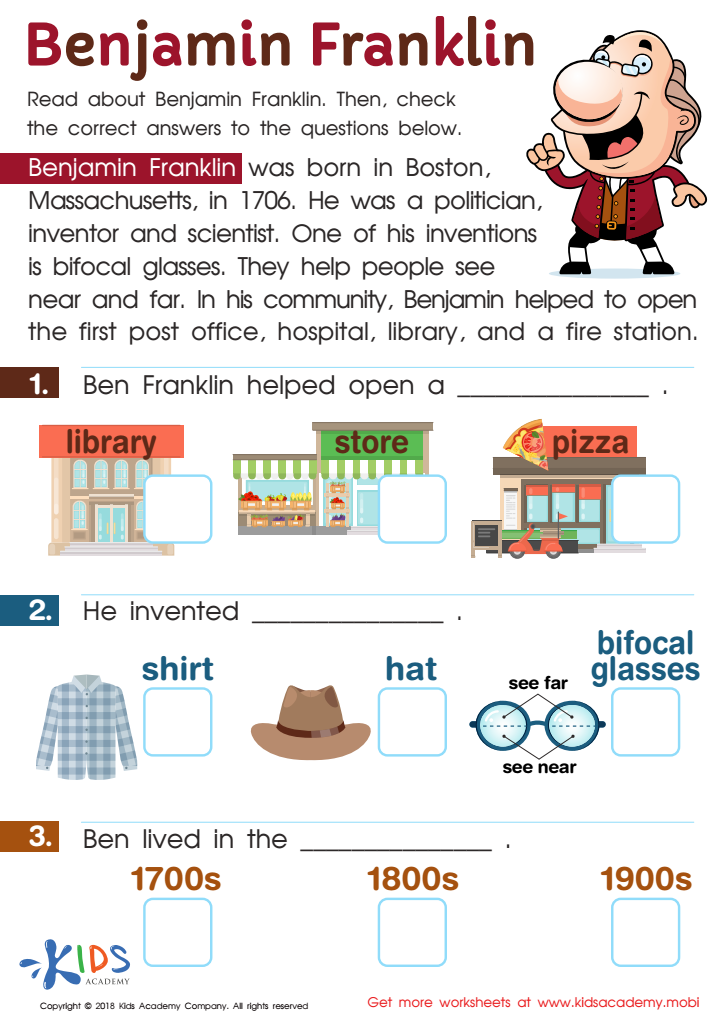
Benjamin Franklin Worksheet
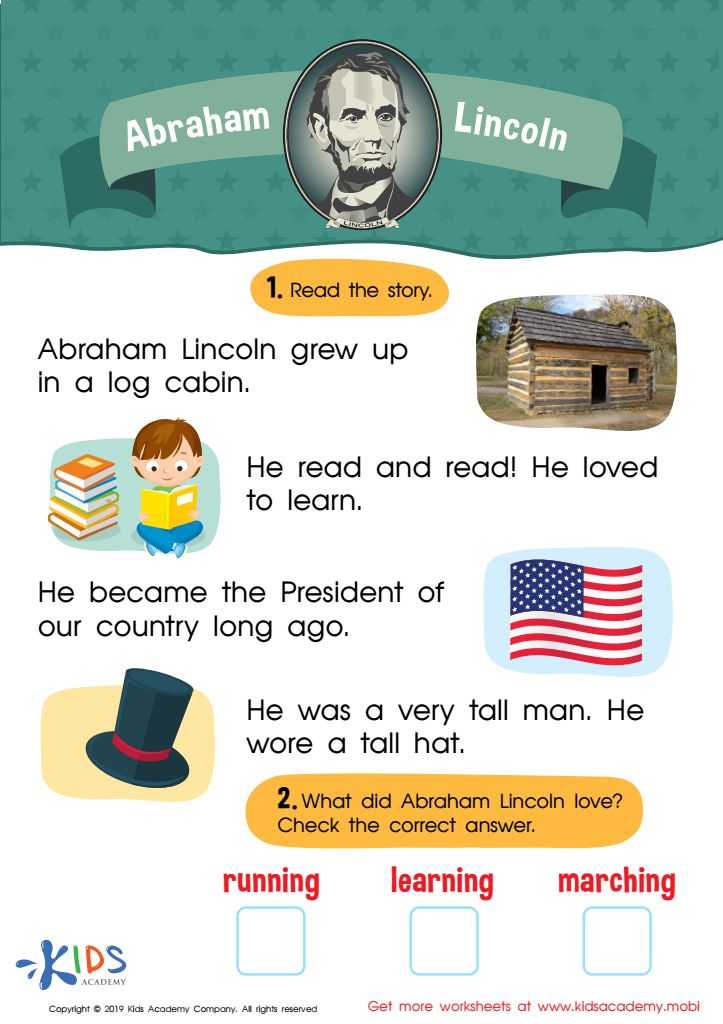
Abraham Lincoln Worksheet
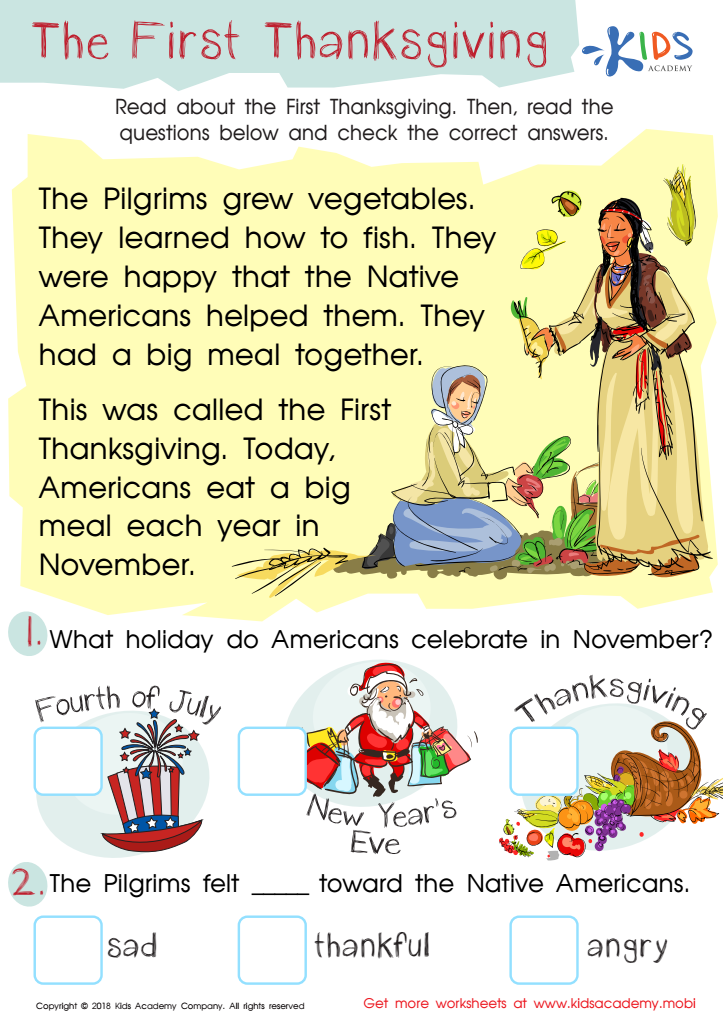
Assessment: First Thanksgiving Worksheet
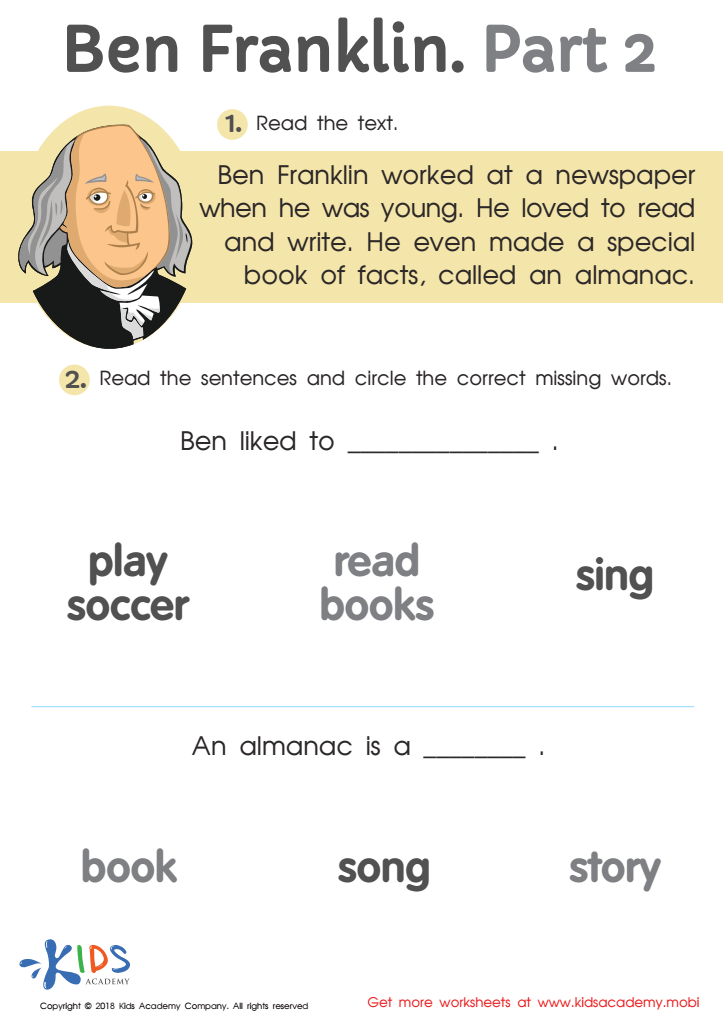
Ben Franklin Part 2 Worksheet








Parents and teachers should prioritize historical knowledge and reading non-fiction for children aged 7-8 because it fosters a foundational understanding of the world. At this age, children are especially curious and open to exploring complex concepts. Introducing them to historical contexts not only helps them develop critical thinking skills but also encourages them to make connections between past and present events.
Non-fiction reading cultivates literacy skills, enriching vocabulary and comprehension while offering a window into different cultures, perspectives, and values. Understanding history helps children form a sense of identity and belonging, as they learn about their own heritage and the diverse backgrounds of others. This exposure promotes empathy and reduces biases, enabling children to appreciate the rich tapestry of human stories.
Moreover, early engagement with historical topics can spark interests in subjects like social studies, science, and even the arts, fostering a lifelong love for learning. Knowledgeable young readers become informed citizens, able to engage in discussions about societal issues thoughtfully. Hence, fostering historical knowledge through non-fiction reading lays the groundwork for informed community members who understand the importance of learning from the past to shape a better future.








