Rhyme recognition Rhyming Worksheets for 7-Year-Olds
3 filtered results
-
From - To
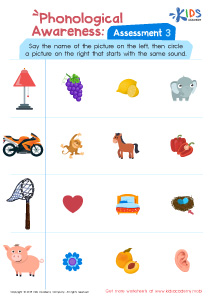
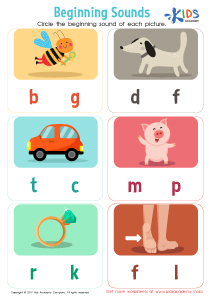
Help your 7-year-old master the art of rhyme with our engaging Rhyme Recognition Rhyming Worksheets. At Kids Academy, our thoughtfully designed printables foster essential literacy skills by helping children identify and match rhyming words. Alongside vibrant illustrations and fun activities, these worksheets make learning to rhyme an enjoyable experience. Children will enhance their phonemic awareness, crucial for early reading success, while learning to listen carefully and understand word patterns. Dedicated to supporting young learners, our rhyme recognition printables are perfect for both classroom and home use. Set a strong reading foundation today with Kids Academy's rhyming worksheets!
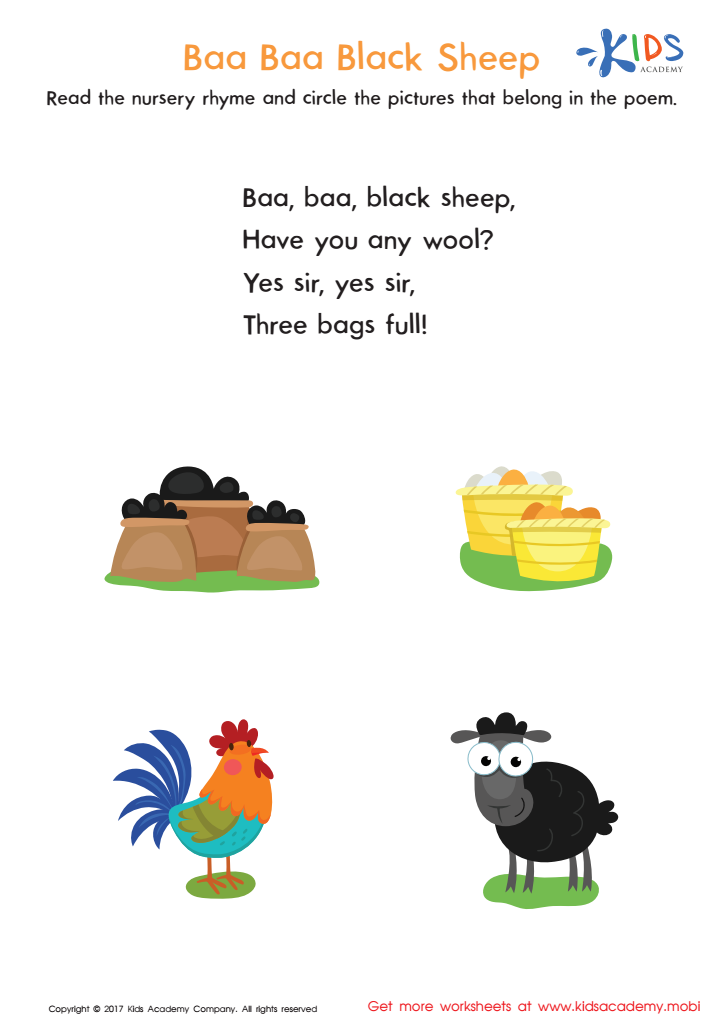
Baa Baa Black Sheep Printable
 Assign to My Students
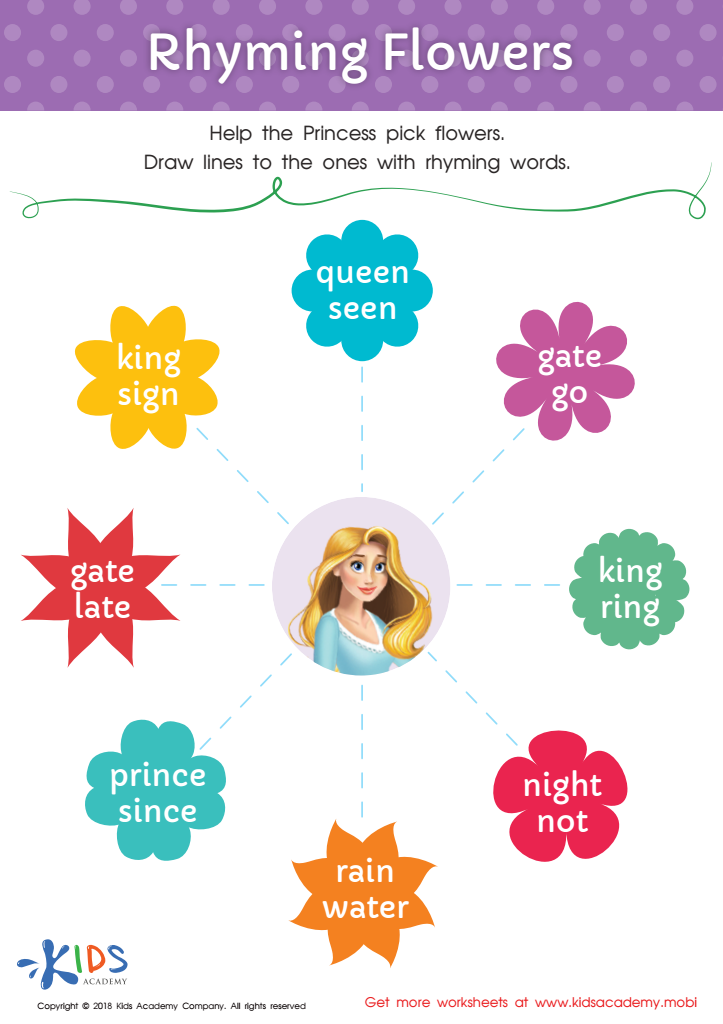
Rhyming Flowers Worksheet
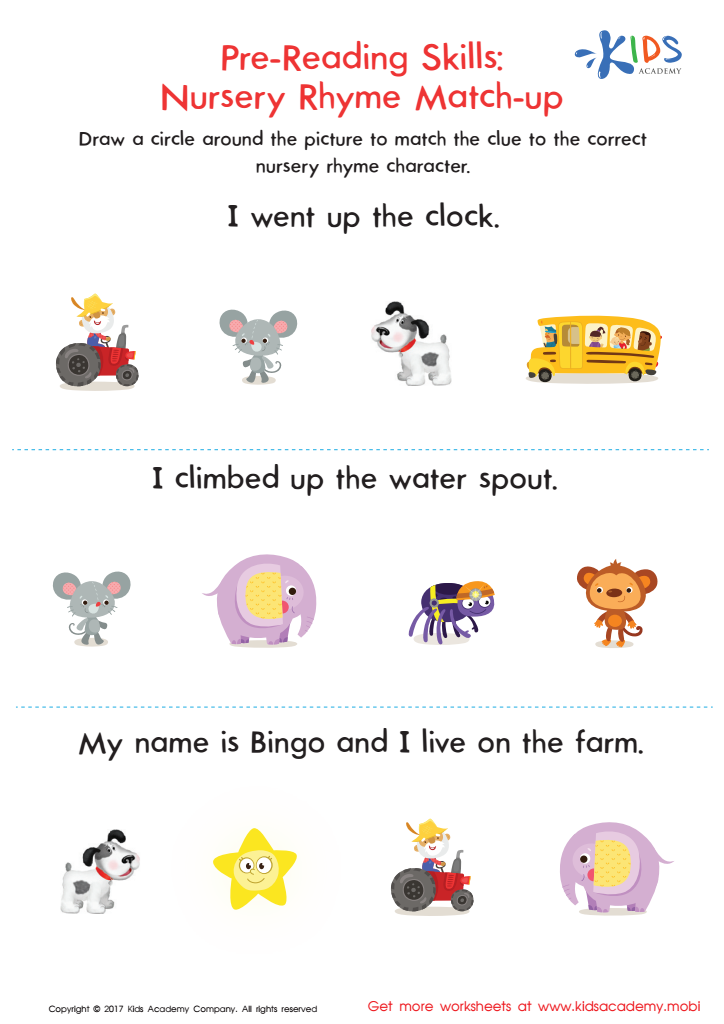
Nursery Rhyme Match–Up Worksheet







Parents and teachers should care about rhyme recognition and rhyming skills for 7-year-olds because these skills form a foundation for reading and writing proficiency. Rhyme recognition helps children understand the sounds within words, enhancing phonemic awareness—a crucial element in learning to read. When kids identify words that rhyme, they begin to grasp how different sounds combine to create words, thereby improving their ability to decode new words and spell them correctly.
Rhyming also boosts memory and aids in the retention of vocabulary and language patterns. For example, rhyming stories, songs, and poems can make learning more engaging and enjoyable, helping children remember words and phrases more effectively. This can lead to an expanded vocabulary and better oral communication skills.
Additionally, rhyme recognition supports cognitive development through pattern recognition and auditory discrimination. It encourages creative thinking, as children often experiment with creating their own rhymes. By fostering these skills, parents and teachers can help children develop a love for language and literature, build their confidence in reading, and set them on a path to academic success. Engaging in rhyming activities, therefore, is not only beneficial but essential in the formative years of a child's educational journey.