Logical thinking improvement Chess Worksheets for 7-Year-Olds
3 filtered results
Difficulty Level
Grade
Age
-
From - To
Subject
Activity
Standards
Boost your child's logical thinking skills with our engaging "Logical Thinking Improvement Chess Worksheets" designed specifically for 7-year-olds! These worksheets blend fun with education, helping young learners develop critical thinking and problem-solving abilities through the game of chess. Each activity is crafted to introduce essential concepts in a playful manner, encouraging kids to strategize and think ahead. Perfect for classrooms or at-home learning, our worksheets not only enhance logical reasoning but also encourage concentration and patience. Discover the joy of learning through chess as your child masters essential skills for academic success and lifelong benefits! Download now and watch them thrive!
Favorites
With answer key
Interactive
How Knights Move Worksheet
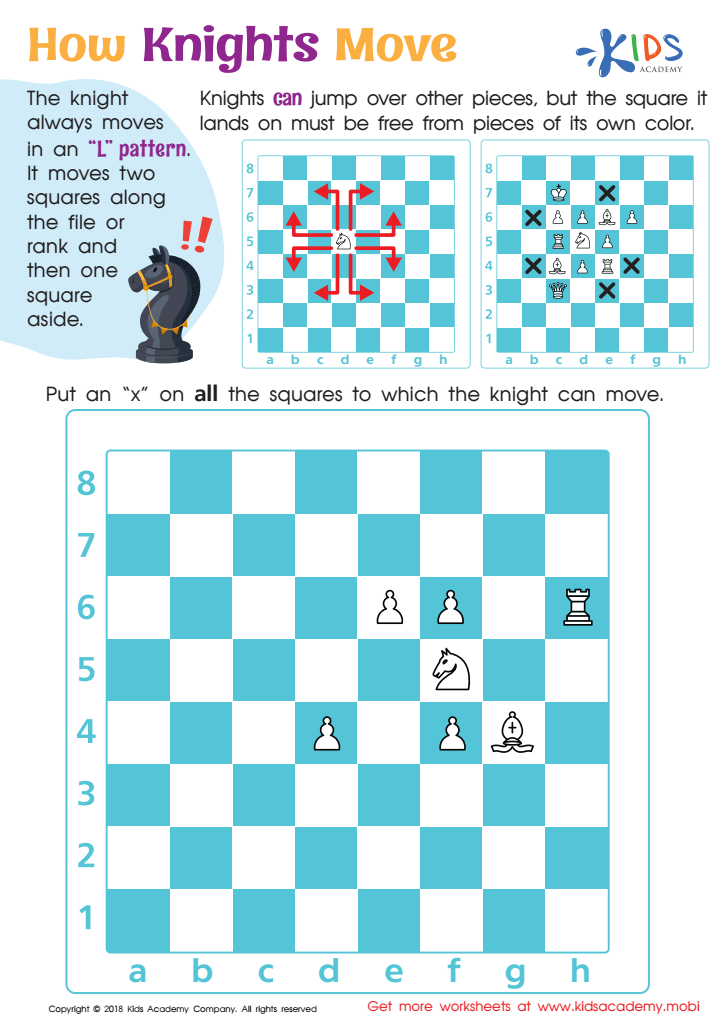
Get your kids to tell you how a knight moves in chess. If they need help, explain that a knight moves in an «L» pattern - two squares on the file/rank, one square aside. It may also jump over other pieces, as long as the landing square is unoccupied. Have them mark the squares where the knight can move in the exercise.
 Assign to My Students
How Knights Move Worksheet
Worksheet
Two Rook Mate Practice Worksheet
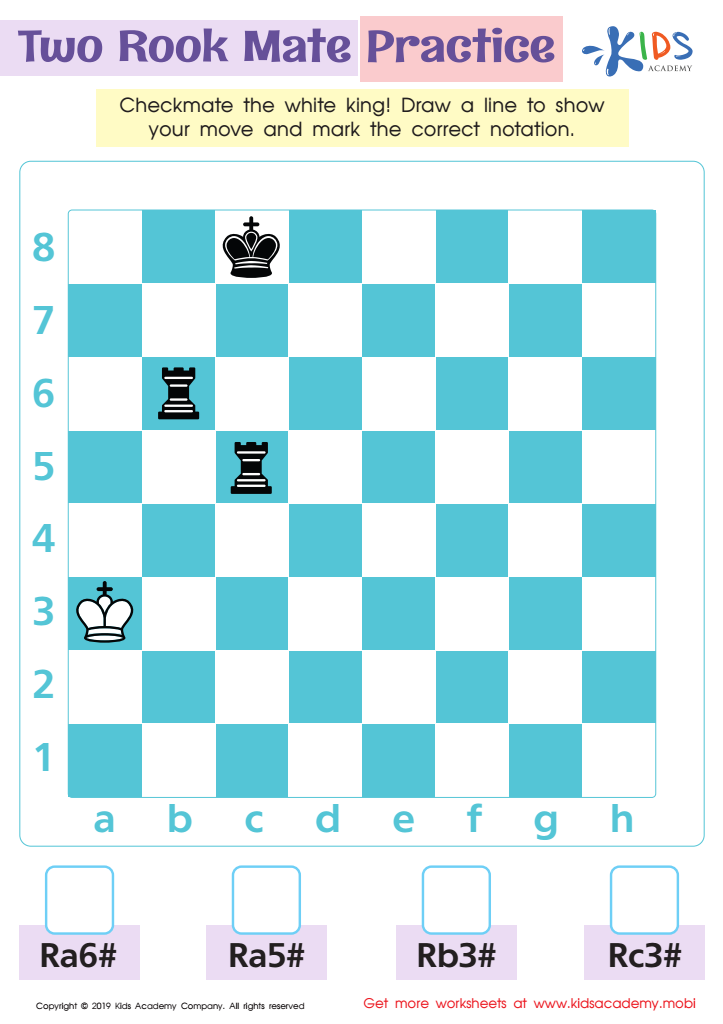
Chess is all about checkmating your opponent. This free Two Rook Mate practice worksheet is a fun way for your mini strategist to do just that. They can draw a line showing their move then pick the correct notation for the mate! A great way for them to practice fine motor skills, too.
Two Rook Mate Practice Worksheet
Worksheet
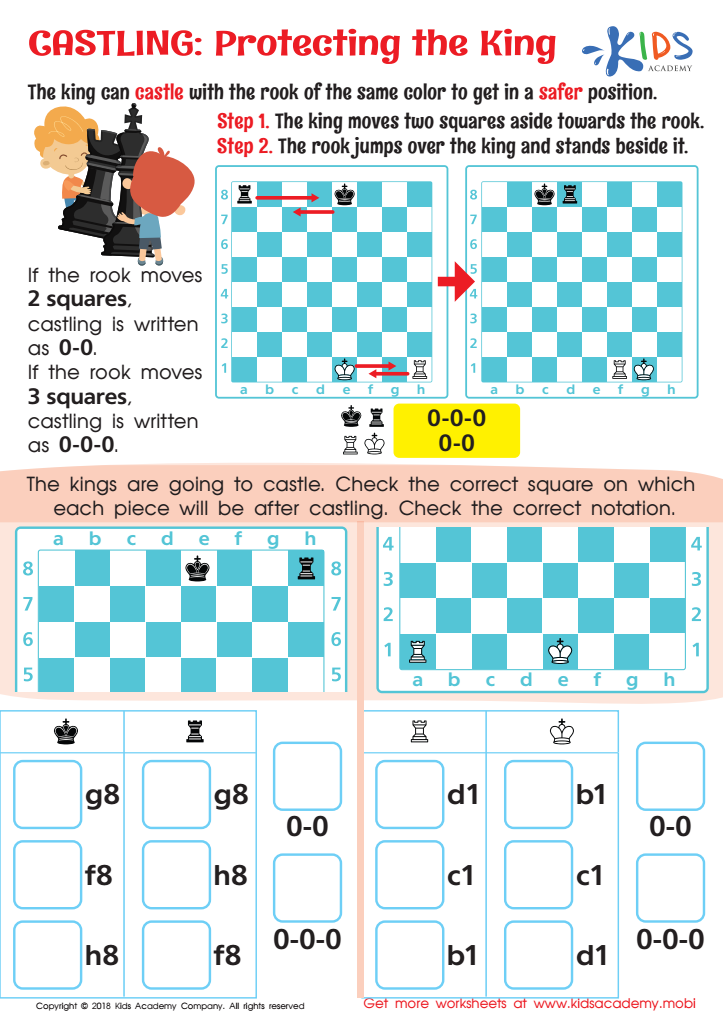
Castling: Protecting the King Worksheet
Castle your king with the rook to get into a safer position! Write 0-0 for a two-square move, or 0-0-0 for a three-square move. Look at the worksheet with your child; on the first chessboard, the king has moved two squares and the rook is beside it. On the second, the rook has jumped over the king. Let your child use their castling knowledge to answer the questions in the easy pdf.
Castling: Protecting the King Worksheet
Worksheet
Join Kids Academy for Free
Who is primarily going to use this learning content?






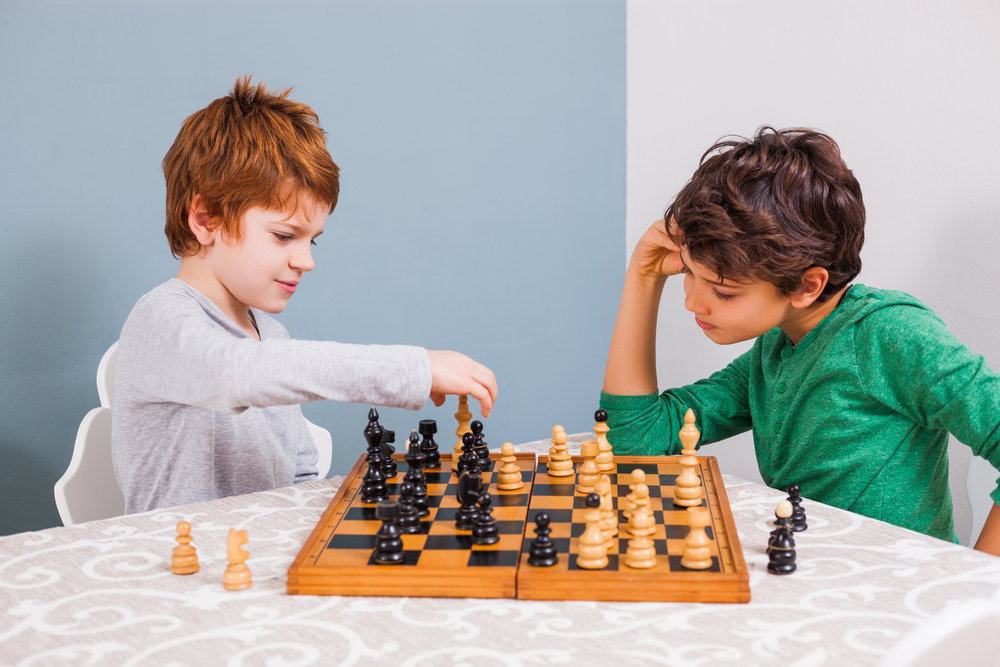

Chess is an exceptional tool for enhancing logical thinking skills in 7-year-olds. As children engage in this strategic game, they learn to analyze situations, anticipate their opponent's moves, and develop problem-solving capabilities. These skills are integral for overall cognitive development, providing a foundation for critical thinking that extends beyond the chessboard.
For parents and teachers, fostering logical thinking through chess can translate into improved academic performance. Children who play chess often display enhanced mathematics skills, better reading comprehension, and stronger organizational capabilities. The game encourages patience and perseverance, teaching kids to consider the consequences of their actions before making decisions—important lessons that can be applied in everyday life.
Moreover, chess promotes social skills. Children learn the importance of fair play, sportsmanship, and respect for opponents, creating an environment where they can develop interpersonal abilities alongside logical reasoning.
Incorporating chess into educational settings or home activities nurtures a love for learning, sparks creativity, and instills a growth mindset. Ultimately, supporting logical thinking improvement through chess is an investment in a child’s future, helping them become critical thinkers and adaptable problem solvers in an increasingly complex world.