
Develop counting skills Worksheets for 7-Year-Olds
6 filtered results
Difficulty Level
Grade
Age
-
From - To
Subject
Activity
Standards
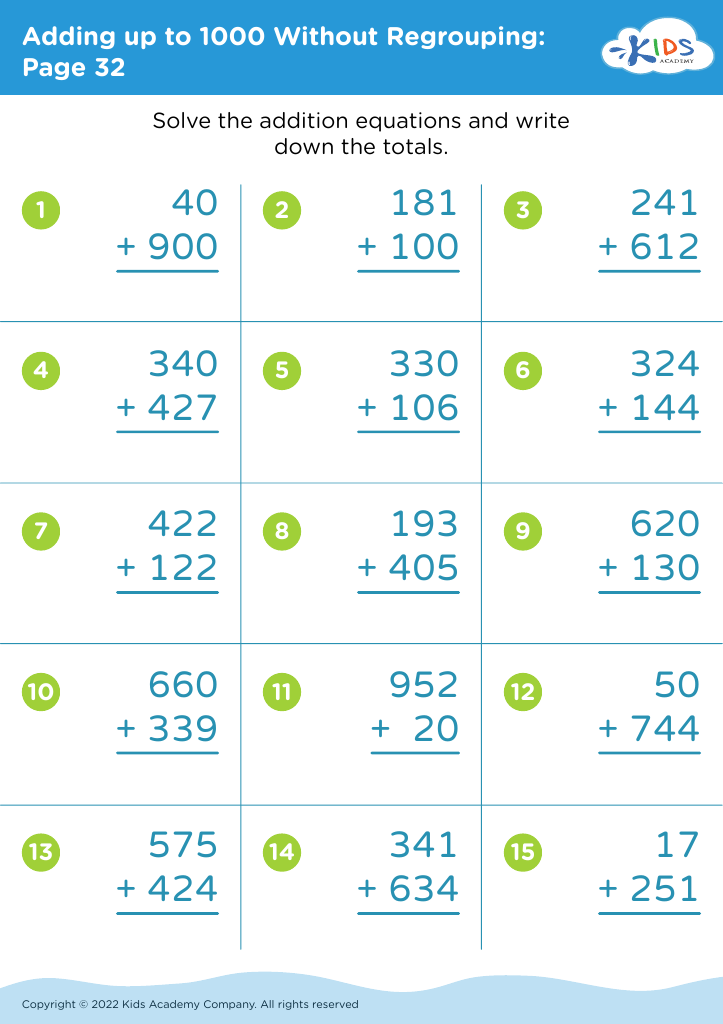
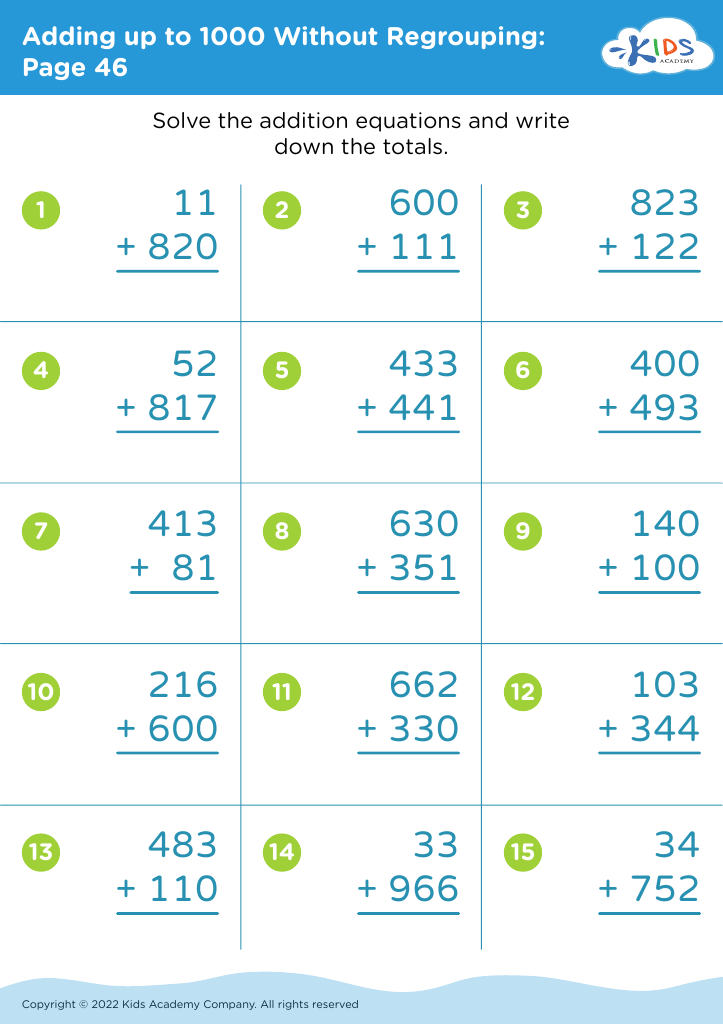
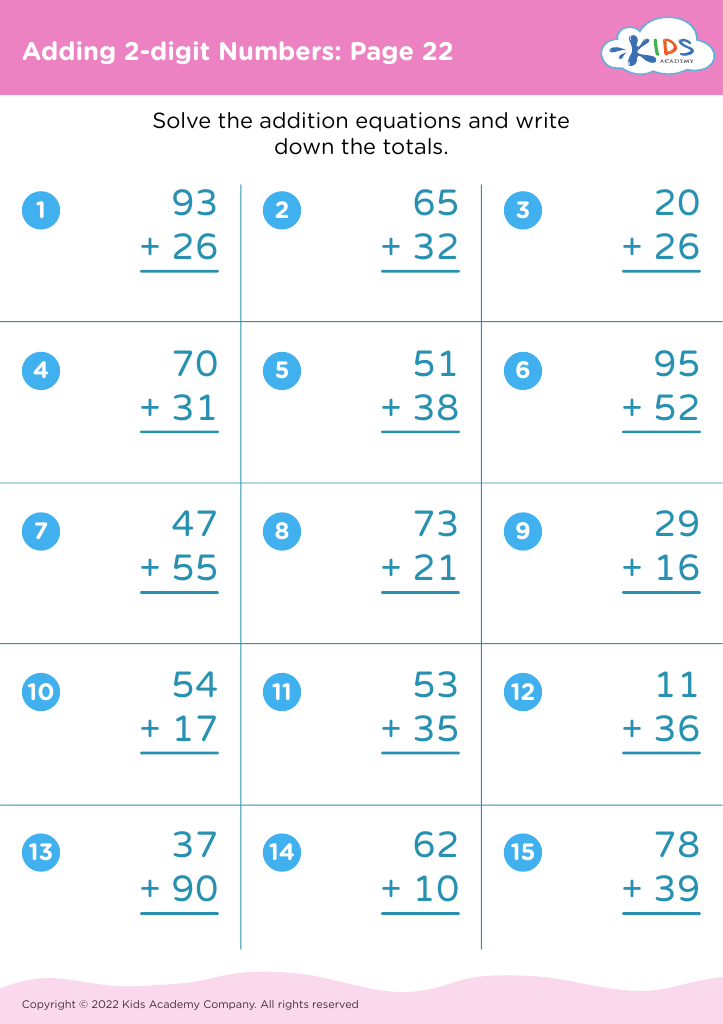
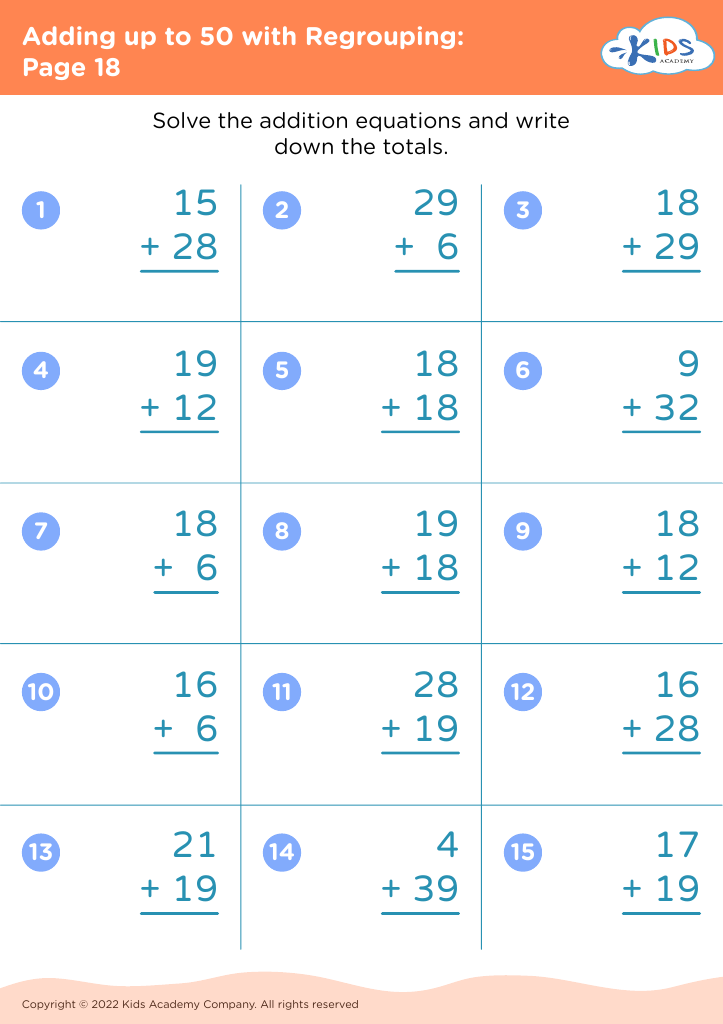
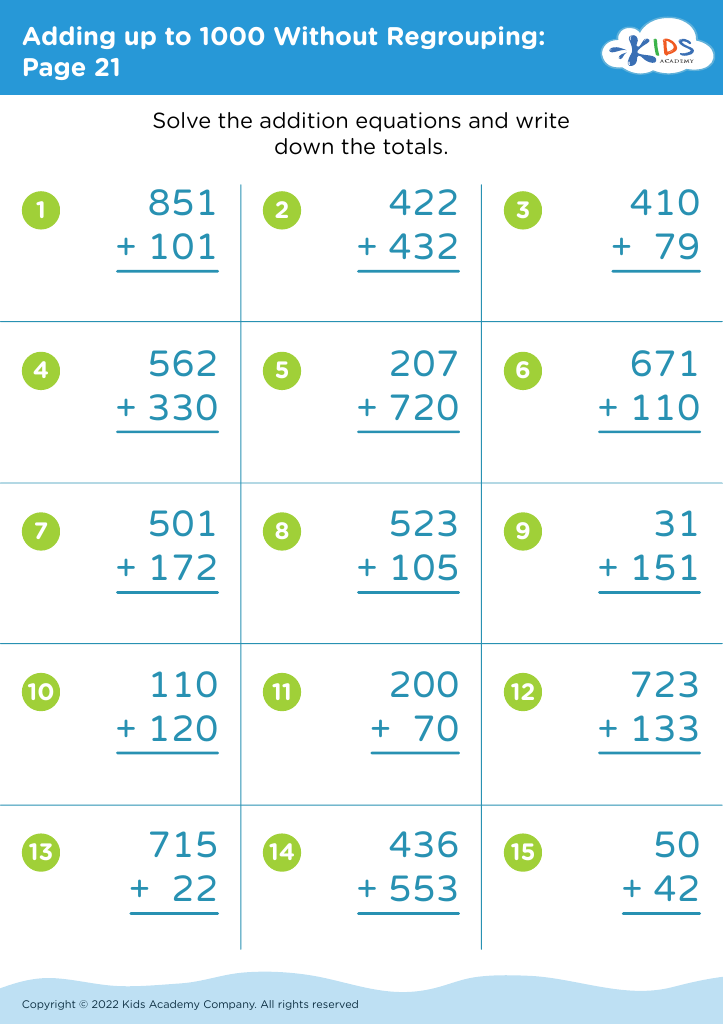
Unlock your child's potential with our engaging counting skills worksheets designed specifically for 7-year-olds! These fun and interactive activities help reinforce fundamental math concepts while keeping learning enjoyable. Our worksheets focus on developing essential counting skills, including number recognition, one-to-one correspondence, and skip counting. Aligned with age-appropriate standards, these resources make practicing math at home enjoyable and effective. Ideal for parents and educators alike, our worksheets encourage independent learning and critical thinking in young learners. Download and start nurturing your child's counting capabilities today to build a solid foundation for future math success! Explore the joy of learning through play!
Favorites
With answer key
Interactive
Join Kids Academy for Free
Who is primarily going to use this learning content?







Developing counting skills in 7-year-olds is crucial for several reasons. First, these skills form the foundation for mathematical understanding. Strong counting abilities enable children to grasp more complex concepts such as addition, subtraction, and even multiplication and division later on. This foundational skill helps them feel confident in their math abilities, fostering a positive attitude towards the subject.
Additionally, counting is more than just a numerical skill; it promotes critical thinking and problem-solving. When children learn to count, they develop the ability to categorize objects and understand quantities, which enhances their logical reasoning skills. These skills extend beyond mathematics, affecting daily activities and decision-making.
Parents and teachers should also consider the social aspect of counting. Engaging children in counting games and activities fosters collaboration and communication with peers, enhancing social development. Furthermore, strong counting skills can impact academic performance as children advance in their educational journey.
In conclusion, nurturing counting skills in 7-year-olds lays a critical foundation for their future academic success, promotes cognitive development, and enhances social cooperation. Parents and teachers play an essential role in encouraging these skills, as they are vital for a well-rounded education.








