
Fraction Addition Worksheets for 7-Year-Olds
17 filtered results
Difficulty Level
Grade
Age
-
From - To
Subject
Activity
Standards
Discover our engaging Fraction Addition Worksheets designed for 7-year-olds! These printable resources help young learners grasp the fundamentals of adding fractions in a fun and interactive way. Our worksheets feature colorful illustrations and a variety of exercises to reinforce key concepts, making math enjoyable and accessible. Whether tackling like and unlike denominators, these activities nurture critical thinking and boost confidence in math skills. Perfect for classroom use or at-home practice, our worksheets cater to different learning styles, ensuring every child can develop a solid foundation in fractions. Explore our selection today and watch your child's math proficiency soar!
Favorites
With answer key
Interactive
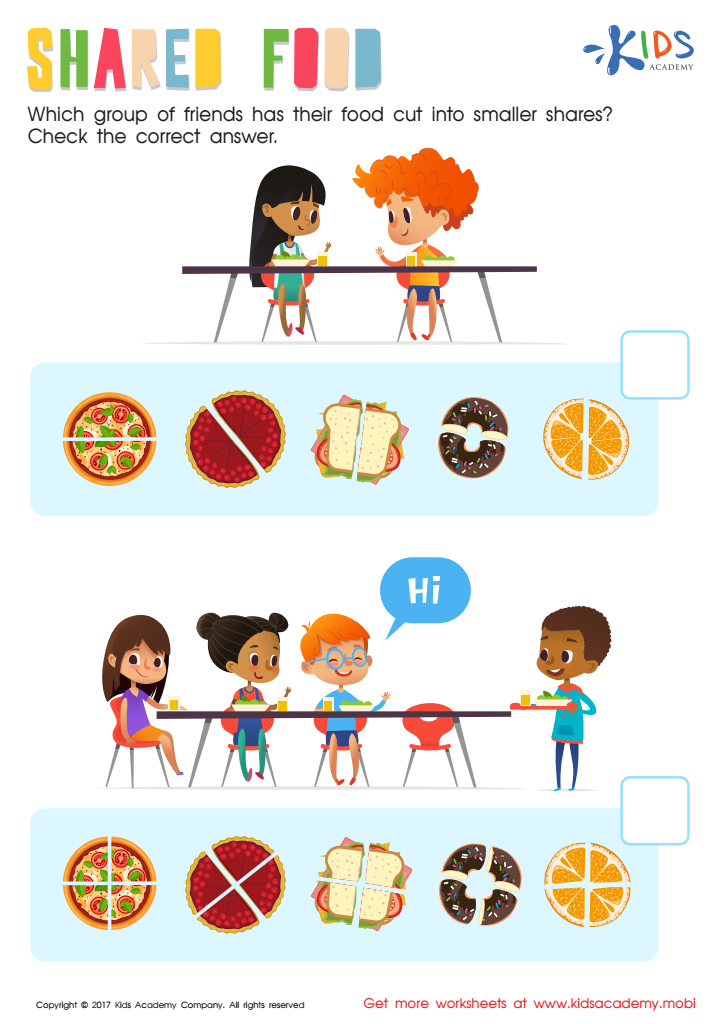
Shared Food Worksheet
In this worksheet, kids learn about sharing and cutting shapes into equal parts. There are two groups of friends: one with two, the other with four. Ask your child which group has their food cut into smaller shares, and help them find the right answer.
 Assign to My Students
Shared Food Worksheet
Worksheet
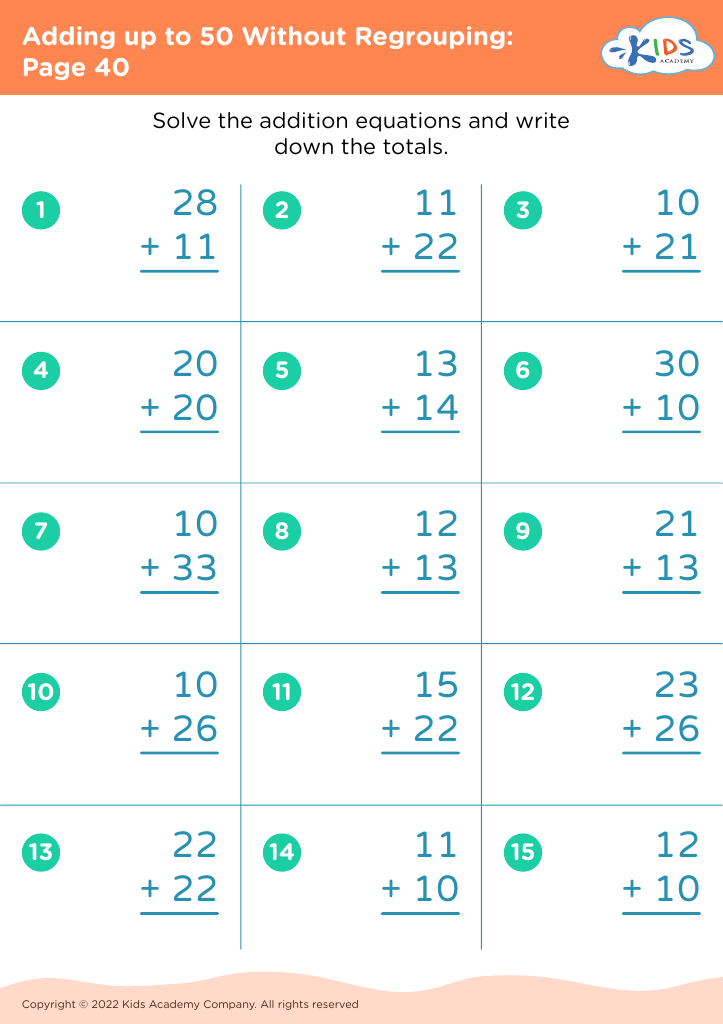
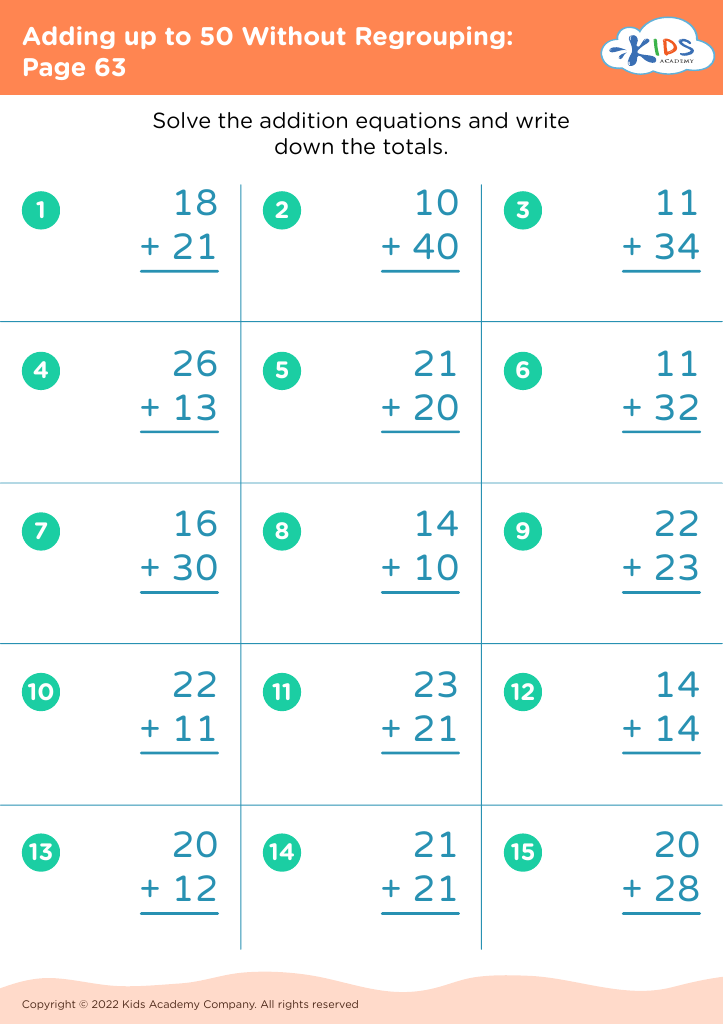
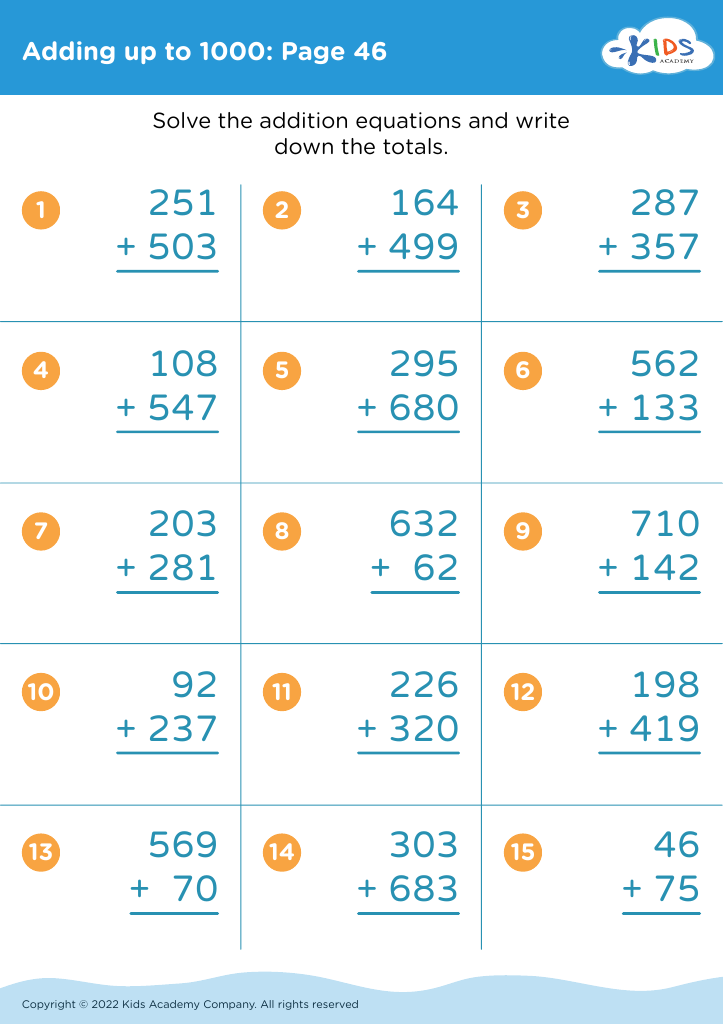
Join Kids Academy for Free
Who is primarily going to use this learning content?







Understanding fraction addition is crucial for 7-year-olds as it lays the foundation for later mathematical concepts. At this age, children begin to learn about fractions, which is not just about numbers, but also about understanding parts of a whole. When parents and teachers emphasize fraction addition, they help children develop critical thinking and problem-solving skills.
Learning to add fractions introduces concepts like common denominators, which strengthens their overall arithmetic skills and fosters a deeper understanding of numbers. This not only enhances their confidence in math but also encourages a positive attitude toward learning more complex topics in the future, such as multiplication and division of fractions or even algebra.
Moreover, grappling with fractions promotes the ability to visualize and articulate concepts, aiding in coherent communication of their thought processes. Encouraging playful yet educational activities, such as cooking or art, allows students to see the practical applications of fractions in daily life. Engaging with fractions in various contexts cultivates curiosity and nurtures a lifelong love for mathematics in children. By prioritizing fraction addition, parents and educators invest in their children's academic growth and prepare them for success in more advanced mathematical challenges.








