
Letter Tracing Practice Worksheets for 7-Year-Olds
8 filtered results
Difficulty Level
Grade
Age
-
From - To
Subject
Activity
Standards
Enhance your 7-year-old's handwriting skills with our Letter Tracing Practice Worksheets! These engaging, beautifully designed printables offer essential practice in letter formation and recognition. Tailored for young learners, the worksheets provide a structured approach to trace both uppercase and lowercase letters, boosting their confidence and precision. With fun illustrations and tracing guides, kids will stay motivated and entertained while mastering their ABCs. Perfect for home or classroom use, ignite a lifelong love for writing and literacy. Download now and watch your child’s handwriting flourish with every trace!
Favorites
With answer key
Interactive
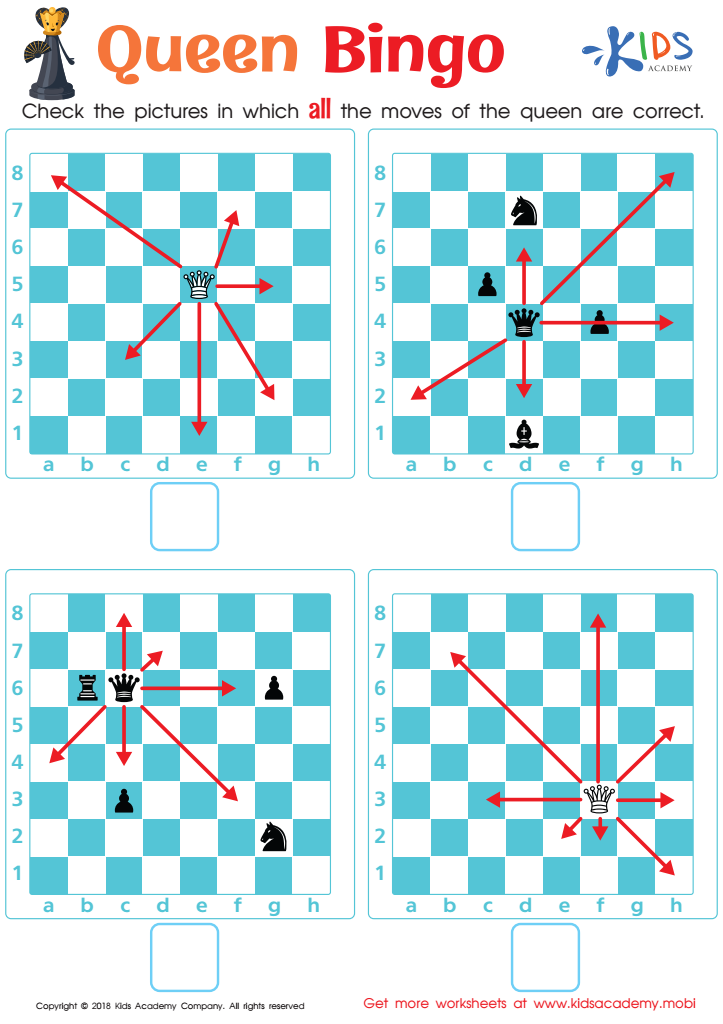
Queen Bingo Worksheet
Test your child's knowledge of chess rules and moves with this free worksheet! Kids look at four pictures and must decide if the queen moves are correct. This exercise helps hone your little one's chess skills!
Queen Bingo Worksheet
Worksheet
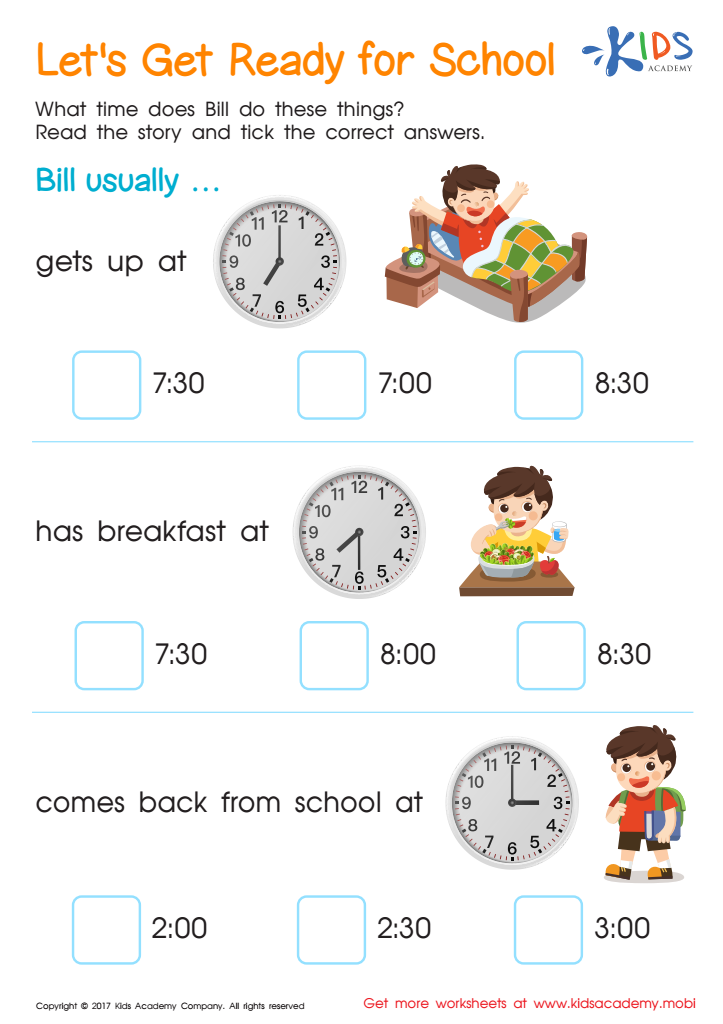
Lets Get Ready For School Time Printable
Believe it or not, kids today are struggling with reading traditional clocks. This vital skill shouldn't be lost, so why not try this fun telling time worksheet to get ready for school? Don't miss out!
Lets Get Ready For School Time Printable
Worksheet
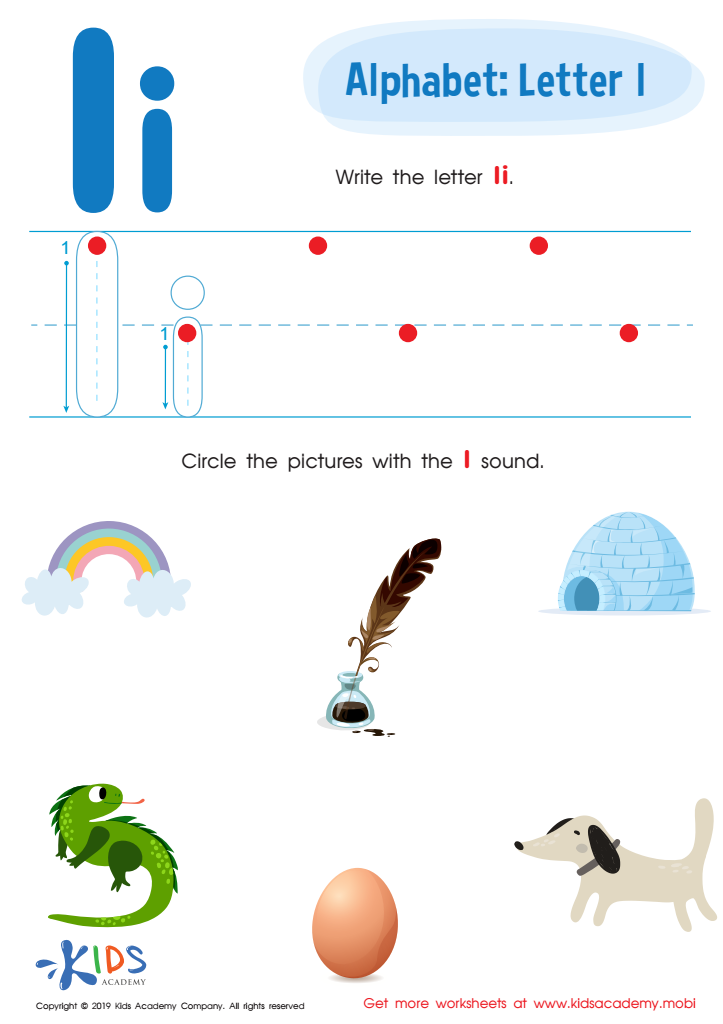
Letter I Tracing Worksheet
Kids can hone tracing, writing and identifying skills for the letter 'I' with this worksheet. Whether visual or reading/writing learners, every child can benefit from the tasks - tracing, writing and circling objects beginning with 'I'. This free sheet will soon get preschoolers confident with the 'I' letter!
Letter I Tracing Worksheet
Worksheet
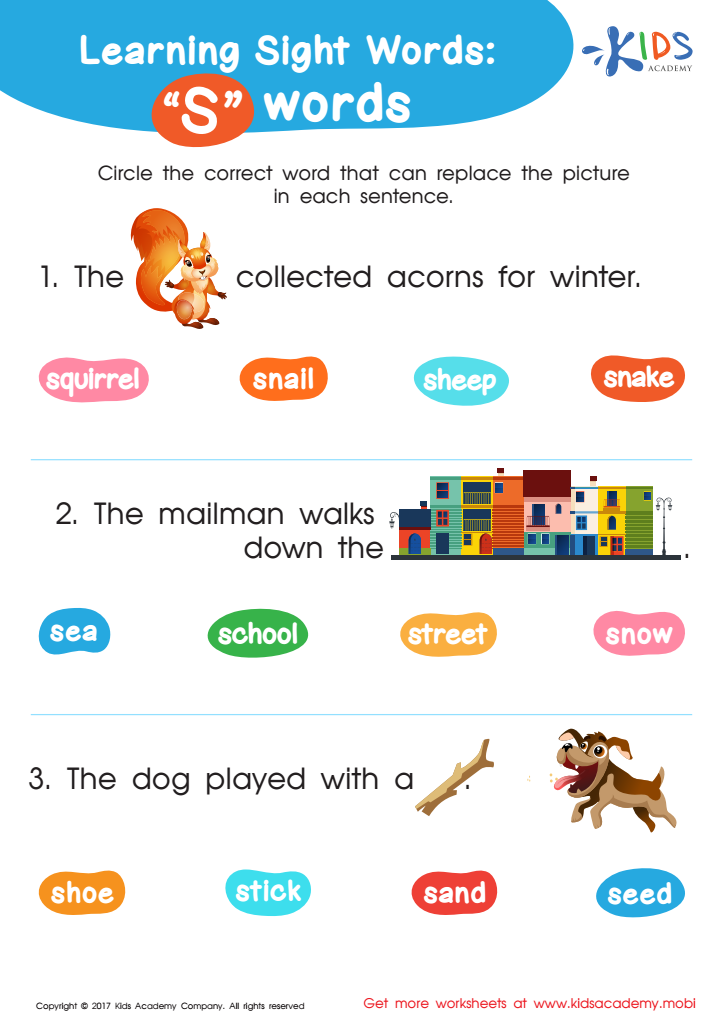
S Words Sight Words Worksheet
This 2nd grade worksheet encourages kids to practice using context clues when identifying sight words that begin with 's'. Engage them with colorful pictures to enhance the learning, helping them to understand the context of each sentence and choose the correct word.
S Words Sight Words Worksheet
Worksheet
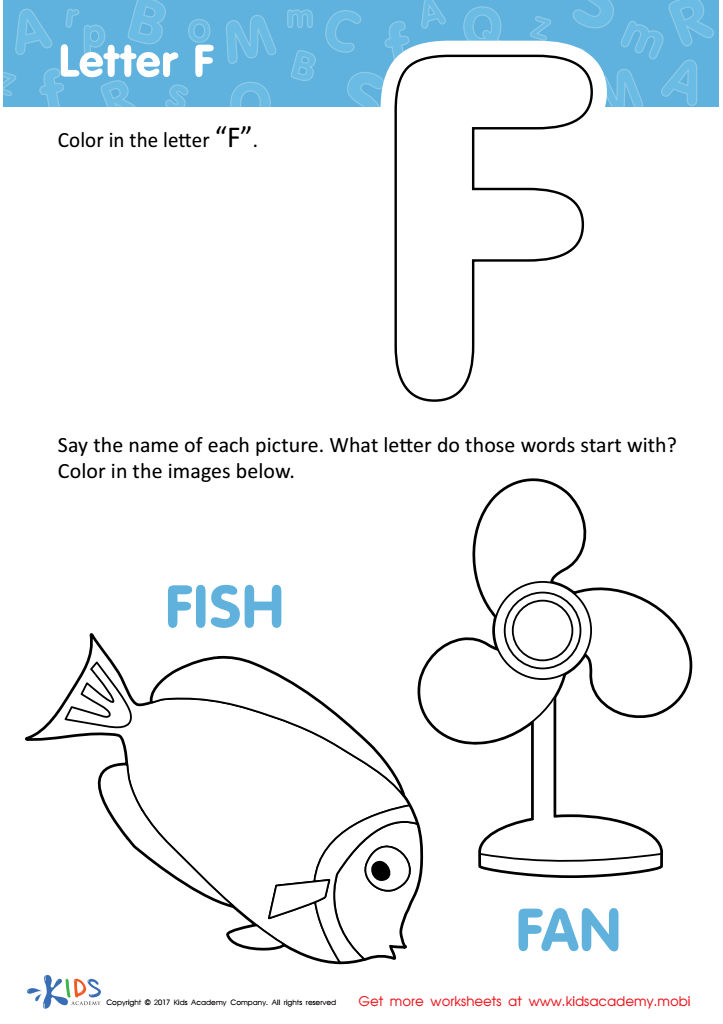
Letter F Coloring Sheet
Coloring pages help kids learn to recognize letters and sounds. Our "F" page has kids color a fish and a fan. It's a great way to introduce them to the letter "F" using words they already know.
Download (PDF)
 Assign to My Students
Assign to My Students
Letter F Coloring Sheet
Worksheet
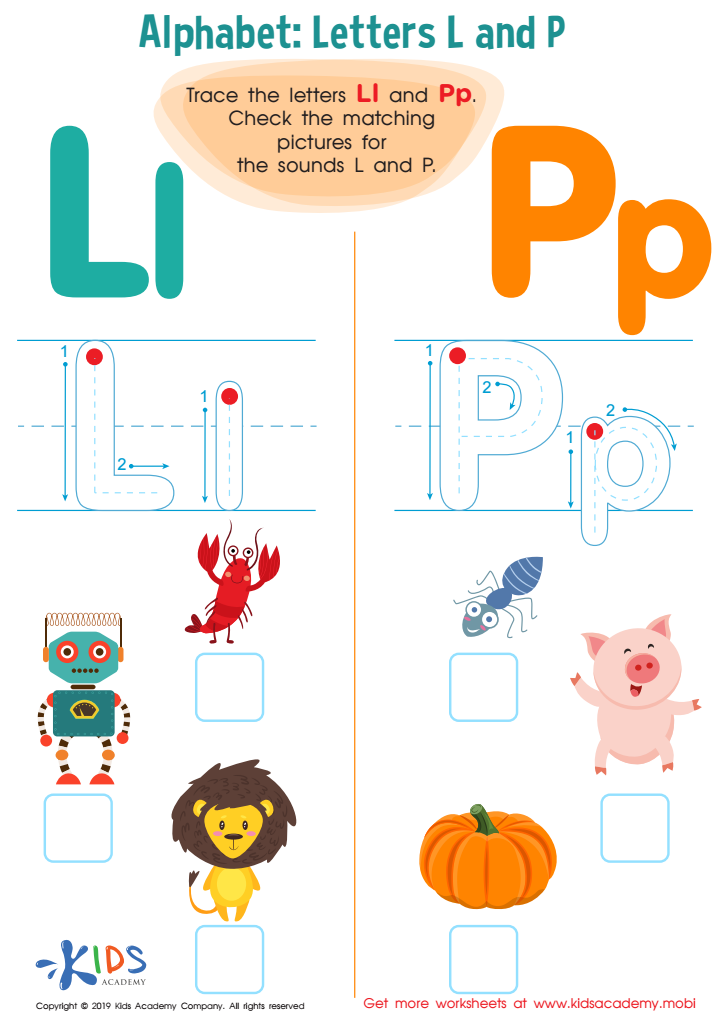
Letter L and P Tracing Worksheet
This traceable worksheet can motivate your students to learn and practice core skills. They'll trace the letters 'L' and 'P' and identify the pictures next to them. With this exercise, they'll unlock their learning abilities and excel in the subject!
Letter L and P Tracing Worksheet
Worksheet
Join Kids Academy for Free
Who is primarily going to use this learning content?








Letter tracing practice plays a crucial role in a child's early literacy and fine motor development, making it significantly beneficial for 7-year-olds. At this age, many children are refining their handwriting skills, and consistent practice involved in tracing helps them gain control and precision with their writing instruments. This activity not only boosts their ability to form legible letters but also improves hand-eye coordination and muscle memory, which are vital for all writing tasks.
For parents and teachers, investing time in letter tracing practice also offers cognitive benefits for children. It strengthens the neural pathways responsible for reading and writing, facilitating better phonemic awareness—an essential component of proficient reading and spelling skills. As kids trace letters, they start to recognize patterns, leading to improved alphabetical order recollection and spelling conventions.
Moreover, letter tracing nurtures a child’s patience and attention to detail. These qualities are indispensable life skills that contribute beyond literacy, affecting academic performance across subjects and everyday tasks. Attention to neatness and the ability to focus on sequential tasks also positively impact a child’s self-confidence.
Ultimately, when parents and teachers emphasize the importance of letter tracing, they're setting the foundation for successful learning experiences, ensuring that the child becomes a more capable and confident communicator in both written and oral expressions.








