Problem solving enhancement Worksheets for 7-Year-Olds
3 filtered results
-
From - To
Unlock your child's potential with our Problem Solving Enhancement Worksheets designed specifically for 7-year-olds! These engaging printable resources aim to develop critical thinking skills, logical reasoning, and creative problem-solving abilities. Our worksheets feature a variety of activities, including puzzles, challenges, and scenarios that encourage children to think outside the box. Each sheet is crafted to make learning fun and interactive, ensuring that young minds stay engaged while building essential skills for academic success. Perfect for home or classroom use, our worksheets provide a captivating way to enhance your child's problem-solving capabilities. Explore our collection today and inspire a love for learning!
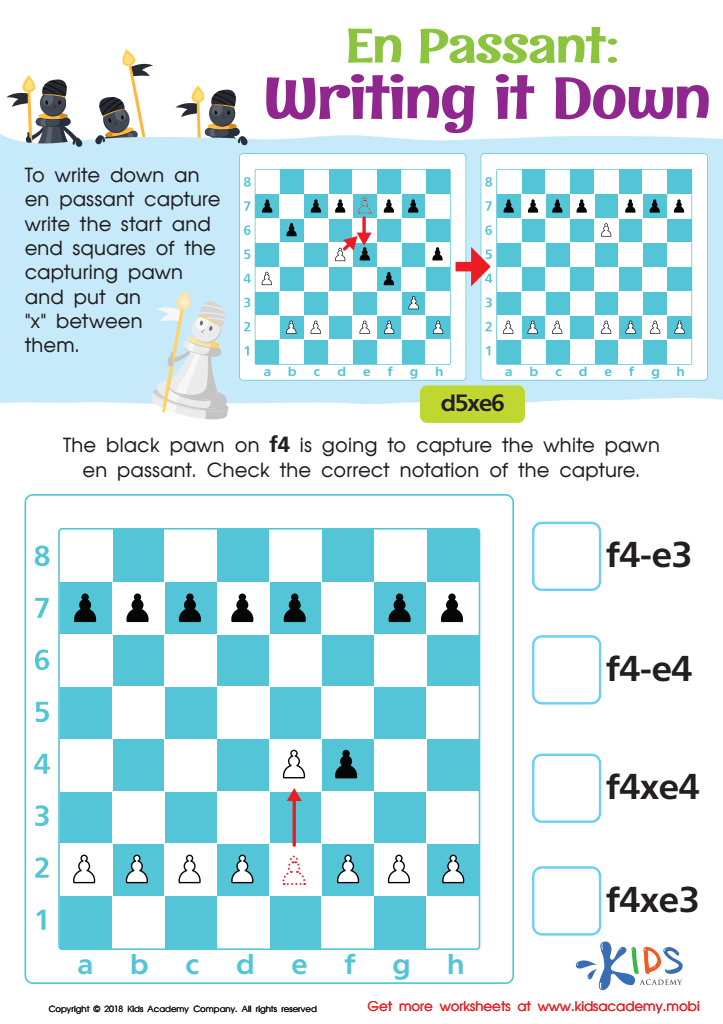
En Passant: Writing it Down Worksheet
 Assign to My Students
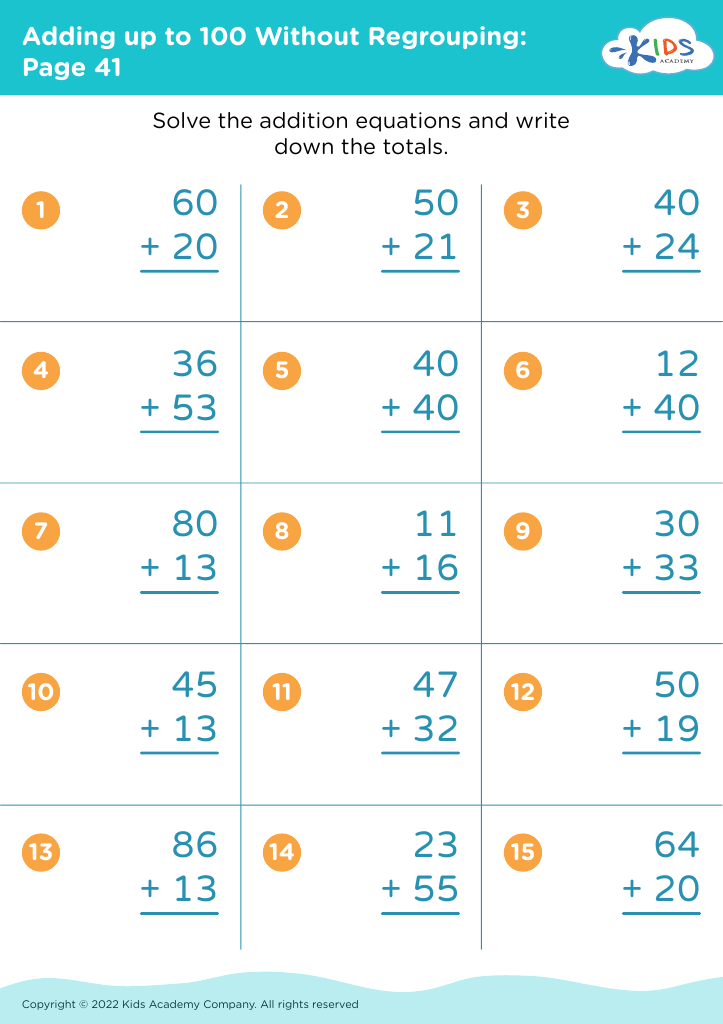

Notation of Checkmate Worksheet




.jpg)



Enhancing problem-solving skills in 7-year-olds is crucial for their academic and personal development. At this age, children are naturally curious and eager to explore new concepts, making it an ideal time to introduce them to systematic thinking and problem-solving strategies. Developing these skills not only fosters logical reasoning and critical thinking, but also encourages creativity and resilience, which are vital in overcoming challenges they may face both in school and life.
Teachers and parents play a pivotal role in nurturing these skills through engaging activities like puzzles, games, and real-life challenges. By doing so, they can create a supportive environment, helping children learn how to approach problems methodically, consider various solutions, and evaluate outcomes.
Furthermore, solid problem-solving abilities lead to improved academic performance across subjects, as math and science heavily rely on logical reasoning. Additionally, instilling these skills promotes confidence, as children feel empowered to take on new challenges. Ultimately, fostering problem-solving enhancement not only prepares children for academic success but also equips them with essential life skills that enable them to navigate future uncertainties with poise. Investing time in developing these capabilities has significant long-term benefits for both children and the adults who support them.








