
Recognition skills Worksheets for 7-Year-Olds
3 filtered results
Difficulty Level
Grade
Age
-
From - To
Subject
Activity
Standards
Discover our engaging recognition skills worksheets designed specifically for 7-year-olds! These resources help young learners develop essential skills such as identifying letters, numbers, and shapes while promoting critical thinking and cognitive development. Our interactive worksheets feature colorful illustrations and fun activities that keep children motivated and excited about learning. Ideal for home or classroom use, these materials encourage independent practice and enhance recognition skills through a variety of exercises. Foster your child's confidence and foundational knowledge with our tailored worksheets, making learning enjoyable and effective. Explore our collection today and support your child's educational journey with fun recognition challenges!
Favorites
With answer key
Interactive
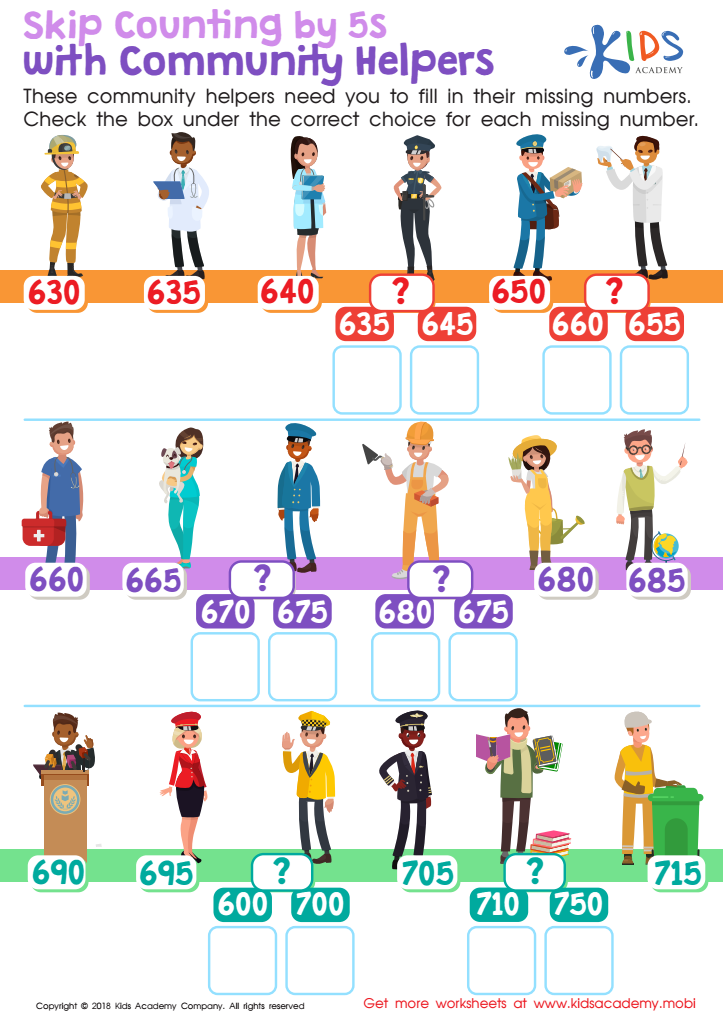
Skip Counting by 5s With Community Helpers Worksheet
This free worksheet combines social studies with math! Kids will practice counting by 5s, rounding numbers and honing their computation skills while also familiarizing themselves with community helpers. Develop your child's number sense and strengthen their math skills - all through a fun and interactive activity.
 Assign to My Students
Skip Counting by 5s With Community Helpers Worksheet
Worksheet
Join Kids Academy for Free
Who is primarily going to use this learning content?




.jpg)


Recognition skills are crucial for 7-year-olds as they underpin essential developmental milestones in literacy, numeracy, and social interaction. At this age, children are transitioning from early reading skills to more complex comprehension abilities. Recognizing letters, words, and basic mathematical symbols enables them to read with fluency, meaningfully engage with texts, and foster a love for learning.
Moreover, these skills extend beyond academics. Social recognition skills, such as understanding non-verbal cues (facial expressions, body language), are vital in helping children navigate friendships and peer interactions. These competencies foster emotional intelligence, empathy, and effective communication, all of which are fundamental for building healthy relationships.
When parents and teachers prioritize recognition skills, they create learning environments that promote confidence and competence. Engaging activities such as games, storytelling, and interactive reading experiences can enhance these skills. Effective recognition promotes a sense of achievement in children, motivating them to tackle future challenges.
Ultimately, by caring about and cultivating recognition skills, adults equip 7-year-olds with the tools necessary for academic success and meaningful social engagement, laying a strong foundation for lifelong learning and personal growth. Therefore, nurturing these skills should be a shared priority between parents and educators.








