Sequencing events Worksheets for 7-Year-Olds
3 filtered results
-
From - To
Discover our engaging Sequencing Events Worksheets designed for 7-year-olds! These worksheets help young learners develop vital comprehension skills by encouraging them to organize events in the correct order. Through fun and interactive activities, children will enhance their understanding of timelines, narratives, and everyday routines. Our printable resources cater to various topics, allowing students to practice sequencing through relatable scenarios and stories. Perfect for classroom use or at-home learning, our worksheets make educational experiences enjoyable and effective. Help your child build critical thinking skills and improve their storytelling abilities with our easy-to-use Sequencing Events Worksheets today!
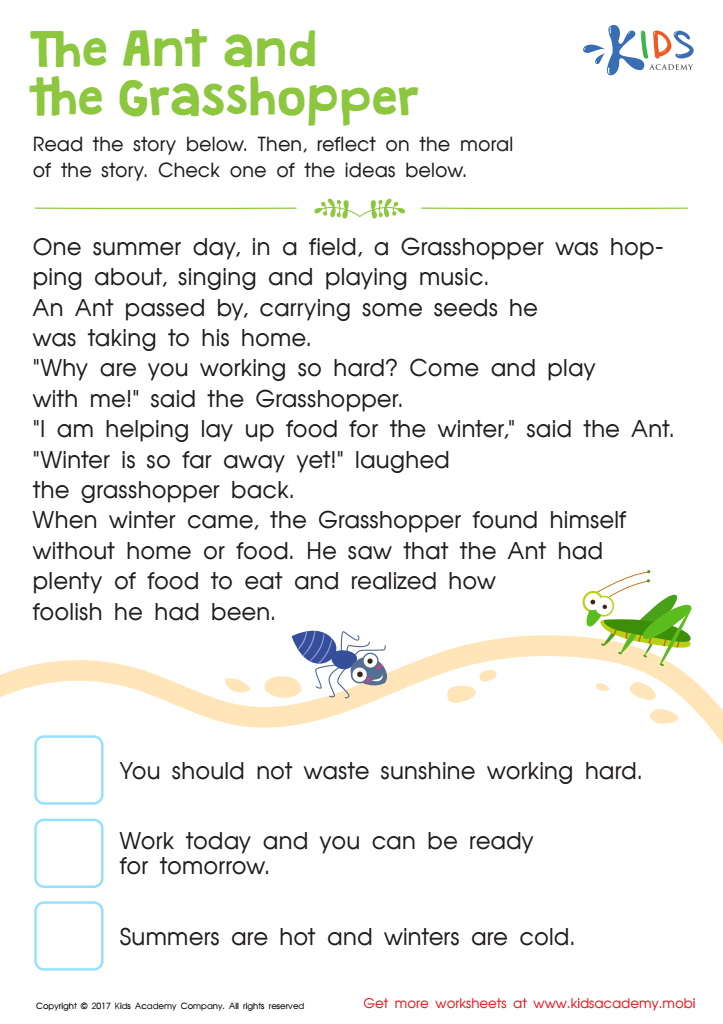
The Ant and The Grasshopper Printable
 Assign to My Students

Emperor Penguin Journey Worksheet
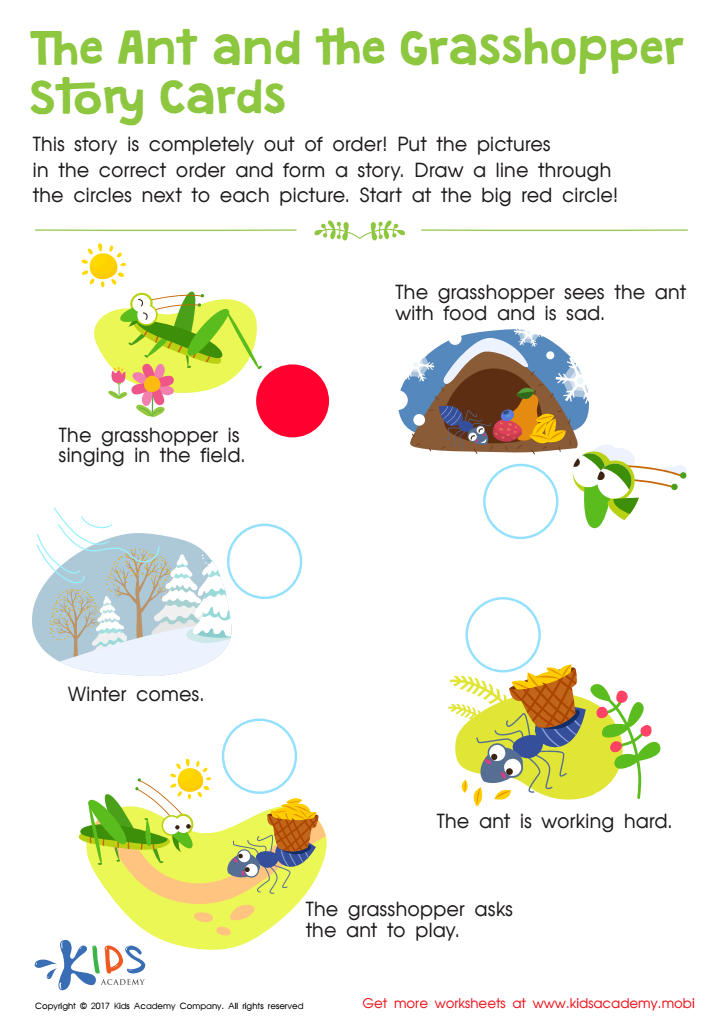
The Ant and The Grasshopper Worksheet







Sequencing events is a critical skill for 7-year-olds that contributes to their cognitive and social development. Understanding the order of events helps children in comprehending narratives, both in reading and in their own lives. When they grasp how one event leads to another, they not only improve their storytelling abilities but also enhance their critical thinking and problem-solving skills. This skill fosters a sense of logic, aiding them in making connections between causes and effects.
Moreover, sequencing is essential for following instructions, such as completing math problems or engaging in science experiments. As they learn these skills, children gain confidence in their academic abilities. Additionally, sequencing activities encourage patience and attention to detail, traits that are valuable in collaborative settings.
From a social standpoint, being able to recount events coherently strengthens conversational skills and fosters meaningful interactions with peers. Parents and teachers play a pivotal role in nurturing this ability, whether through storytelling, discussing daily routines, or engaging in sequence-based games. By helping children practice sequencing, adults can enhance their overall learning experience, ensuring that they are well-equipped to navigate both academic and social landscapes. Promoting this skill is investing in a stronger foundation for lifelong learning.








