
Understanding community roles Worksheets for 7-Year-Olds
3 filtered results
Difficulty Level
Grade
Age
-
From - To
Subject
Activity
Standards
"Understanding Community Roles Worksheets for 7-Year-Olds" are designed to help young learners grasp the importance of various community helpers. These engaging, age-appropriate worksheets feature colorful illustrations and activities that introduce children to roles such as firefighters, teachers, doctors, and more. By identifying and learning about these critical roles, kids not only enhance their social awareness but also develop appreciation for the people who contribute to their community's well-being. Perfect for classroom or at-home use, these worksheets align with learning standards and make understanding community roles a fun and educational experience for young minds.
Favorites
With answer key
Interactive
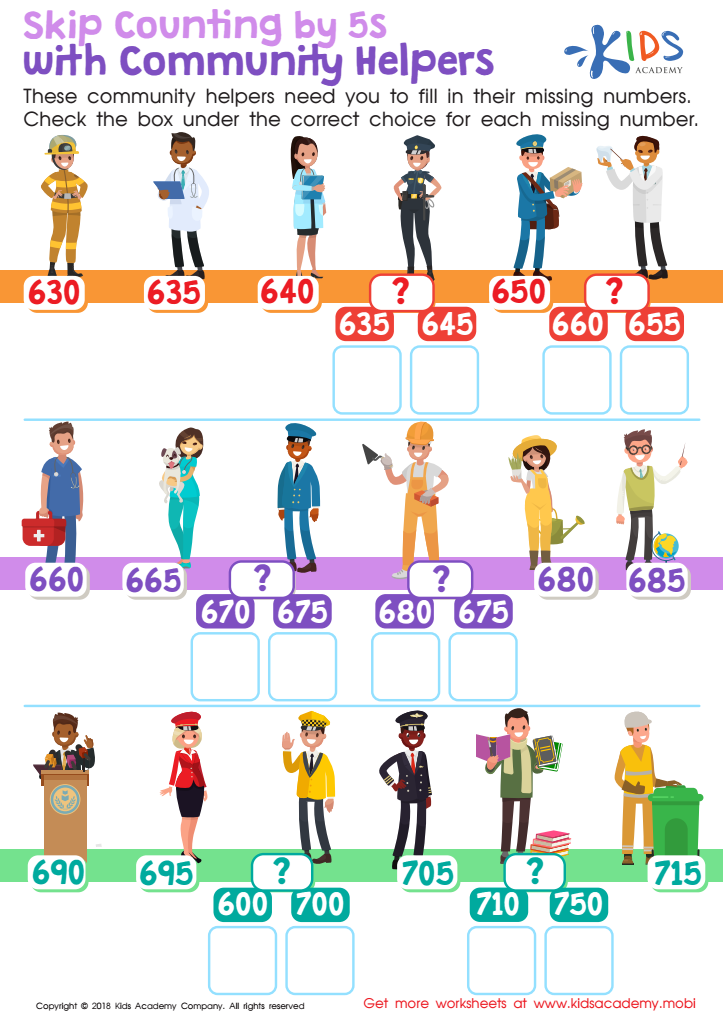
Skip Counting by 5s With Community Helpers Worksheet
This free worksheet combines social studies with math! Kids will practice counting by 5s, rounding numbers and honing their computation skills while also familiarizing themselves with community helpers. Develop your child's number sense and strengthen their math skills - all through a fun and interactive activity.
 Assign to My Students
Skip Counting by 5s With Community Helpers Worksheet
Worksheet
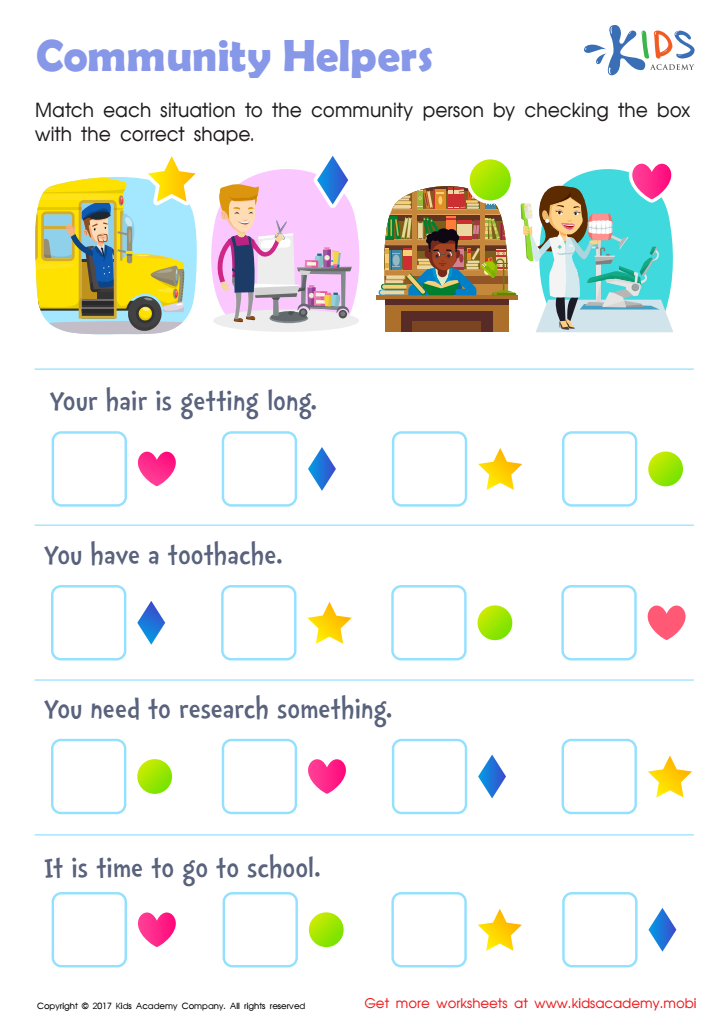
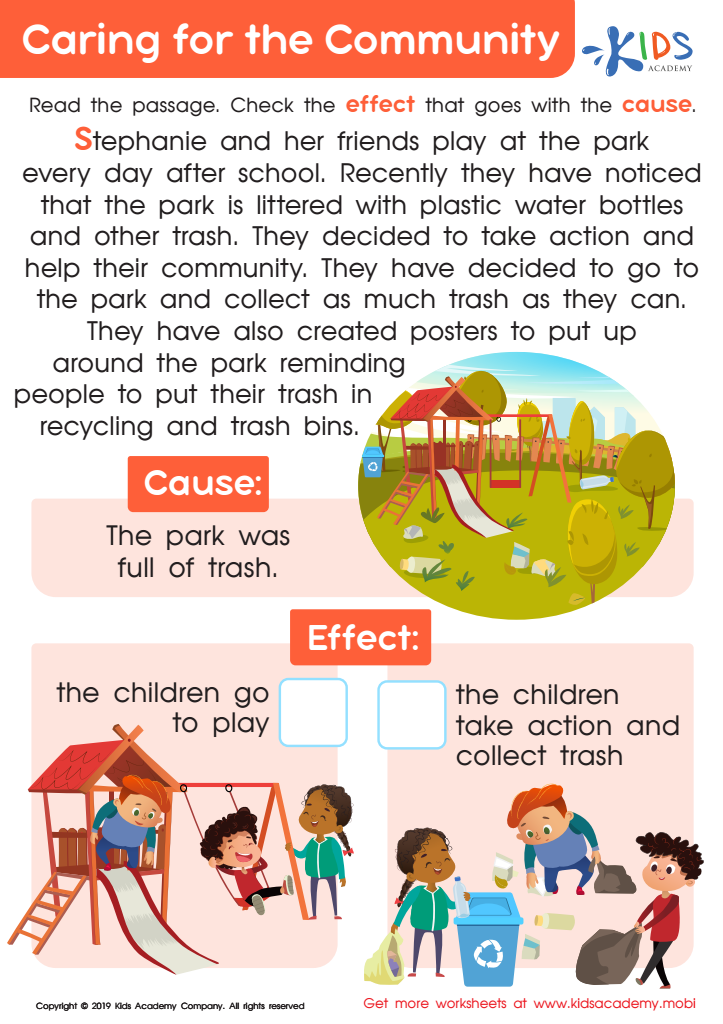
Caring for the Community Worksheet
Before beginning, get your kids in the right mind-set by having them name ways to care for their community. Read the passage with them, pointing at pictures, then ask them to match the ‘cause’ with the ‘effect’ on the worksheet. This will help them learn more about how to care for their community.
Caring for the Community Worksheet
Worksheet
Join Kids Academy for Free
Who is primarily going to use this learning content?






Understanding community roles is vital for 7-year-olds as it lays the foundation for responsible citizenship and social awareness. At this age, children are beginning to expand their world beyond the immediate family and school, and knowing about community roles helps them navigate and appreciate the broader social structure. Parents and teachers should care about this because it fosters a sense of belonging and respect for others, key components of character development.
When children learn about various roles in the community – such as doctors, firefighters, teachers, and police officers – they start recognizing the importance of teamwork and how different functions contribute to society's well-being. This understanding promotes empathy, as children appreciate the diverse contributions people make to daily life. Moreover, it helps children to identify and idolize good role models, potentially guiding their future aspirations.
Educational activities related to community roles enhance children's critical thinking and communication skills. Through role-playing, discussions, and field trips, they gain practical insights and can better understand and respect rules, responsibilities, and the concept of civic duty. Ultimately, this foundational knowledge nurtures well-rounded, socially responsible individuals who are more likely to actively contribute to and improve their communities as they grow older.








