Addition Practice Adding up to 100 Misc Worksheets for 7-Year-Olds
3 filtered results
-
From - To
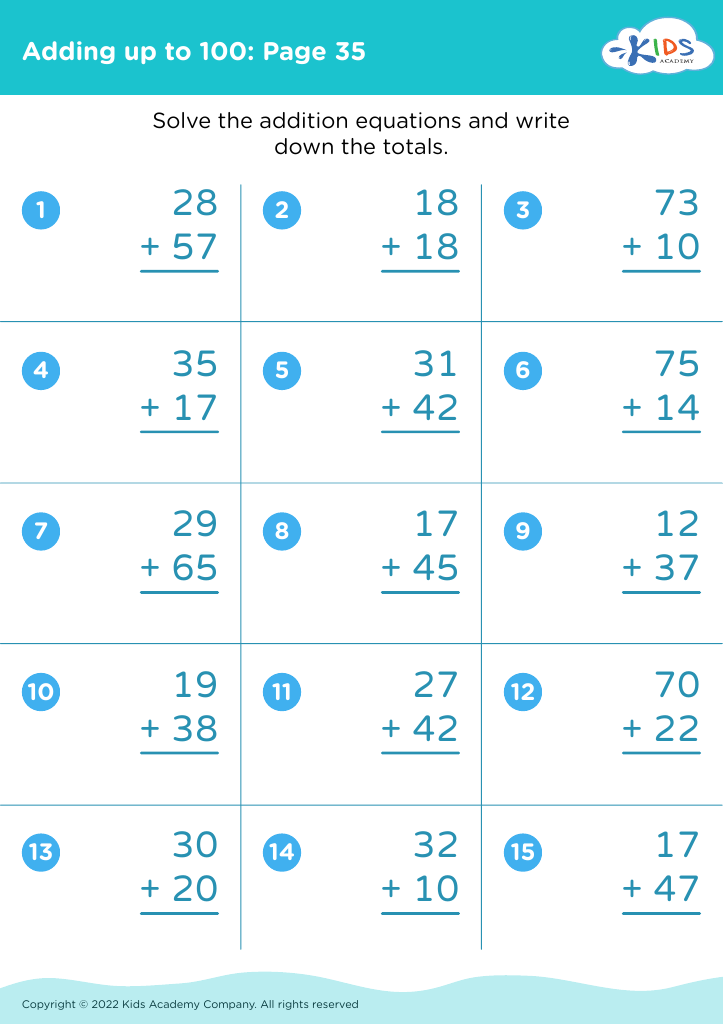
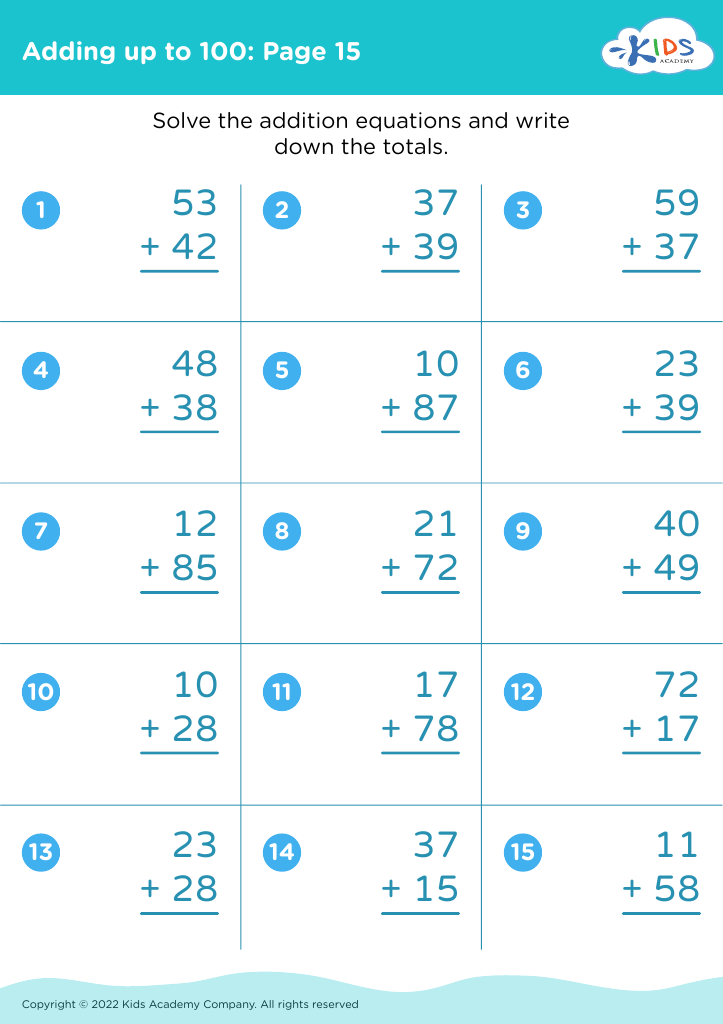
Welcome to our Addition Practice page, designed specifically for 7-year-olds! Here, you’ll find a variety of engaging worksheets that make mastering addition up to 100 fun and interactive. Perfect for reinforcing key math skills, these resources cover diverse approaches to addition, ensuring children develop a solid understanding of the concept. With colorful visuals and adaptable challenges, students will enhance their problem-solving abilities while enjoying the learning process. Ideal for teacher-led activities or homework assignments, our worksheets help young learners build confidence in their math skills. Explore our collection today and watch your child excel in addition!
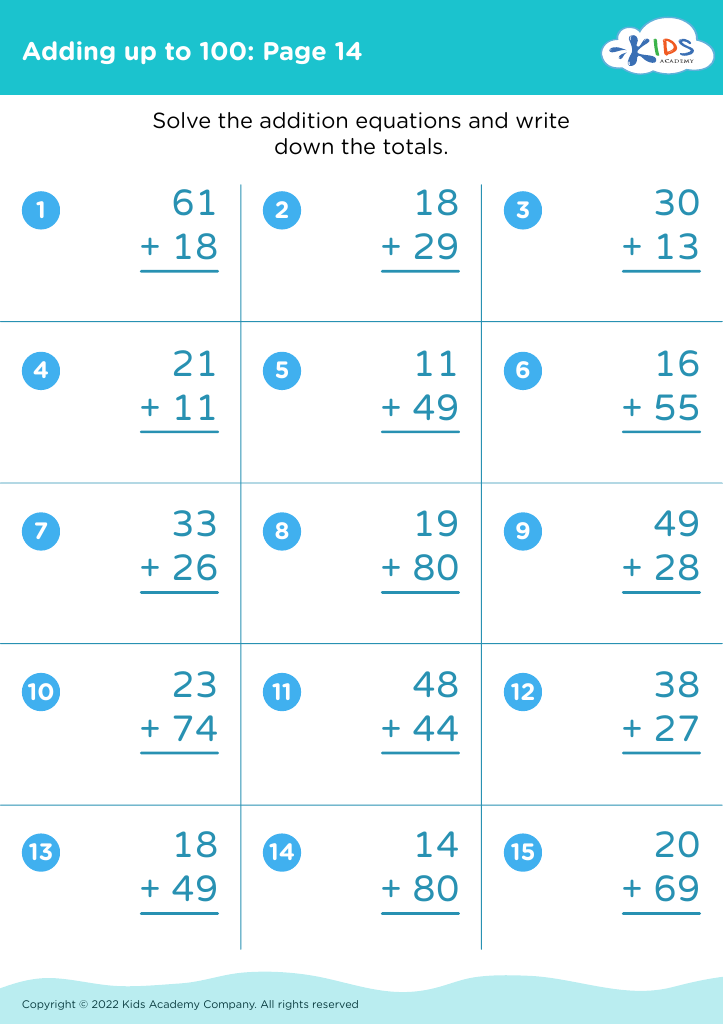


Parents and teachers should prioritize addition practice for 7-year-olds, especially tasks that involve adding up to 100, because this foundational skill is crucial for overall mathematical competency. At this age, children are transitioning from simple arithmetic to more complex problem-solving, and mastering addition boosts their confidence and engagement in math-related activities.
Practicing addition helps develop cognitive skills, promotes number sense, and enhances their ability to recognize patterns. By working with numbers up to 100, children gain a better understanding of how numbers relate to one another, which is essential for future concepts such as multiplication and division.
Furthermore, routine practice can improve retention and speed, essential for tackling more advanced mathematical concepts in later grades. Engaging in addition games and activities also fosters a positive attitude towards math, making it a fun rather than daunting subject.
Moreover, strong foundational skills in addition can significantly impact their academic performance across subjects, as many subjects— including science and economics— rely on numerical literacy. Therefore, dedicating time to addition practice equips children with essential tools for academic success and daily life, fostering critical thinking that extends beyond the classroom.