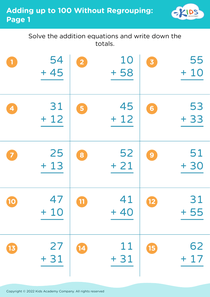
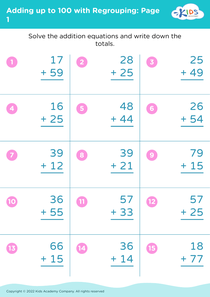
Fine Motor Skills Adding up to 100 Misc Worksheets for 7-Year-Olds
5 filtered results
-
From - To
Help your 7-year-old excel in math with our Fine Motor Skills Adding up to 100 Misc Worksheets. Specifically designed to enhance fine motor skills, these engaging and educational worksheets provide hands-on practice in addition up to 100. Perfect for young learners, each worksheet focuses on promoting precision and control through fun, interactive exercises that merge math with fine motor development. Whether your child needs extra help or just loves a challenge, these worksheets are an excellent resource to support their learning progress. Ideal for home or classroom use, foster confidence and competence in your child today!
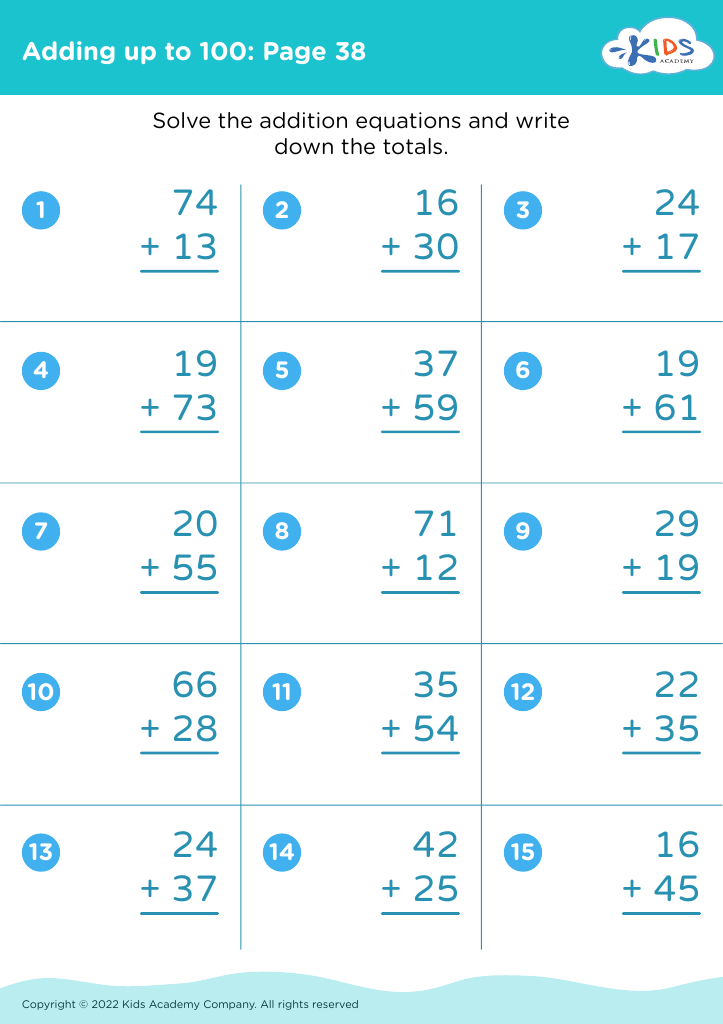
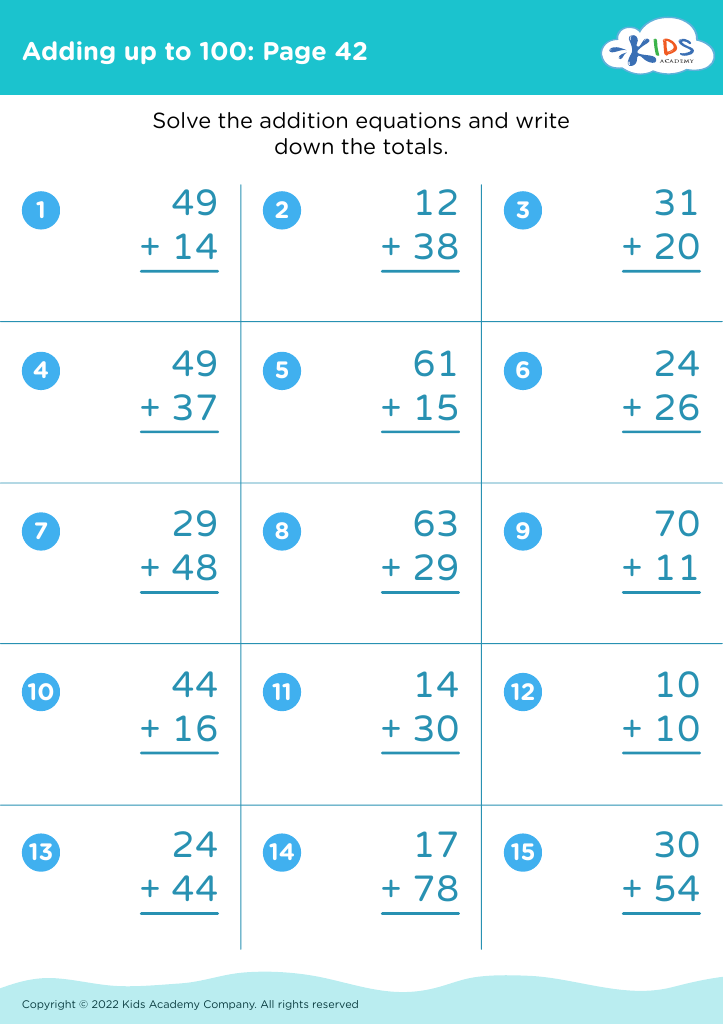
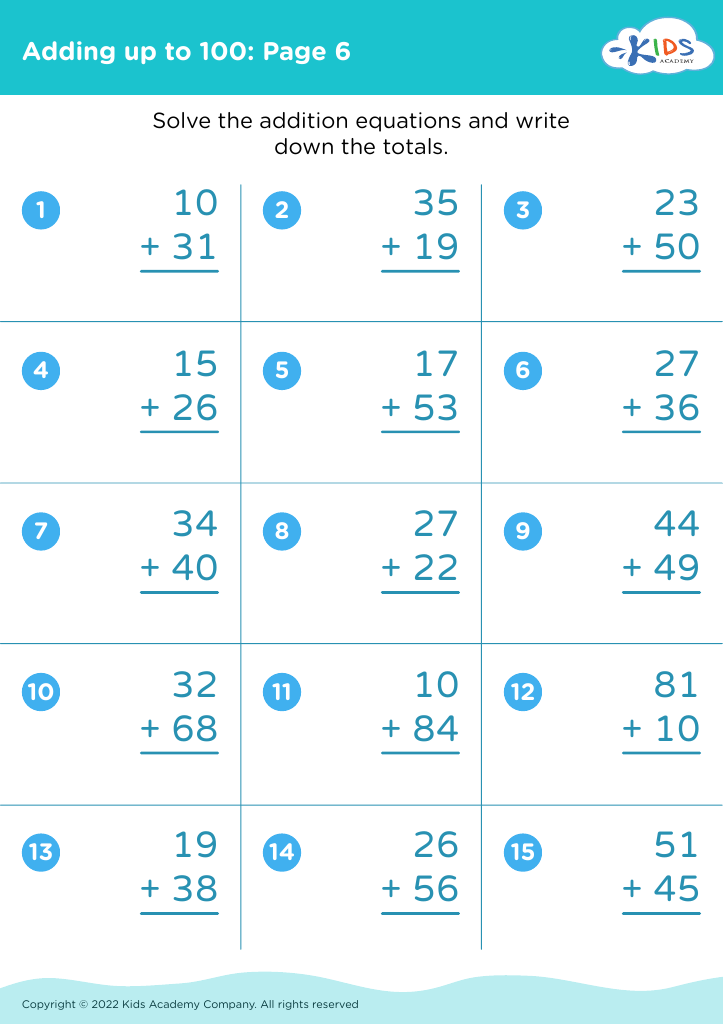
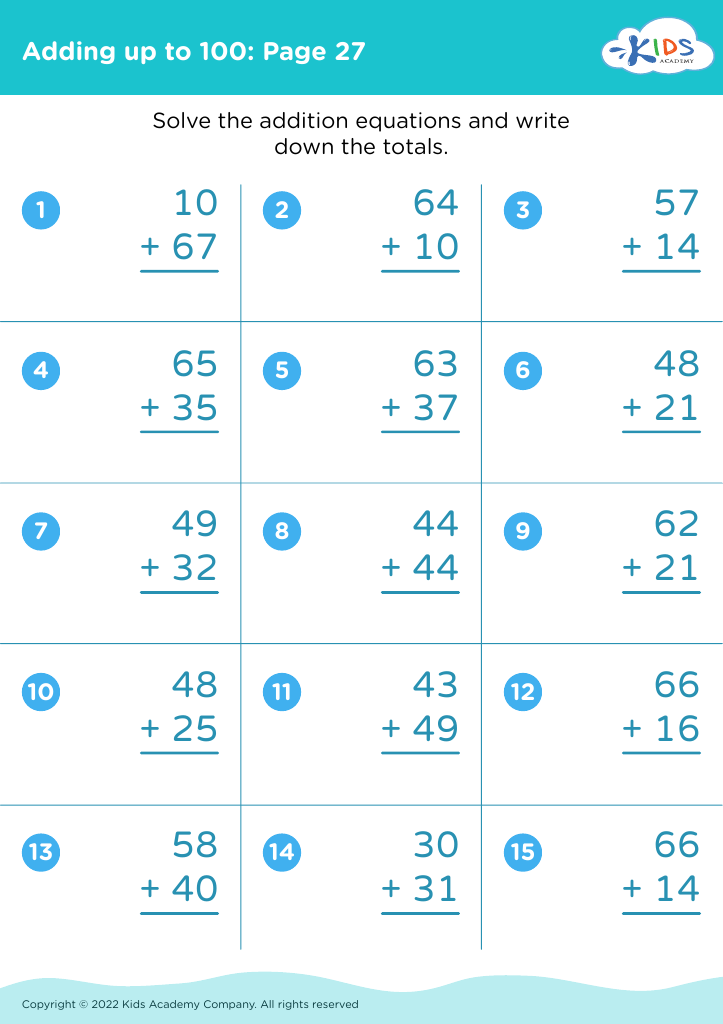
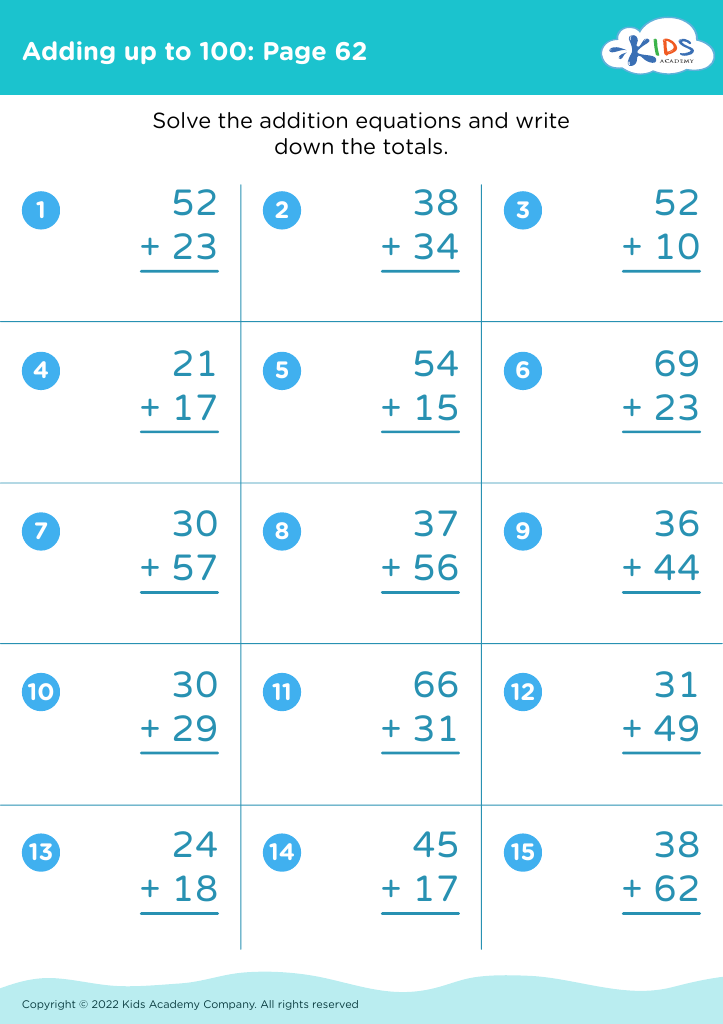


Fine motor skills are essential for 7-year-olds because they serve as a fundamental component of a child’s overall development, affecting their ability in academic settings and daily life tasks. For instance, developing these skills can enhance a child’s handwriting, allowing them to write more clearly and efficiently, which is critical as they increasingly engage in written work at school. When it comes to math, the ability to manipulate small objects and use tools like pencils and rulers properly is crucial for solving addition problems, especially when adding up to 100.
Fine motor skill development also underpins other learning activities. For example, children practice cutting, pasting, and coloring, which are not just about creativity but also bolster their precision and hand-eye coordination. These activities build a solid foundation for more complex tasks and subjects as they advance in school.
Parents and teachers should thus care about fine motor skills because they directly influence a child’s academic performance and self-sufficiency. Proficiency in these skills also fosters confidence and encourages a positive attitude towards learning challenges. Therefore, investing in activities that develop fine motor skills contributes significantly to a child’s holistic and academic growth.