Identifying shapes Adding up to 100 Misc Worksheets for 7-Year-Olds
3 filtered results
-
From - To
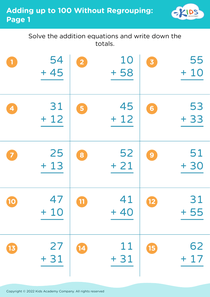
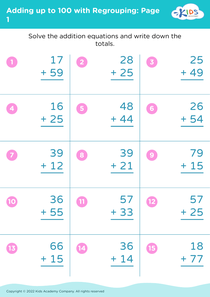
Welcome to our "Identifying Shapes Adding Up to 100 Misc Worksheets" for 7-year-olds! These engaging worksheets help young learners build foundational math skills while exploring shapes. Your child will practice recognizing and naming various 2D and 3D shapes, all while mastering addition with sums up to 100. Each worksheet is designed to strengthen problem-solving skills and boost confidence in math. Ideal for classroom use or at-home learning, our resources provide creative and interactive challenges that make learning fun. Equip your child with the necessary tools to excel in geometry and early arithmetic. Download today and start learning through play!
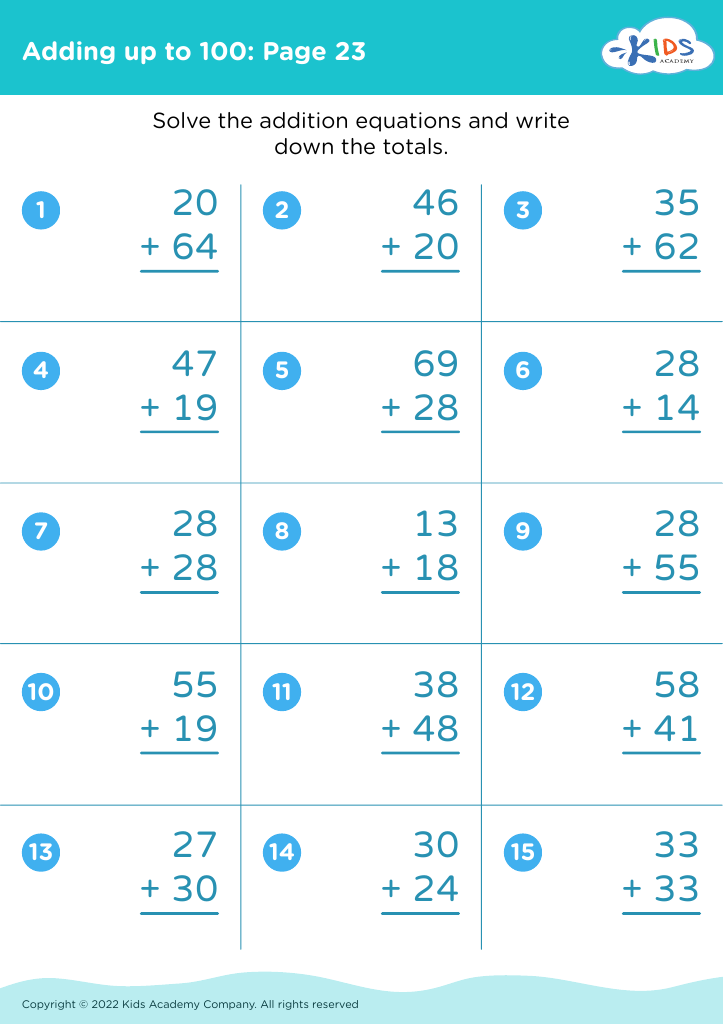
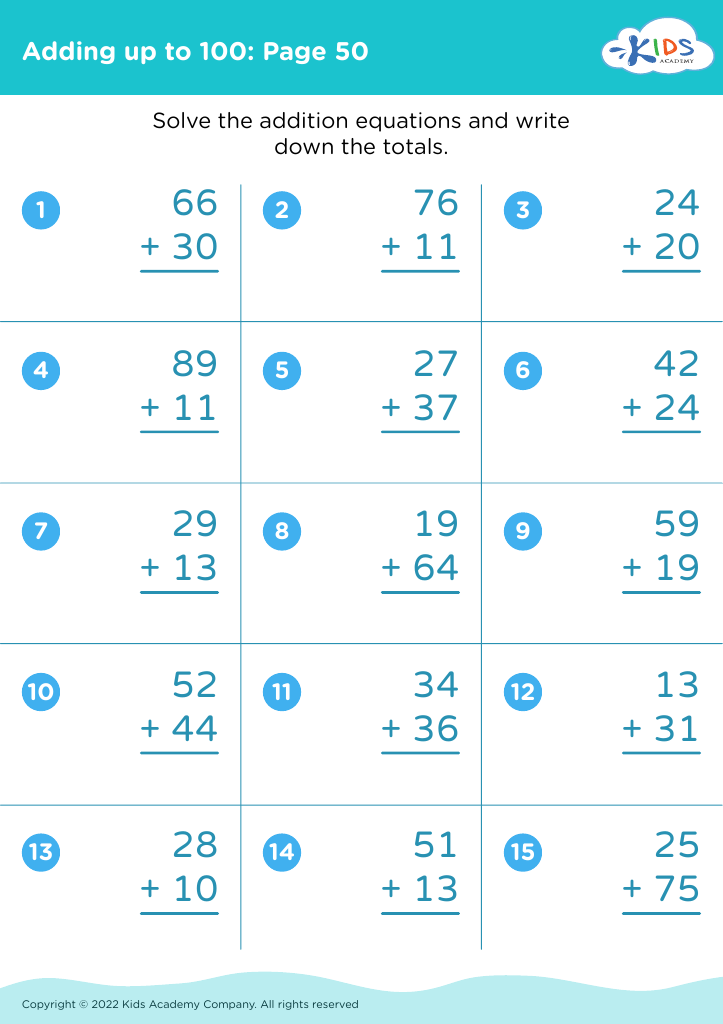
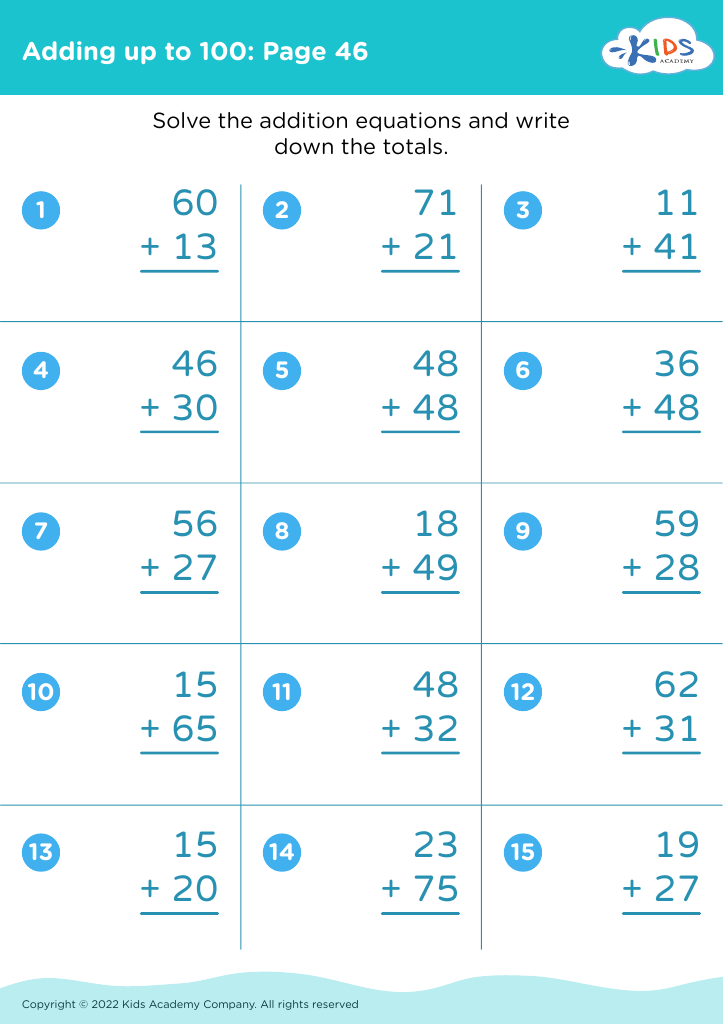


Identifying shapes and adding up to 100 are fundamental skills that significantly contribute to a child's cognitive development, making them crucial for both parents and teachers to prioritize for 7-year-olds. Mastering shapes lays the groundwork for spatial awareness, critical for understanding geometry later in life. It encourages observation and categorization skills, helping children make sense of the world around them, from architecture to nature.
On the other hand, the ability to add up to 100 fosters mathematical proficiency. At this age, kids are developing problem-solving skills and mathematical thinking that they'll rely on as they progress in their education. Understanding addition in context, such as word problems or real-life scenarios, reinforces their numerical fluency.
Additionally, both skills promote confidence and independence. When children are comfortable with these concepts, they are more likely to engage in problem-solving and explore mathematical concepts on their own. Furthermore, these skills often combine; recognizing shapes can support understanding in geometry and measurement, which subsequently involves adding and subtracting.
Overall, attention to shape recognition and addition lays a strong educational foundation, nurtures curiosity, and encourages academic growth, making it essential for parents and teachers to focus on these areas.