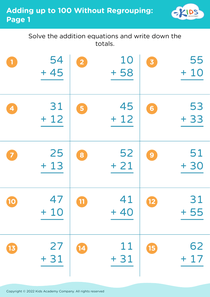
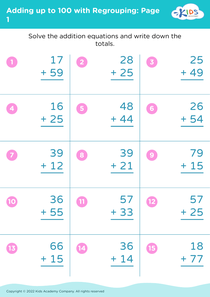
Problem-Solving Skills Adding up to 100 Misc Worksheets for 7-Year-Olds
7 filtered results
-
From - To
Foster your child’s math abilities with our "Problem-Solving Skills Adding up to 100 Misc Worksheets" designed specifically for 7-year-olds. Available on Kids Academy, these engaging, printable activities assist in developing crucial problem-solving skills in addition, ensuring young learners grasp essential concepts up to 100. Each worksheet combines fun tasks with educational challenges to stimulate analytical thinking and reinforce learning. Perfect for use at home or in the classroom, our expertly crafted resources provide tailored practice to boost confidence and improve math proficiency. Explore our collection to help your child succeed in math and enjoy a confident academic journey.
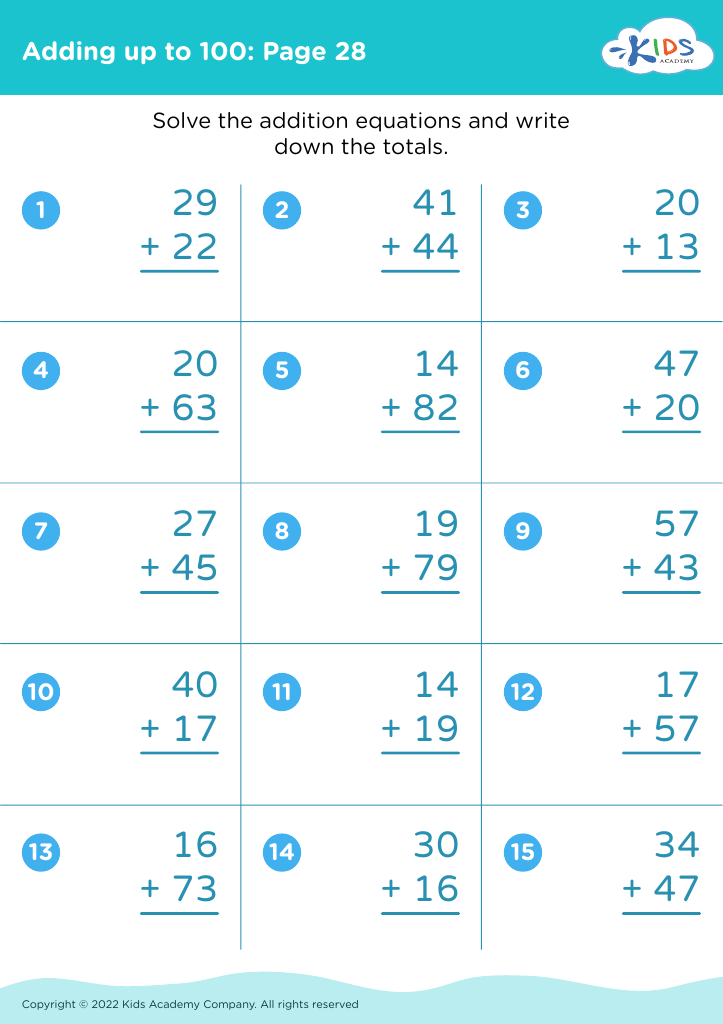
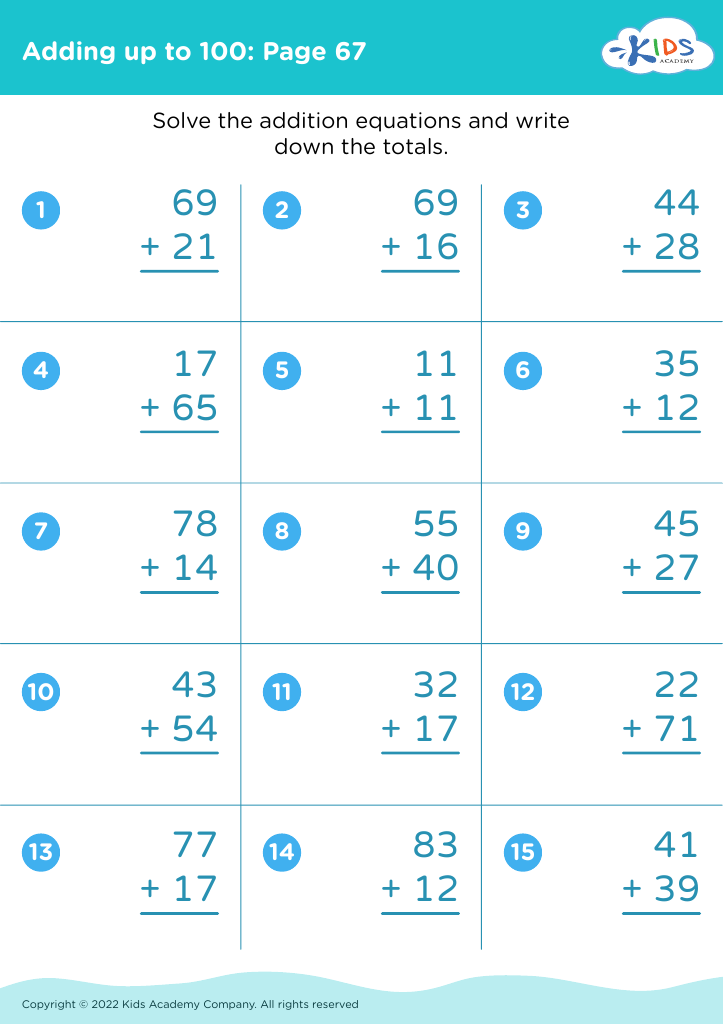
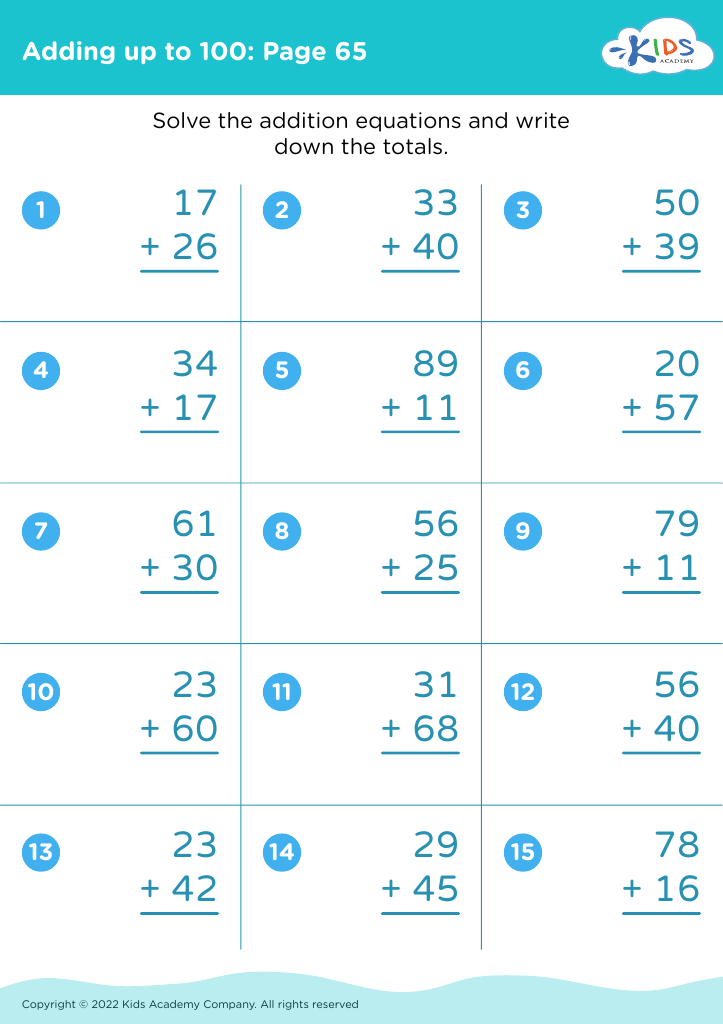
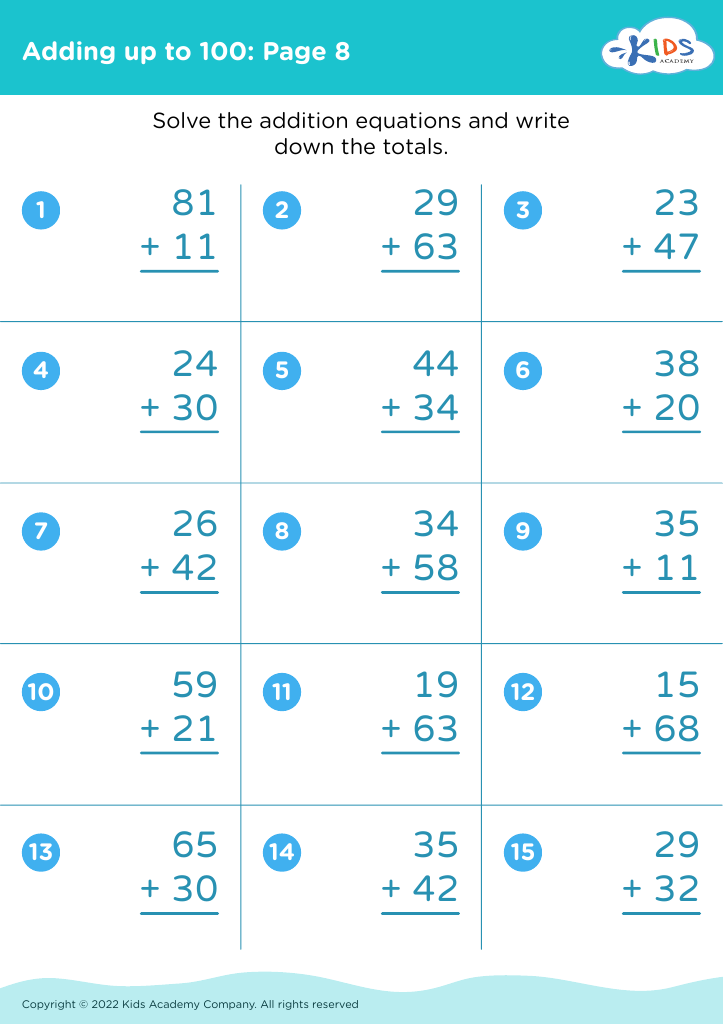
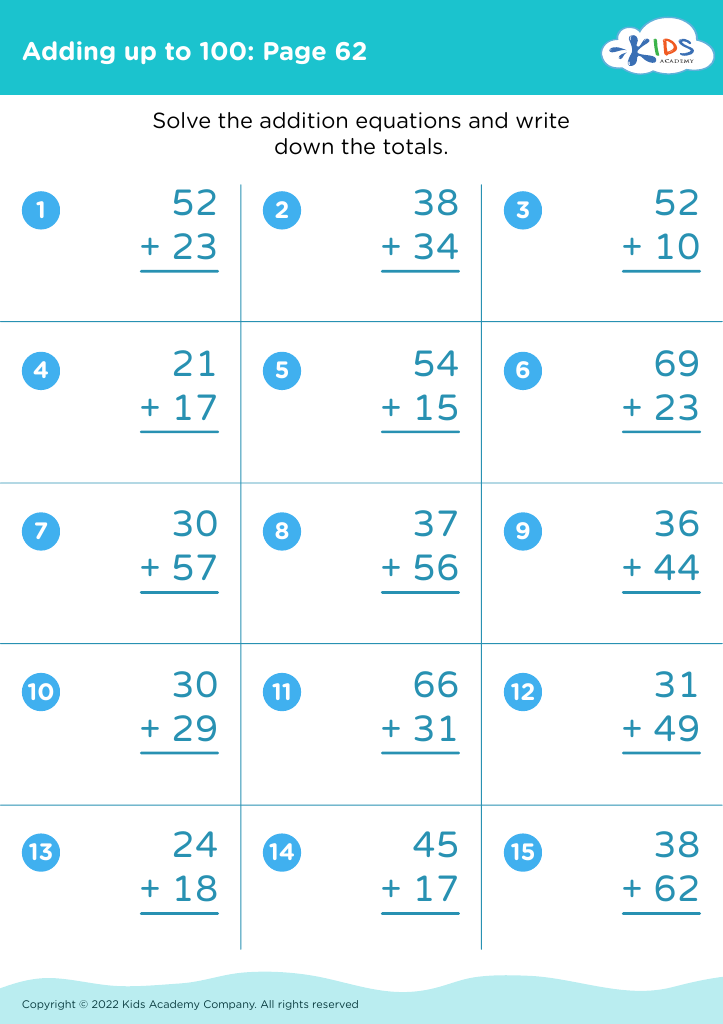
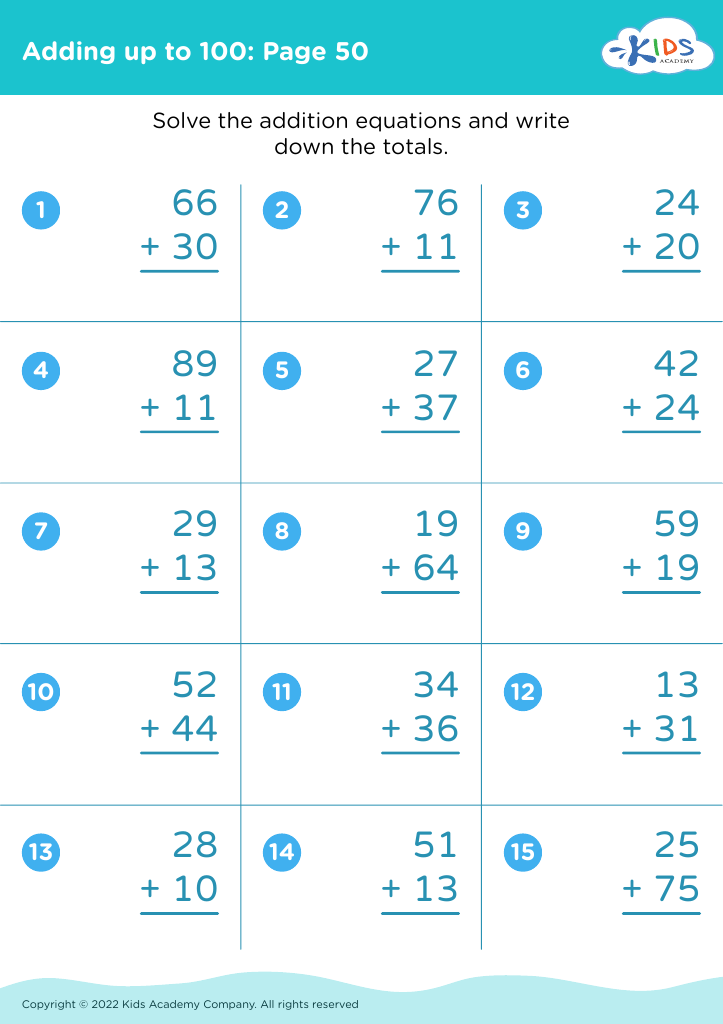
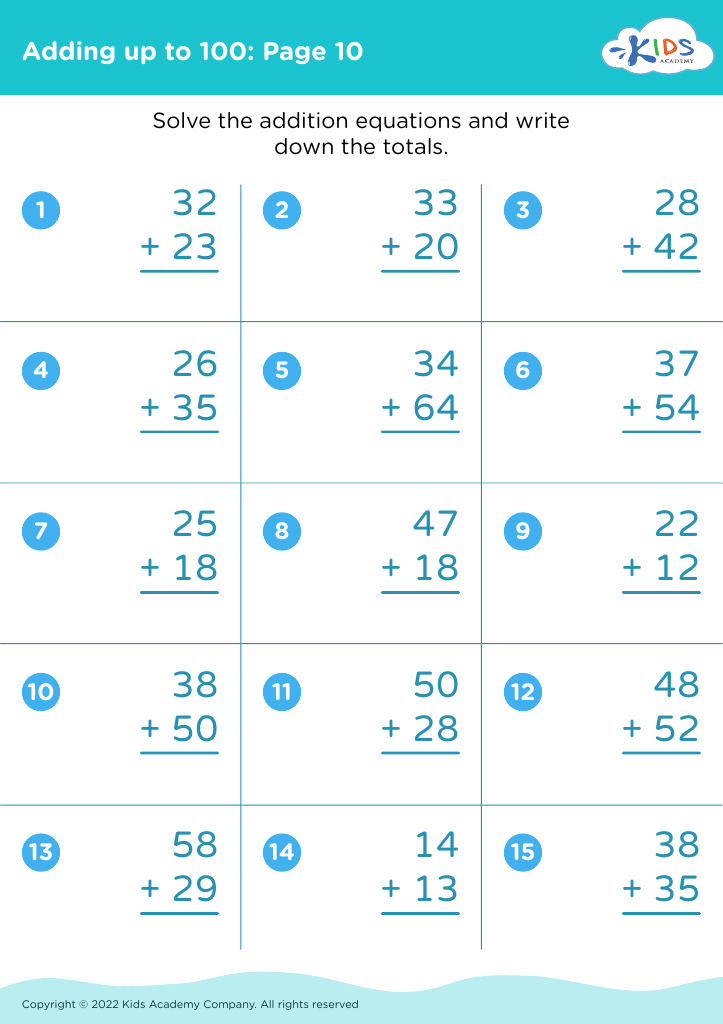


Parents and teachers need to pay attention to problem-solving skills involving adding up to 100 for 7-year-olds for several crucial reasons. These skills form a vital foundation for mathematical competence and cognitive development.
Firstly, grasping how numbers work together to make a sum enables children to build strong numeracy skills. These skills are not just foundational for advanced math learning but also for everyday life activities such as shopping, time management, and budgeting. Secondly, problem-solving tasks encourage logical thinking and persistence. When children encounter addition problems, they must focus, think critically, and often try different strategies to find the answer. This practice fosters resilience and flexibility in thinking.
Additionally, mastering such arithmetic at a young age boosts confidence. A confident child is more likely to embrace new challenges and approach future learning experiences with optimism. It also enhances classroom participation and engagement, which further facilitates learning. Teachers can diagnose learning difficulties early on should any arise, and parents can support learning at home with contextual real-world problems.
Lastly, these skills often carry over to improve other academic and life skills. The systematic approach honed during arithmetic problem-solving contributes to better reading comprehension, logical reasoning abilities, and even collaborative skills when tasks are performed in groups. Hence, nurturing these skills is immensely beneficial for a child's overall educational and personal development.