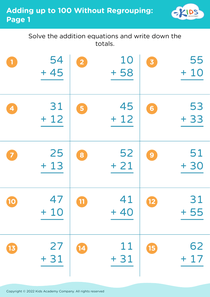
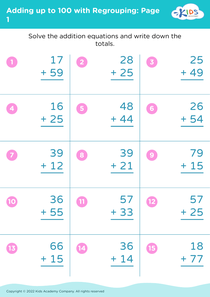
Recognizing Patterns Adding up to 100 Misc Worksheets for 7-Year-Olds
3 filtered results
-
From - To
Welcome to our "Recognizing Patterns Adding up to 100 Misc Worksheets for 7-Year-Olds" page! These engaging worksheets are designed to enhance your child's mathematical skills by focusing on recognizing patterns while adding numbers up to 100. With a variety of creative exercises and visual representations, your 7-year-old will not only improve their addition skills but also develop critical thinking and problem-solving abilities. Our fun, interactive worksheets cater to different learning styles, making math enjoyable and accessible. Help your child discover the beauty of patterns in math and build a strong foundation for future learning with these essential resources!
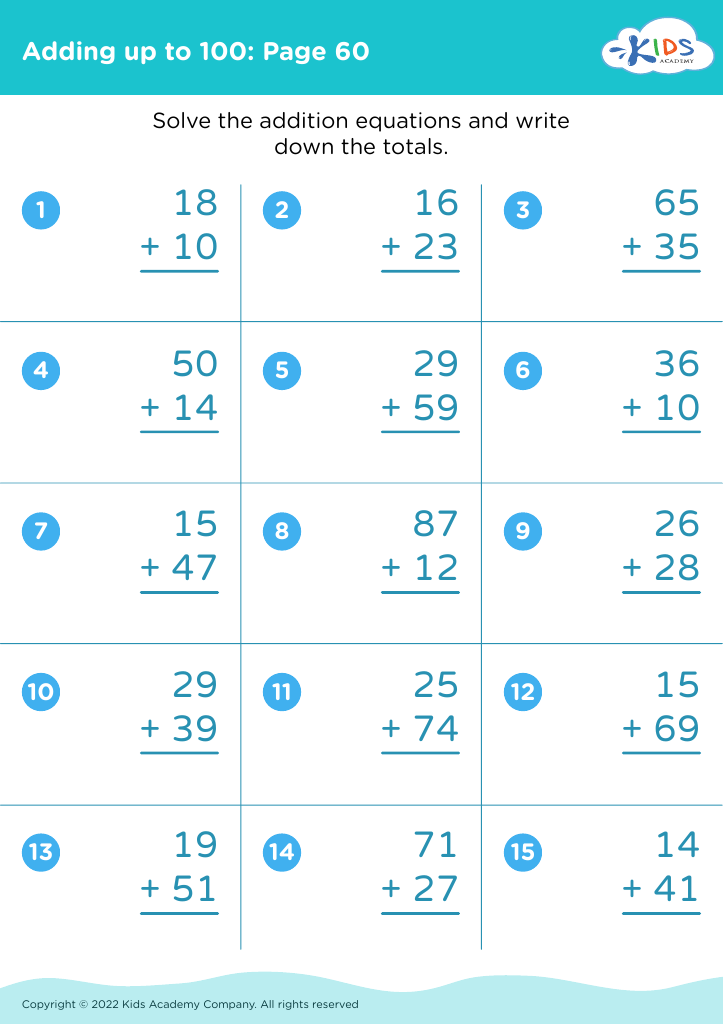
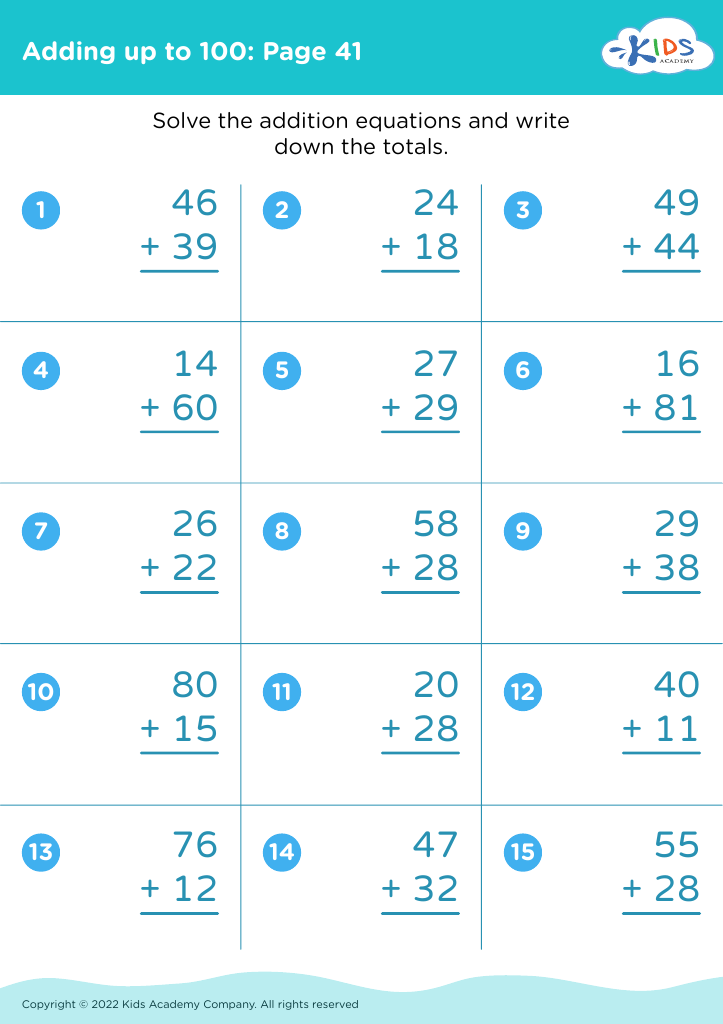
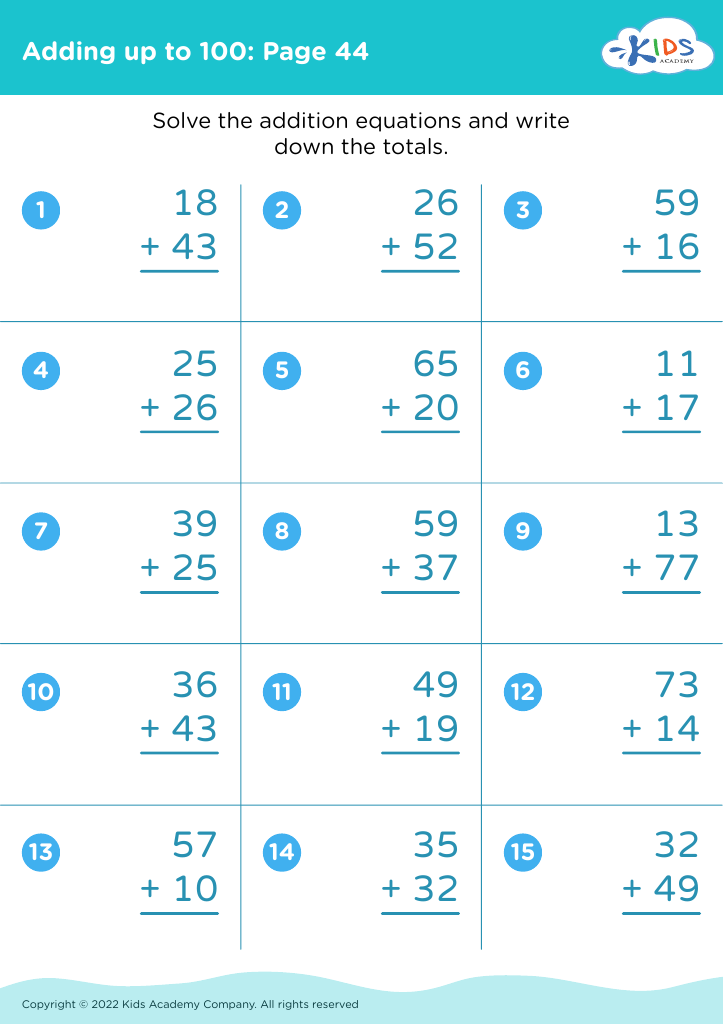


Recognizing patterns, particularly when adding up to 100, is a crucial mathematical skill for 7-year-olds. It forms the foundation for advanced arithmetic and critical thinking, enabling students to approach problems with confidence and creativity. When children identify patterns in numbers, they develop a deeper understanding of relationships between numbers, which fosters mathematical fluency.
For parents and teachers, recognizing these patterns signals a child's cognitive development. Engaging with number patterns not only enhances calculation skills but also encourages analytical thinking— essential in daily life and future academic success. Moreover, strong patterning skills support the understanding of more complex concepts such as multiplication, division, and place value.
Additionally, recognizing patterns can boost a child's motivation and enjoyment of math. When students see connections and can predict outcomes, they often feel a sense of achievement, which reinforces their learning and encourages continued exploration. Supporting children in developing these skills leads to improved performance, positive attitudes toward math, and lays the groundwork for lifelong learning habits. Thus, fostering pattern recognition is vital for both immediate educational goals and future mathematical proficiency.