Understand fractions Adding up to 100 Misc Worksheets for 7-Year-Olds
3 filtered results
-
From - To
Explore our engaging "Understand Fractions Adding up to 100" worksheets, specially designed for 7-year-olds! These interactive resources help young learners grasp the concept of fractions through fun and colorful activities. Students will explore ways to visualize and manipulate fractions, making it easier to understand how they relate to whole numbers while adding up to 100. Ideal for classroom or home use, these worksheets are perfect for reinforcing mathematical skills while keeping learning enjoyable. Start your child's adventure in mastering fractions today—download these creative worksheets and watch their confidence and math skills grow! Ideal for all early grade learners!
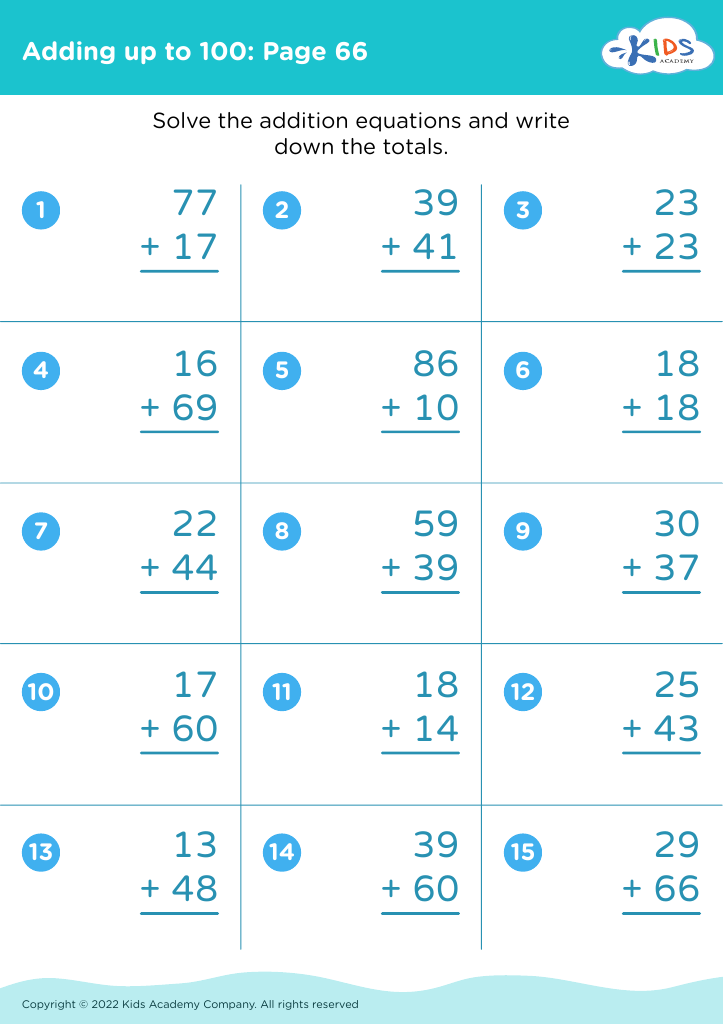
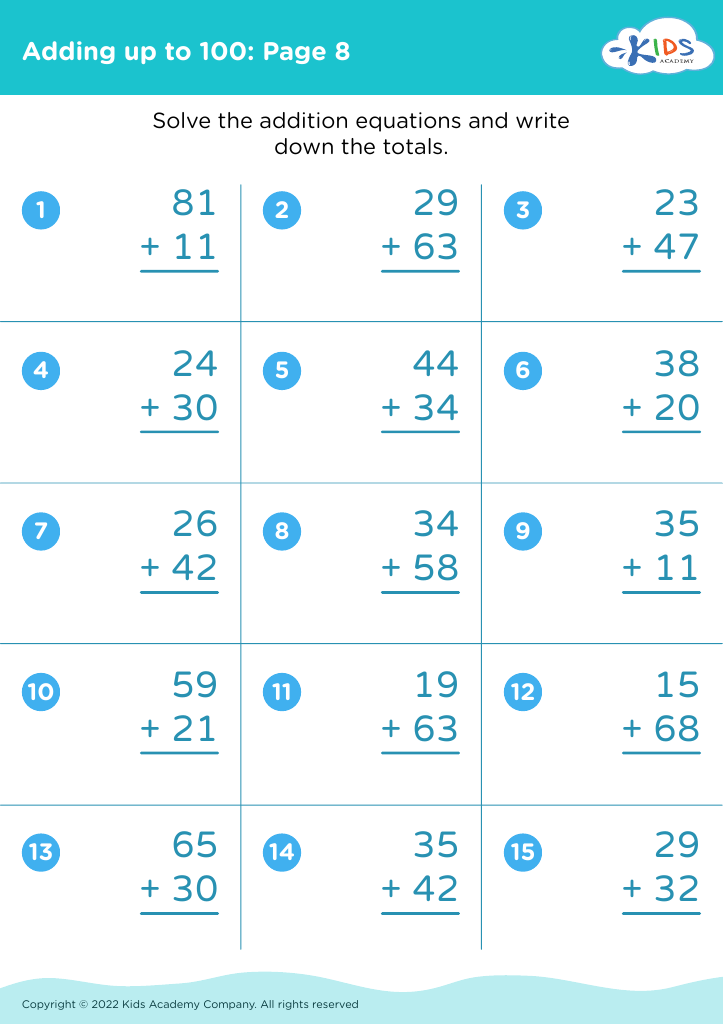
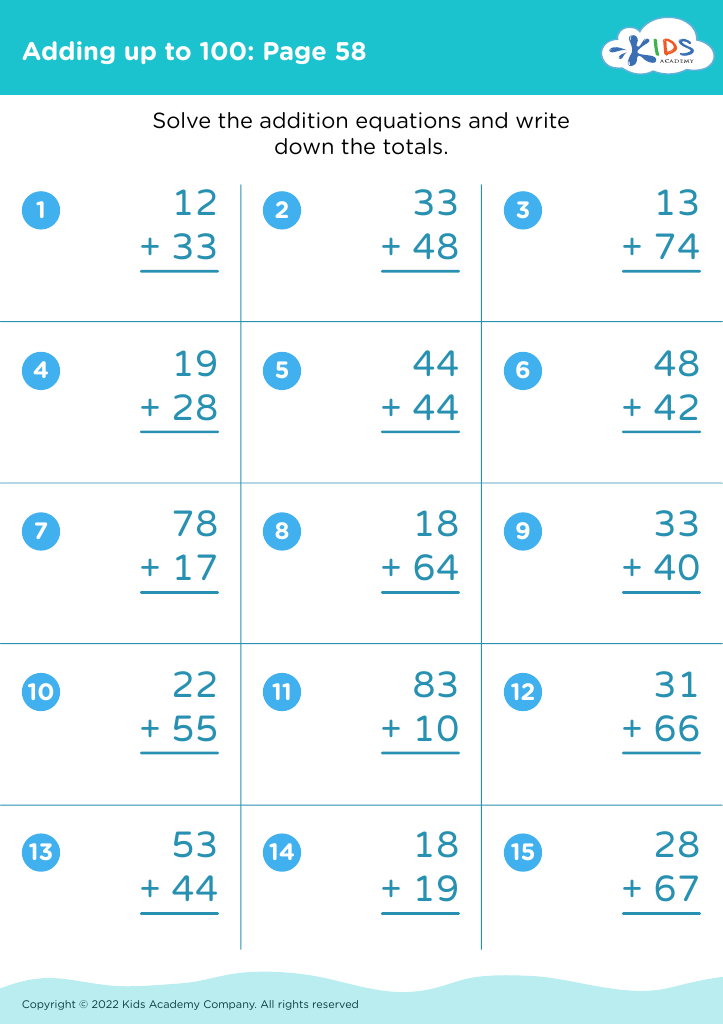


Understanding fractions is a fundamental math skill that supports a child’s overall mathematical competence. For 7-year-olds, learning about fractions and their relationship to a whole, like one hundred, is particularly important for several reasons. First, it lays a solid foundation for more advanced math concepts, such as ratio and proportion, which will be encountered in later grades. Grasping fractions promotes critical thinking and problem-solving skills, encouraging children to interpret and manipulate numbers effectively.
Additionally, knowing how different fractions can add up to a whole, such as 100, fosters an understanding of parts and wholes, which is a valuable life skill. This knowledge helps children relate math to real-world situations, allowing them to make sense of money, share resources, and understand time management.
Moreover, engaging with fractions can enhance a child's confidence and enjoyment in math. Parents and teachers who encourage skills in this area can create a supportive learning environment, ultimately cultivating a positive attitude toward mathematics. Therefore, addressing fractions with 7-year-olds is essential not just for academic achievement, but also for personal development and daily life applications.