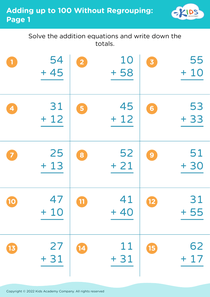
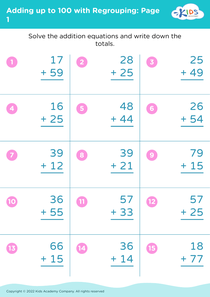
Understanding fractions Adding up to 100 Misc Worksheets for 7-Year-Olds
16 filtered results
-
From - To
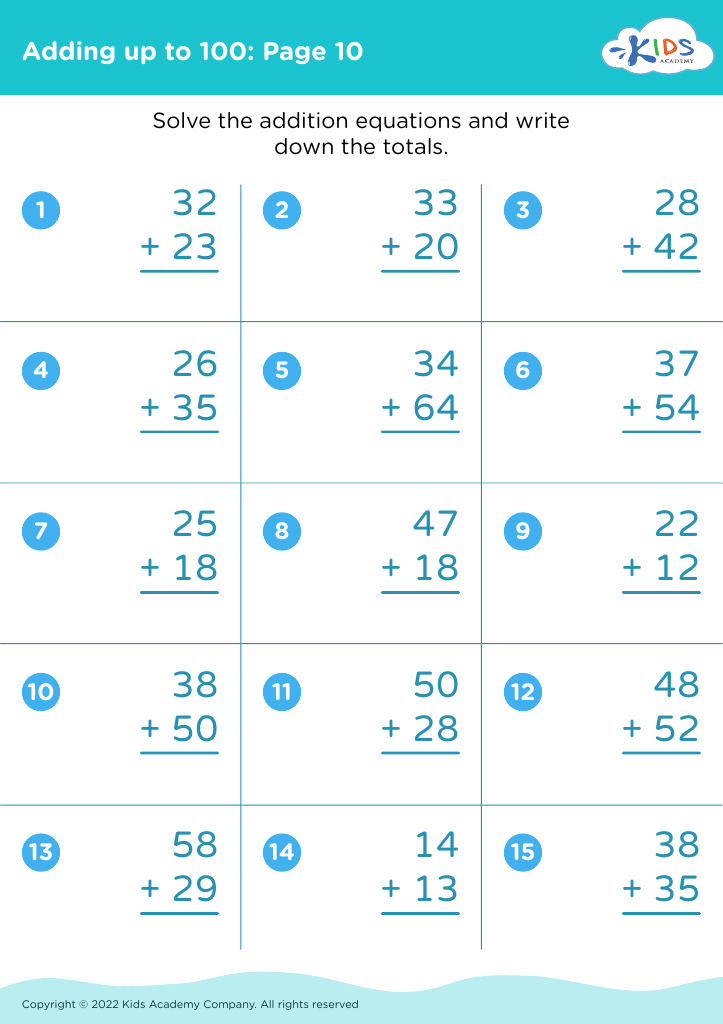
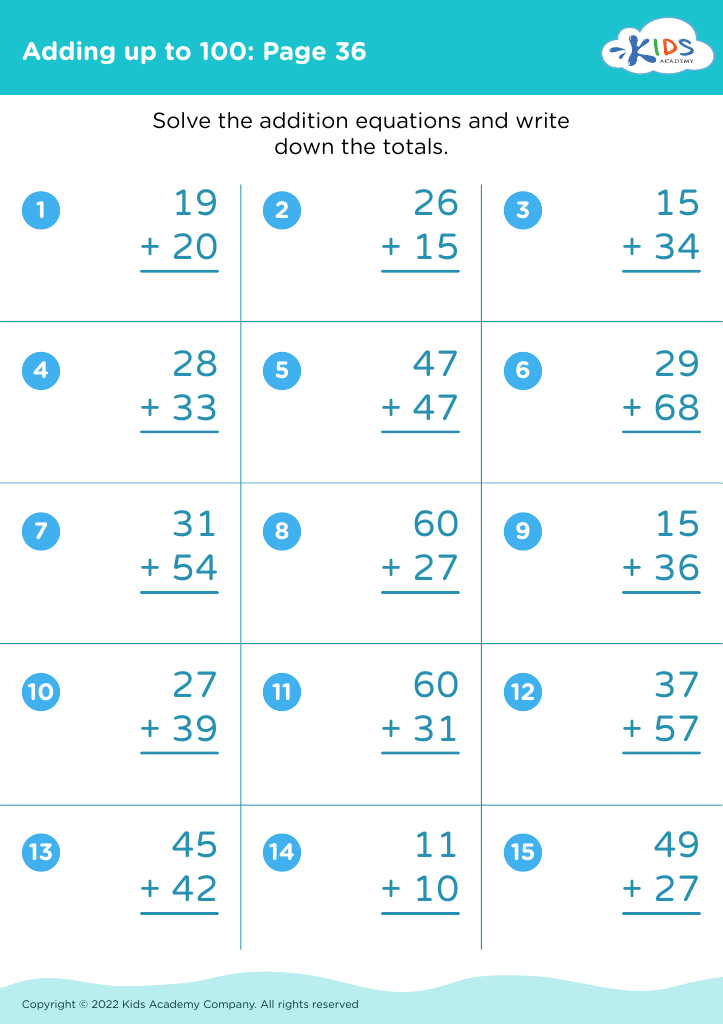
Explore our "Understanding Fractions: Adding up to 100 Misc Worksheets for 7-Year-Olds" page at Kids Academy! Designed specifically for young learners, these worksheets provide engaging exercises in adding numbers up to 100 while introducing basic fraction concepts. Each activity aims to enhance essential math skills and build confidence in solving problems. Through colorful visuals and interactive tasks, children will grasp fundamental fraction principles and practice addition in a fun and educational way. Foster your child’s mathematical development with our expertly crafted resources tailored to meet the unique learning needs of 7-year-olds. Visit us today!
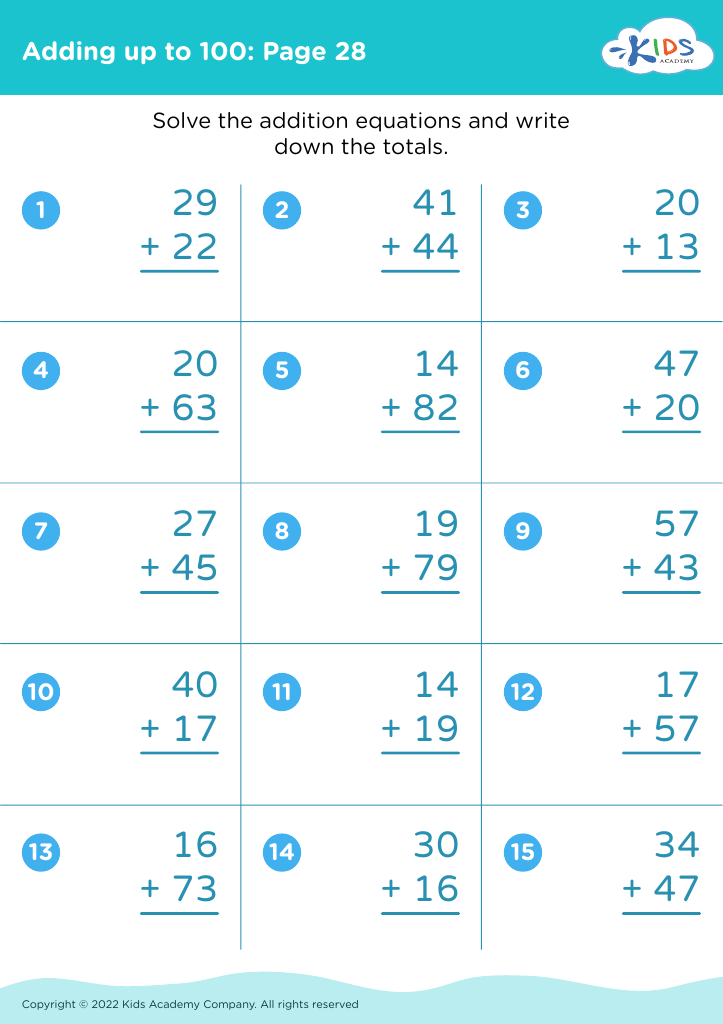
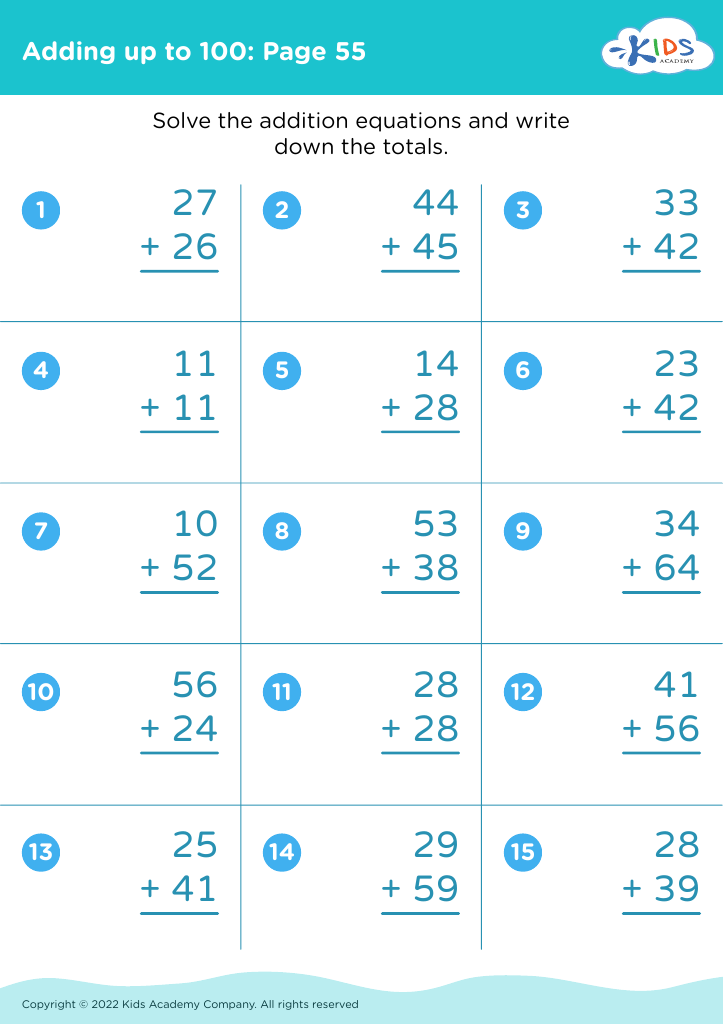
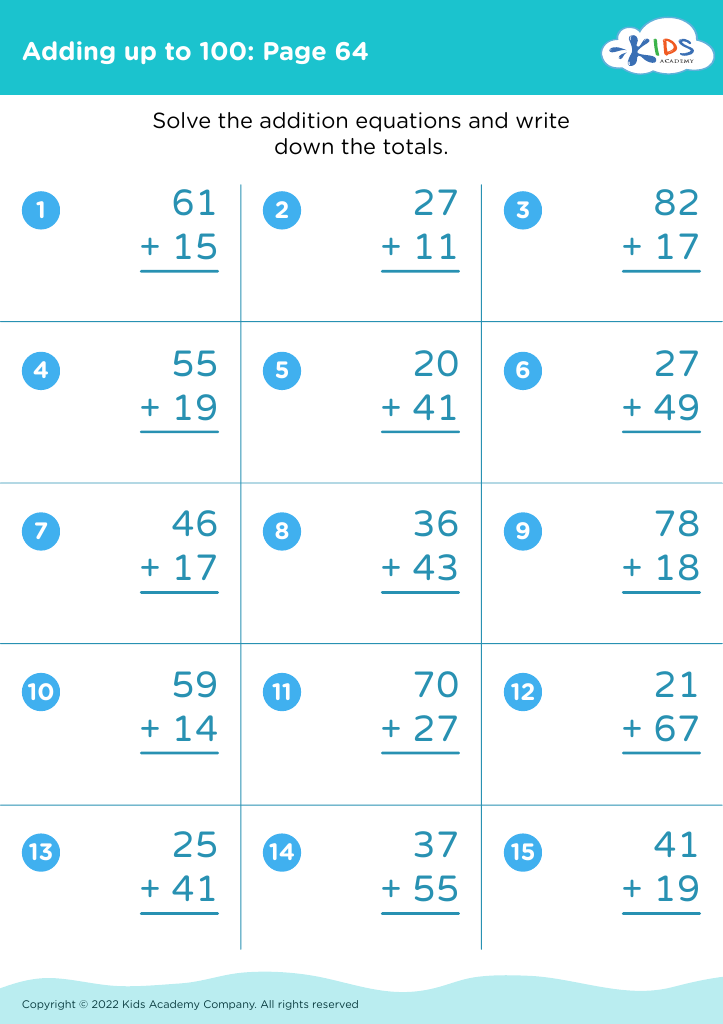
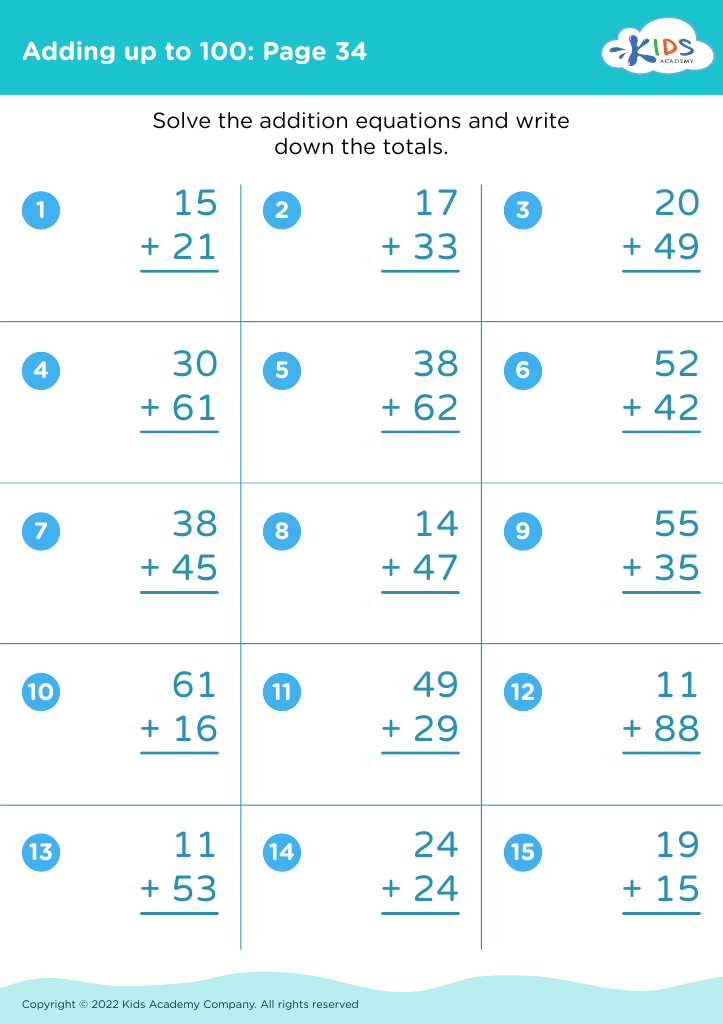
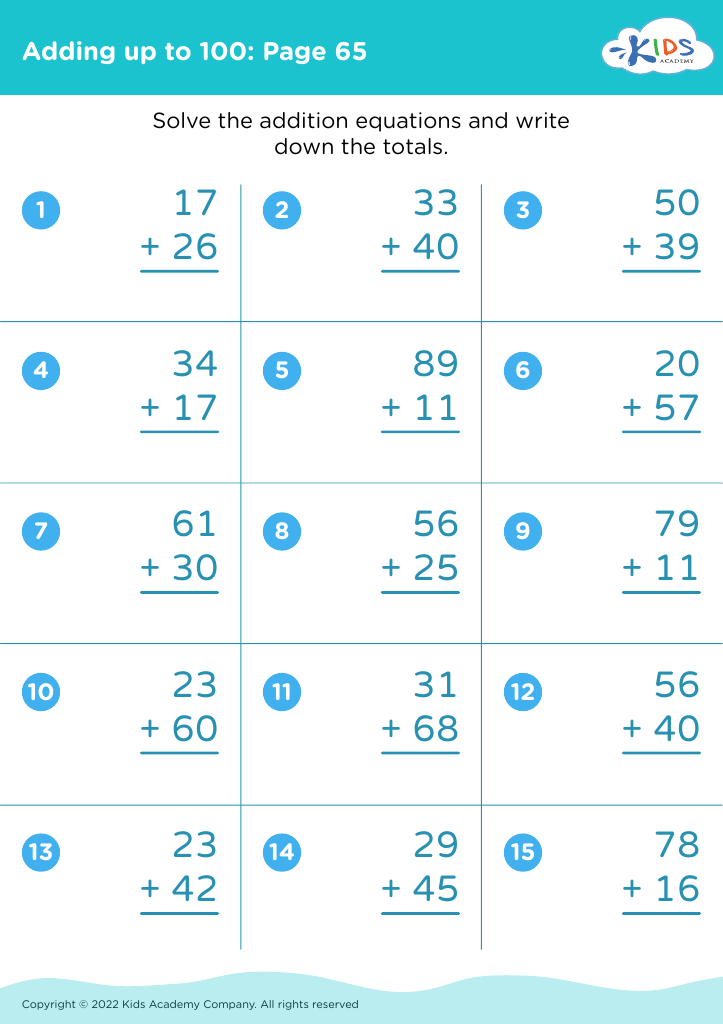
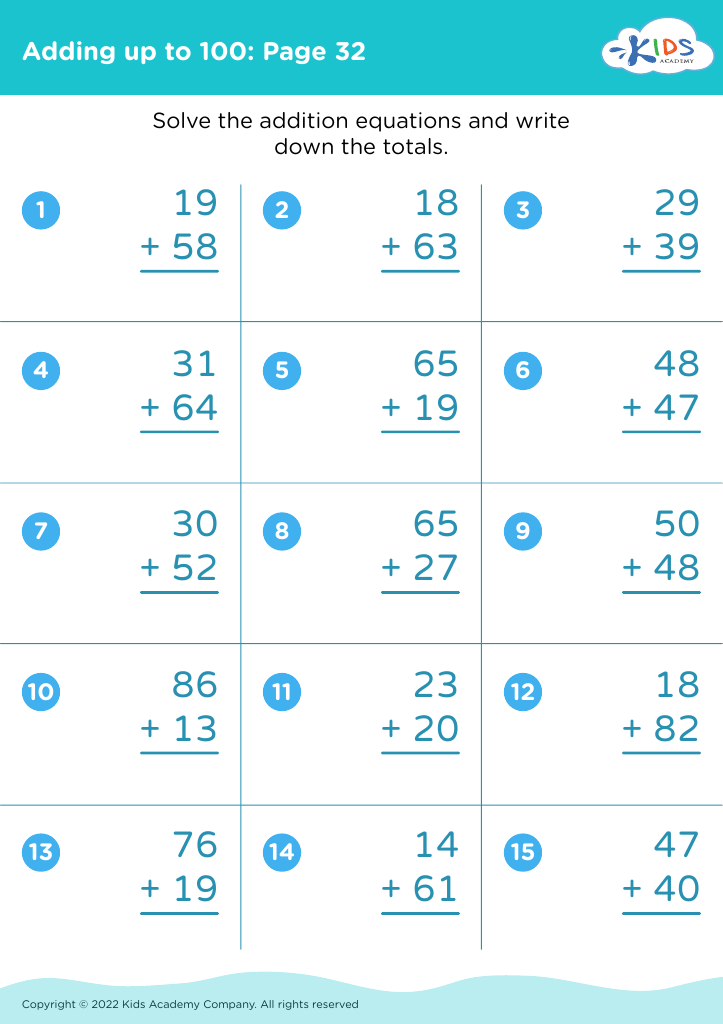
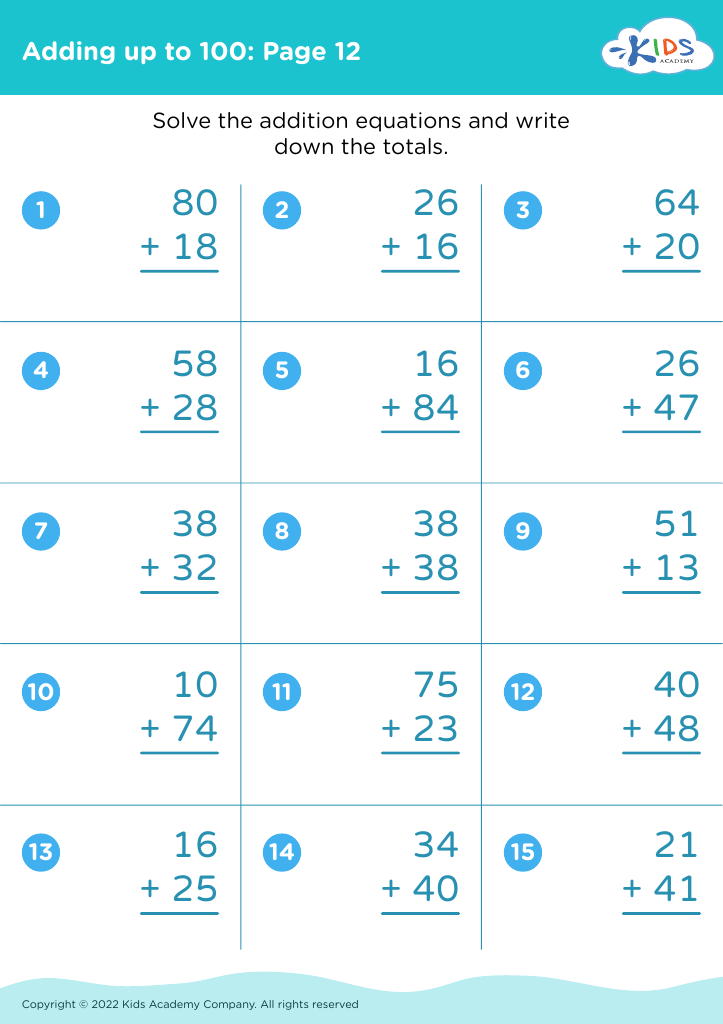
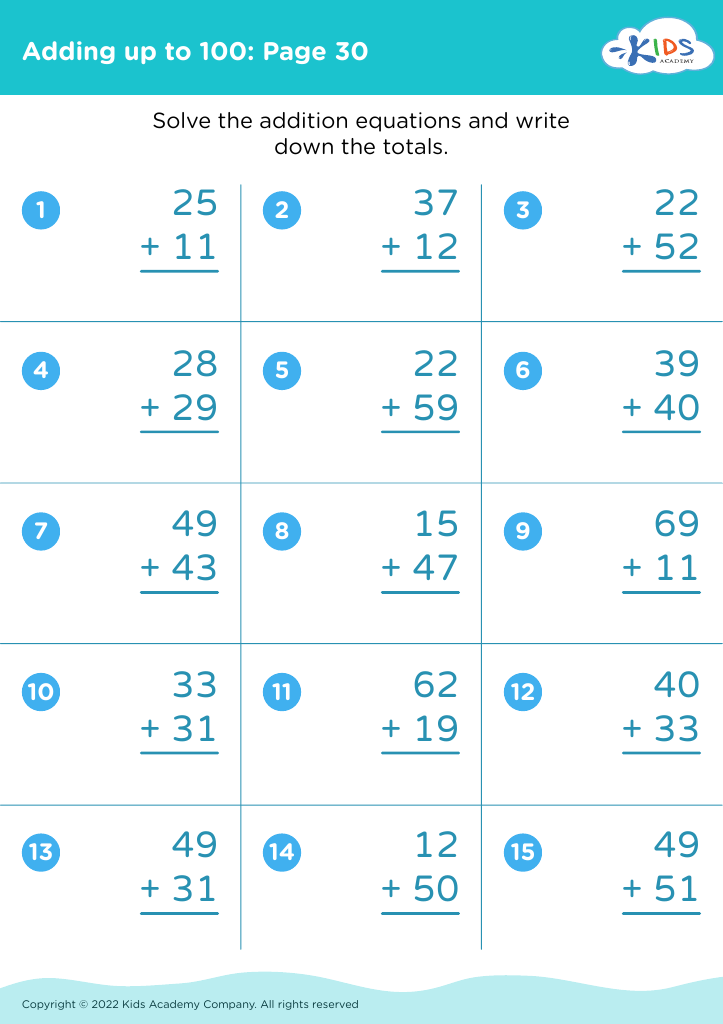
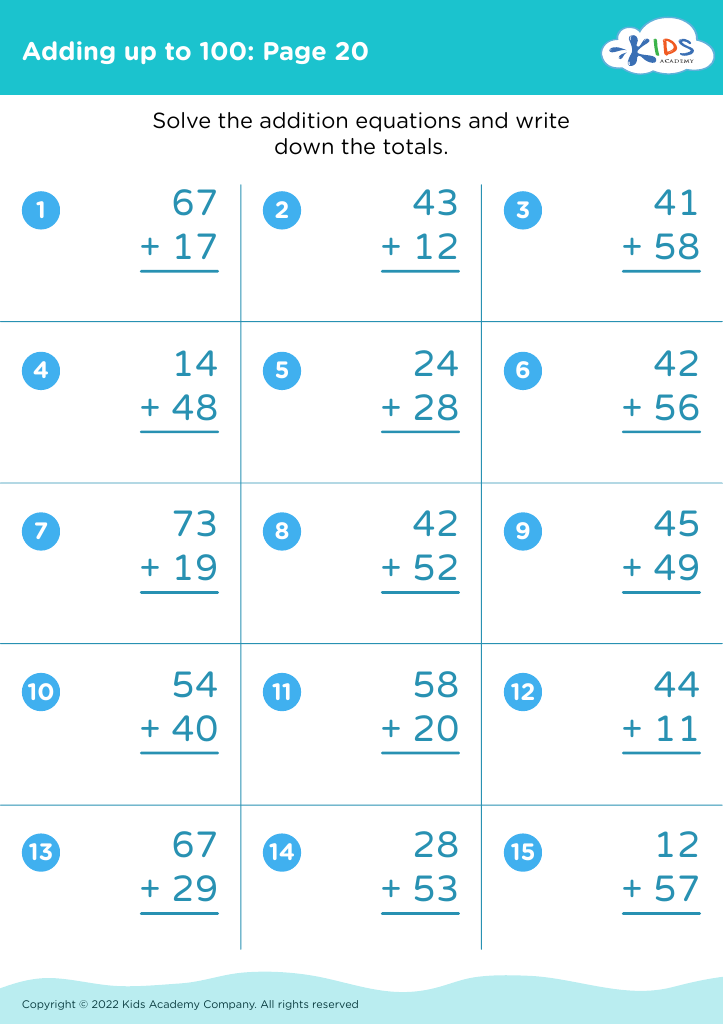
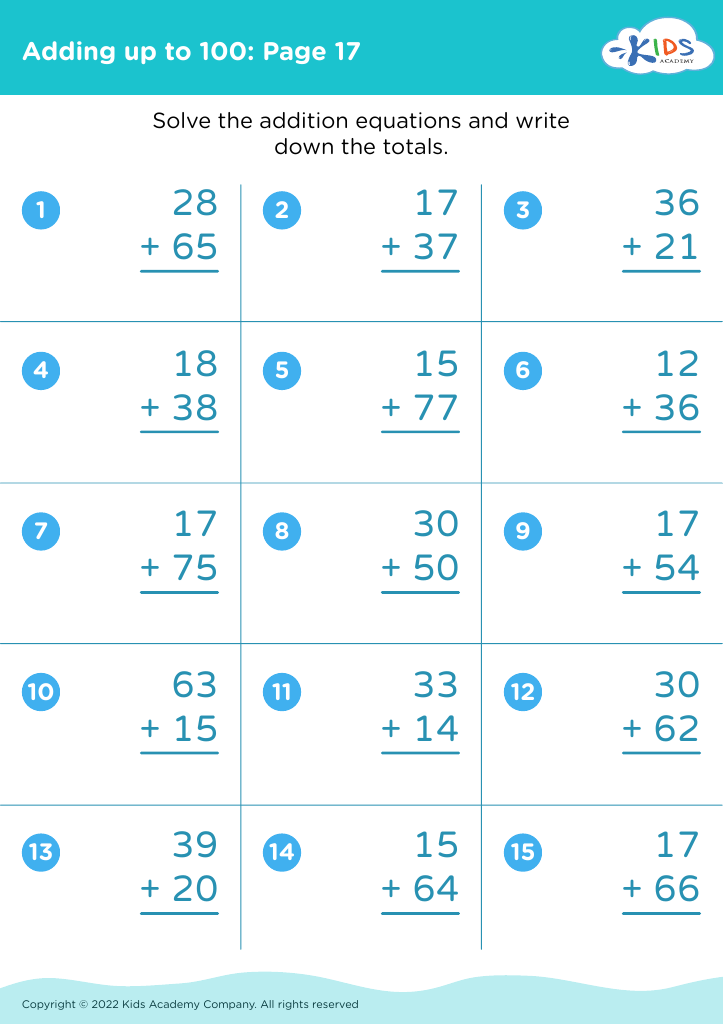
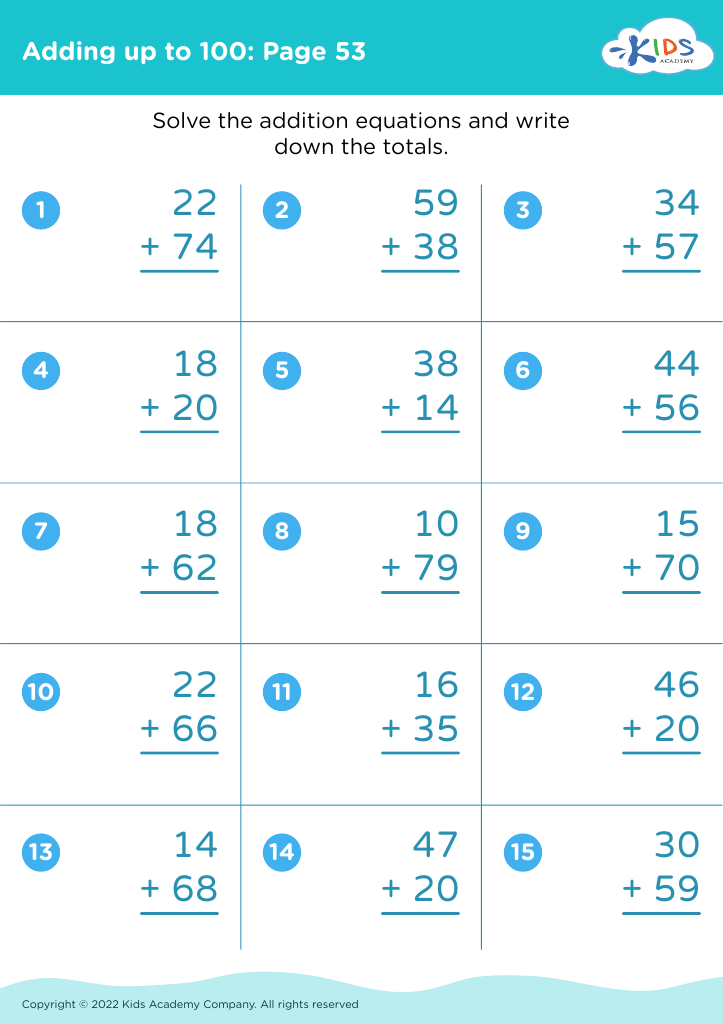
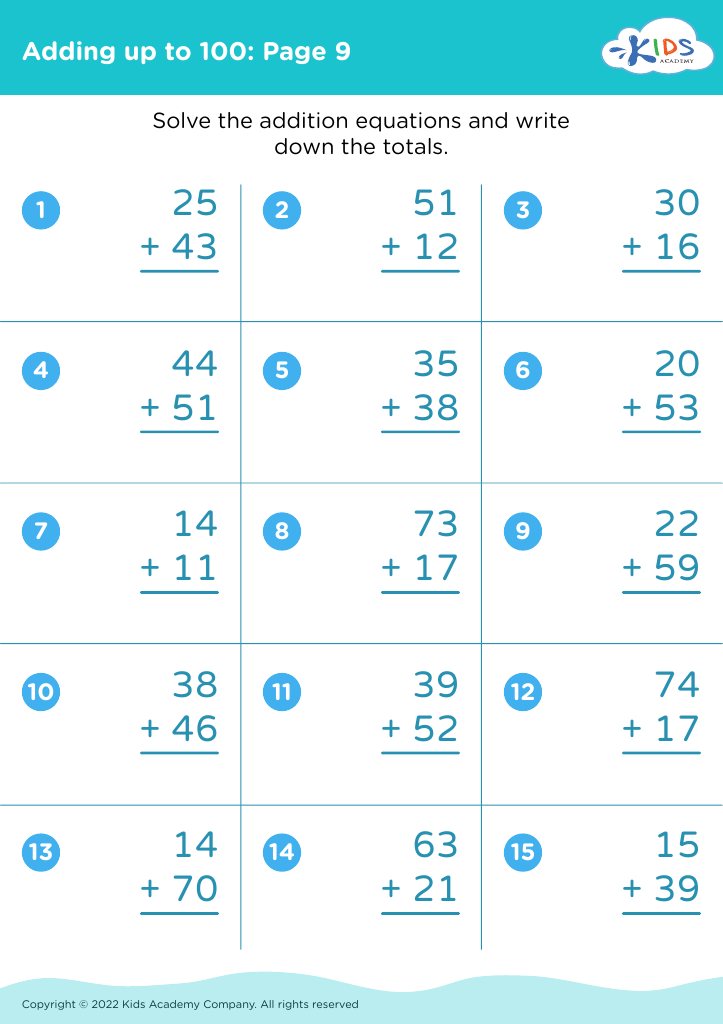
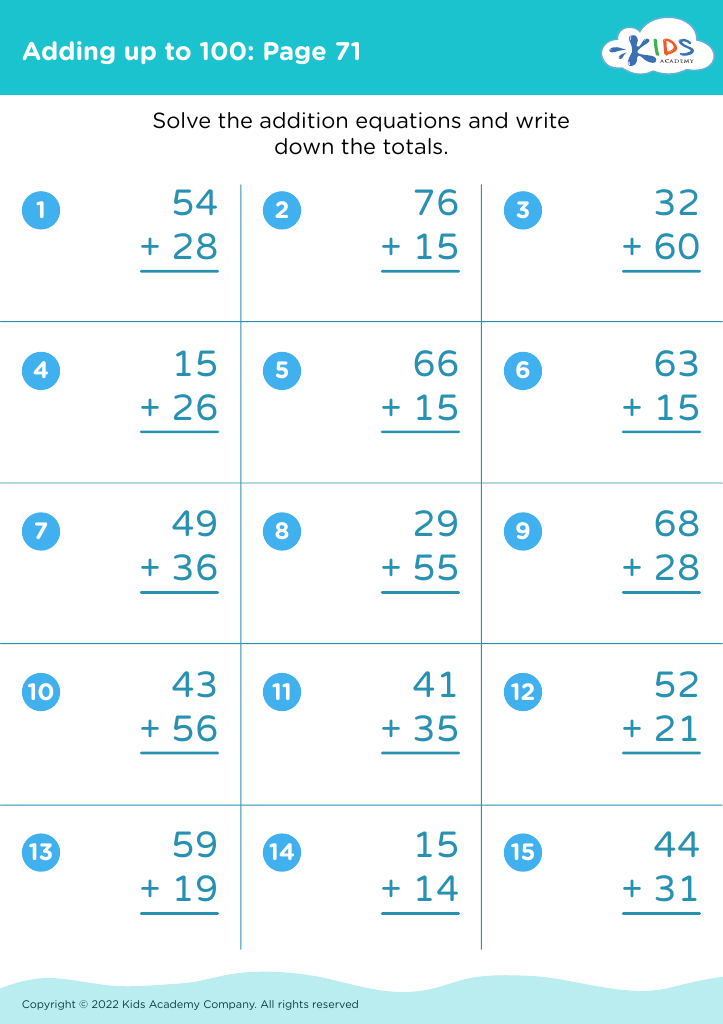
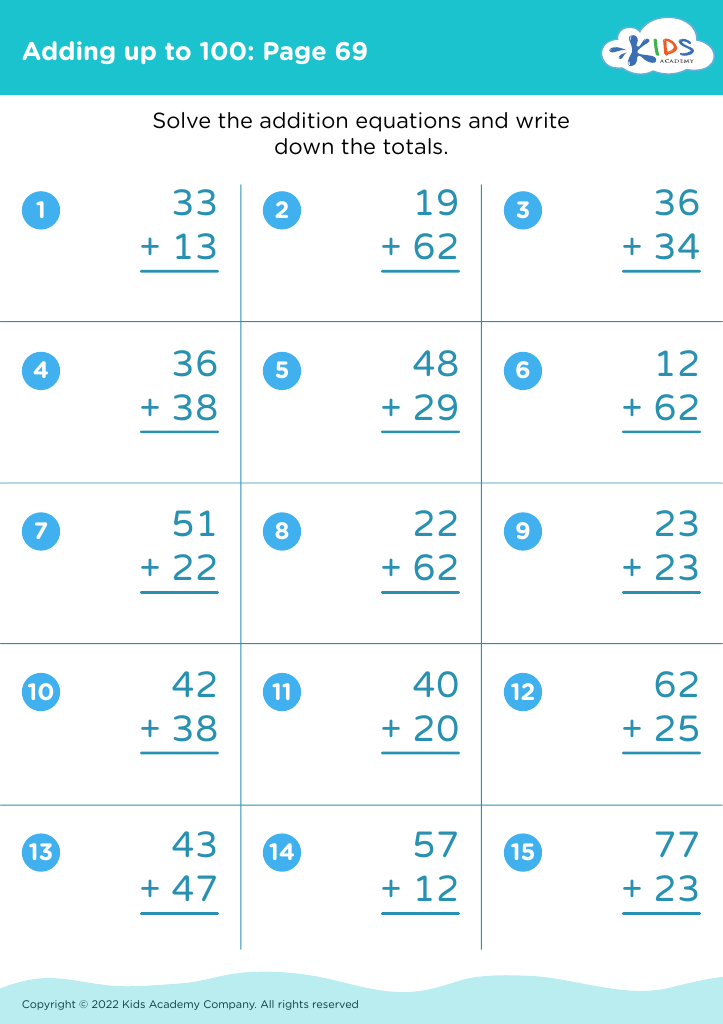


Understanding fractions, addition up to 100, and other miscellaneous math skills are essential building blocks in the education of 7-year-old children. At this developmental stage, children are not only learning basic arithmetic but also conceptualizing how numbers work together in more complex ways. When parents and teachers focus on fractions, they help children grasp proportionality, division, and the concept of parts making a whole, which are critical for advanced math and practical life skills. This foundational knowledge aids in understanding time, measurement, and data interpretation later on.
Addition up to 100 is equally important because it fosters fluency in basic arithmetic, a necessary stepping stone to more advanced operations such as multiplication and division. It also helps children in real-life situations, like counting money or combining item quantities. Mastery in these areas boosts a child's confidence and efficiency in handling numbers.
Beyond these, miscellaneous math skills—such as recognizing patterns, understanding shapes, and developing problem-solving strategies—enhance cognitive development, logic, and analytical thinking. Together, these math skills support overall academic success, open doors to STEM fields, and cultivate a lifelong love for learning. Parents and teachers play crucial roles in nurturing these skills, making math both accessible and enjoyable for young learners.