Understanding patterns Adding up to 100 Misc Worksheets for 7-Year-Olds
6 filtered results
-
From - To
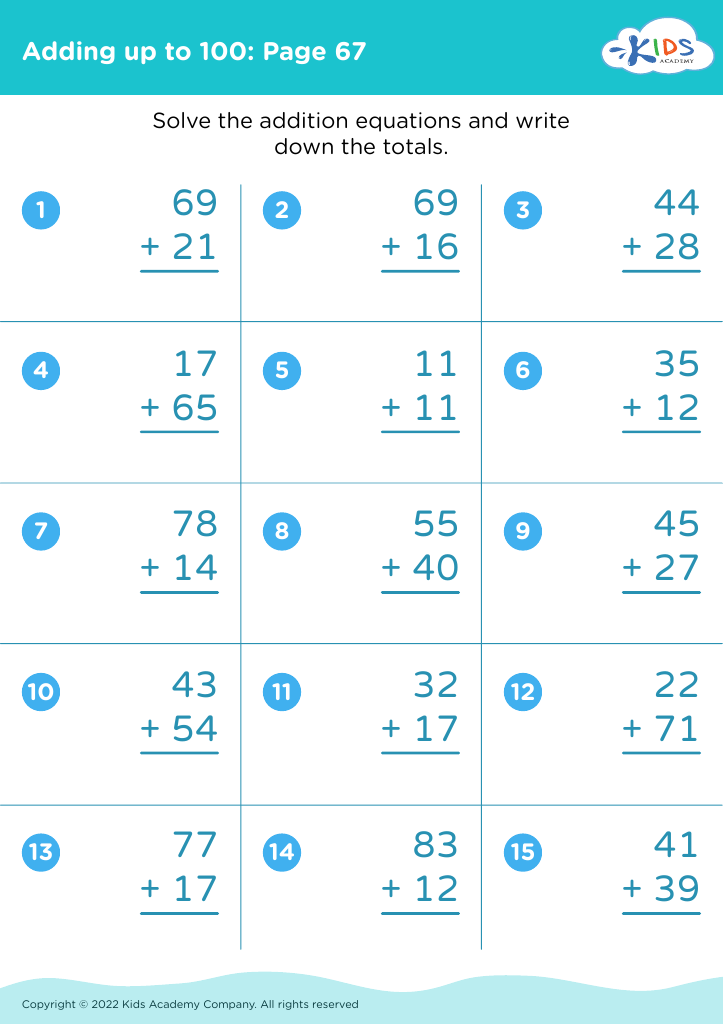
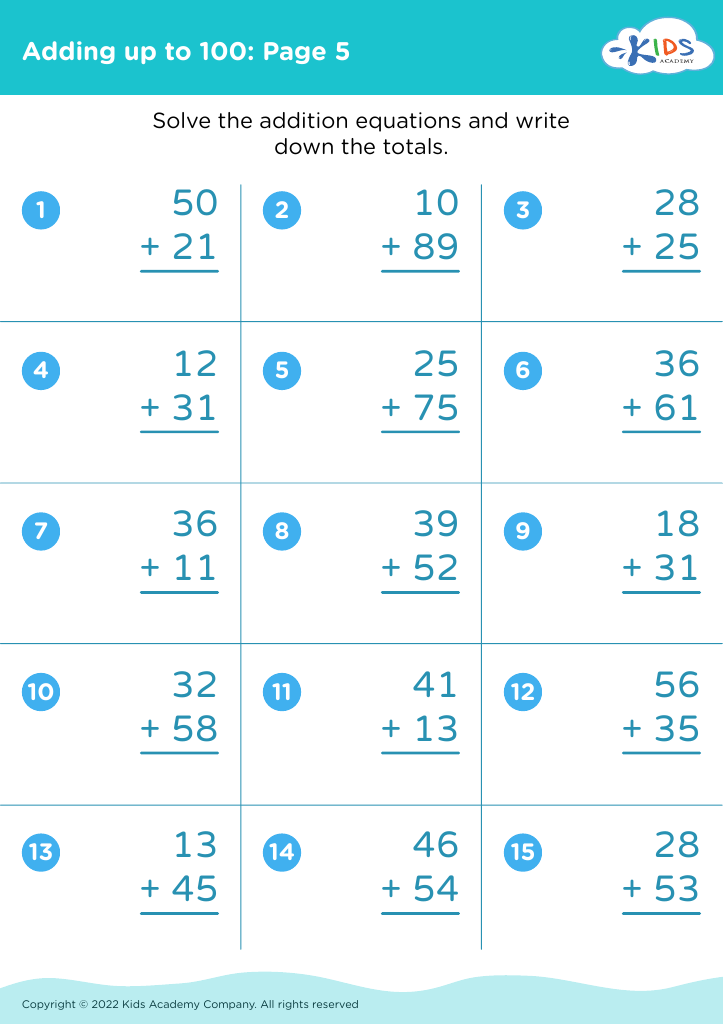
Welcome to our "Understanding Patterns Adding up to 100 Misc Worksheets" designed specifically for 7-year-olds! These engaging worksheets aim to enhance your child's understanding of mathematical patterns while practicing addition up to 100. Through fun and interactive exercises, children will explore number sequences, identify patterns, and solve addition problems using creative strategies. Each worksheet is crafted to promote critical thinking, boost confidence in math skills, and foster a love for learning. Perfect for classroom use or homeschooling, these resources will make math enjoyable and insightful. Dive in today and watch your child flourish in their mathematical journey!
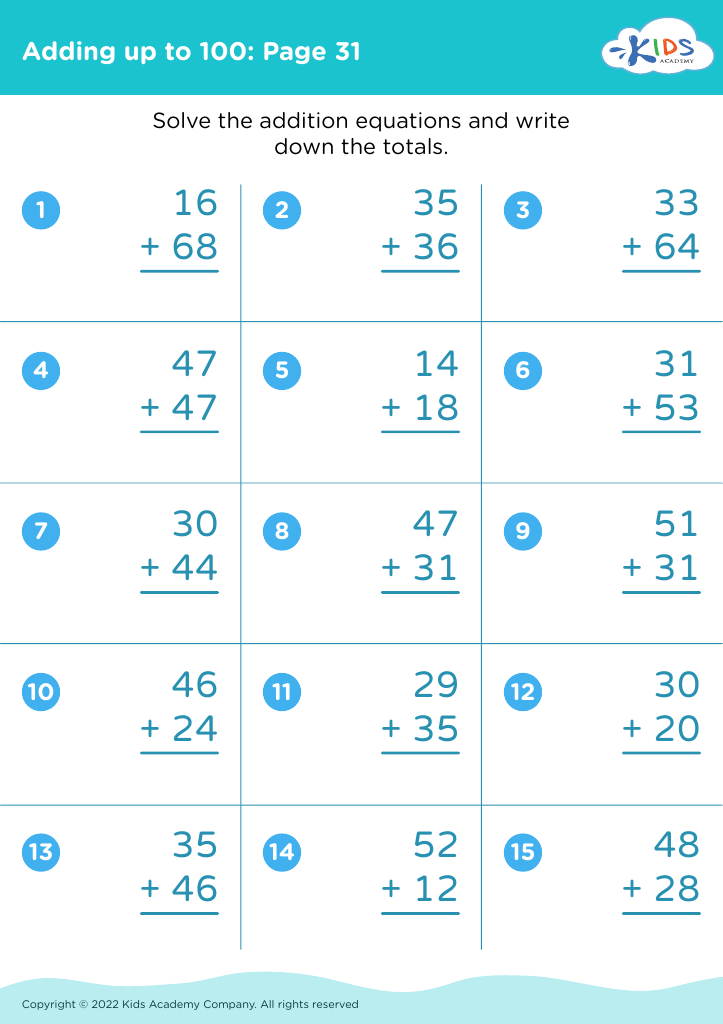
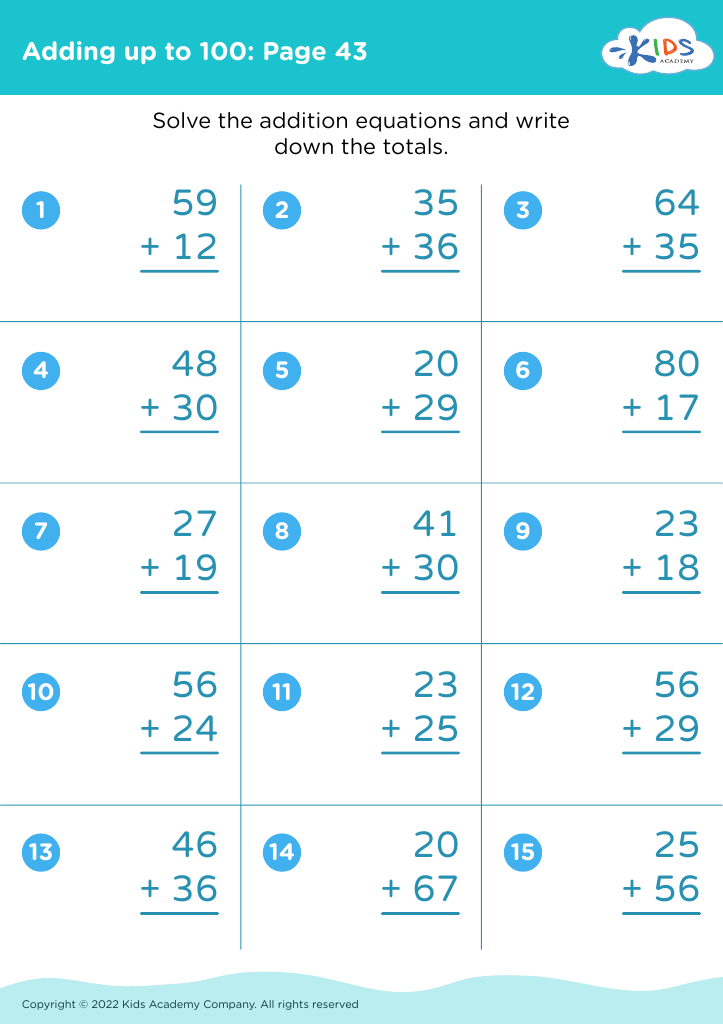
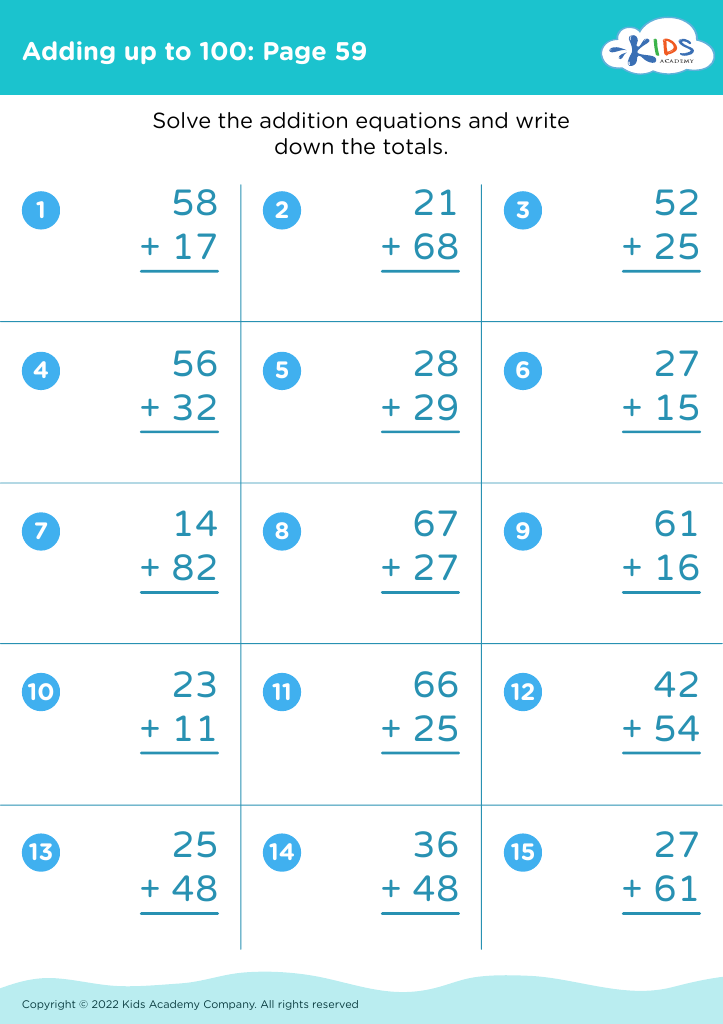
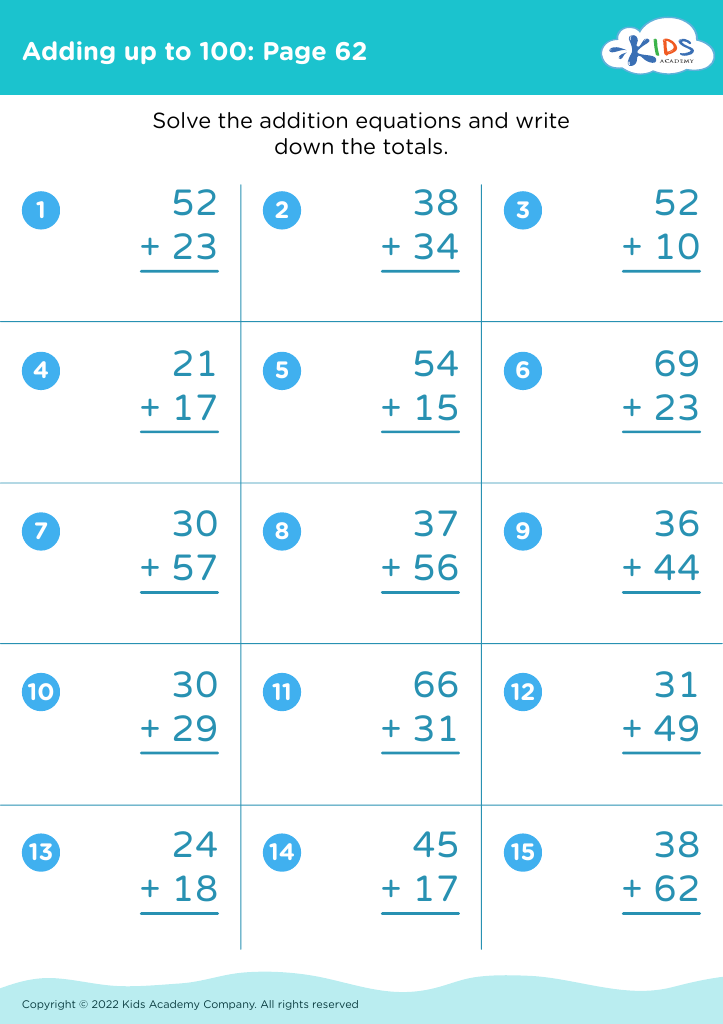


Understanding patterns and the concept of adding up to 100 is crucial for 7-year-olds as it forms a foundational element of their mathematical learning. At this age, children begin to develop critical thinking and problem-solving skills that are essential for more complex mathematics. Recognizing patterns helps students identify relationships between numbers, which fosters a deeper understanding of arithmetic operations such as addition and subtraction.
When children learn to add numbers that total 100, they enhance their mental math skills and comprehension of place value. This knowledge allows them to make connections in real-life contexts, such as understanding money, time, and measurements.
For parents and teachers, emphasizing this skill not only aids children in their current mathematical endeavors but also prepares them for future topics in mathematics, including multiplication and division. Moreover, it encourages a sense of achievement and confidence in students, as they learn to manipulate numbers efficiently.
By caring about these fundamental skills, parents and educators promote a positive attitude toward math, laying groundwork for academic success and stronger logical reasoning. Ultimately, recognizing patterns and mastering basic arithmetic operations contributes to a well-rounded education that benefits children both inside and outside the classroom.