Understanding Sequences Adding up to 100 Misc Worksheets for 7-Year-Olds
4 filtered results
-
From - To
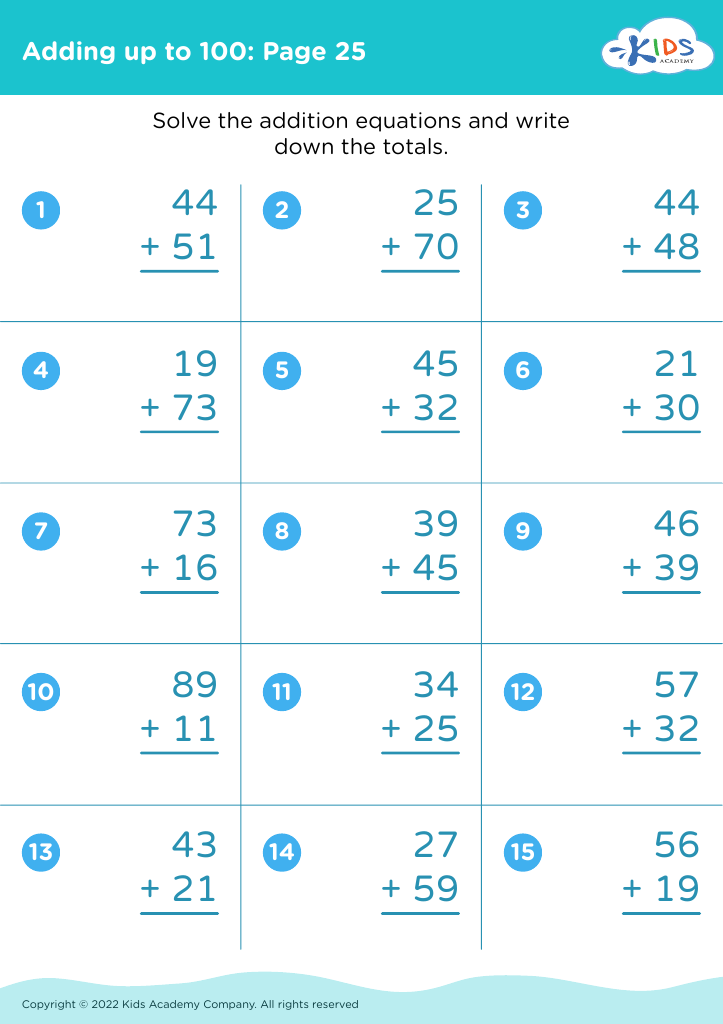
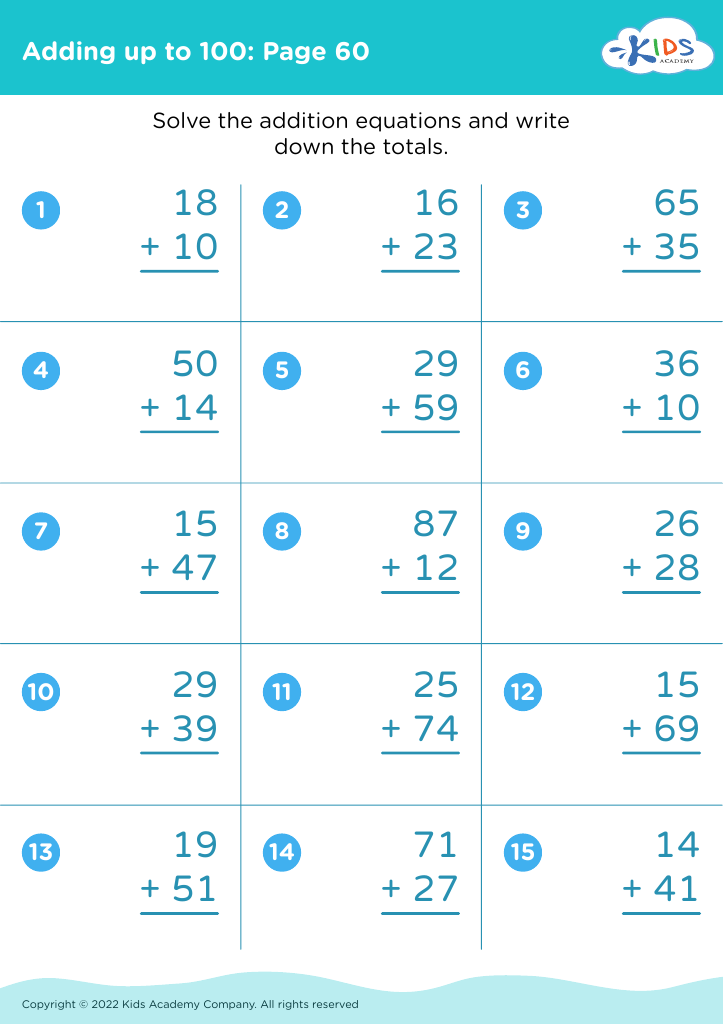
Discover our engaging "Understanding Sequences Adding up to 100" worksheets designed specifically for 7-year-olds. These fun and interactive materials focus on enhancing mathematical skills through the understanding of sequences and patterns. Kids will enjoy identifying numbers, completing sequences, and practicing addition while boosting their confidence in math. With colorful visuals and age-appropriate challenges, these worksheets make learning enjoyable. Ideal for classroom activities or at-home practice, they encourage independent learning and help reinforce key concepts. Let your child explore the joy of mathematics and the magic of numbers by diving into our comprehensive worksheets today!
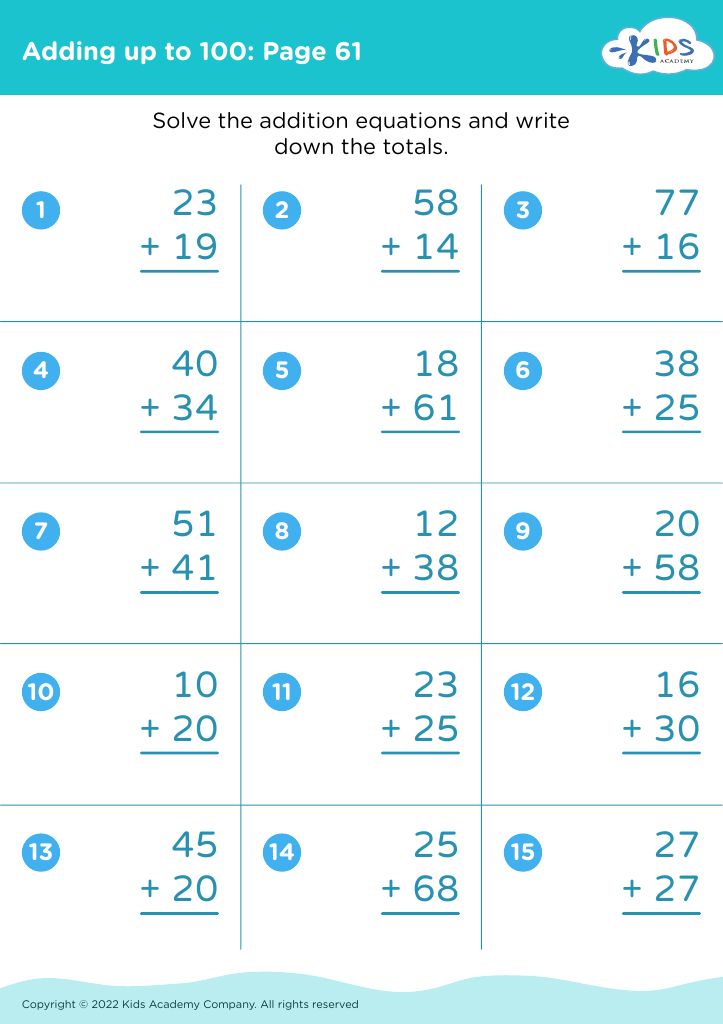
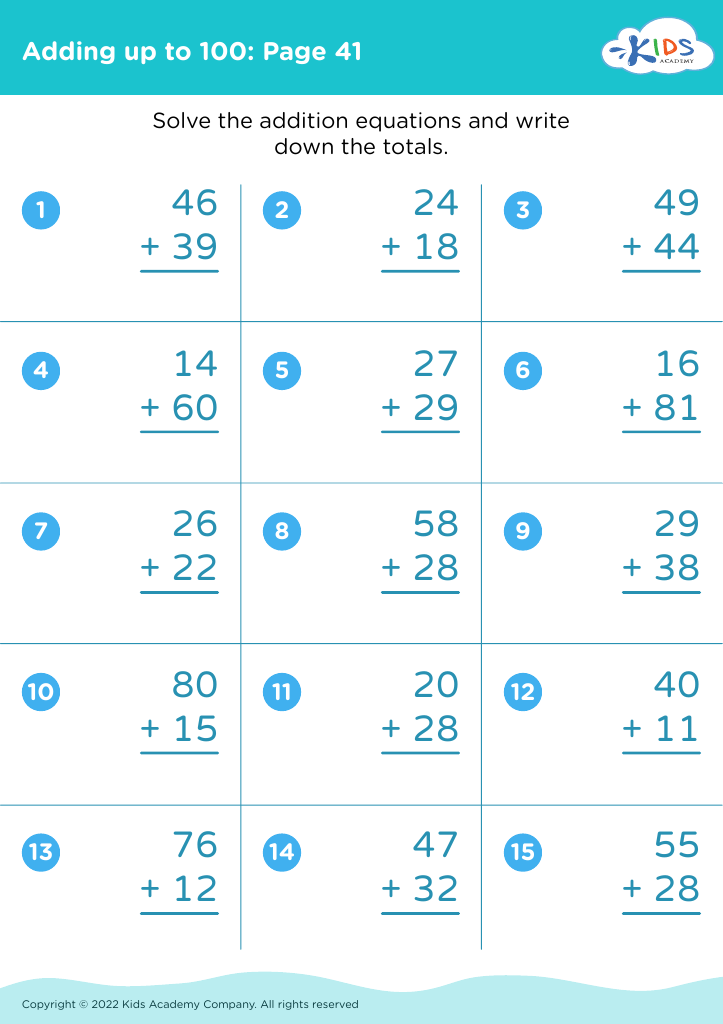


Understanding sequences and addition, particularly when it concerns adding up to 100, is crucial for 7-year-olds. At this age, children are at a pivotal stage in their mathematical development, where foundational skills are forged. Mastering sequences enhances their ability to recognize patterns, an essential skill not only in mathematics but also in problem-solving across various subjects.
By learning to add numbers that sum to 100, students improve their mental math abilities, learn to make quick calculations, and develop number sense. This foundation sets them up for success in more complex mathematical concepts like fractions, multiplication, and even basic algebra in the future.
Additionally, engaging with sequences can foster critical thinking as children learn to predict and identify subsequent numbers in a series.
Parents and teachers should recognize that when children grasp these concepts, they gain confidence in their mathematical skills, which can improve their overall academic performance. A strong command of addition and sequence recognition can empower children not only in mathematics but also enhance their analytical skills, benefiting them in various aspects of their education. Supporting children in these areas lays the groundwork for lifelong learning and success in mathematics and beyond.