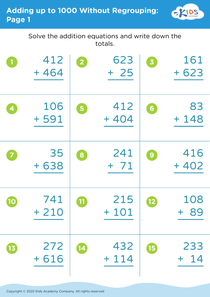
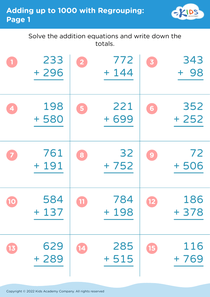
Basic Math Skills Adding up to 1000 Misc Worksheets for 7-Year-Olds
3 filtered results
-
From - To
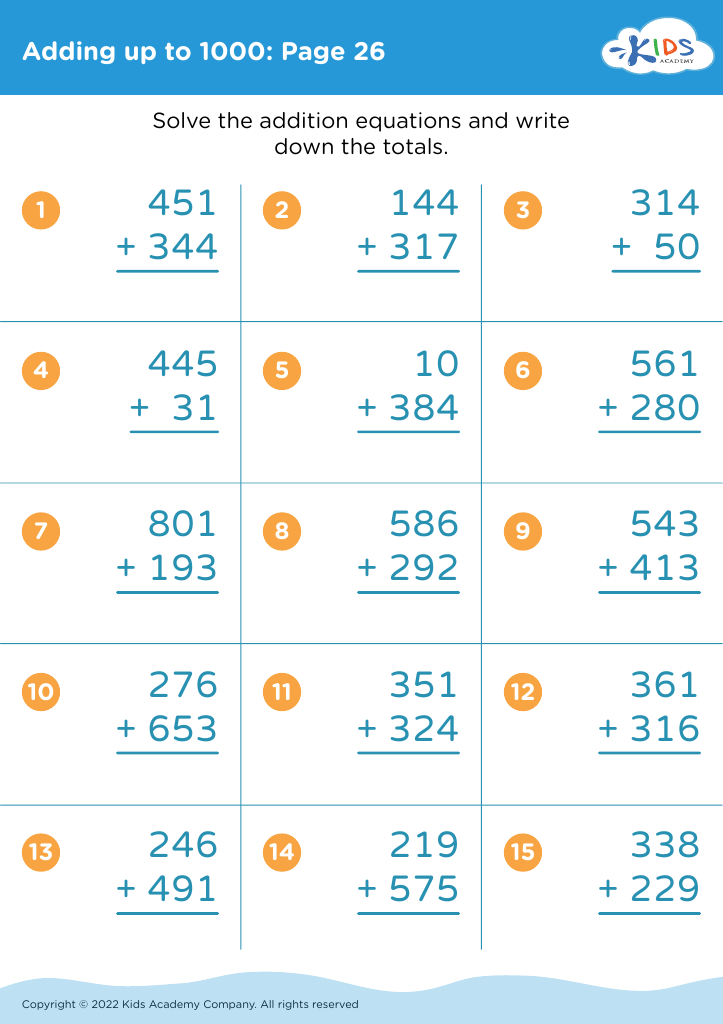
Welcome to our "Basic Math Skills Adding up to 1000 Misc Worksheets" designed specifically for 7-year-olds! These engaging and interactive worksheets help young learners master addition concepts with numbers up to 1000. Each worksheet offers a variety of fun activities that encourage practice in a way that captivates children’s interest. Designed to promote critical thinking and boost confidence, these resources are perfect for reinforcing math skills at home or in the classroom. Whether used for homework or supplemental learning, our worksheets are a fantastic way to make math enjoyable while ensuring children develop a solid foundation in basic math skills.
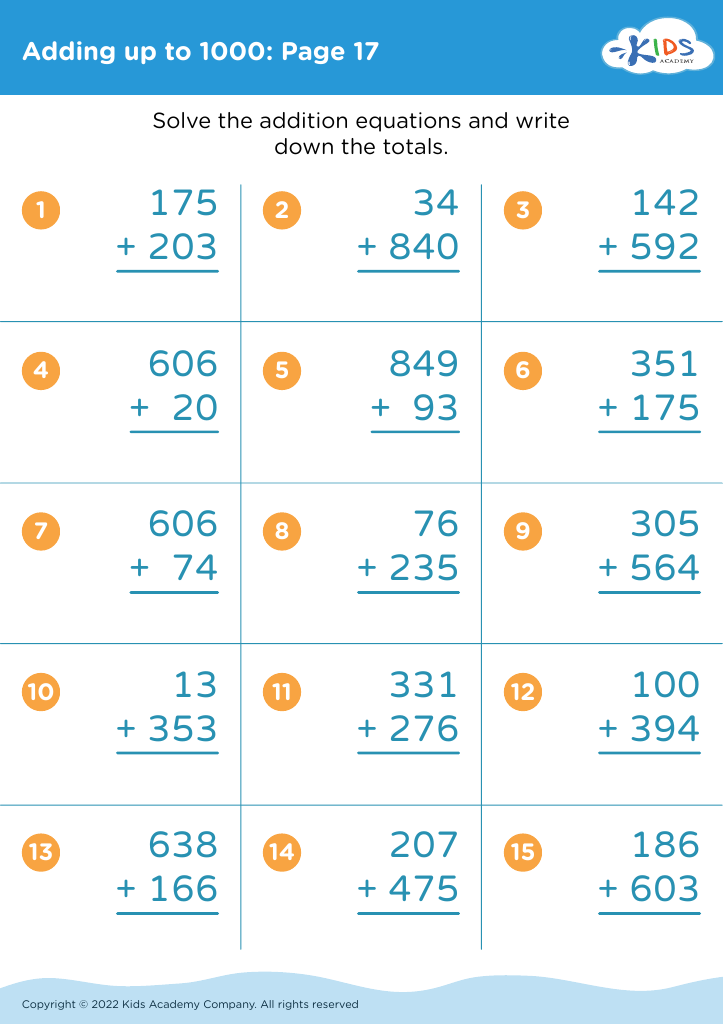
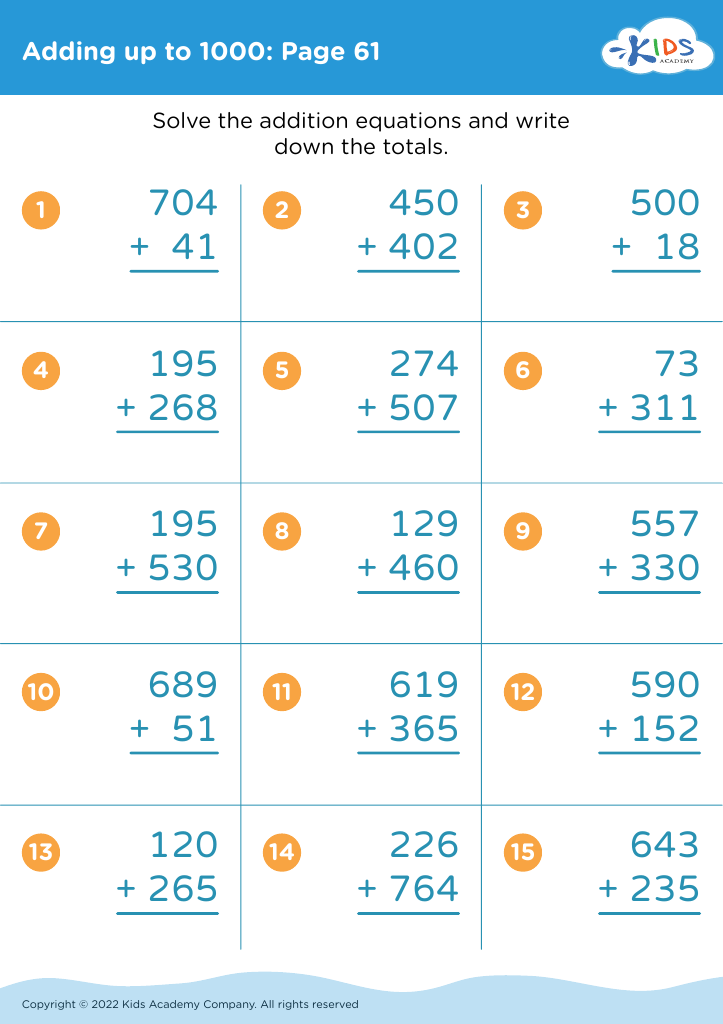


Parents and teachers should prioritize basic math skills, particularly adding up to 1,000, for seven-year-olds because these foundational skills serve multiple critical purposes. First, mastering addition reinforces number sense, allowing children to understand relationships between numbers, build confidence, and approach math with a positive mindset. This confidence is paramount, as 70% of students who struggle with basic math often face challenges in higher-level mathematics.
Moreover, basic addition skills enhance problem-solving abilities. As children learn to add larger numbers, they develop strategies such as regrouping and breaking down problems, skills applicable in everyday life and future academic situations. This early exposure can lead to greater mathematical fluency, preparing them for more complex concepts later on.
Additionally, fostering these skills helps bridge potential learning gaps. In a global economy where numeracy is crucial, ensuring students are proficient in basic math sets the stage for lifelong learning and success. It also nurtures critical thinking, as children begin to approach real-world problems, budgeting, and time management with an arithmetic foundation. Ultimately, by focusing on these essential skills, parents and teachers equip young learners to thrive in both academic settings and day-to-day challenges, laying the groundwork for their future endeavors.