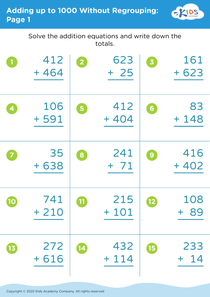
Comparing Fractions Adding up to 1000 Misc Worksheets for 7-Year-Olds
5 filtered results
-
From - To
Explore our engaging collection of "Comparing Fractions Adding up to 1000" worksheets designed for 7-year-olds! These printable resources help young learners build essential math skills by comparing fractions in a fun and interactive way. Each worksheet is thoughtfully crafted to encourage understanding of fraction concepts while supporting addition skills. Students will practice identifying larger and smaller fractions, enhancing their critical thinking and problem-solving abilities. Perfect for home or classroom use, these materials promote hands-on learning, making math enjoyable. Download our worksheets today to give your child the confidence to tackle fractions and solidify their math foundation!
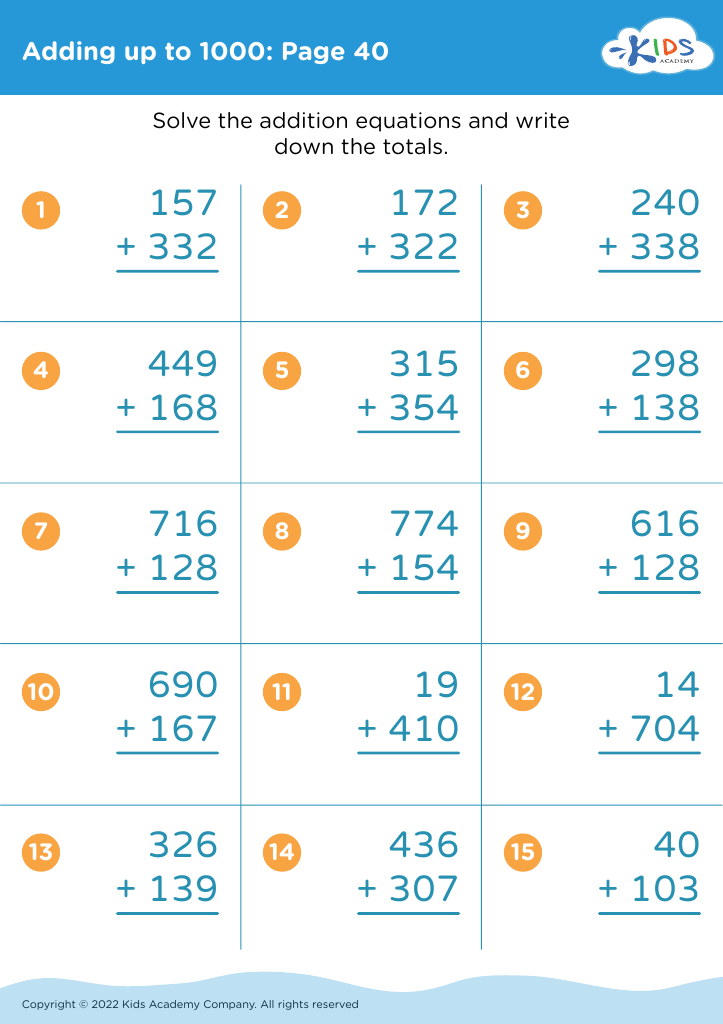
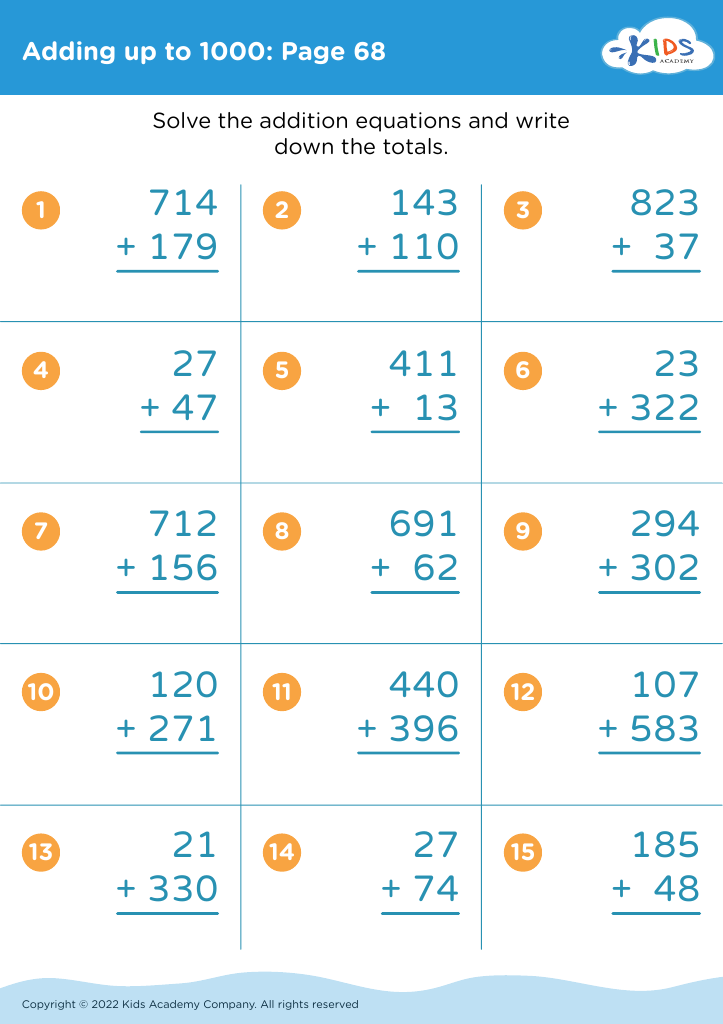
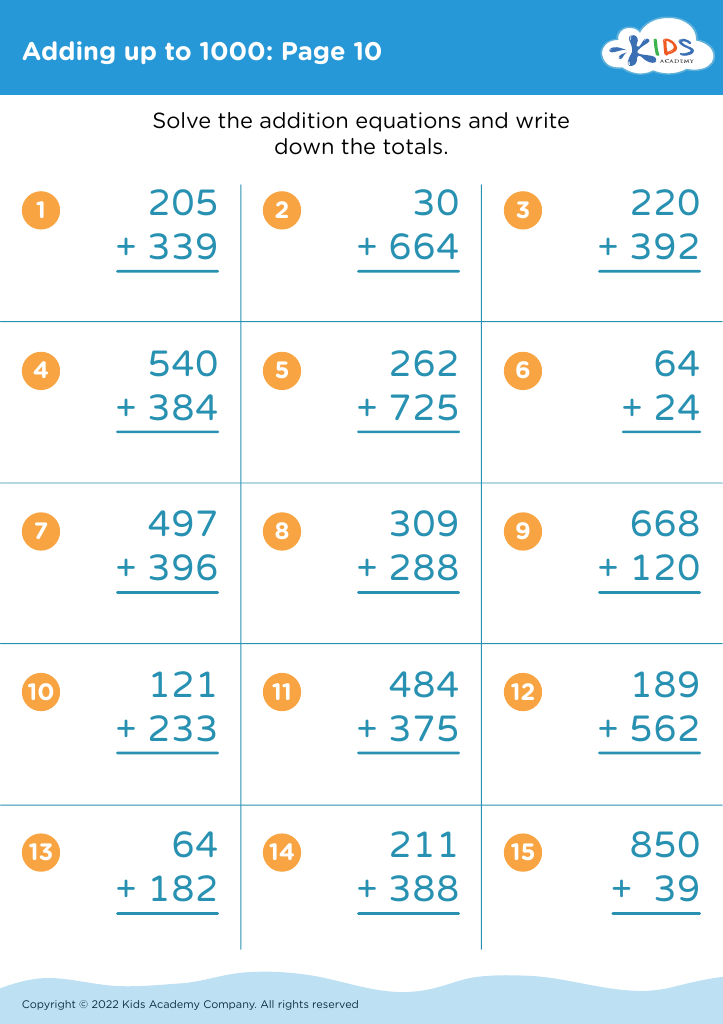
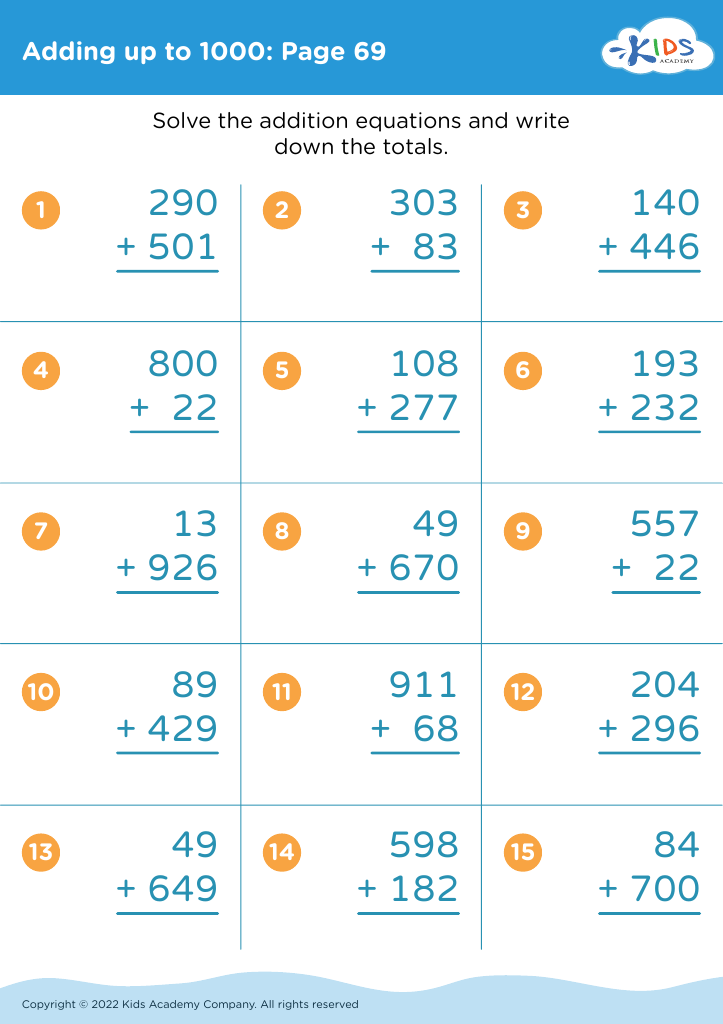
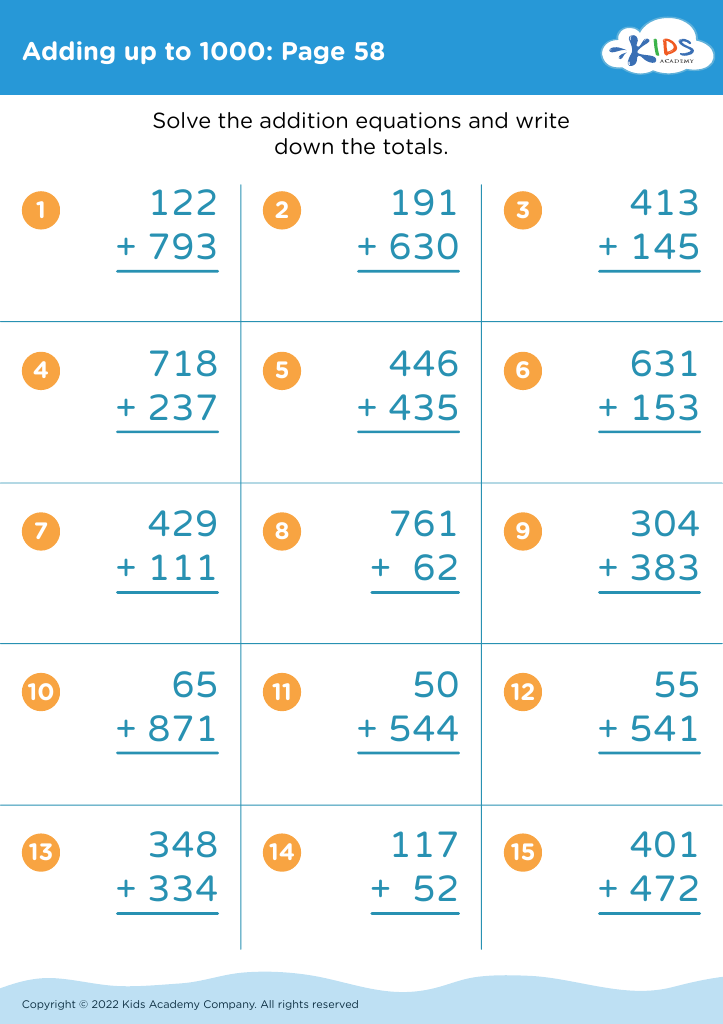


Understanding and comparing fractions is crucial for 7-year-olds as it lays the foundation for future math skills and promotes critical thinking. At this age, children are developing their number sense and learning how to analyze quantities. Learning to compare fractions allows them to distinguish between different parts of a whole, helps with understanding relationships between numbers, and empowers them to make informed decisions in everyday situations.
When parents or teachers focus on skills like comparing fractions within activities, like "Adding up to 1000 Misc," they encourage children to see practical applications for math concepts. This fosters engagement and relevance, helping young learners see the fun in solving problems. Such exercises enhance mathematical fluency by reinforcing concepts in real-world contexts, such as piecing together budget information or splitting treats evenly.
Moreover, mastering fractions aids in developing greater mathematical proficiency, impacting future learning. Children who understand fractions are also better equipped to tackle more advanced topics in mathematics, such as ratios, proportions, and algebra. Additionally, mathematical confidence boosts a child’s overall academic performance, enabling them to tackle challenges across disciplines. For parents and educators, supporting a child in this area is an investment not only in their math skills but in their overarching educational journey.