Counting practice Adding up to 1000 Misc Worksheets for 7-Year-Olds
8 filtered results
-
From - To
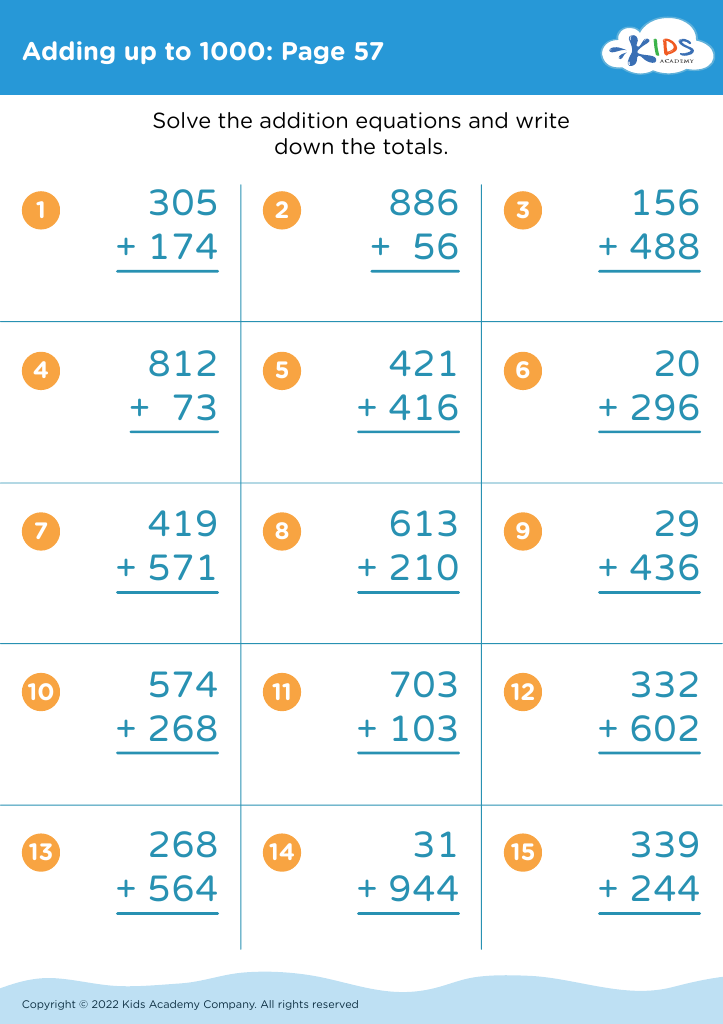
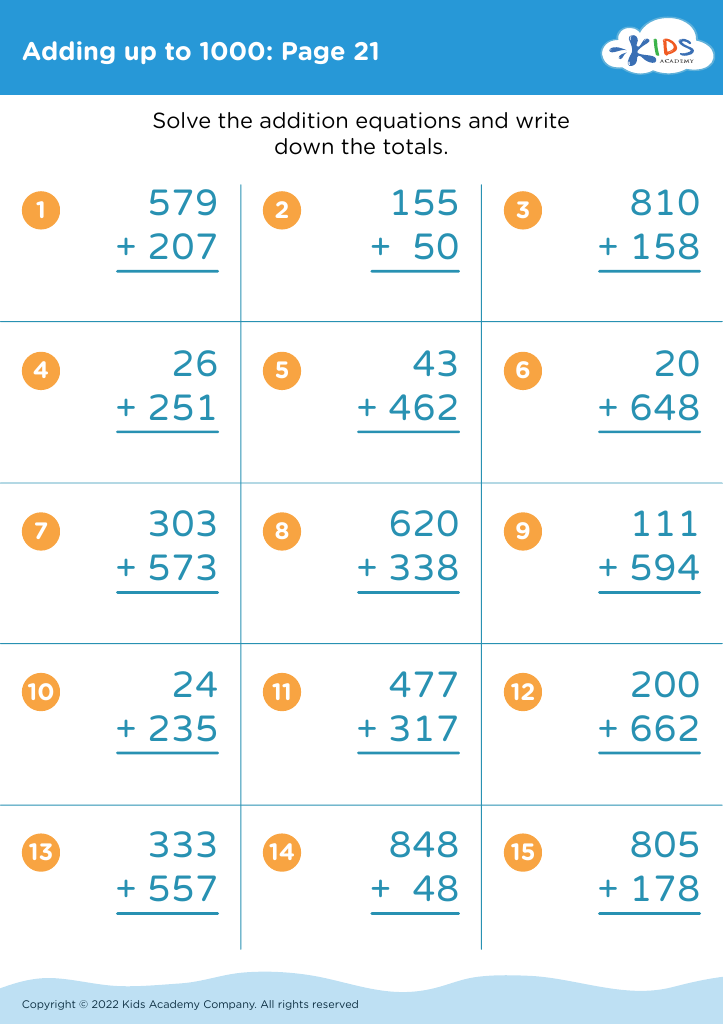
Enhance your child's math skills with our "Counting Practice: Adding Up to 1000" worksheets tailored for 7-year-olds. These engaging, printable resources offer a fun and interactive way to develop counting and addition abilities. Kids will explore various exercises designed to challenge and strengthen their understanding of numbers within 1000. From simple addition problems to more complex exercises, these worksheets promote essential skills needed for academic success. Perfect for home or classroom use, these activities encourage independent learning and allow young learners to build confidence in their math proficiency. Access our variety of worksheets today and watch your child's math skills soar!
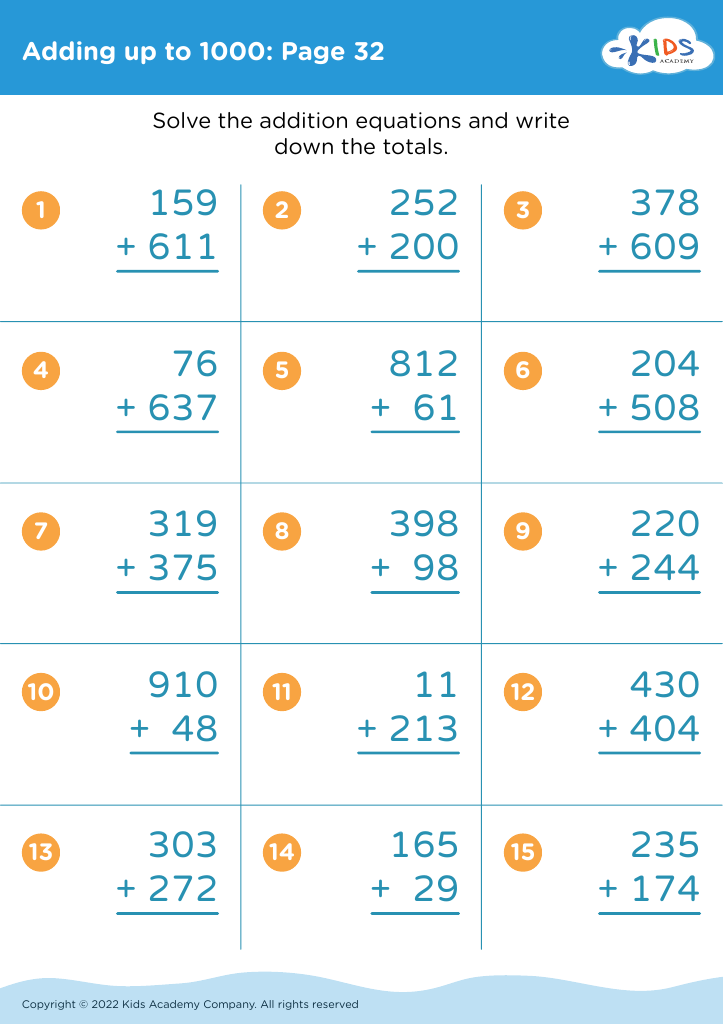
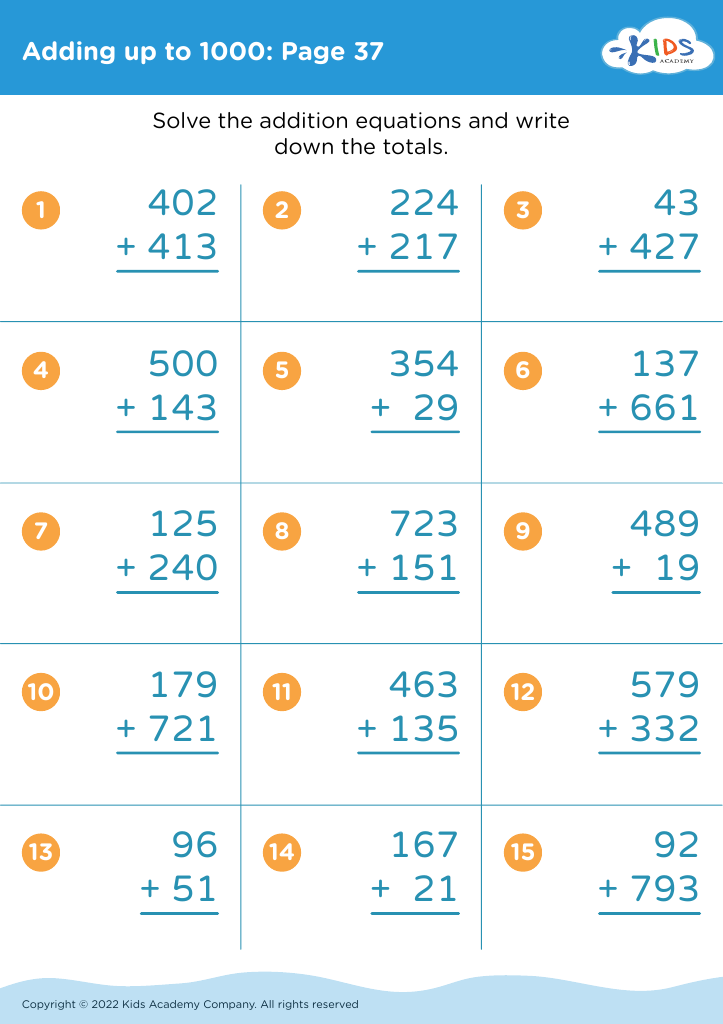
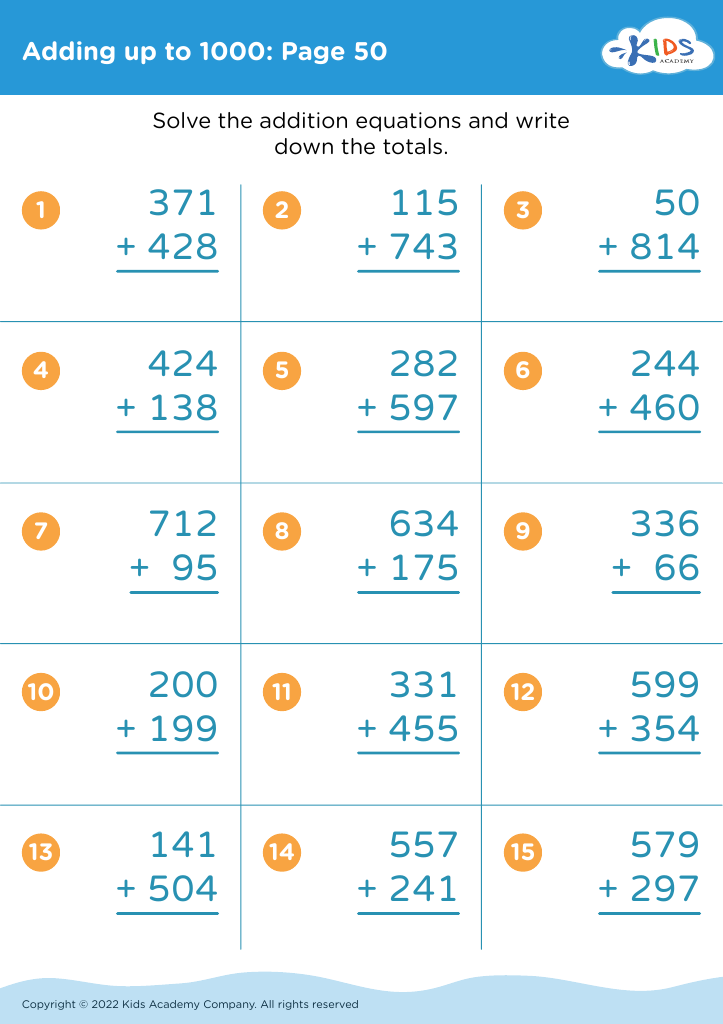
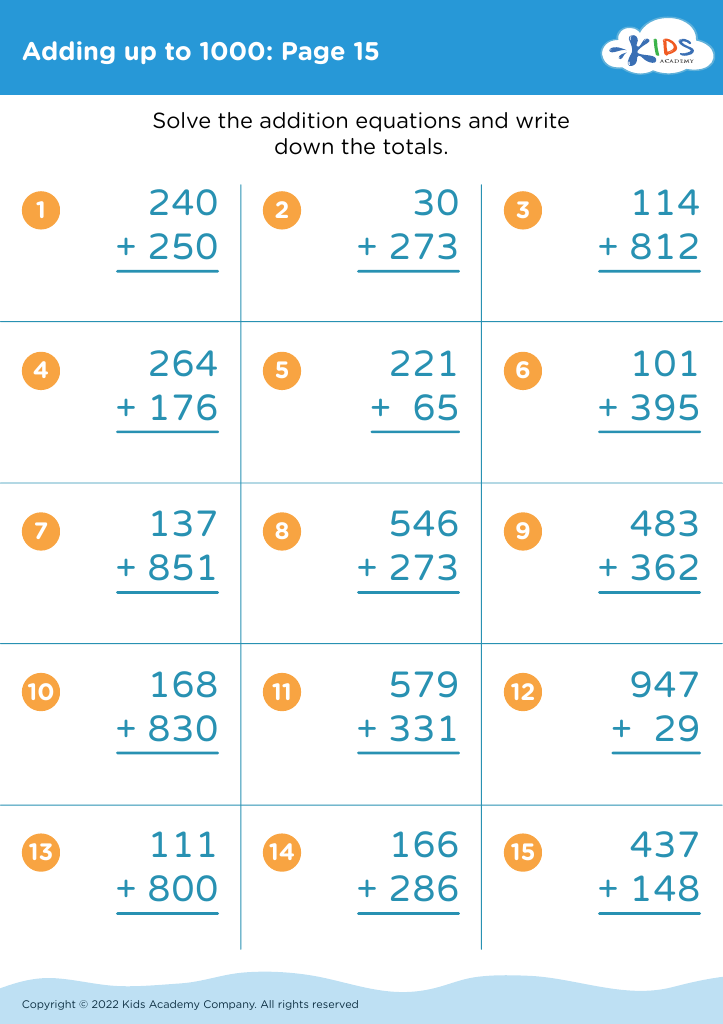
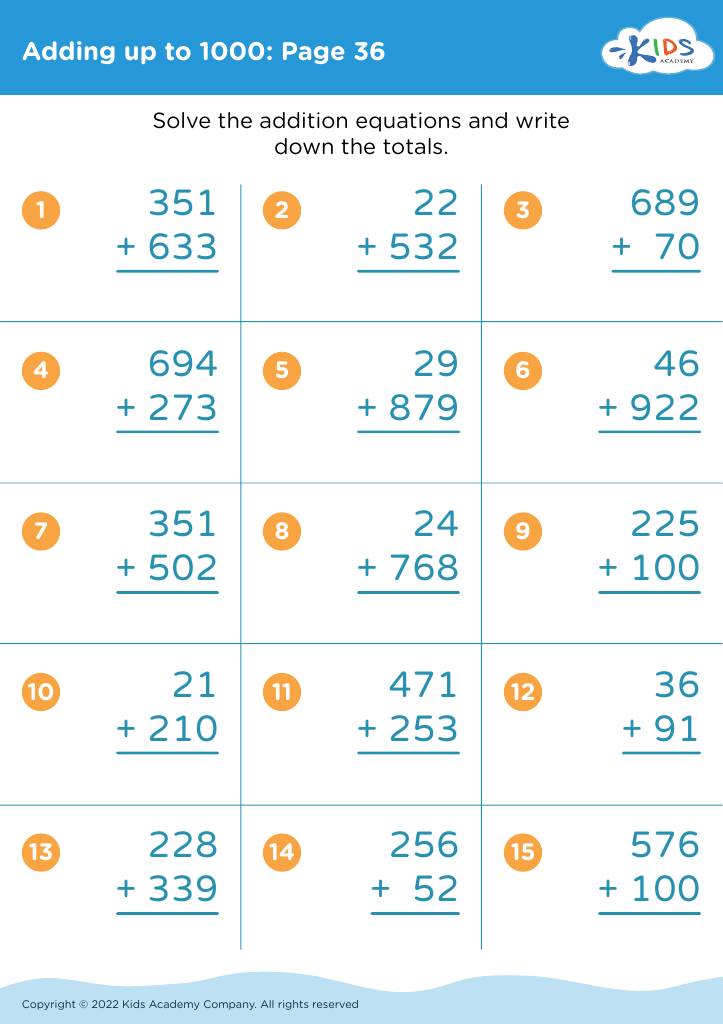
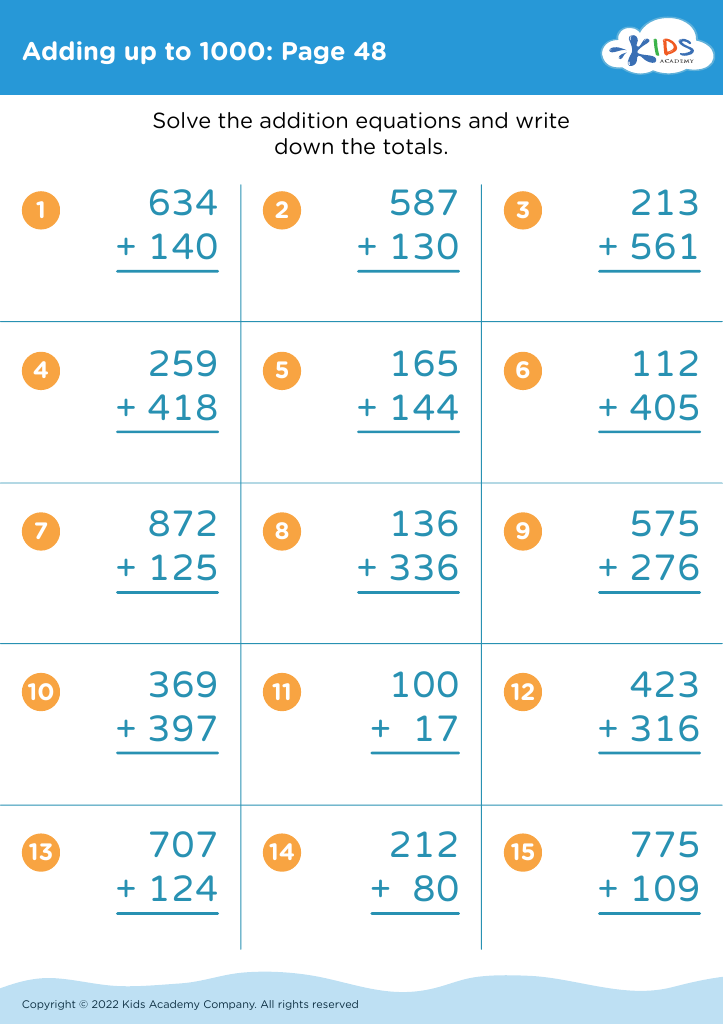


Counting practice that involves adding up to 1000 is crucial for the mathematical development of 7-year-olds. At this age, children are transitioning from basic arithmetic to more complex calculations, allowing them to grasp foundational concepts that will support their future learning. Engaging in counting and addition exercises helps solidify their understanding of numbers, promotes number sense, and enhances their ability to recognize patterns and relationships between quantities.
Furthermore, counting up to 1000 introduces children to concepts of place value, which is essential for performing operations with larger numbers in later grades. It also builds confidence in their mathematical abilities, as students gain fluency with basic addition and develop problem-solving skills. This practice lays the groundwork for understanding more advanced topics such as subtraction, multiplication, and division.
Additionally, counting activities can foster a supportive learning environment at home or in the classroom. Parents and teachers can incorporate playful, interactive strategies that make learning enjoyable, thus nurturing a child's interest and curiosity when it comes to math. By prioritizing counting practice at this critical age, adults contribute significantly to a child's overall academic success and lifelong skills in numeracy.