Fine Motor Skills Adding up to 1000 Misc Worksheets for 7-Year-Olds
5 filtered results
-
From - To
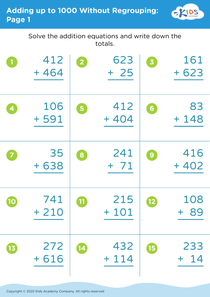
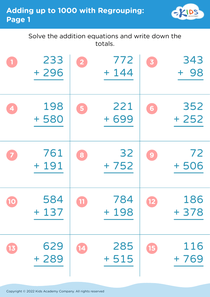
Explore our collection of fine motor skills worksheets tailored specifically for 7-year-olds, focusing on adding up to 1000! These engaging worksheets are designed to enhance your child's math abilities while improving their fine motor skills. Each worksheet features various activities, from colorful number tracing to fun addition problems, ensuring that learning math becomes an enjoyable experience. Perfect for at-home practice or classroom use, these worksheets help build a strong foundation in mathematics and fine motor skills through practice, precision, and play. Give your child the advantage they deserve with our comprehensive collection today!
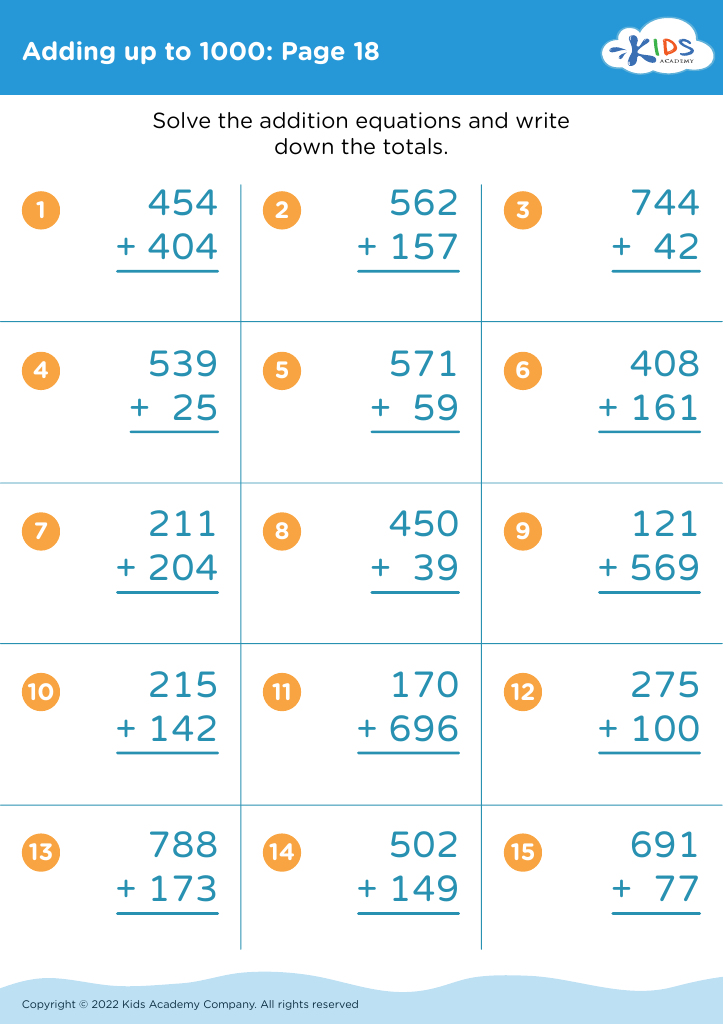
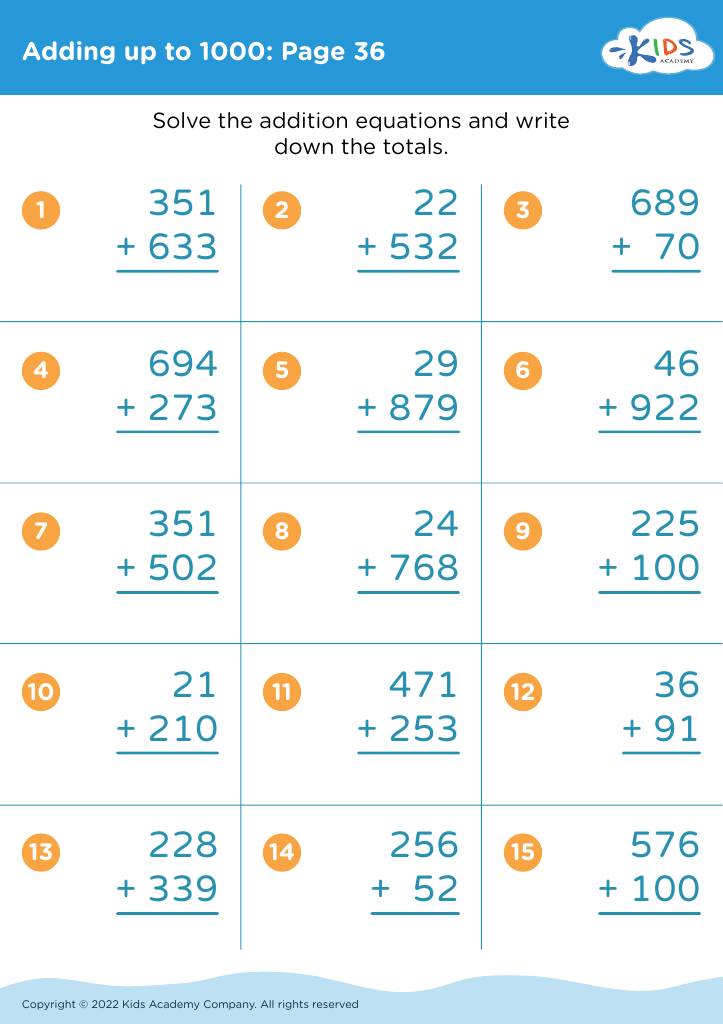
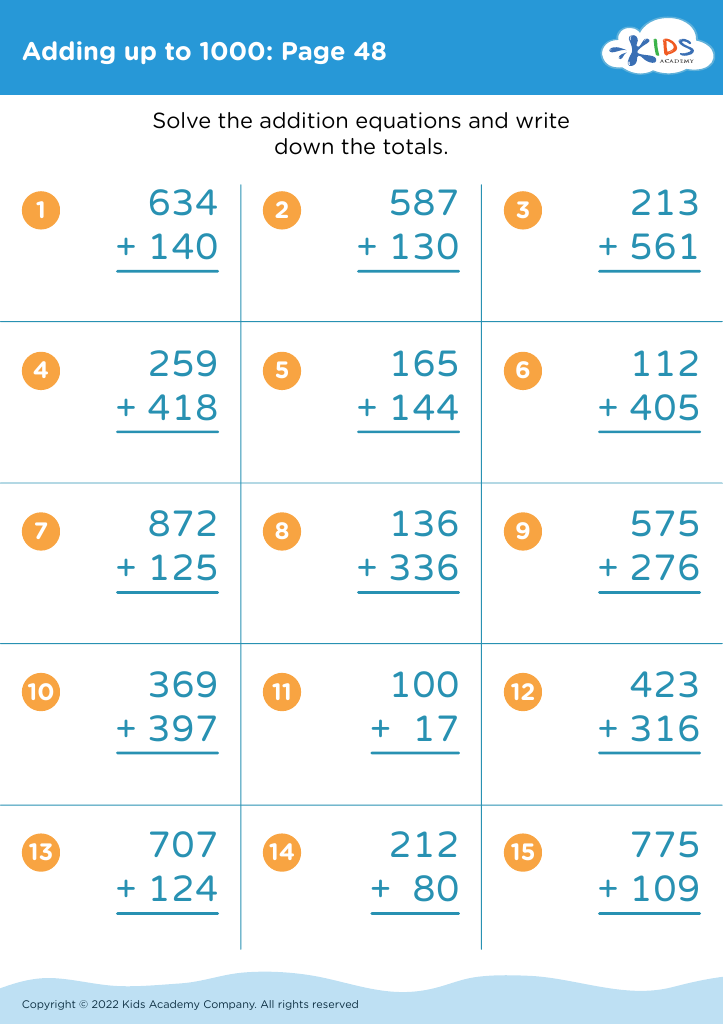


Parents and teachers should recognize the importance of developing fine motor skills in 7-year-olds, as these skills are fundamental for children's overall cognitive and physical development. Fine motor skills refer to the ability to use small muscles, particularly those in the hands and fingers, to perform precise movements. These skills are critical for activities such as writing, drawing, cutting with scissors, tying shoelaces, and using digital devices.
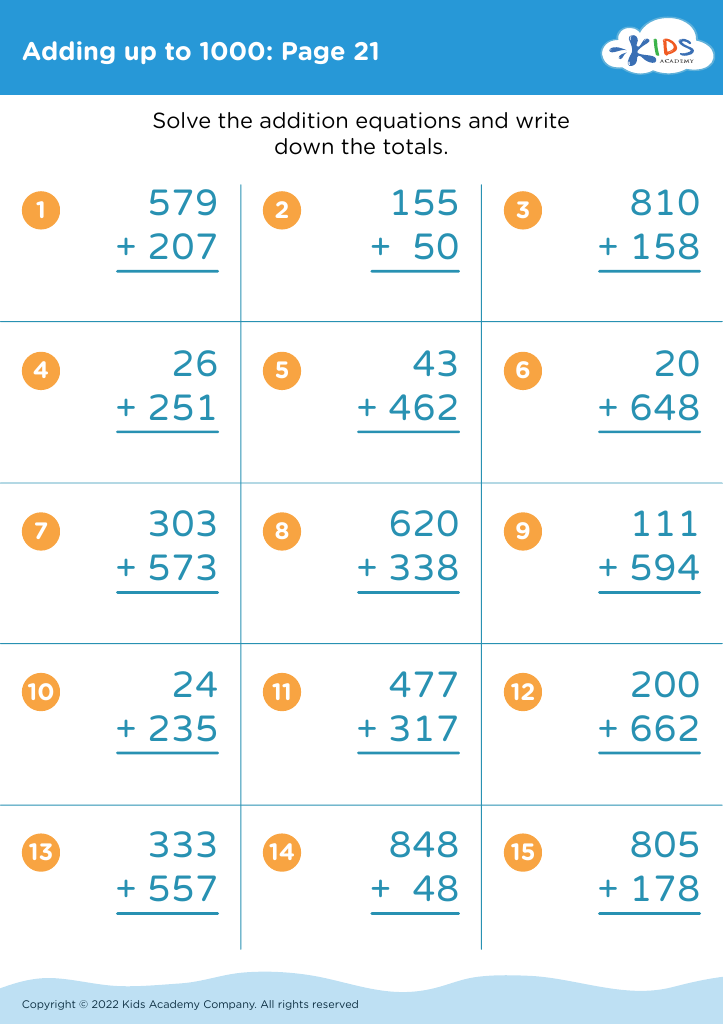
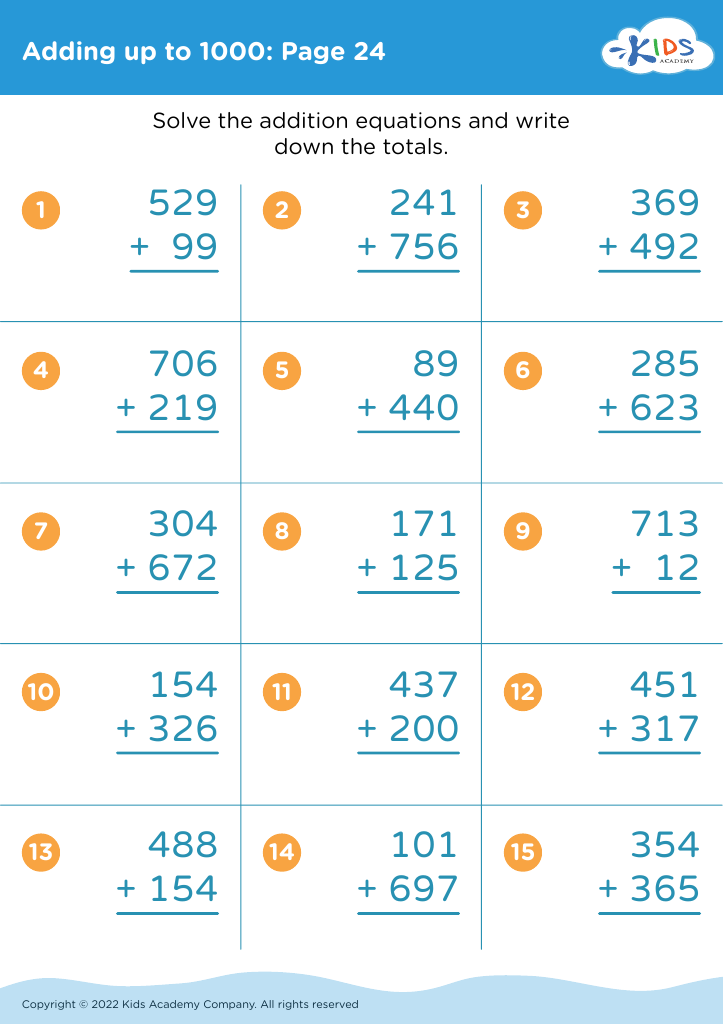
For 7-year-olds, whose educational curriculum often introduces more complex tasks, having well-developed fine motor skills can significantly enhance their abilities to keep up with classroom demands. For instance, adding up to 1000 requires not only mathematical understanding but also the dexterous control to write numbers accurately and efficiently. Strong fine motor skills reduce the physical strain of writing and improve legibility, thereby minimizing frustration and fostering better academic performance.
Moreover, effective motor skills are linked to self-esteem and independence. Children who can proficiently manage tasks like writing or art projects feel more competent, promoting a positive attitude toward learning. Additionally, mastering these skills early on sets a solid foundation for later stages of education, where more intensive and detailed work will be required. Therefore, parents and teachers should actively encourage and support activities that develop fine motor skills to ensure children are well-prepared for their educational journeys.