Problem-Solving Skills Adding up to 1000 Misc Worksheets for 7-Year-Olds
14 filtered results
-
From - To
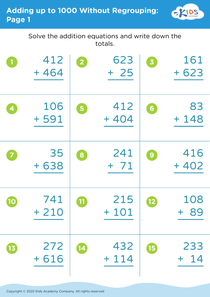
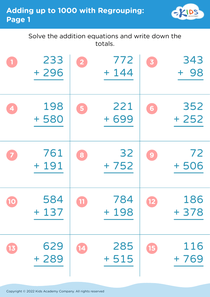
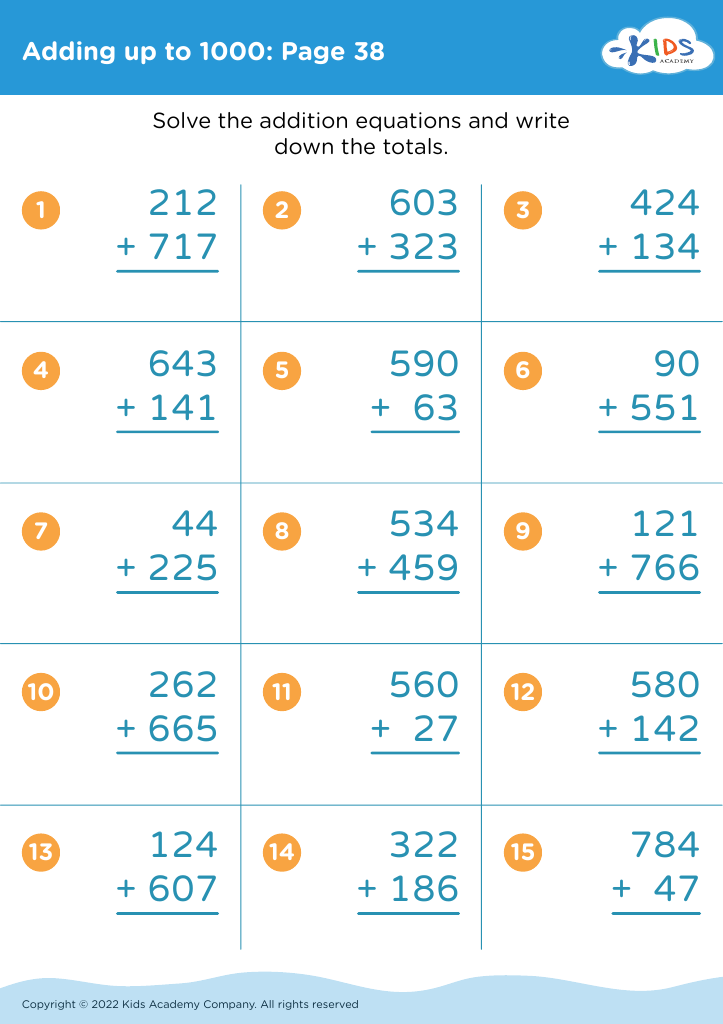
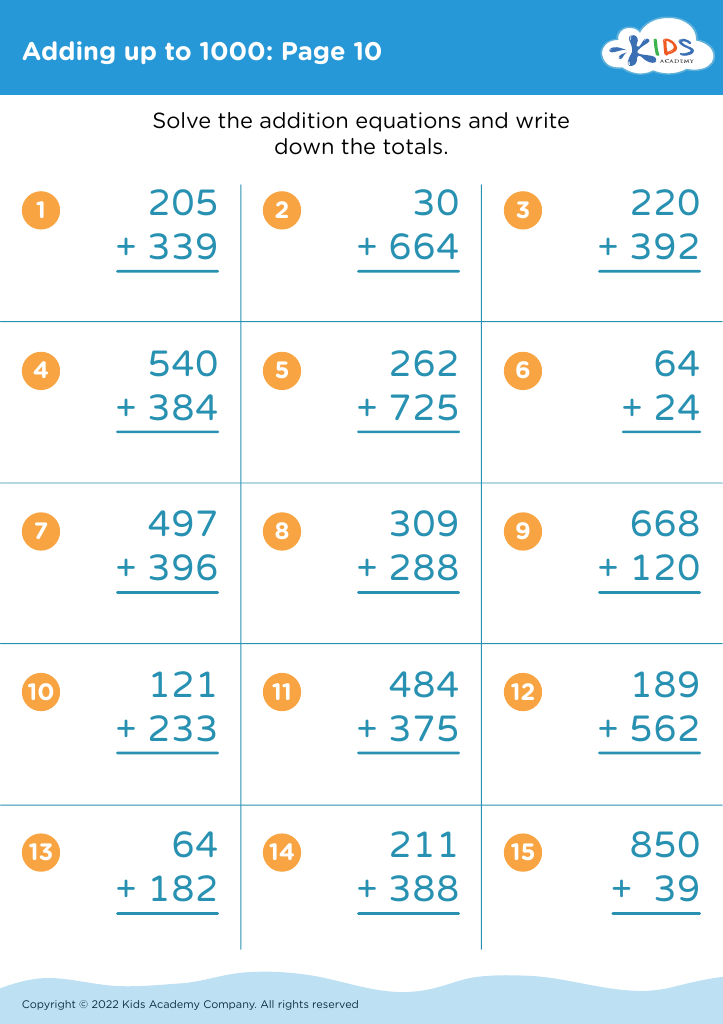
Discover our diverse collection of problem-solving skills worksheets specifically designed for 7-year-olds, focused on adding up to 1000. Ideal for both classroom and home learning, these engaging activities help young learners build critical thinking and mathematical reasoning. Each worksheet presents a variety of scenarios that challenge children to apply addition skills in practical contexts. With colorful themes and clear instructions, our resources make mastering math both fun and effective. Support your child's journey to becoming a confident mathematician by integrating our adding up to 1000 worksheets into their daily routine. Visit Kids Academy to get started!
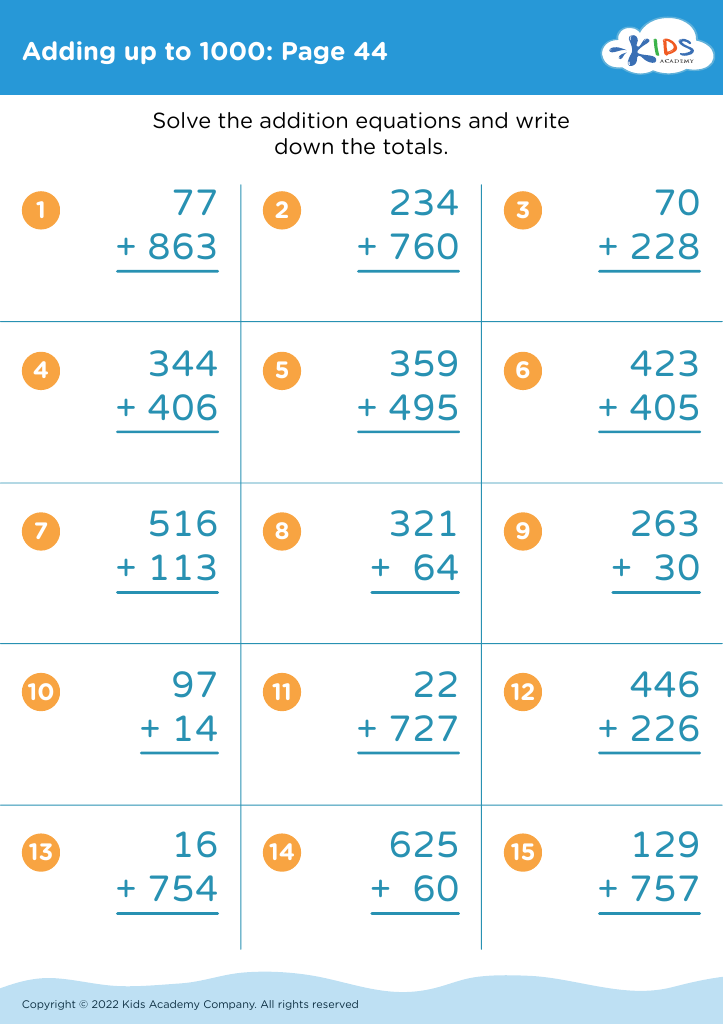
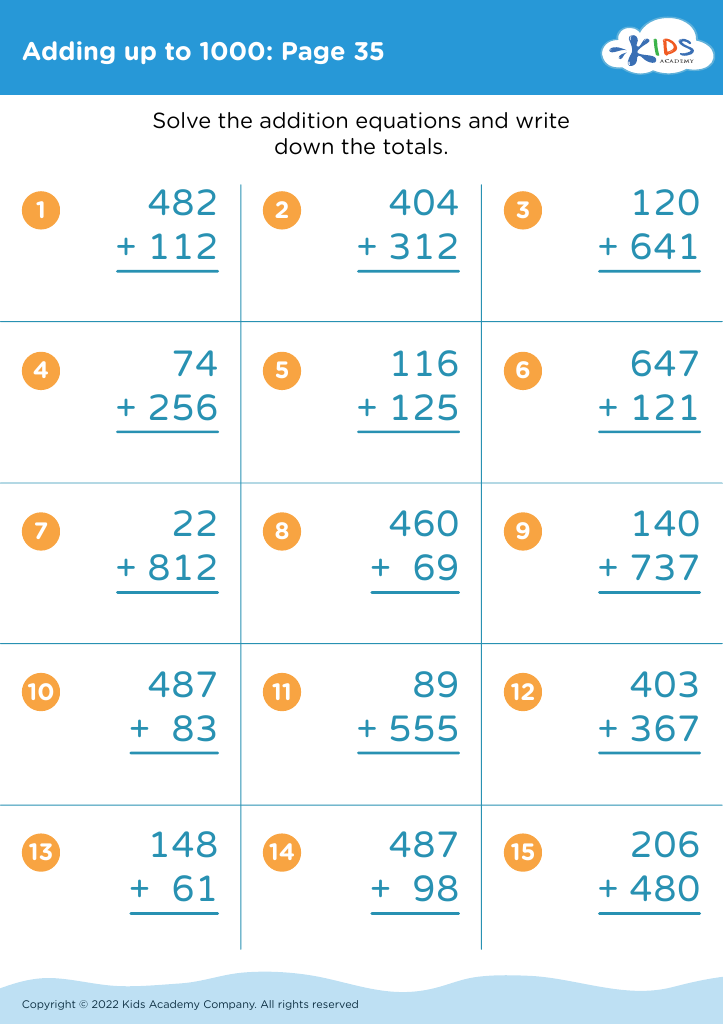
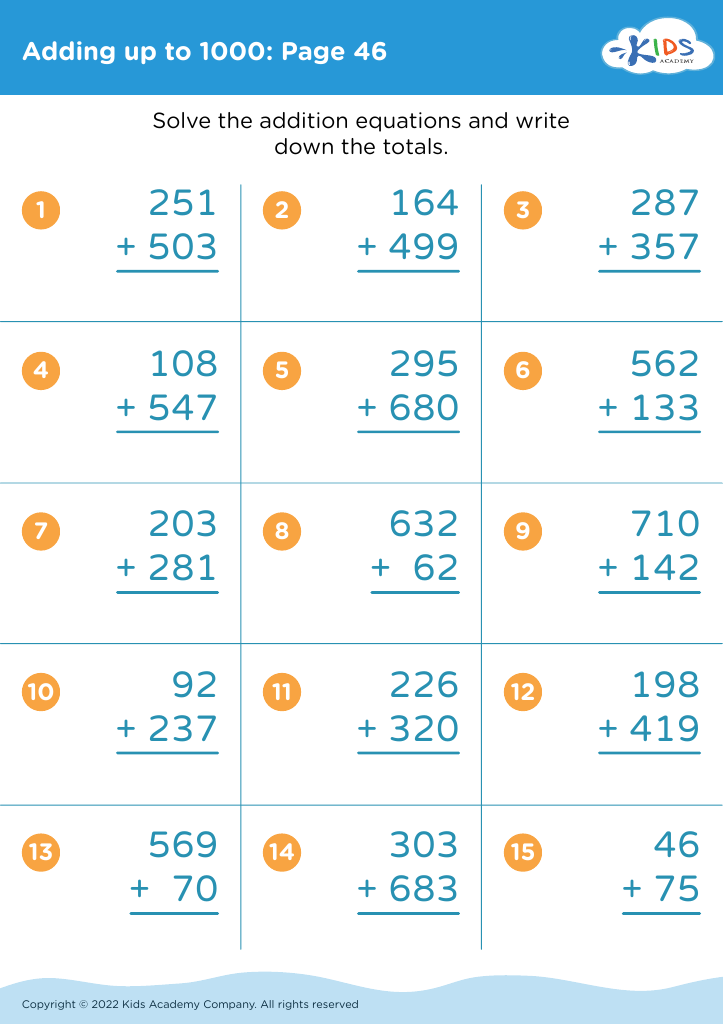
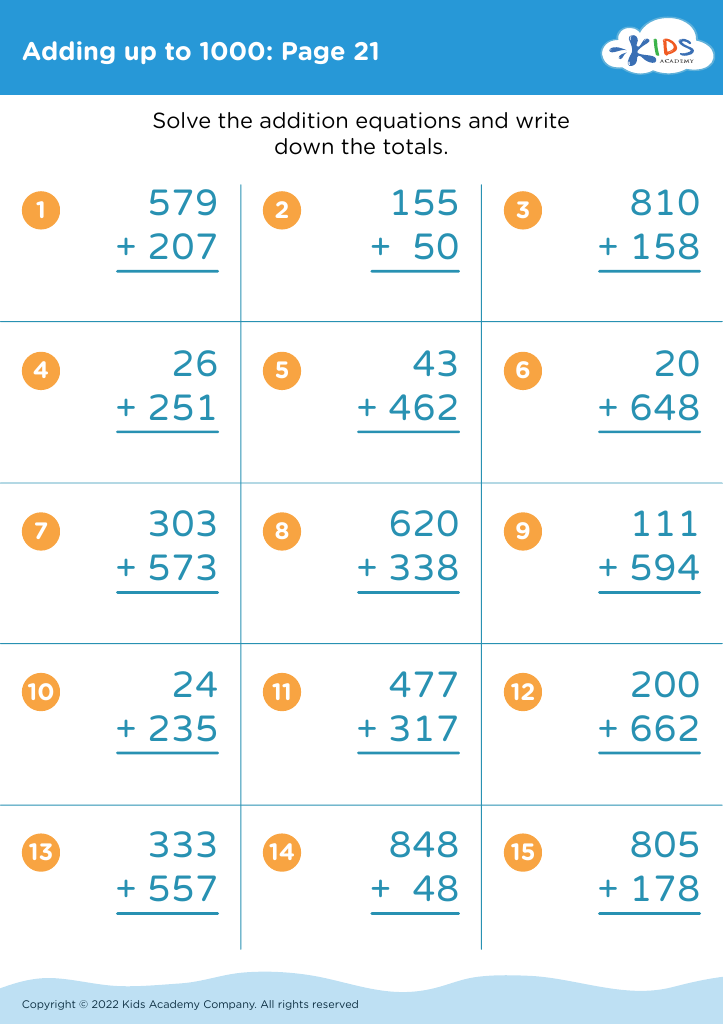
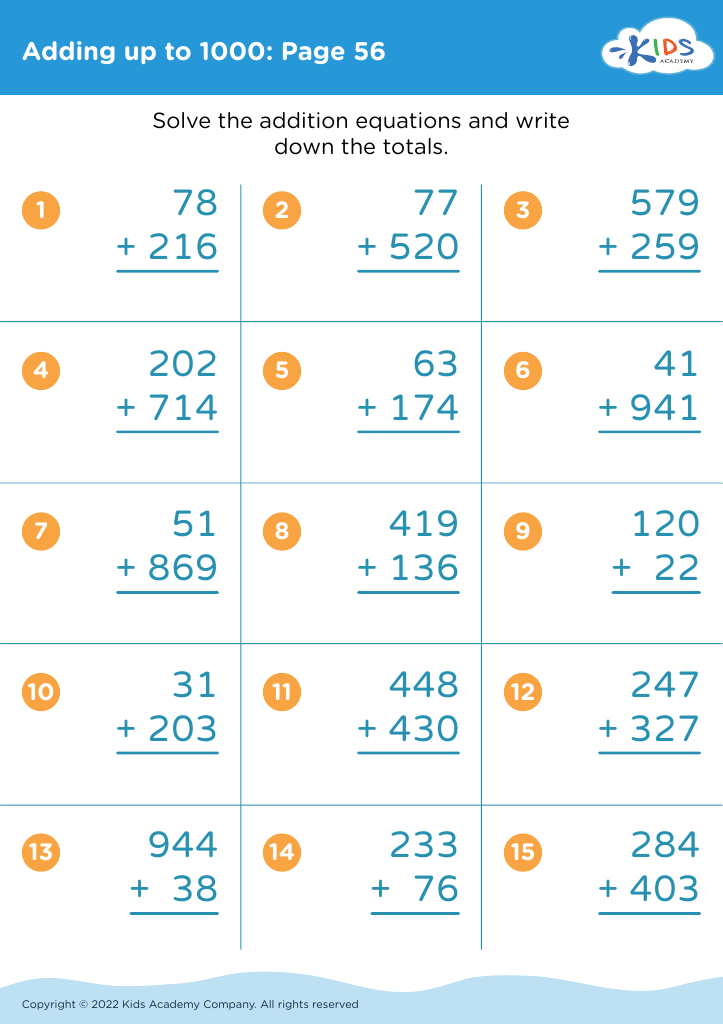
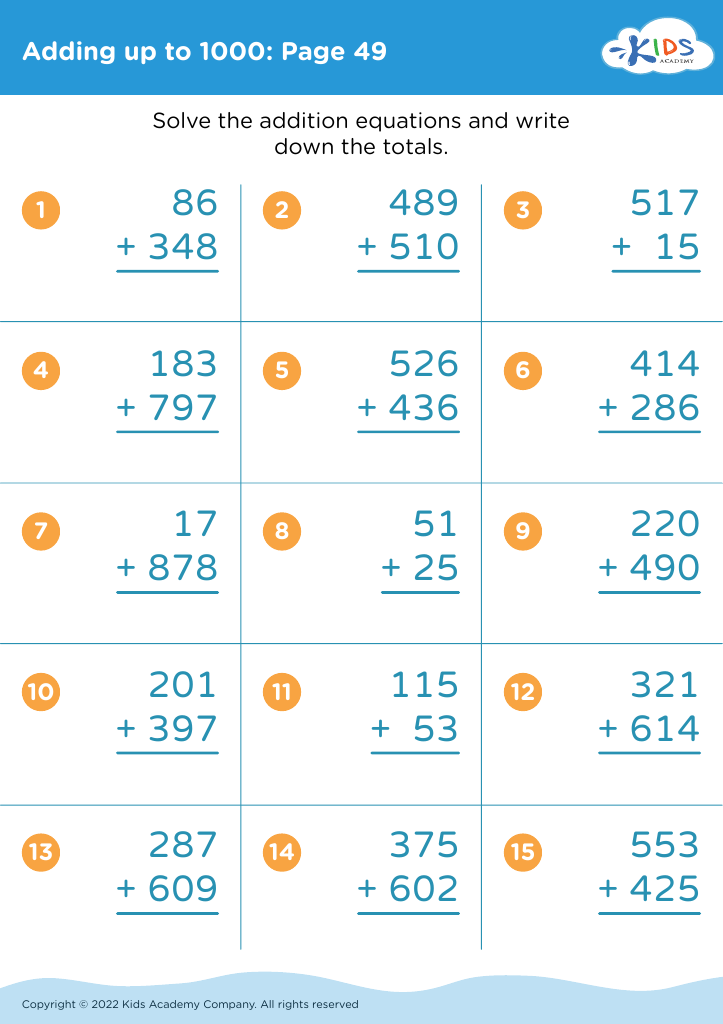
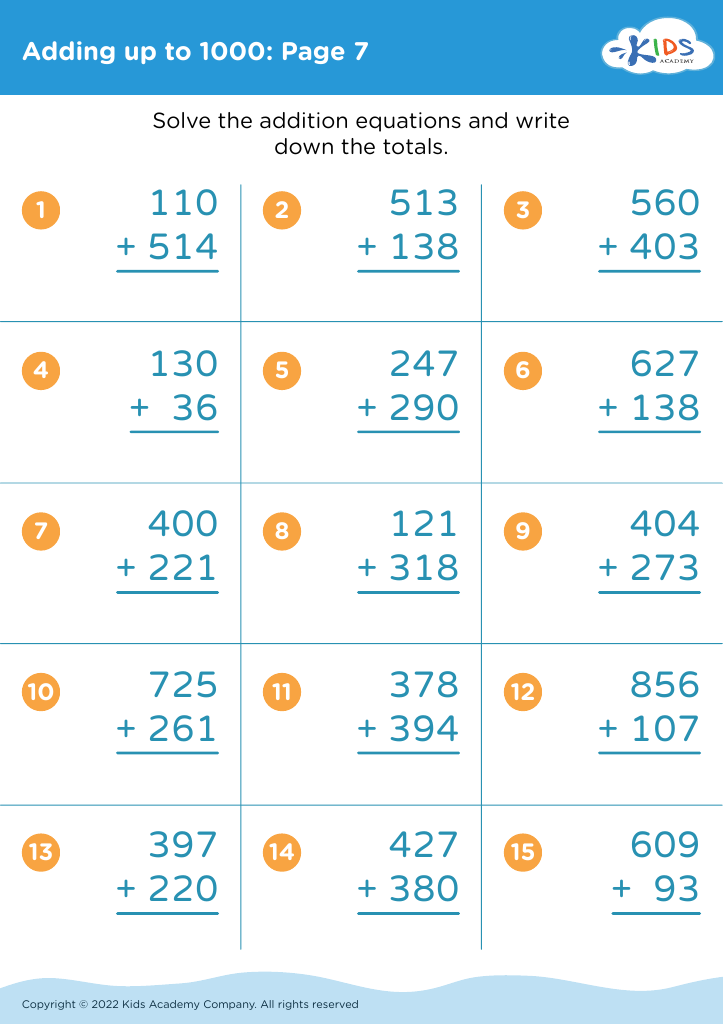
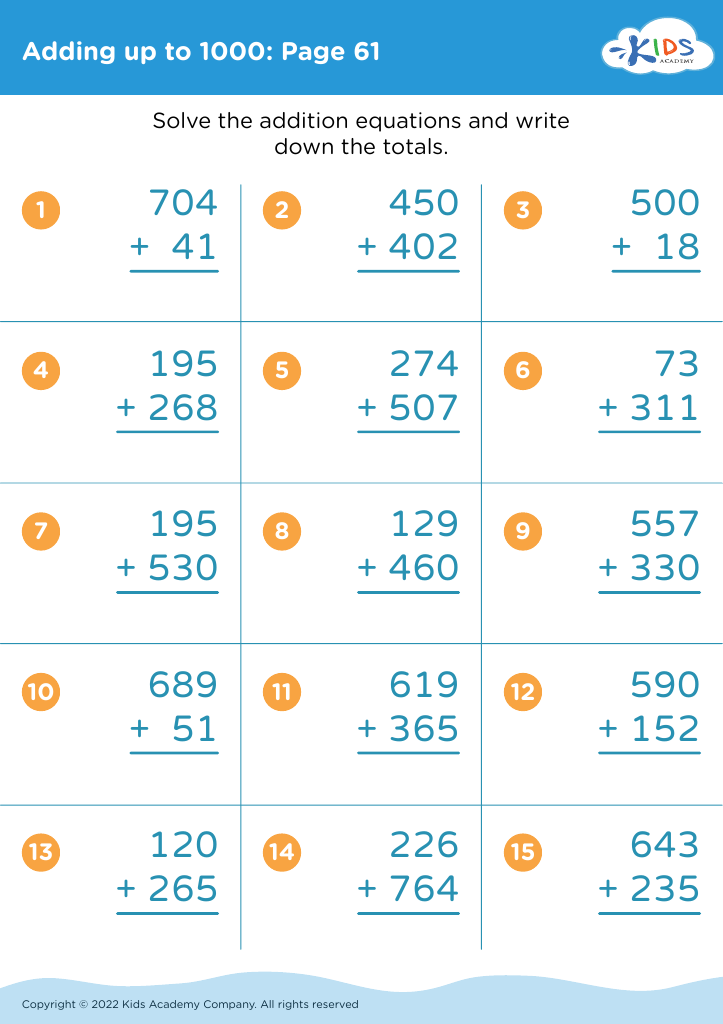
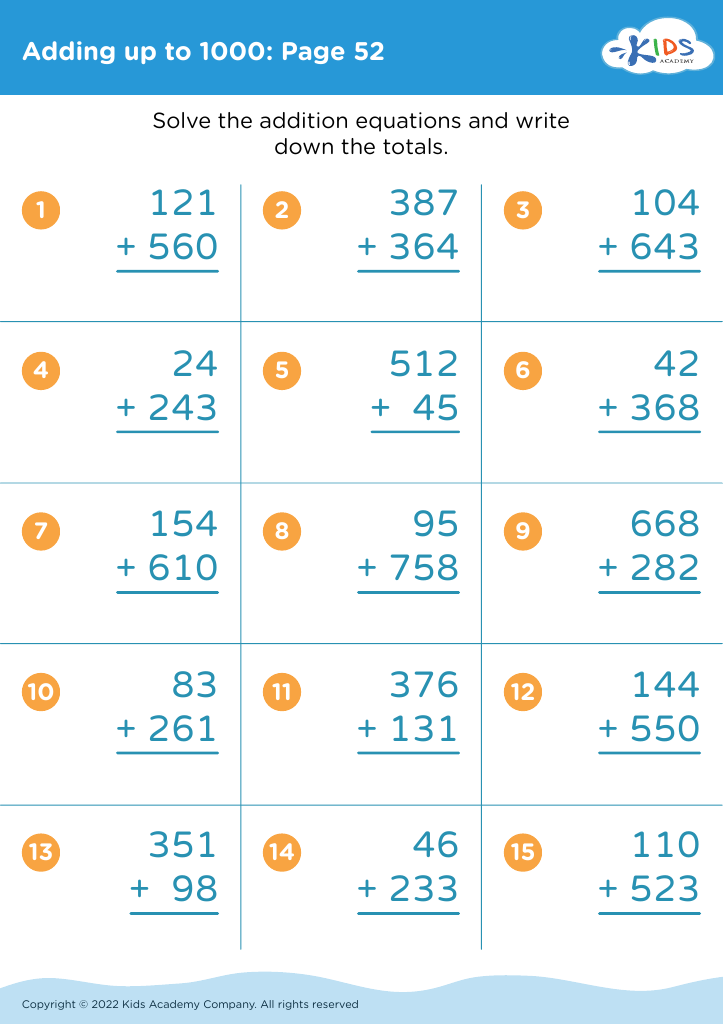
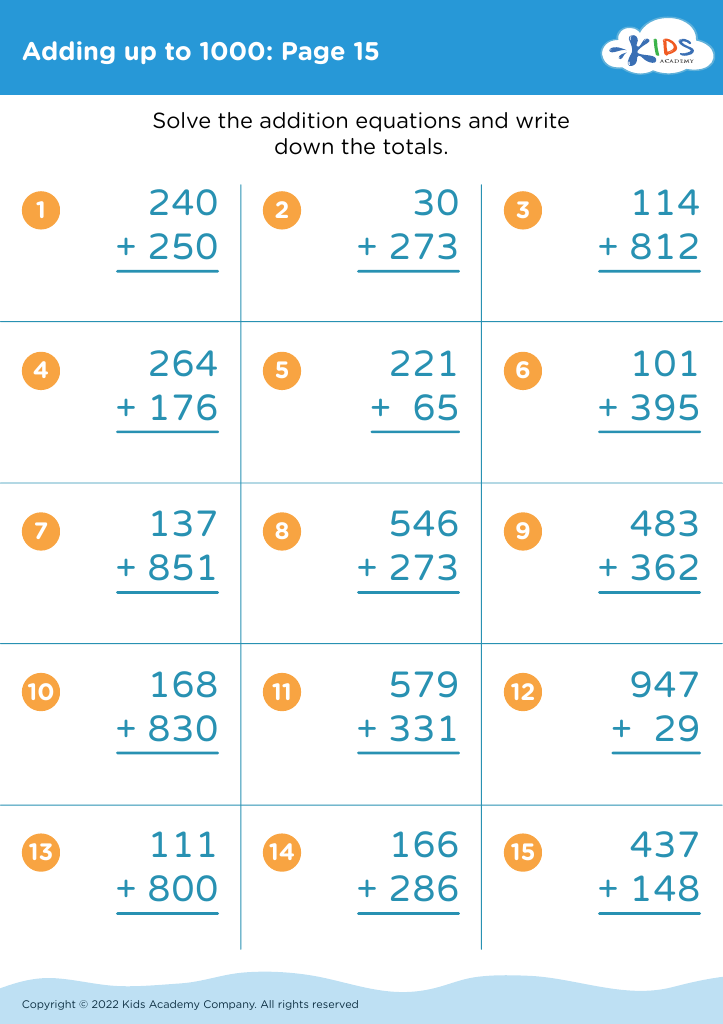
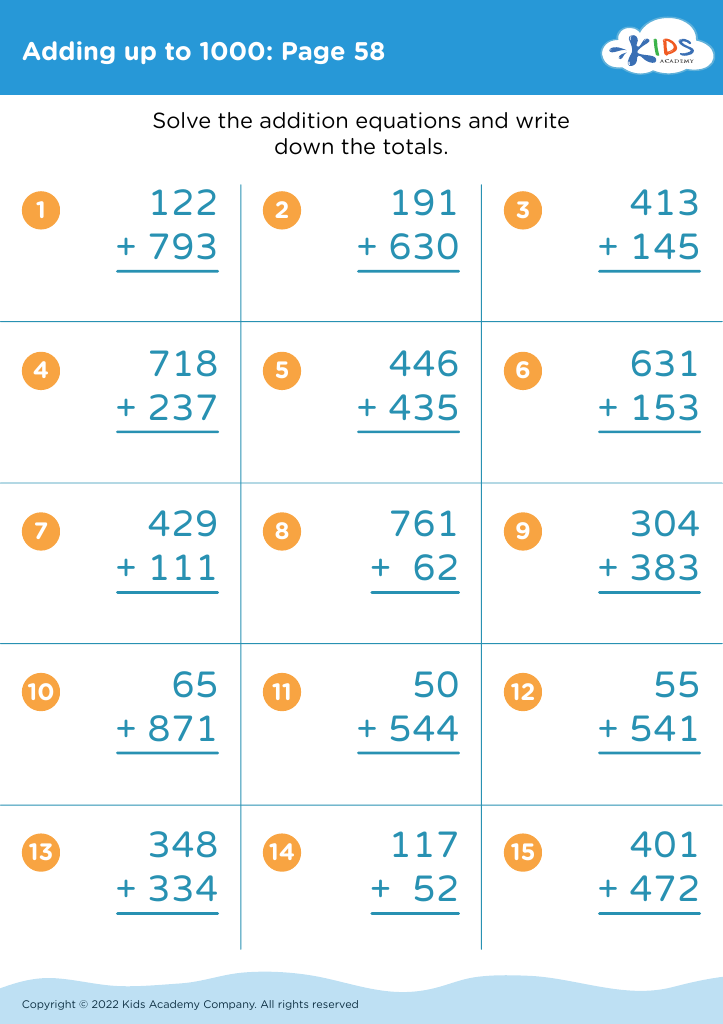
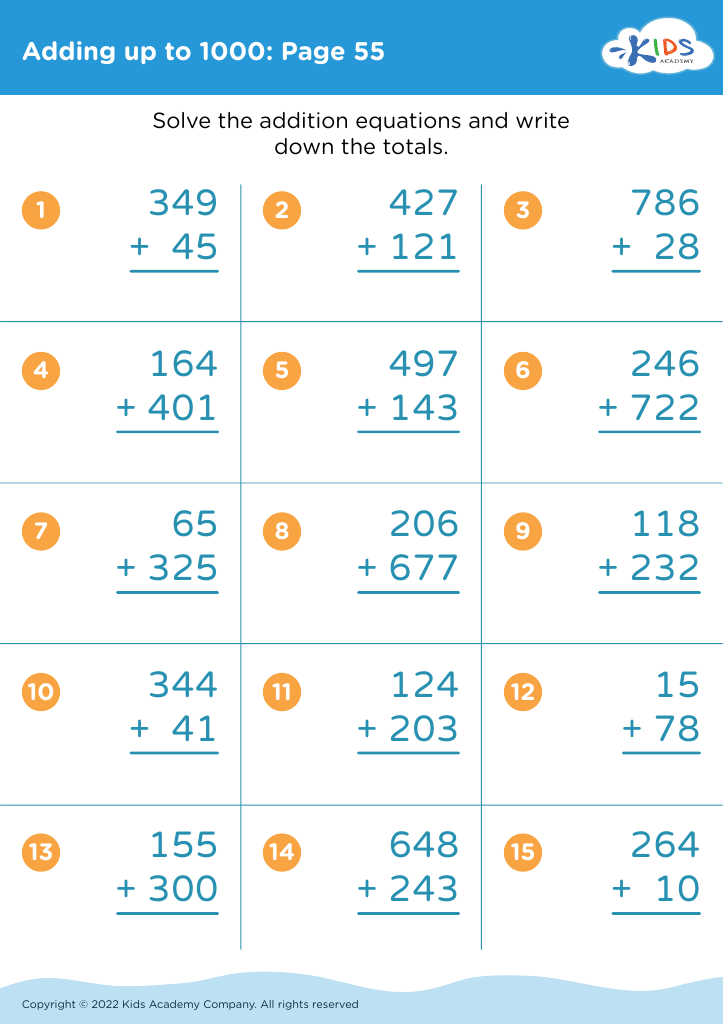


Problem-solving skills are foundational for cognitive development and can significantly benefit 7-year-olds when incorporated into their learning activities, such as adding up to 1000 in mathematics. At this age, children are in a crucial stage of brain development where they begin to understand more complex mathematical concepts and logical reasoning.
For parents and teachers, emphasizing problem-solving skills in mathematical contexts serves multiple purposes. Firstly, it enhances numerical literacy, fostering a comfort and familiarity with larger numbers. This not only establishes a solid foundation for more advanced math later on but also builds confidence, reducing math-related anxiety which is crucial for positive lifelong attitudes towards the subject.
Secondly, problem-solving is not just about finding the correct answer—it's also about understanding the process and developing critical thinking skills. When children work on problems like adding up to 1000, they learn to break down problems into smaller, manageable parts, recognize patterns, perform estimations, and apply logical reasoning. These cognitive strategies are transferable across various subjects and real-life situations, aiding overall academic performance and daily decision-making.
Lastly, engaging in such exercises encourages patience and persistence. Problem-solving often requires trial and error, promoting resilience and the willingness to continue trying until a solution is found. These soft skills are invaluable as they prepare children to tackle challenges both in and out of the classroom, making them more adaptable and resourceful individuals.