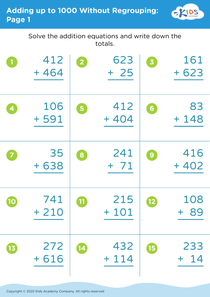
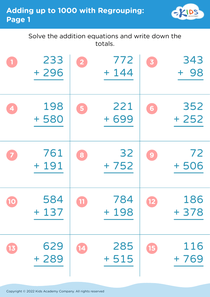
Reading comprehension Adding up to 1000 Misc Worksheets for 7-Year-Olds
4 filtered results
-
From - To
Boost your child’s reading and math skills with our "Reading Comprehension Adding up to 1000 Misc Worksheets for 7-Year-Olds". Designed specifically for young learners, these printable worksheets blend engaging math problems with exciting reading exercises to enhance comprehension. Perfect for classroom or home use, each worksheet includes a variety of addition problems adding up to 1,000 that challenge and delight young minds. Fun stories and questions test reading understanding while providing a strong mathematical foundation. Inspire your 7-year-old to improve their skills confidently and enjoyably with these enjoyable, educational resources from Kids Academy.
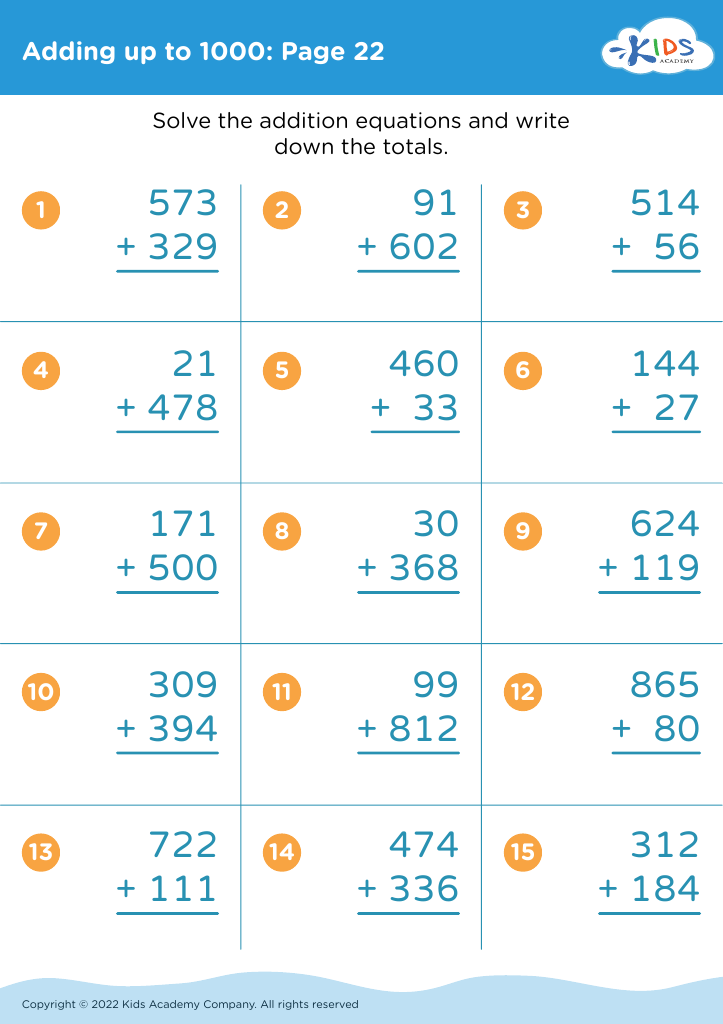
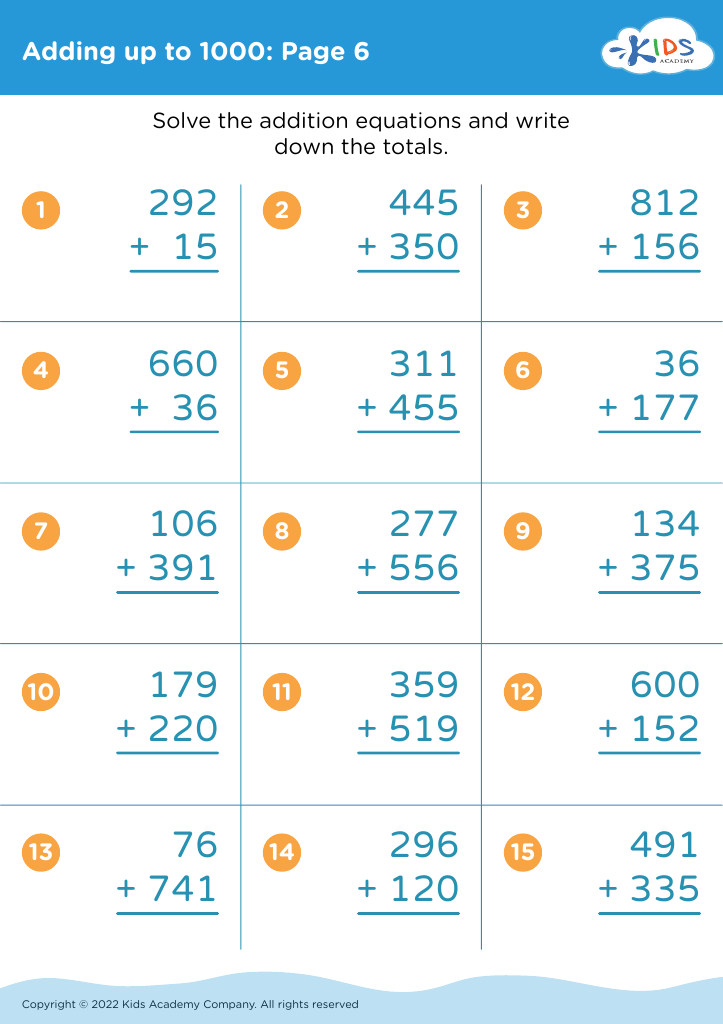
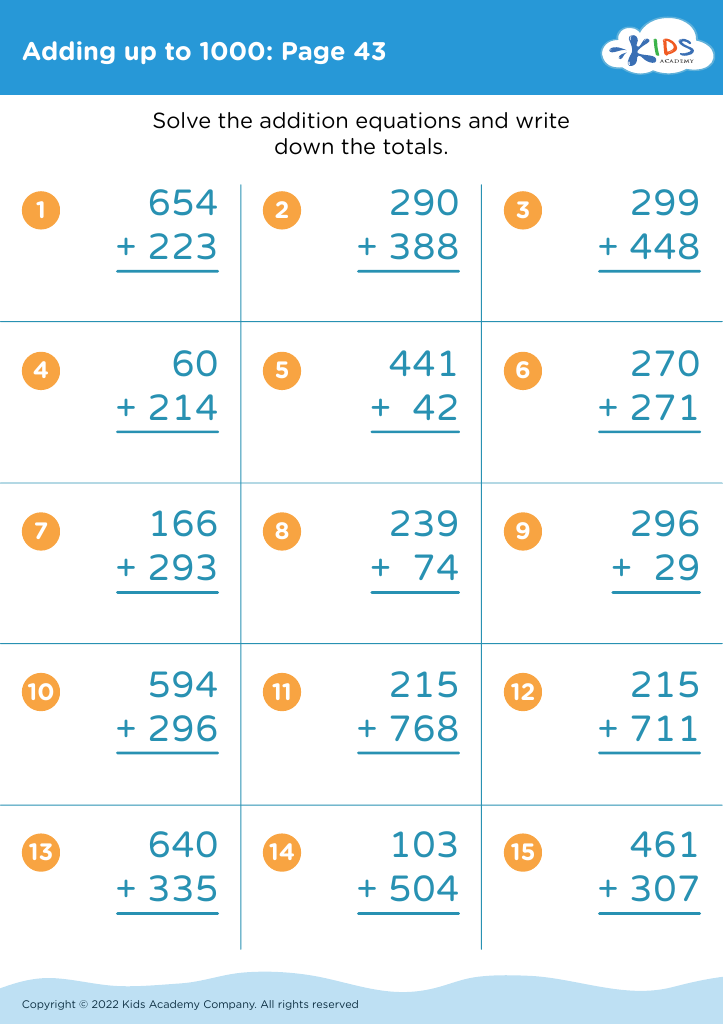
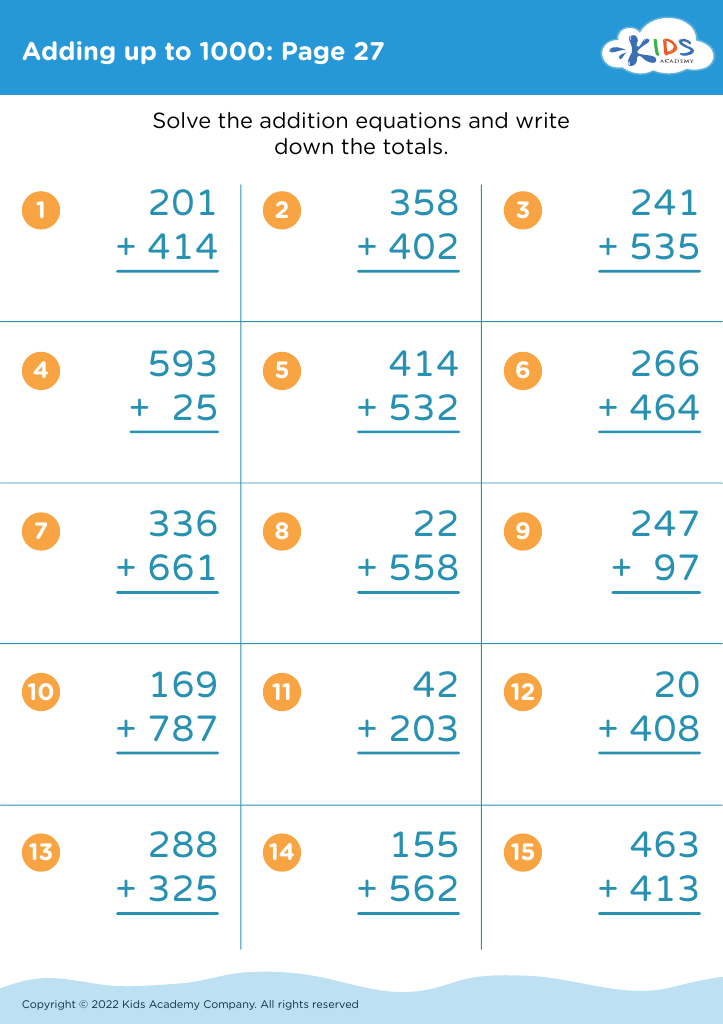


Reading comprehension and basic math skills, like adding up to 1000, are crucial for 7-year-olds as they lay the foundation for future academic success and overall cognitive development. Parents and teachers should actively foster these abilities for several reasons.
Firstly, reading comprehension is key to understanding instructions, enhancing vocabulary, and inspiring a love for learning. When children grasp the essence of what they read, they become better equipped to follow complex narratives, perform well in all subjects, and engage critically with the content.
Adding up to 1000 in math introduces children to larger numbers, thereby improving their numerical fluency. Mastering this skill not only boosts their confidence in handling real-life situations, like managing money or measuring ingredients, but also prepares them for more complex arithmetic operations in higher grades.
Collectively, these skills promote problem-solving, logical thinking, and the ability to connect knowledge across different subject areas. Early competence in reading and math creates enthusiastic learners who are ready to tackle future academic challenges with confidence and resilience.
Encouraging these capabilities in 7-year-olds ensures a well-rounded intellectual growth, making it vital for parents and teachers to prioritize and nurture both reading comprehension and basic math skills consistently.