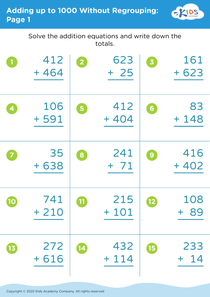
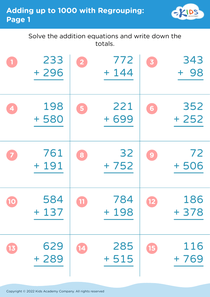
Understanding fractions Adding up to 1000 Misc Worksheets for 7-Year-Olds
13 filtered results
-
From - To
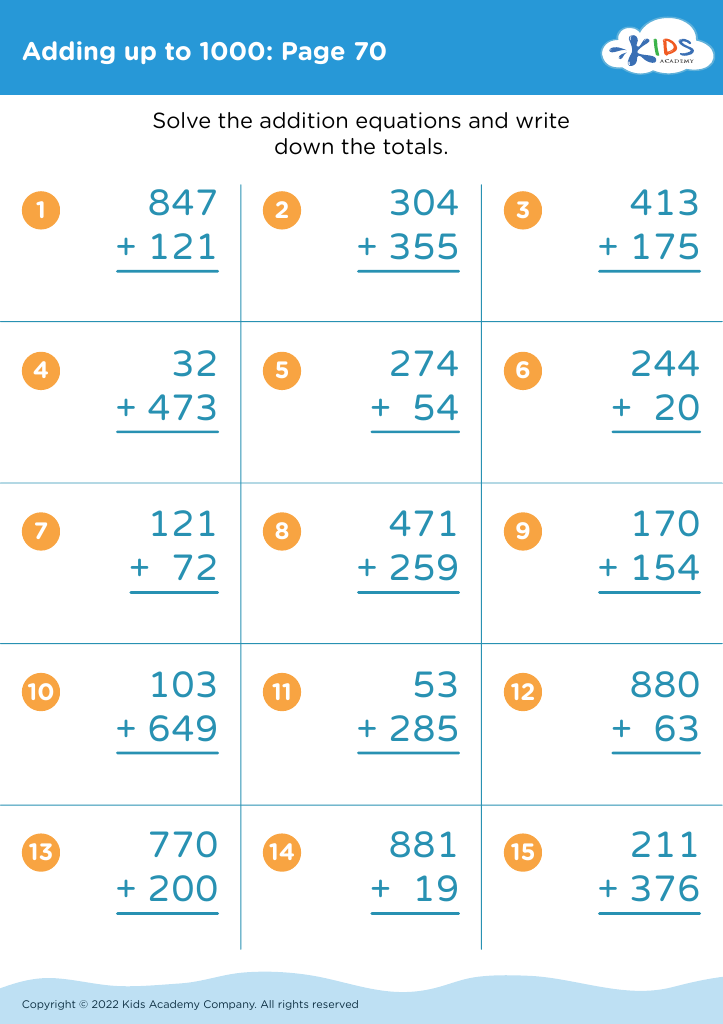
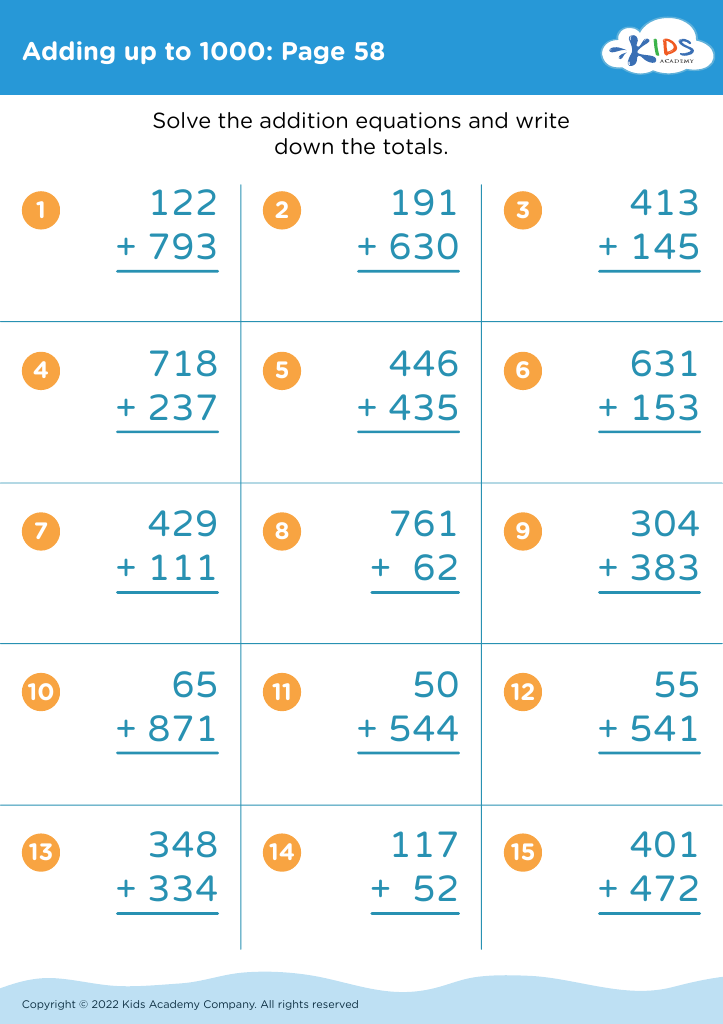
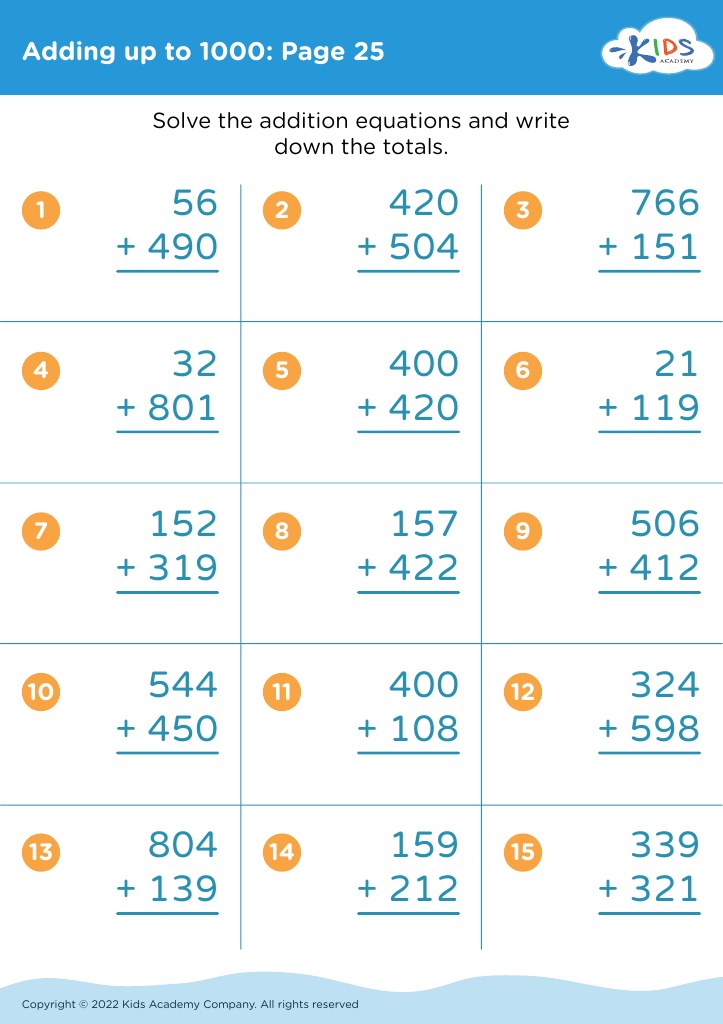
Welcome to our "Understanding Fractions Adding up to 1000 Misc Worksheets" designed specifically for 7-year-olds! These engaging worksheets provide an interactive way to help young learners grasp the concept of fractions and their relationships within whole numbers, particularly focusing on addition up to 1000. Through fun exercises, children will solidify their understanding of fractions, enhancing their math skills for future challenges. Each worksheet promotes critical thinking, boosts confidence, and sets a solid foundation for advanced mathematical concepts. Perfect for classroom use or at-home practice, our resources make learning fractions enjoyable and effective. Explore the world of fractions with us today!
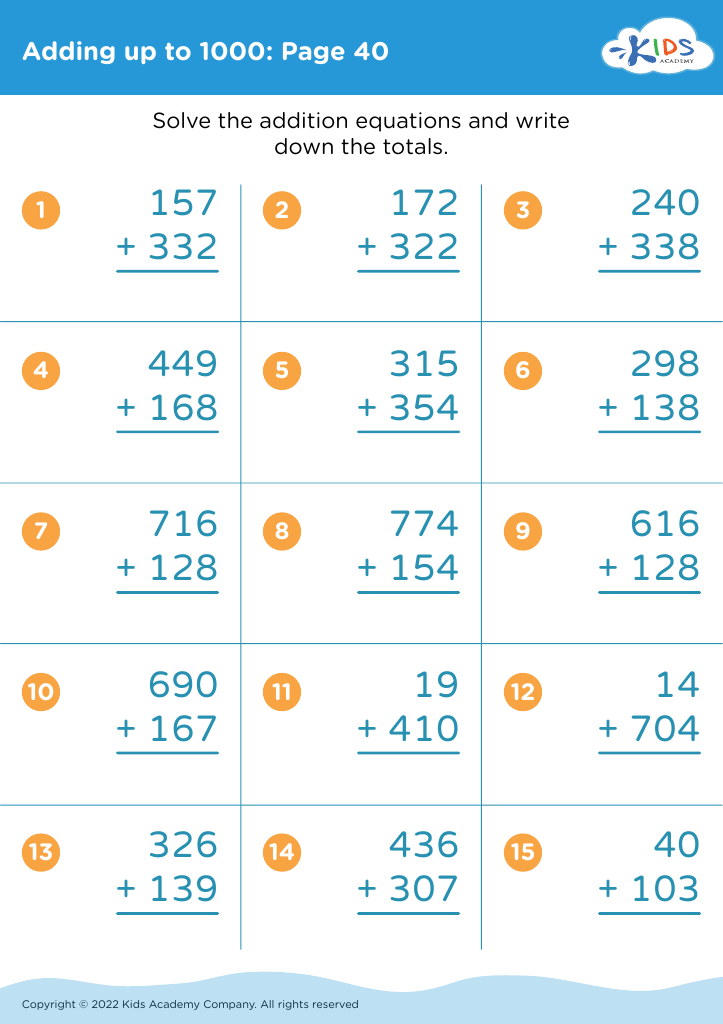
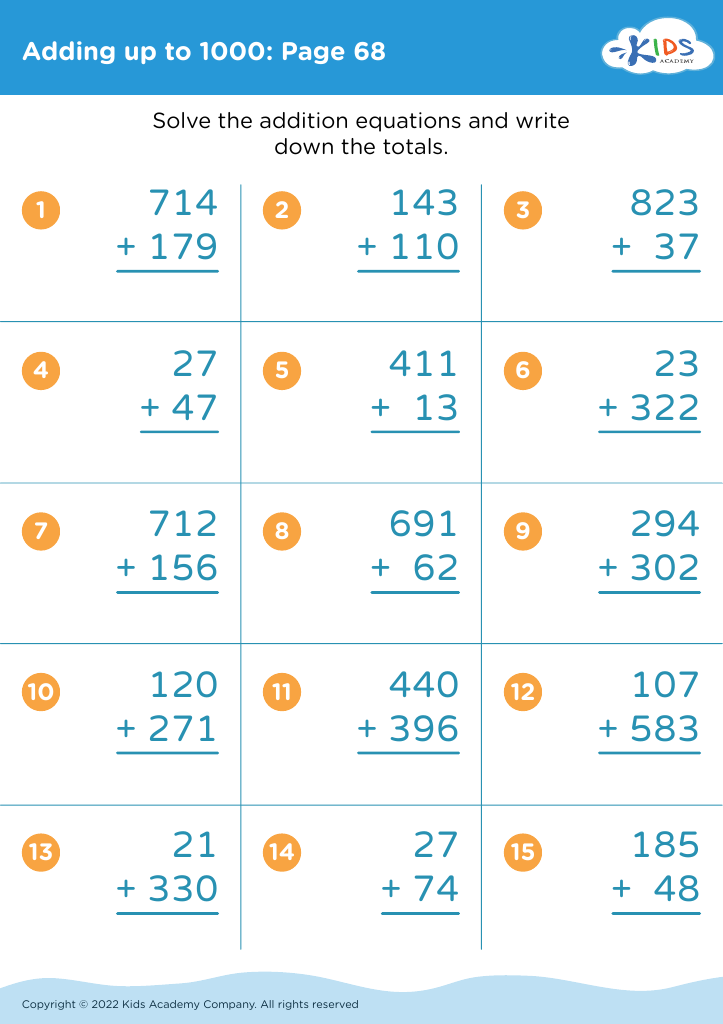
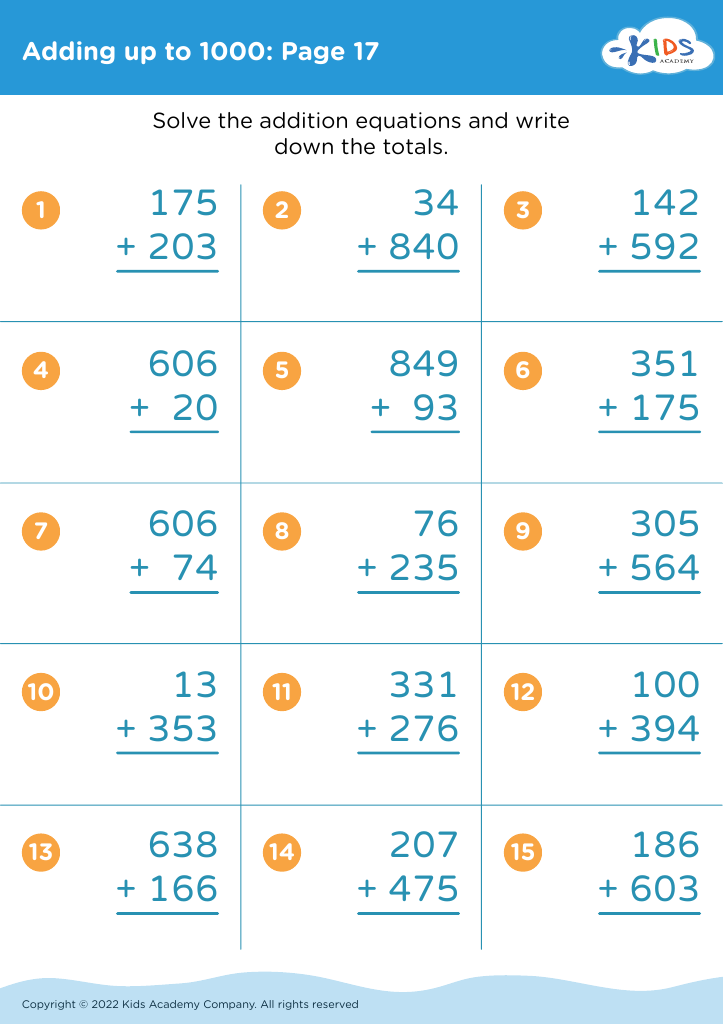
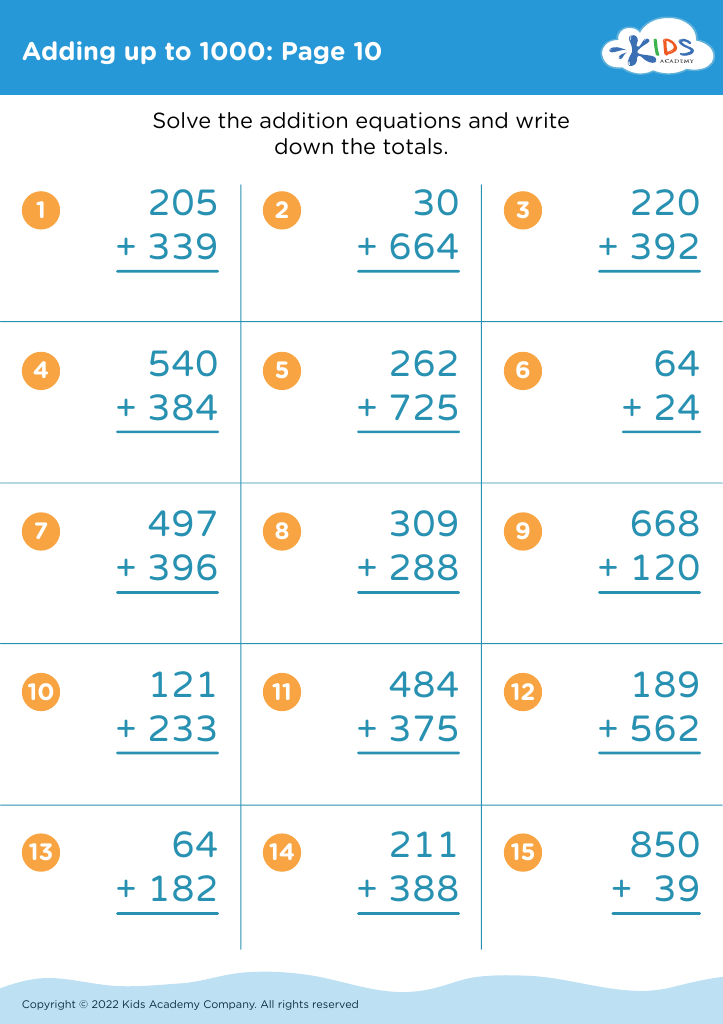
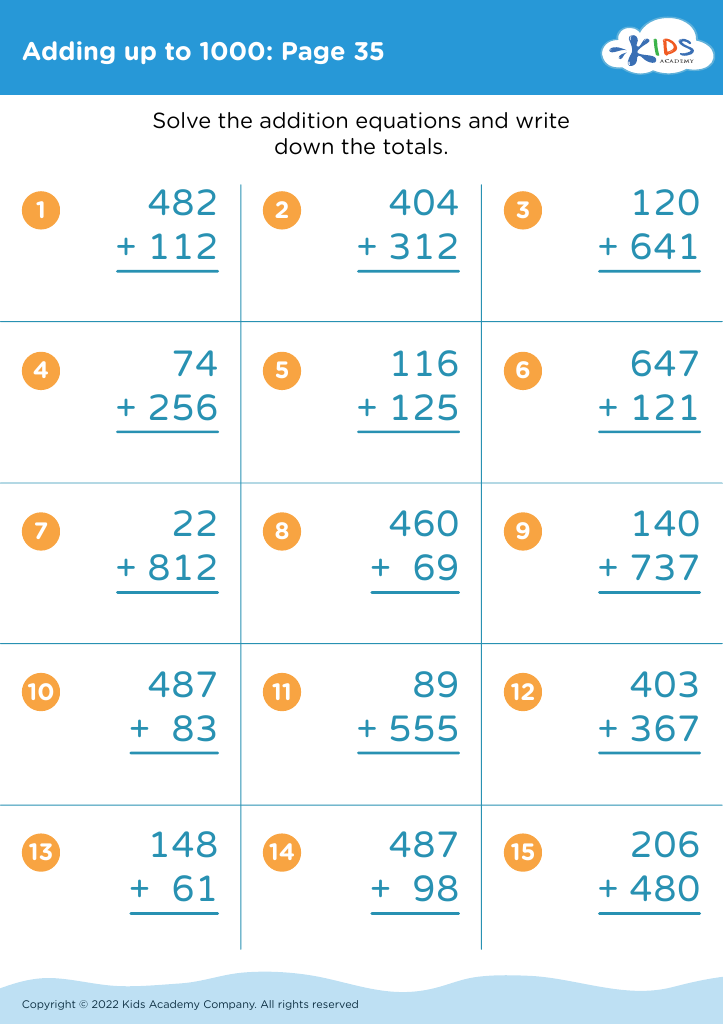
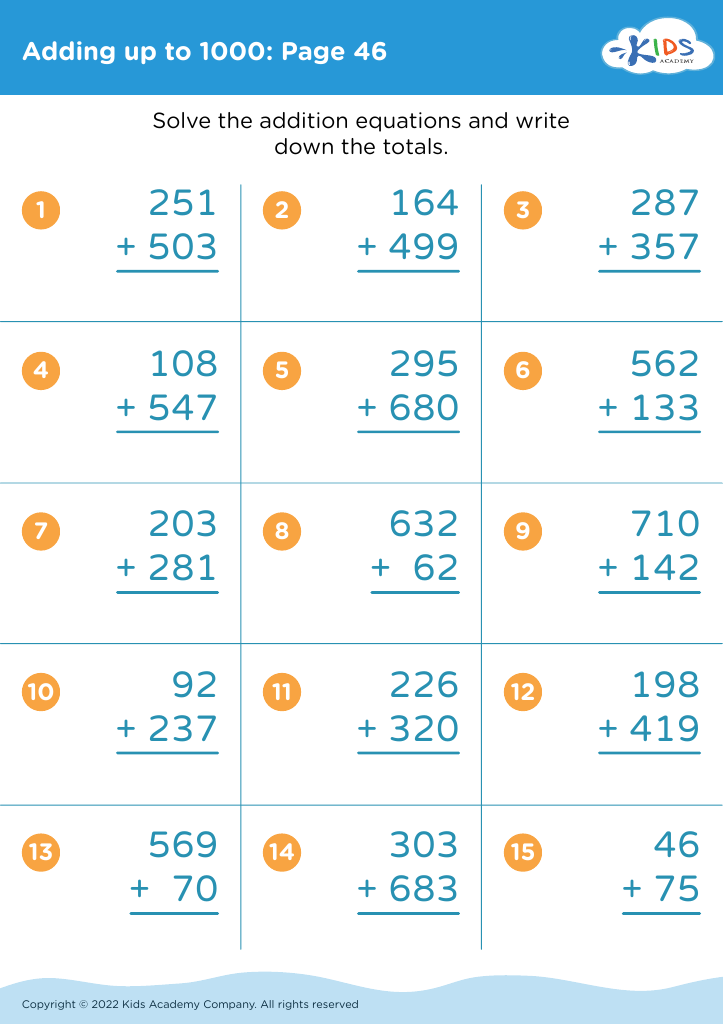


Understanding fractions, particularly for a 7-year-old, is crucial because it lays the foundation for mathematical concepts that students will encounter in the future. At this age, children are developing critical thinking and problem-solving skills, and comprehending fractions helps them make sense of parts and wholes, which is essential in their everyday lives.
When parents and teachers emphasize fractions, they are helping students grasp how numbers can represent various quantities and relationships. This foundational knowledge supports further learning in geometry, ratios, and later, algebra. Additionally, understanding fractions aids in real-world applications, such as cooking or dividing objects fairly among friends.
For instance, connecting fractions to adding up to 1000 fosters both numeric fluency and an understanding of proportionality, as students identify how various fractions contribute to a whole. Engaging children in fractional activities, visual aids, and hands-on experiences can deepen their comprehension and make learning enjoyable.
Ultimately, parents and teachers’ dedication to teaching fractions empowers children with essential math skills, builds confidence, and prepares them for more complex mathematical reasoning in future education, ultimately promoting their academic success. Providing this early instruction is not just about math; it’s about developing logical thinking habits that will serve children throughout their lives.